
The short version
The 15 most beautiful mountains on Earth in 2026 — from Ama Dablam and Fishtail to the Matterhorn, Fitz Roy and Fuji. Which trek gets you there.
Beauty is not the same as height. The tallest mountain on Earth is not automatically the most striking, and some of the peaks that stop travellers mid-sentence barely crack 3,500 metres. What makes a mountain beautiful is line and drama — a clean summit pyramid, a hanging glacier, a wall that catches fire at sunrise, a reflection in still water. Judged that way, the world has a handful of mountains that stand above the rest, and a surprising number of them are clustered in one small Himalayan country.
This is our curated field guide to the fifteen most beautiful mountains in the world for 2026 — ranked not by altitude but by how completely they take your breath away, and by how easily an ordinary traveller can actually stand in front of them. Nepal opens the list, because no country on Earth packs more world-class scenery into a two-week trip. We have picked mountains you can genuinely reach, and for the Nepalese peaks we tell you exactly which trek delivers the view and what it costs to go with us.
Why Nepal owns the top of the list
Eight of the world's fourteen 8,000-metre peaks sit inside or on the border of Nepal, but sheer altitude is only part of the story. What sets the Nepal Himalaya apart is accessibility to beauty: teahouse trails, built and maintained over generations, let a reasonably fit traveller walk to the foot of a giant without ropes, oxygen or technical skill. You sleep in a warm lodge, eat a hot dinner, and wake to a wall of ice you would otherwise only see in a mountaineering film. Nowhere else on the planet offers that trade so generously. If you are still deciding where in the world to go, our companion pieces on the best places to visit in the world in 2026 and the best treks in the world both keep circling back to the same country — and so does this one.
1. Ama Dablam — 6,812 m — Khumbu, Nepal
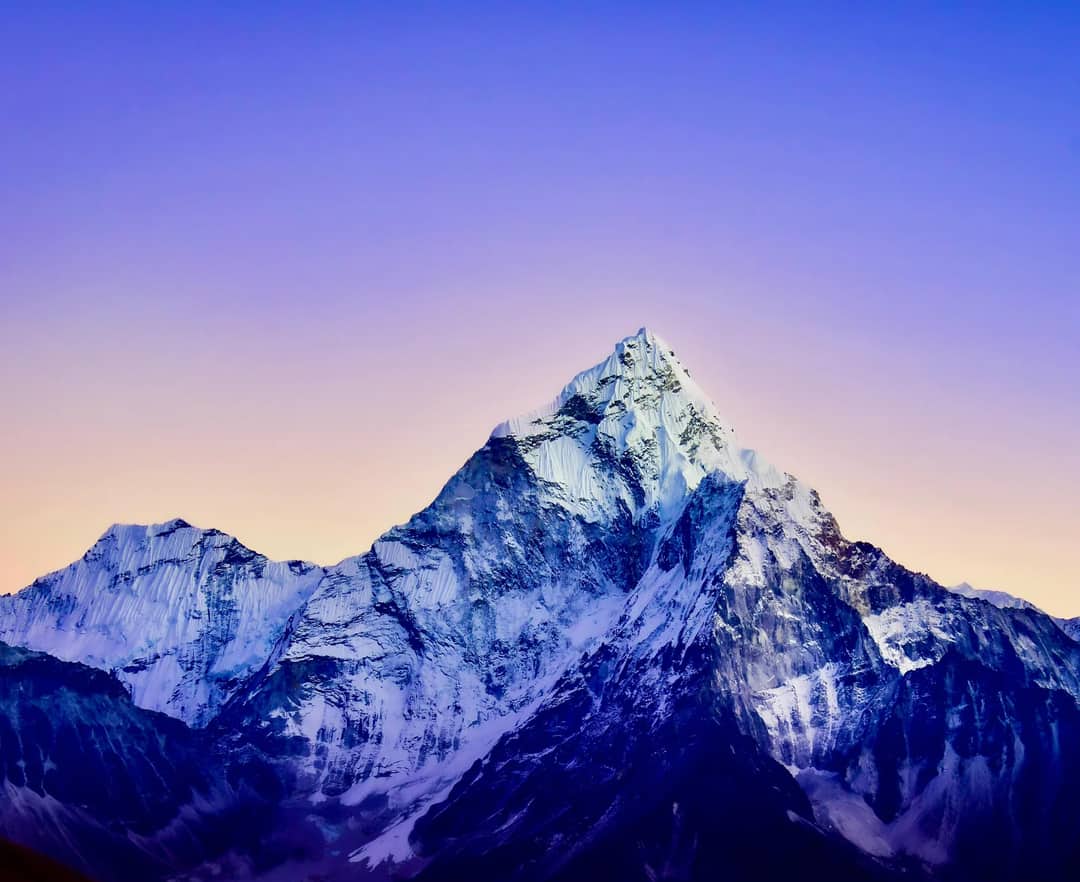
Ask ten mountain photographers to name the most beautiful peak on Earth and Ama Dablam wins more votes than Everest. At 6,812 metres it is not one of the giants, but its shape is perfect: a soaring central spire flanked by two ridgelines that curve out like arms, with a hanging glacier — the dablam, or pendant — glinting on its chest. The name means "mother's necklace." It is the mountain that dominates the middle of the Everest Base Camp trek, framing the trail for days between Tengboche and Dingboche, and it is the single strongest argument for walking to Everest rather than flying over it.
You do not need to climb it to be floored by it. The classic view arrives on the walk in, and it only improves as you gain height. Our Everest Base Camp Trek — 14 Days puts you directly beneath it, with rates from US$1,350 per person in a group of eight or more (US$1,850 for a solo traveller). Short on time? The Everest Base Camp Helicopter Tour banks the same Khumbu skyline in a single morning from US$1,220 per person in a group of eight-plus. Plan the route with our Everest Base Camp trek guide and the wider Everest region guide, and read a real schedule in our day-by-day EBC itinerary for 2026.
2. Machapuchare (Fishtail) — 6,993 m — Annapurna, Nepal
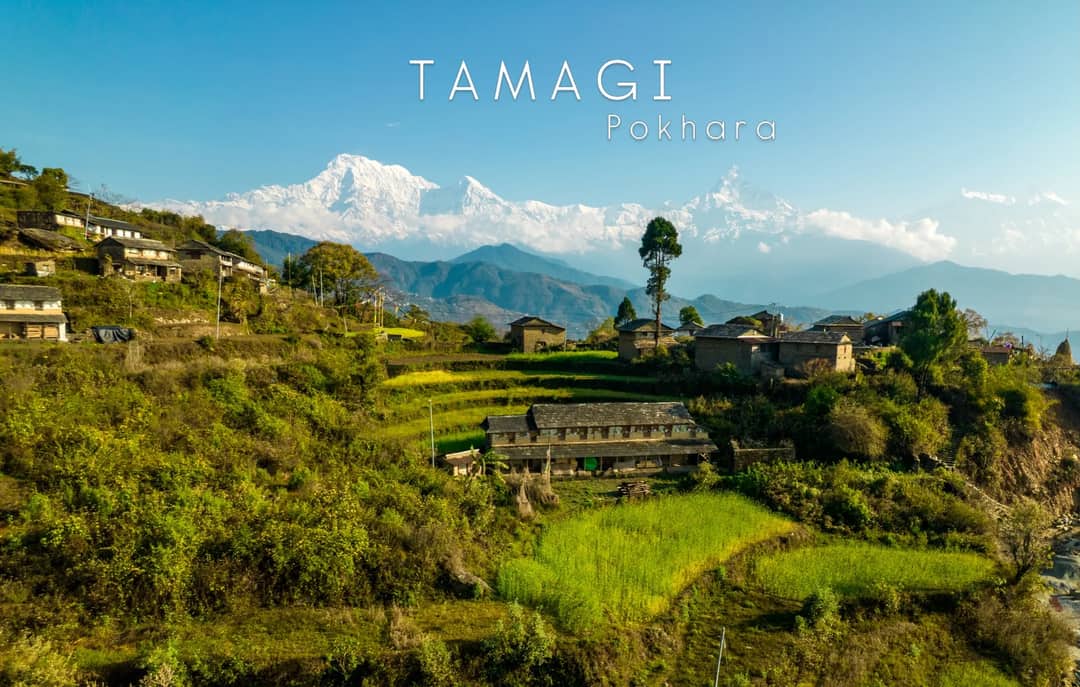
Machapuchare, "the fish's tail," is Nepal's most photographed mountain that almost nobody has climbed. Sacred to the local Gurung people and off-limits to mountaineers, its twin-pointed summit rises 6,993 metres above the Pokhara valley and appears to lean over the city like a guardian. Because it stands out ahead of the main Annapurna wall, it looks far taller than it is — a dagger of rock and ice reflected in Phewa Lake at dawn.
Two treks put you under its point. The Mardi Himal Trek — 4 Days climbs a high ridge to a viewpoint almost directly below the Fishtail, from US$330 per person in a group of eight-plus (US$455 solo) — the best short, high view in Nepal. For the amphitheatre itself, the Annapurna Base Camp Trek — 6 Days walks into a ring of peaks with Machapuchare at its heart, from US$505 per person in a group of eight-plus (US$695 solo); we also run a 9-day version for a gentler pace. Compare the two shorter options in our Poon Hill vs Mardi Himal breakdown, and lean on the Annapurna region guide and our ABC trek guide. Pokhara is the launch pad for both — see Kathmandu vs Pokhara to decide where to base yourself.
3. Mount Everest — 8,849 m — Khumbu, Nepal
The highest point on Earth had to be here, and not only for the number. Seen from the Nepali side, Everest — Sagarmatha to Nepalis, Chomolungma to Tibetans — is a dark, wind-scoured pyramid trailing a permanent plume of spindrift off its summit. It is rarely the prettiest peak in any given photo (Ama Dablam usually is), but standing at Kala Patthar at 5,545 metres as the last light turns the summit gold is one of travel's genuinely unforgettable moments.
You reach that viewpoint on foot — no climbing required — on the 14-day Everest Base Camp trek. It is a serious walk but an achievable one; our honest take on the difficulty lives in How Hard Is Everest Base Camp Really?, and everything from permits to flights is covered in the EBC trek guide. If Everest and Annapurna are both on your shortlist, our EBC vs ABC comparison will help you pick.
4. Annapurna I — 8,091 m — Annapurna, Nepal
The first 8,000-metre peak ever climbed (in 1950) is also one of the most beautiful — and, statistically, one of the most dangerous to summit. For a traveller, though, Annapurna is pure spectacle: a long, fluted south face of ice that walls off the head of the Modi Khola valley. Stand in the Annapurna Sanctuary at dawn and the entire horizon is a 360-degree ring of white, with Annapurna I, 8,091 metres, at its apex.
The Annapurna Base Camp trek delivers this without any technical ground, through terraced villages, rhododendron forest and bamboo groves. Our 6-day ABC trek is the efficient option; read a full plan in the 2026 ABC itinerary and the deeper ultimate ABC guide.
5. Manaslu — 8,163 m — Gorkha, Nepal
The eighth-highest mountain on Earth, Manaslu — "mountain of the spirit" — rises 8,163 metres above the Budhi Gandaki valley in a great, clean pyramid. It is far quieter than Everest or Annapurna because it sits in a restricted area that requires a special permit and a licensed guide, which is exactly why it stays beautiful: fewer trekkers, intact Tibetan-Buddhist villages, and a circuit many walkers rate above the more famous loops.
The Manaslu Circuit loops the whole massif and crosses the 5,106-metre Larke Pass. Our Manaslu Circuit Trek — 14 Days runs from US$1,550 per person in a group of eight-plus (US$2,100 solo). See how it stacks up against the classics in Manaslu vs Annapurna Circuit, and get the full permit-and-cost picture in the Manaslu Circuit 2026 guide. Before you book any restricted-area trek, skim our Nepal permits hub and the Nepal visa guide.
The rest of the world's most beautiful mountains
Nepal dominates, but great mountains stand on every continent. Here are ten more that belong in any honest list — each iconic, each reachable, and none of them requiring you to be a mountaineer just to see them at their best.
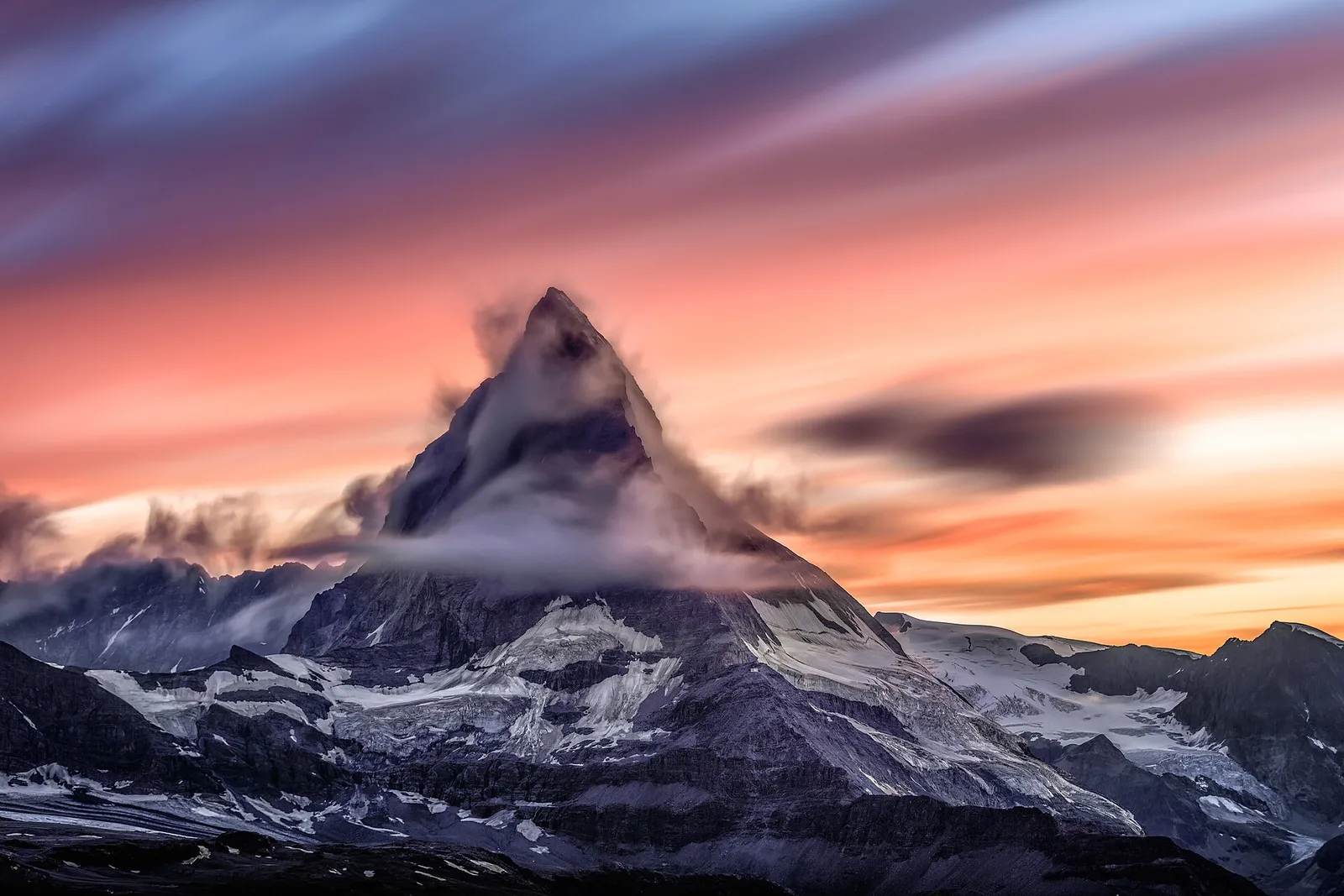
6. The Matterhorn — 4,478 m — Pennine Alps, Switzerland / Italy
Europe's most recognisable mountain is a near-perfect four-sided pyramid straddling the Swiss-Italian border. At 4,478 metres the Matterhorn is not tall by Himalayan standards, but its isolated, faceted shape — instantly familiar from a certain chocolate wrapper — makes it one of the most photographed peaks on Earth. The car-free resort of Zermatt sits at its feet, and a walk to the Riffelsee lake rewards you with the classic mirror reflection. It is a cornerstone of any trip built around our best places to visit in Europe in 2026.
7. K2 — 8,611 m — Karakoram, Pakistan / China
The second-highest mountain on Earth at 8,611 metres is, to many climbers, more beautiful and more fearsome than Everest. K2's steep, symmetrical pyramid rises from the remote Karakoram with no easy side, earning it the nickname "the Savage Mountain." Simply reaching a viewpoint means a serious multi-week trek to Concordia in northern Pakistan — this is a mountain for the committed, and it sits high on our list of the best adventure destinations in the world.
8. Kilimanjaro — 5,895 m — Tanzania
Africa's high point is the tallest free-standing mountain in the world, a dormant volcano rising 5,895 metres straight out of the Tanzanian savanna. Its snow-capped dome floating above acacia plains and grazing elephants is one of the continent's defining images. Uniquely among the world's high peaks, Kilimanjaro can be walked to the summit by fit non-climbers over several days. If you are weighing it against a Himalayan objective, we compared them directly in Everest Base Camp vs Kilimanjaro.
9. Mount Fuji — 3,776 m — Honshu, Japan
No mountain is more culturally beloved than Fuji-san. At 3,776 metres it is a nearly symmetrical volcanic cone, snow-capped for much of the year and endlessly reproduced in Japanese art. Seen across Lake Kawaguchi or floating behind a bullet train, it is the quiet star of any journey through our best places to visit in Asia in 2026. The official climbing season is short, but the view is a year-round pilgrimage.
10. Denali — 6,190 m — Alaska Range, USA
The highest peak in North America, Denali ("the Great One") rises 6,190 metres in interior Alaska. What makes it staggering is its relief: because it climbs from a low base, its vertical rise from foot to summit is among the largest of any mountain on land — arguably greater than Everest's rise above its high plateau. Most travellers admire it from Denali National Park's tundra, where it looms over caribou and grizzly country on the clear days it deigns to show itself.
11. Mount Fitz Roy — 3,405 m — Patagonia, Argentina / Chile
The jagged granite skyline of Fitz Roy, 3,405 metres, is so distinctive it became a clothing logo. Ringed by spires on the Argentine-Chilean border, it is a magnet for photographers who hike out from El Chaltén to Laguna de los Tres for the sunrise "burn," when the towers glow red. Technically brutal to climb, it is generous to hikers — one of the great walk-to viewpoints on the planet, and a highlight of the Americas for anyone chasing the best countries for hiking.
12. Cerro Torre — 3,128 m — Patagonia, Argentina / Chile
Fitz Roy's slender neighbour is, if anything, more dramatic: a 3,128-metre needle of vertical granite capped by a mushroom of rime ice and lashed by Patagonian storms. For decades it was considered unclimbable, and it remains one of the hardest peaks in the world to summit. For the rest of us it is pure sculpture, best seen from the trail to Laguna Torre — proof that beauty has nothing to do with altitude.
13. Alpamayo — 5,947 m — Cordillera Blanca, Peru
Once voted "the most beautiful mountain in the world" in a mountaineering survey, Alpamayo is a flawless 5,947-metre pyramid of fluted ice in Peru's Cordillera Blanca. Its near-perfect trapezoidal face, grooved by parallel runnels of snow, looks almost artificial in its symmetry. Reaching its base is a highlight of Peru's Santa Cruz trekking country — a strong reason the Andes feature so heavily among the world's great ranges.
14. Mont Blanc — 4,808 m — Graian Alps, France / Italy
The roof of Western Europe at 4,808 metres, Mont Blanc — "the white mountain" — is a broad, glaciated dome presiding over Chamonix, the birthplace of modern mountaineering. It is less a single spire than a massif of snowfields, séracs and satellite spires. You do not have to climb it: the celebrated Tour du Mont Blanc circles the whole massif on foot through France, Italy and Switzerland, one of the most beloved multi-day walks in the Alps.
15. Grand Teton — 4,199 m — Wyoming, USA
The Tetons rise abruptly from the flat sagebrush of Jackson Hole with no foothills to soften them, and the Grand Teton, 4,199 metres, is their crown. That sudden vertical wall — mirrored in the Snake River and glacial lakes below — is one of North America's most photographed alpine scenes, immortalised by generations of landscape photographers. It is the mountain that anchors many an American road trip through the world's best destinations.
How to actually stand in front of one of these
The difference between admiring a beautiful mountain in a photograph and standing beneath it in the cold morning air is smaller than most people think — especially in Nepal, where the trails are built for ordinary travellers rather than climbers. You do not need ropes, oxygen or previous experience to reach the foot of Ama Dablam, Machapuchare, Everest or Annapurna. You need a couple of weeks, a reasonable level of fitness, and a good guide.
The best window for the Himalaya is autumn (late September to November) and spring (March to May), when skies are clearest and the peaks show themselves day after day — see our month-by-month guide to the best time to trek Nepal and the regional Nepal weather guide to time it right. Entry is straightforward: our Nepal visa guide covers visa-on-arrival, and the permits hub explains the passes each trek requires.
Height impresses. Beauty is what you remember. And the most beautiful mountains on Earth are more reachable than you think — five of them from a single two-week trip out of Kathmandu or Pokhara.
If Nepal has climbed to the top of your list — as it should have — start with our overview of the best places to visit in Nepal in 2026, then widen out to the best treks in Asia. When you are ready to turn a photograph into a memory, our team will build the trip around whichever of these giants you most want to meet. The mountains have been waiting a long time. Come and stand in front of one.
Featured image: Sam Ferrara samferrara via Wikimedia Commons (CC0).

Written by
Travel Himalaya NepalPokhara-based, NMA-certified trekking guides. We’ve led 5,000+ treks across the Annapurna and Everest regions since 1998 — every word here comes from the trail. More from this author →
Share this article
Ready to Trek?
From reading about it to standing on it
Our Pokhara-based guides have been doing this since 1998. Tell us your dates and fitness level — we'll build your perfect itinerary. Free, no obligation.
Why trek with our licensed agencyMore guides like this
Popular trips to consider
View all treks & toursFree Trekker’s Insider Guide
Permits, packing lists, cost breakdowns — no fluff.
We send one useful email. You can unsubscribe anytime.