
The short version
Around twenty European destinations worth your 2026 leave — from Madrid and Madeira to the Dolomites and Norwegian fjords — plus an honest guide to the natural next step for hikers who have done Europe's great walks: the Himalaya.
Europe has a way of ruining you for other holidays. You go for a long weekend in a beautiful city, you take one unplanned walk up into the hills behind it, and suddenly you are the sort of person who reads trail reports at their desk. If that has already happened to you, this list is a warning as much as an invitation: the best places to visit in Europe in 2026 are wonderful, and several of them will hand you a taste of big-mountain travel that is very hard to un-want.
So we have built this guide two ways. First, as a genuinely useful shortlist of around twenty European destinations worth your 2026 leave — cities, coastlines and the continent's finest walking country, each with a real reason to go this year rather than next. And second, for the hikers among you, as an honest bridge: because once you have done Europe's great walks, there is a natural next step, and it runs through the Himalaya. We will get to that near the end, and we will be straight with you about how it compares.
We run treks in Nepal for a living, so we are not neutral. But we have also walked in the Alps and the Dolomites, and we would rather tell you the truth than oversell a plane ticket.
How we chose (and how to read this list)
Every entry below has a specific 2026 hook — an event, a new rail link, a rising trend or simply the fact that it is having a moment before the crowds catch up. We have leaned toward places that reward slow, active travel over box-ticking, and we have flagged the ones outdoor lovers should prioritise. If you want the global picture beyond Europe, our companion pieces cover the best places to visit in the world in 2026 and the best adventure destinations worldwide. Walkers should also bookmark our roundups of the best treks in the world for 2026 and the best countries for hiking.
The great European cities for 2026
1. Madrid, Spain
Madrid was voted Europe's top destination for 2026 by European Best Destinations, topping the poll with more than 127,000 votes. It earns it: world-class museums, the greenest big-city core in the country after the Madrid Río regeneration, and a food-and-terrace culture that runs late into the night. Come for the culture, and use it as a springboard — the Sierra de Guadarrama on the city's doorstep is a reminder that Spain is one of Europe's most under-rated mountain countries.
2. Lisbon and Porto, Portugal
Portugal keeps winning, and 2026 gives it an extra hook: a total solar eclipse on 12 August 2026 will be visible across parts of the country. Lisbon's light, Porto's river gorge and the port lodges of Vila Nova de Gaia are the easy sells; the quiet win is how well both cities connect to hiking country, from the Sintra hills to the terraced Douro Valley.
3. Ljubljana, Slovenia
Slovenia is the 2026 darling of the "swap the icon for the alternative" crowd — travellers choosing Ljubljana over Venice, helped by improved rail routes and a genuine eco-tourism ethos. It is also the perfect two-in-one: a fairy-tale capital where a serious mountain range, the Julian Alps, begins barely an hour away (more on that below).
4. Naples, Italy
Naples is having its long-overdue moment as travellers tire of a saturated Florence and Venice. It is raw, operatic and the best food city in Italy, and it opens the door to the Amalfi Coast's cliff paths and the smoking cone of Vesuvius. For outdoor lovers, the Path of the Gods above Positano is one of the finest half-day walks in the Mediterranean.
5. Athens and the Peloponnese, Greece
The Greek Peloponnese is among the fastest-rising destinations for 2026, and it pairs neatly with a couple of days in a revitalised Athens. Beyond the ruins, this is walking country — the Mani peninsula, the Menalon Trail and the Lousios Gorge give Greece a hiking side that most beach-focused visitors never see.
6. Tallinn and the Baltics
For scenic-commute travellers chasing new rail and ferry links, the Baltic capitals remain 2026's smart-value city trio. Tallinn's medieval old town is the headline; the bog boardwalks of Lahemaa National Park are the surprise, offering the strangest and most peaceful flat walking in Europe.
Islands and coast: slower, wilder, 2026-ready
7. Madeira, Portugal
Madeira was named the world's top trending destination for 2026, and hikers already know why. The levada network — irrigation channels turned into hundreds of kilometres of contouring trails — plus the volcanic ridge walk of Pico Ruivo make this the rare island that is as much a walking destination as a resort. If your 2026 leave is short but you want real trails, start here.
8. Sardinia, Italy
Sardinia is one of the year's fastest-climbing searches, up sharply on last year. Most people come for the Costa Smeralda's water; the Selvaggio Blu on the east coast is quietly one of the toughest and most beautiful multi-day coastal treks in Europe — proof that "beach island" and "serious walk" are not opposites.
9. The Azores, Portugal
Portugal's mid-Atlantic islands are the antidote to a crowded Mediterranean summer: crater lakes, whale watching and hydrangea-lined trails on São Miguel, with almost no queues. For anyone who loved Iceland's drama but wants it greener and warmer, this is the 2026 pick.
Europe's best hiking country for 2026
This is the heart of the list, and the reason the final section exists. If you take your walking seriously, these are the European regions to prioritise this year.
10. The Dolomites, Italy
The Dolomites remain the most photogenic mountains in Europe and the gateway drug for a whole generation of hikers. The Alta Via 1 hut-to-hut route, the Tre Cime di Lavaredo loop and the meadows of the Alpe di Siusi give you Himalayan-scale drama on well-marked, hut-supported trails. If you have never done a multi-day mountain walk, the Dolomites are the gentlest possible introduction to the format that Nepal later perfects.
11. The Norwegian fjords
Norway's fjords are heading into 2026 under record demand, and the country is responding with a phased sustainable-tourism tax and, more usefully, new hiking routes and transport links designed to spread visitors beyond Geiranger and Nærøyfjord. Go for Trolltunga, Preikestolen and the Romsdalseggen ridge — but go with the understanding that "wild" Europe is now actively managing its numbers, exactly as Nepal does with its permit system.
12. The Swiss and French Alps
The Alps are the benchmark against which every other mountain range is measured, and the Tour du Mont Blanc — the 170-kilometre circuit around the Mont Blanc massif through France, Italy and Switzerland — is the most famous long-distance walk on the continent. It is the natural high point of a European hiking life. It is also, not coincidentally, the walk we will compare directly to Nepal's Annapurna Circuit below.
13. The Julian Alps, Slovenia
Beyond Ljubljana lie the Julian Alps and Triglav National Park: turquoise rivers, the Vršič Pass and Mount Triglav itself, Slovenia's beloved 2,864-metre summit. It offers 80 percent of the Alps' grandeur at a fraction of the crowds and cost, which is why it keeps rising up 2026 shortlists.
14. The Scottish Highlands
Scotland has a 2026 spotlight — Glasgow hosts the Commonwealth Games and Edinburgh's festivals run as ever — but the enduring draw is the West Highland Way, the Isle of Skye's Cuillin ridge and the Cairngorms' subarctic plateau. This is the closest thing Britain has to genuine wilderness walking, weather very much included.
15. Picos de Europa, Spain
Spain's Picos de Europa are the most dramatic limestone peaks on the continent outside the Dolomites, and far quieter. The Cares Gorge trail and the cable-car access at Fuente Dé make big scenery unusually reachable, and 2026's push toward "the alternative to the icon" is sending savvy hikers here instead of the Pyrenees.
16. The Faroe Islands
The Faroes are peak 2026 for hikers who want the ends of the earth: grass-roofed villages, sea cliffs and light that photographers dream about. Note the new reality, though — because much of the terrain is private grazing land, several of the best trails now charge an access fee (around DKK 450 per adult, guide included). It is a small but telling sign of how the world's fragile walking destinations are protecting themselves.
17. Iceland
2026 hands Iceland a rare double: the 12 August total solar eclipse passes over the country, and the Northern Lights remain strong in the years around solar maximum. Add the Laugavegur trek — Iceland's premier multi-day trail through rhyolite mountains and lava fields — and you have Europe's most otherworldly hiking, timed for an unrepeatable year.
18. Georgia and the Caucasus
On the very edge of Europe, Georgia is the continent's frontier for adventurous walkers: the Mestia-to-Ushguli trek through medieval Svaneti sits beneath 5,000-metre peaks, and Tbilisi's food and wine scene is a revelation. If the destinations above are the on-ramp to serious mountain travel, Georgia is where Europe starts to feel like the Himalaya's warm-up act — which brings us to the point of this whole article.
Done Europe's great walks? The Himalaya is the next step
Here is the pattern we see constantly. Someone walks the Tour du Mont Blanc, or does a Dolomites hut-to-hut, or finally links the West Highland Way. They come home changed, and within a year they are asking the same question: what's bigger? The honest answer is Nepal. Not because the Alps aren't magnificent — they are — but because the Himalaya offer the same hut-to-hut rhythm you already love, scaled up to a size that Europe simply cannot match.
We have written the definitive head-to-head, and if you take one link from this article, take this one: Annapurna Circuit vs Tour du Mont Blanc. The short version is below, and we have tried to be fair to both.
How the Alps and the Himalaya actually compare
| Tour du Mont Blanc (Alps) | Annapurna / Everest region (Himalaya) | |
|---|---|---|
| Highest point | ~2,665 m (Grand Col Ferret) | 5,416 m (Thorong La) / 5,364 m (Everest Base Camp) |
| Accommodation | Mountain refuges & guesthouses | Teahouses — warm rooms, cooked meals, wifi |
| Typical duration | 7–11 days | 7–18 days |
| Daily cost | High (Western Europe prices) | Low on the trail; excellent value overall |
| Main challenge | Distance & ascent | Altitude & acclimatisation |
| Support | Self-guided is common | Licensed guide + porter is the norm |
The most important row is the last two. In the Alps you carry your own pack and navigate yourself, and the difficulty is honest physical distance. In Nepal the terrain is comparable day to day, but the game is altitude — which is exactly why we build slow acclimatisation into every itinerary and why a guide and porter are standard, not luxuries. If you want the unvarnished truth about whether you are ready, read how hard Everest Base Camp really is. And if you loved the teahouse-style comfort of Alpine refuges, our Nepal tea house trekking guide will feel instantly familiar.
The three walks that should be on your list next
The Annapurna region is the closest cousin to the Tour du Mont Blanc: a circuit-and-sanctuary landscape of villages, terraced hills and a wall of white peaks. Our comfortable 6-day Annapurna Base Camp trek runs from $695 per person as a solo traveller, dropping to $505 per person in a group of eight or more — remarkable value for a walk into the heart of an 8,000-metre amphitheatre. For a gentler first taste with the same views, the 7-day Annapurna Panorama trek is from $670 per person solo, or $490 per person for groups of eight-plus. Plan the whole region with our Annapurna guide hub and the Annapurna Base Camp trek guide.
Everest Base Camp is the one people mean when they say "the big one." It is the Himalayan equivalent of finishing the TMB and then deciding to walk to the foot of the highest mountain on earth. Our classic 14-day Everest Base Camp trek is from $1,850 per person for a solo traveller, dropping to $1,350 per person in a group of eight or more. Start your planning with the Everest guide hub and the detailed Everest Base Camp trek guide.
The Manaslu Circuit is our pick for Alps veterans specifically. It is a true circuit over a high pass (the Larkya La), it still feels wild and lightly trodden the way the TMB did decades ago, and it is culturally extraordinary. The 14-day Manaslu Circuit trek runs from $2,100 per person solo, or $1,550 per person in a group of eight or more. The Manaslu Circuit trek guide covers the restricted-area permits and logistics.
What is genuinely different — and easier — than you expect
Two things surprise European hikers most. The first is comfort: Nepal's teahouses mean you walk with a light daypack and sleep in a warm lodge with a cooked dal bhat waiting — closer to the refuge experience than to camping. The second is cost. Once you are on the trail, Nepal is dramatically cheaper than the Alps, which is why a two- or three-week Himalayan trip often costs less than a week of Alpine huts and Swiss trains.
The paperwork is also simpler than it looks. Most nationalities get a Nepal tourist visa on arrival — see our plain-English Nepal visa guide — and trekking permits are straightforward once you know the system, which we lay out in the Nepal permits hub and the 2026 trekking permits guide. Timing matters more than anything: our best time to trek Nepal and Nepal weather by month guides will steer you to the two clear windows (spring and autumn).
If you are ready to picture a whole trip rather than a single walk, our 2-week Nepal itinerary shows how it all fits together, the wider best places to visit in Nepal covers what to see beyond the trail, and Kathmandu vs Pokhara helps you decide where to base yourself. For quick views without the full trek, even the 7-day Everest View trek delivers the range at a fraction of the effort.
The 2026 bottom line
If you have one European trip in you for 2026, take it — Madrid, Madeira and the Dolomites will not disappoint, and the solar eclipse over Portugal and Iceland on 12 August is a genuinely once-in-a-lifetime reason to go this year specifically. But notice what your favourite parts turn out to be. If it is the walking — the rhythm of a long trail, the hut at the end of the day, the peak you did not think you could reach — then Europe has done its job. It has made you a mountain traveller.
The Himalaya are simply where that road leads next. When you are ready, we will be here, and we will tell you honestly whether you are ready for the altitude or should build up to it first. That is the whole job.
Europe teaches you to love the mountains. Nepal is where you find out how big they get. Do them in that order, and 2026 might be the best travel year of your life.
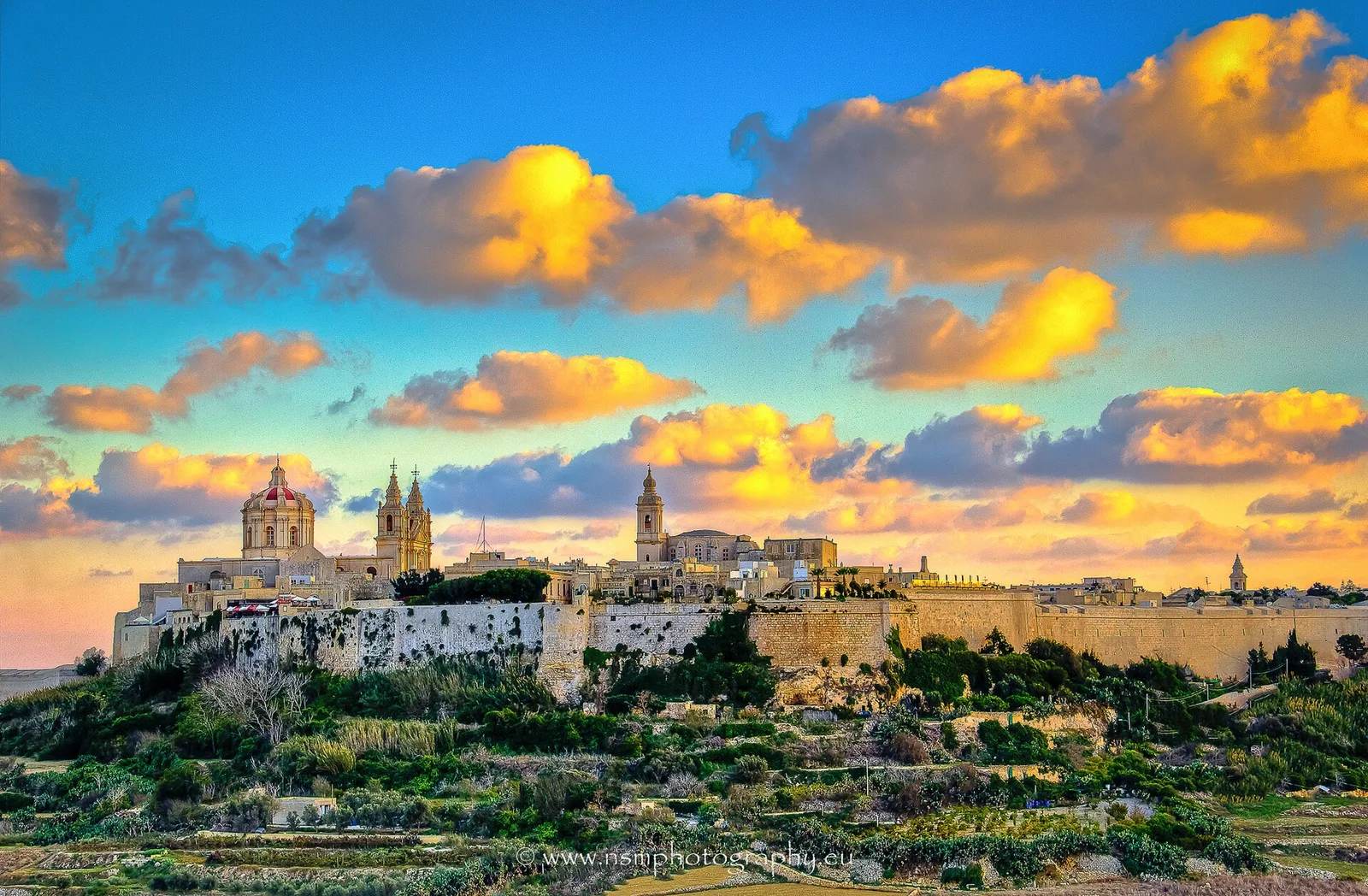
Featured image: Nsm Photography via Wikimedia Commons (CC BY 3.0).

Written by
Travel Himalaya NepalPokhara-based, NMA-certified trekking guides. We’ve led 5,000+ treks across the Annapurna and Everest regions since 1998 — every word here comes from the trail. More from this author →
Share this article
Ready to Trek?
From reading about it to standing on it
Our Pokhara-based guides have been doing this since 1998. Tell us your dates and fitness level — we'll build your perfect itinerary. Free, no obligation.
Why trek with our licensed agencyMore guides like this
Popular trips to consider
View all treks & toursFree Trekker’s Insider Guide
Permits, packing lists, cost breakdowns — no fluff.
We send one useful email. You can unsubscribe anytime.