
The short version
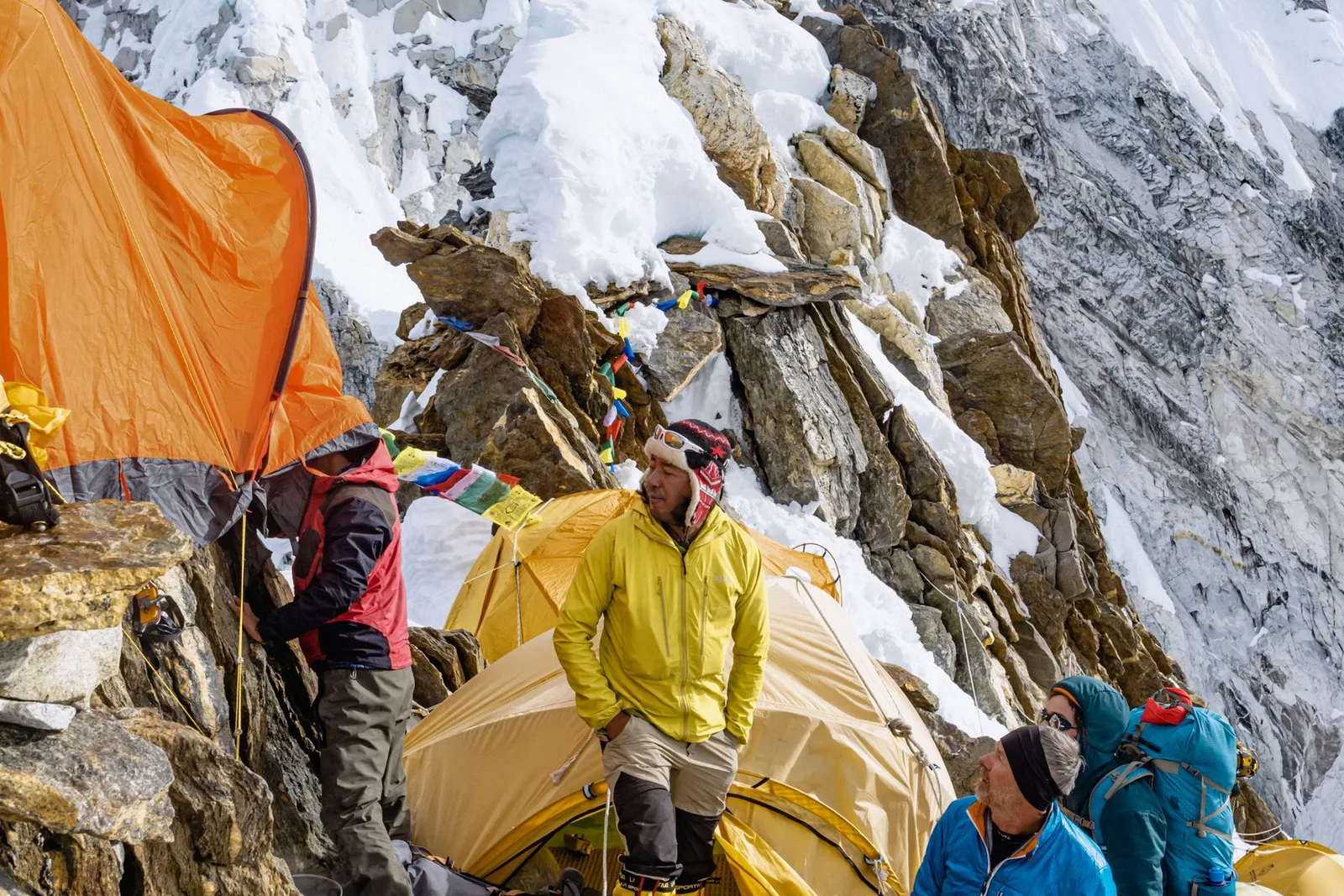
The Khumbu Icefall is the most lethal stretch of the Everest climb — a moving glacier of collapsing seracs. Here is what makes it deadly, the verified toll behind 2014 and 2015, and why trekkers to Base Camp never set foot on it.
I have walked to the foot of the Khumbu Icefall more times than I can count, and I have never once stepped onto it. That is not caution. That is the whole point. The Icefall is the single most dangerous piece of ground on the standard route up Everest, and the trek that most travellers dream of — Everest Base Camp — stops at its lower edge and turns around. Understanding that line, the exact place where a trek ends and a climb begins, is the most useful thing I can teach anyone drawn to this mountain.
This is an honest account of why the Icefall kills, who it has killed, and why the people who trek here with us are never in it. I will not dramatise the dead. The men lost in this glacier were colleagues and, in some cases, friends. What they deserve is accuracy.
Everest's danger, zone by zone
People ask whether Everest is dangerous as if the whole mountain were one thing. It is not. The risk is concentrated in specific zones, and the deadliest of them sits surprisingly low. Here is the climb ranked by where the danger actually lives.
| Zone | Altitude | Primary hazard | Notable toll |
|---|---|---|---|
| Khumbu Icefall | 5,364–6,100 m | Collapsing seracs, moving glacier, hidden crevasses | 16 killed in a single serac collapse, 18 April 2014 |
| The Death Zone / summit ridge | above 8,000 m | Oxygen starvation, exhaustion, no possible rescue | 8 killed in the storm of 10–11 May 1996 |
| Base Camp (extraordinary events) | 5,364 m | Earthquake-triggered avalanche air blast | At least 22 killed, 25 April 2015 |
| Western Cwm & Lhotse Face | 6,100–7,900 m | Avalanche, crevasse falls, falling ice | Recurrent single-climber losses |
| Everest Base Camp trek approach | 2,800–5,545 m | Altitude sickness (managed with proper pacing) | Not a climbing zone — where our travellers go |
Notice the last row. The trek and the climb share a single point on the map — Base Camp, at 5,364 metres — and then they part completely. Everything in the rows above Base Camp belongs to mountaineers on ropes, oxygen and multi-week expeditions. A trekker stands at the edge, photographs the Icefall tumbling down from the Western Cwm, and walks back down to a teahouse. That is the difference between a holiday and an expedition.
What the Khumbu Icefall actually is
The Icefall is not a cliff of ice you climb once. It is a river of ice, frozen mid-collapse. The Khumbu Glacier pours off the Western Cwm and breaks over a steep step in the valley, shattering into a chaos of house-sized blocks called seracs, split by crevasses that can swallow a bus. It sits directly above Everest Base Camp and runs roughly from 5,364 metres up to around 6,100 metres, where Camp I waits on gentler ground.
The thing that makes it lethal is that it moves. The Khumbu Glacier flows downhill by roughly a metre a day, faster in places. That means the route through it is never the same twice. Seracs that were stable yesterday lean today and topple tomorrow, with no warning a human can read in time. Crevasses open under fresh snow. Ice towers the size of buildings come down in seconds. You cannot negotiate with a glacier and you cannot outrun a falling serac. You can only reduce the time you spend beneath one — which is why climbers cross the Icefall before dawn, when the cold holds the ice more firmly in place, and move through it fast.
Nothing about that describes trekking. It describes the most exposed hour of a very serious climb.
18 April 2014: the day the Icefall took sixteen Sherpas
At around 6:45 in the morning on 18 April 2014, a serac broke off a hanging glacier on Everest's western shoulder and swept down through a section of the Icefall while Sherpa teams were ferrying loads for the season's commercial expeditions. Sixteen Nepali climbing workers were killed. Thirteen bodies were recovered by longline helicopter; nine more men were injured. It was, at the time, the deadliest single day in the mountain's recorded history.
Every one of the dead was a professional — veteran Sherpa climbers doing the most dangerous job on the mountain, opening and stocking the route so that paying clients could follow. The 2014 disaster is remembered not only for its scale but for what it exposed: the men who carry the greatest risk on Everest are almost always Nepali, and almost always in the Icefall. It changed how many of us in this industry talk about who bears the cost of the summit. I will not pretend it did not change me.
25 April 2015: an earthquake, and Base Camp itself
The one time in living memory that Base Camp — the place trekkers actually reach — became the deadliest ground on the mountain was not caused by trekking at all. On 25 April 2015 a magnitude 7.8 earthquake, the strongest in the region in over 80 years, shook loose an avalanche from Pumori that struck Everest Base Camp with a wall of snow and, by many survivors' accounts, a blast of air ahead of it. At least 22 people were killed — some counts run to 24 — making it the single deadliest day in Everest's history, surpassing 2014.
I include this because honesty is the only thing worth reading a page like this for. Base Camp is not a magically protected spot. But the 2015 deaths were the product of a once-in-generations earthquake that killed roughly 9,000 people across Nepal that day. It was not a trekking accident. It was a national catastrophe that happened to reach the mountain. Weighing the risk of an EBC trek against that event is like refusing to visit a city because of a historic earthquake. What matters for a trekker is the ordinary risk of ordinary conditions — and there, the honest hazard is altitude, not falling ice, and altitude is manageable.
The Icefall Doctors: the route is built by hand, every season
The path through the Khumbu Icefall does not exist until people make it. Each spring a specialist team known as the Icefall Doctors, working under the Sagarmatha Pollution Control Committee, goes ahead of every expedition to find and fix a line through the maze — bridging crevasses with aluminium ladders lashed end to end, anchoring ropes, and then maintaining it daily as the glacier shifts beneath them. In the 2026 pre-season, unstable seracs held the route up for weeks before it was declared open to Camp I; one blocking serac was measured at roughly 55 metres long and 28 metres high.
These are the people who spend the most hours in the most dangerous place on Everest, so that others spend the fewest. When you read that climbing Everest has become "safer," a large part of that safety was built, ladder by ladder, by Nepali hands in the dark. It is worth knowing whose work that is.
Why the Icefall kills when so much else has gotten safer
Here is the part that surprises people: Everest overall is far less deadly than it used to be, and yet the Icefall's danger has barely changed. The reason is simple. Most of what has made the mountain safer — fixed ropes on the standard route, far better weather forecasting, bottled oxygen, radios, helicopter evacuation from Base Camp — reduces the risks you can plan around. The Icefall's core hazard is not a risk you can plan around. It is the glacier deciding, on its own schedule, to drop a block of ice on whatever is beneath it. No forecast predicts the exact minute a serac fails. The only real defences are to cross rarely, cross fast, and cross in the cold before dawn. The danger is structural, not tactical, and that is exactly why it resists all the improvements that have tamed the rest of the climb.
Can the Icefall ever be made safe?
Not really — and the industry's attempts to work around it tell you how intractable it is. After 2014, some expedition operators began using helicopters to ferry loads over the lower Icefall from Base Camp up to Camp I or Camp II, so that Sherpa teams would make fewer crossings carrying heavy gear. The logic is sound: the single biggest exposure is the number of trips through the danger, so cutting the number of trips cuts the risk. But it does not remove it. Climbers still have to cross the Icefall on their own feet to acclimatise and to reach the higher camps, and helicopters bring their own hazards at that altitude.
Every other lever people reach for — moving the route, crossing earlier, better ladders, spending less time inside — is a way of managing exposure, never of eliminating it. That is the honest ceiling on Icefall safety. You can make a serac fall less likely to catch you. You cannot stop the serac from falling. A climb that depends on repeatedly passing through such a place is, and will remain, a serious undertaking. A trek that stops below it is a different proposition entirely, and that distinction is not marketing — it is the physical geography of the mountain.
The wider picture: Everest's toll, and its falling death rate
Through the end of 2025, the Himalayan Database records 339 deaths on Everest since record-keeping began in 1921. That number sounds enormous, and each name in it is real. But a toll is not a rate, and confusing the two is the most common mistake people make about this mountain.
A 2026 study in The Journal of Physiology, "Updates to mortality on Mount Everest: 1921–2024," analysed outcomes for more than 30,000 people who climbed above Base Camp. It found that overall mortality above Base Camp fell from 1.4% in the era 1921–2006 to 0.7% in 2007–2024 — a halving. Mortality on standard-route spring summit attempts dropped from around 3.0% in earlier decades to roughly 0.8% in the modern period. And it confirmed what every guide already knows: more than three-quarters of climber deaths since 1921 have happened on the descent from extreme altitude, when climbers are spent, out of oxygen and out of daylight — not on the way up.
So the honest summary is this. Everest still kills roughly one climber in a hundred who go above Base Camp. The Icefall and the Death Zone account for most of that. And none of it applies to the trek, because the trek does not go above Base Camp.
Where the trek ends and the climb begins
This is the sentence I want every prospective traveller to hold onto: you never climb Everest with us, and you never enter the Khumbu Icefall — you safely trek to Base Camp, stand at 5,364 metres at the foot of the ice, and walk back down. Base Camp is not the Death Zone. It is not the Icefall. It is a boulder-strewn moraine at the glacier's edge where expeditions pitch their tents, and where a well-acclimatised trekker in good hands is doing something demanding but fundamentally safe.
The real challenge of the EBC trek is altitude, and altitude is a problem you manage rather than gamble on: a route profiled for gradual ascent, proper acclimatisation days at Namche and Dingboche, a guide watching every member for the early signs, and the discipline to descend if a body is not adjusting. That is the entire craft of a good Everest trek, and it is a completely different craft from surviving a glacier that drops ice on you.
Our 15-day Everest Base Camp Trek is built around exactly that margin — an unhurried acclimatisation schedule, licensed guides who have walked this valley for years, and a turn-around at the one place on the mountain where standing and looking is the right and safe thing to do. Solo travellers start from USD 2,050, less per person in a small group. You get the view up into the Icefall and the Western Cwm. You do not get anywhere near them.
Read this next
If the mountain's risks interest you, we have written honestly about them elsewhere. For the physiology of why the summit zone is lethal, see Why Do People Die on Everest? The Death Zone Explained. For why K2 is statistically far deadlier than Everest despite fewer total deaths, read K2 vs Everest: Which Is Deadlier, Harder, and Why. To see how Everest ranks against the world's most lethal peaks, there is The 10 Deadliest Mountains in the World, and for the full roll-call of the giants, The 14 Eight-Thousanders Ranked.
Frequently asked questions
Do Everest Base Camp trekkers walk through the Khumbu Icefall?
No. The Everest Base Camp trek ends at Base Camp (5,364 m), which sits at the foot of the Icefall. Trekkers can see the Icefall tumbling down from the Western Cwm above, but they never set foot on it. Crossing the Icefall is the start of the actual climb and is done only by mountaineers on a full Everest expedition.
What is the most dangerous part of climbing Everest?
By objective hazard, the Khumbu Icefall between Base Camp and Camp I is the most dangerous section of the standard route, because collapsing seracs and shifting crevasses cannot be predicted or outrun. The Death Zone above 8,000 metres is the other great killer; more than three-quarters of climber deaths occur on the descent from that altitude, according to a 2026 study in The Journal of Physiology.
How many people died in the 2014 Khumbu Icefall disaster?
Sixteen Nepali climbing workers, mostly Sherpas, were killed when a serac collapsed and swept through the Icefall on the morning of 18 April 2014. At the time it was the deadliest single day in Everest's history, later surpassed by the 2015 earthquake avalanche.
Is Everest Base Camp itself dangerous?
Under normal trekking conditions the main risk at Base Camp is altitude, which is managed through gradual acclimatisation. The catastrophic exception was 25 April 2015, when a magnitude 7.8 earthquake triggered an avalanche that killed at least 22 people at Base Camp. That was an extraordinary natural disaster affecting the whole country, not a routine trekking hazard.
Is Everest getting safer?
Yes, for climbers the death rate has fallen sharply. Mortality above Base Camp dropped from 1.4% in 1921–2006 to 0.7% in 2007–2024, thanks to fixed ropes, better forecasting, oxygen, communications and evacuation. The Icefall remains the stubborn exception, because its hazard is a moving glacier rather than a risk you can plan around.
How is the route through the Icefall made?
A specialist Nepali team called the Icefall Doctors, working under the Sagarmatha Pollution Control Committee, fixes a route through the Icefall each spring using aluminium ladders over crevasses and anchored ropes, then maintains it daily as the glacier shifts. They spend more time in the most dangerous zone than anyone else on the mountain.
Written by
Dawa SherpaPokhara-based, NMA-certified trekking guides. We’ve led 5,000+ treks across the Annapurna and Everest regions since 1998 — every word here comes from the trail. More from this author →
Share this article
Ready to Trek?
From reading about it to standing on it
Our Pokhara-based guides have been doing this since 1998. Tell us your dates and fitness level — we'll build your perfect itinerary. Free, no obligation.
Why trek with our licensed agencyMore guides like this
Popular trips to consider
View all treks & toursFree Trekker's Insider Guide
Permits, packing lists, cost breakdowns — no fluff.
We send one useful email. You can unsubscribe anytime.