
Digital nomad health insurance, and the plan type that fails on a trek
Travel insurance covers trips, nomad plans up to a year on the move, expat health plans life abroad. Pre-existing conditions and altitude decide which fits.

On this page (6)
Travel insurance is built for trips of a few months, nomad insurance for rolling stays of up to a year, and international health insurance (often sold as an expat plan) for living abroad on an annual contract. The difference that costs people money is what each one leaves out. Travel and nomad policies pay for new emergencies, not the condition you already have. International health plans cover routine and chronic care but may add exclusions for your medical history, and evacuation can be an optional extra. If you’ll trek, check the altitude clause on whichever you buy, because that is where claims fail.
- Under about six months, with trekking: travel insurance that states the altitude you’ll reach.
- Moving around for most of a year: a nomad policy, after checking its adventure and altitude terms.
- Living abroad, with a chronic condition or a family: international health insurance, with the evacuation module added.
- A trek is a separate question whichever plan you choose. Get the activity cover confirmed in writing.
The three types, and what each is built for
Each type answers a different question: what if something goes wrong on my trip, what if I get ill while living on the move, and who pays for my healthcare now that I live abroad? Cigna Global, which sells international health insurance, puts the split plainly on its own site. Travel insurance is short-term cover, “usually of six months or less”, that treats emergencies at the nearest facility and sends you home for long-term care. International health insurance is “long-term, often 12-month cover” with a medical focus.
Nomad insurance sits between the two. SafetyWing’s Nomad Insurance Essential, one example of the type, is travel medical cover you can hold for up to 364 days at a time. It pays for new, unexpected problems, and it includes limited medical cover in your home country, up to 30 days according to its page.
| Travel insurance | Nomad insurance | International health (expat) insurance | |
|---|---|---|---|
| Built for | A trip | Living on the move | Living abroad |
| Typical length | Usually six months or less | Up to 364 days at a time (SafetyWing Essential) | Annual contract |
| Emergencies | Yes | Yes | Yes |
| Routine and chronic care | No | No on the travel-medical tier | Generally yes |
| Pre-existing conditions | Declare them and check the wording | Not covered on SafetyWing Essential | May carry special exclusions after a medical questionnaire (Cigna Global) |
| Evacuation | Often included; check the limit | Included on SafetyWing Essential | An optional module on Cigna Global |
| Lost luggage, delays | Yes | Yes on SafetyWing Essential | No, it’s medical |
Pre-existing conditions are the real dividing line
If you already have a condition that needs managing, travel and nomad policies are the wrong base layer, because they are designed around new events. SafetyWing states that its Essential plan “does not cover pre-existing conditions, maternity care or cancer treatment”. Its FAQ defines a pre-existing condition as anything you have ever been treated for or diagnosed with, plus anything you have had symptoms of in the last two years. That is a wide net.

International health insurance is the type designed for ongoing care, but it isn’t automatic. Cigna Global says that if you have sought advice or had symptoms before your plan starts, it “may decide to add special exclusions”, so the medical questionnaire decides what you actually get. Fill it in fully. A condition you leave out is the easiest claim for an insurer to refuse.
For a healthy 30-year-old on a six-month loop through Asia, none of this matters much. For a nomad with asthma, diabetes or a pregnancy in the plan, it decides everything.
Where trekking and altitude catch people out
Whichever type you hold, treat a Himalayan trek as its own item and get it confirmed, because the activity and altitude clauses are where claims fail. SafetyWing sells adventure sports as an optional add-on, which tells you the base plan’s activity cover has limits. Read which activities and altitudes the add-on covers before you rely on it above 4,000 metres. International health plans are built around medical care, not adventure. We couldn’t find a trekking altitude figure on Cigna Global’s public pages, so if yours is silent, ask the insurer in writing.
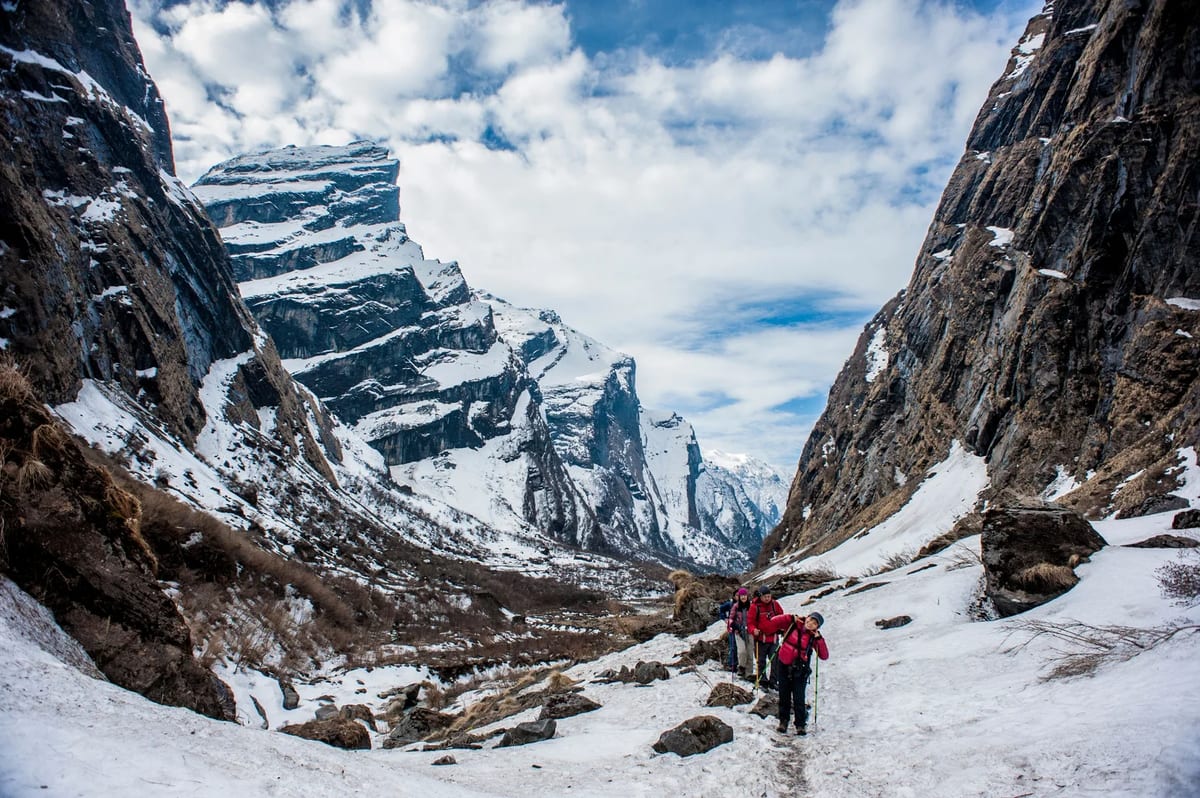
Travel insurance is usually where the clearest trekking cover sits, because some insurers publish an altitude ceiling for each tier and residency. Our Nepal trekking insurance guide sets those ceilings out, and the Everest trail tops out at 5,545 metres on Kala Patthar. The bill you are insuring against is a helicopter: what a helicopter rescue costs in Nepal has the figures.
Some long-stay travellers add a medical evacuation membership on top of insurance. That is a different product: it arranges the rescue rather than reimbursing it. Treat it as an addition to insurance, not a replacement.
With any of these policies, the most important thing after an accident is to call the insurer’s assistance line before a helicopter is booked, where you possibly can. Our guide to claiming on Nepal travel insurance after a rescue explains why.
Which one fits your situation
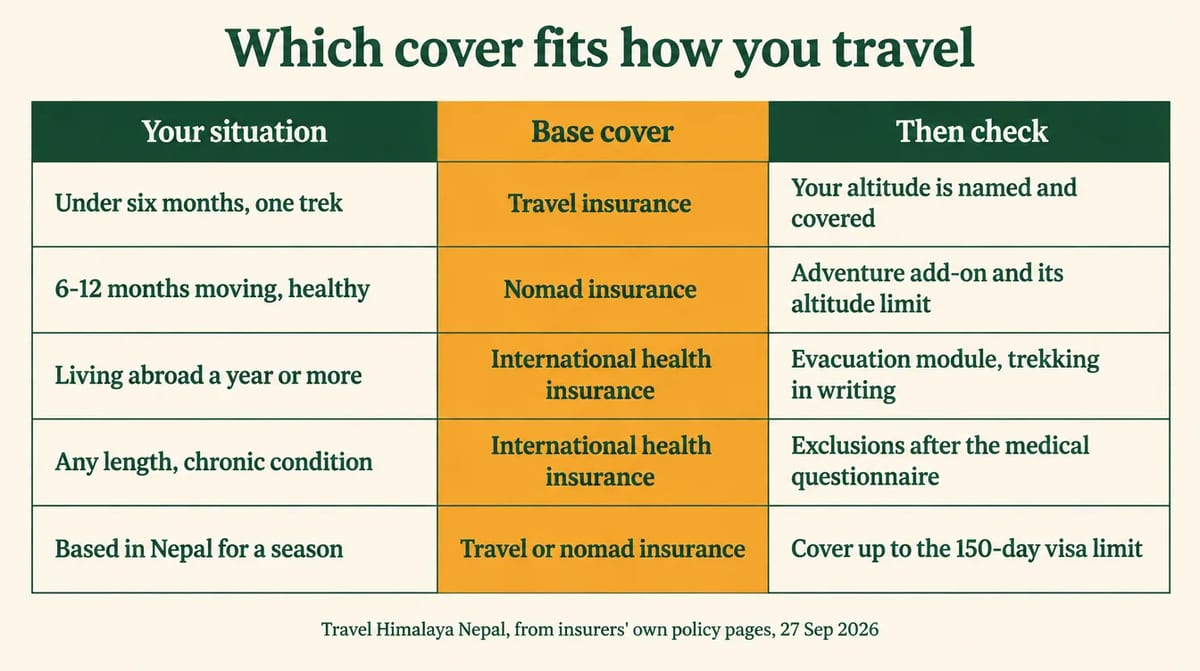
Match the policy to how long you’ll be away and what your health needs, then fix the trekking gap separately. We are a trekking company, not brokers, and nobody pays us for this page. The providers named here are examples of a type whose terms we read on their own sites, not recommendations over others.
| Your situation | Base cover | Then check |
|---|---|---|
| Under six months, one trek | Travel insurance | The altitude you’ll reach is named and covered |
| Six to twelve months moving, healthy | Nomad insurance | The adventure add-on and its altitude limit |
| Living abroad a year or more | International health insurance | The evacuation module; trekking confirmed in writing |
| Any length, chronic condition | International health insurance | Exclusions added after the medical questionnaire |
| Based in Nepal for a season | Travel or nomad insurance | Cover for the full stay, up to the 150-day visa limit |
Nepal adds its own constraint. There is no working digital nomad visa yet, so a remote worker is on a tourist visa, which stops at 150 days in a calendar year. That fits a travel or nomad policy better than an annual expat plan. Working remotely from Pokhara covers the visa and the practicalities, and digital nomad taxes explains why working abroad doesn’t make you tax-free.
The verdict
Buy for the life you actually live, not the one in the brochure: a trip needs travel insurance, a year on the move needs nomad cover, and a life abroad needs international health insurance. The cheapest correct plan for most people who come to Nepal to work and trek is a travel or nomad policy that names the altitude they will reach. An annual expat plan is more than a 150-day stay needs, unless you have a condition that a travel policy won’t touch.
Whatever you choose, read three things in the wording before you pay: how it treats your medical history, whether evacuation is included, and the exact altitude it covers you to. If any of the three is vague, ask in writing and keep the reply.
We can match a trek to your visa dates and tell you the maximum altitude to give your insurer. Annapurna Base Camp is nine days at $920 USD solo and Everest Base Camp is twelve days at $1,700 USD solo, including permits, a government-registered guide, a porter, teahouses and meals.
See the Annapurna Base Camp trek →What is the difference between travel insurance and international health insurance?
Travel insurance is short-term cover, usually six months or less, for emergencies and trip problems such as lost luggage. International health insurance is an annual medical plan for people living abroad, and generally covers routine and chronic care as well.
Does digital nomad insurance cover pre-existing conditions?
Often not. SafetyWing’s Nomad Insurance Essential, for example, doesn’t cover pre-existing conditions, maternity care or cancer treatment. International health plans are designed for ongoing care but may add exclusions based on your medical questionnaire.
How long can a digital nomad insurance policy last?
SafetyWing’s Essential plan covers up to 364 days at a time. Travel insurance is usually for six months or less, and international health insurance runs on an annual contract.
Does nomad or expat insurance cover trekking in Nepal?
Not automatically. Nomad plans may need an adventure add-on, and expat plans are built around medical care. Check the activity and altitude clauses, and get trekking to your maximum altitude confirmed in writing.
What insurance do I need to work remotely from Nepal?
Because Nepal’s tourist visa stops at 150 days a year, most remote workers are best served by travel or nomad insurance covering the full stay, with the altitude of any trek named in the policy.
Keep reading
Fast cafes, cheap months and the 150-day visa limit.
The altitude limit that voids most policies.
The helicopter bill you are really insuring against.
The one call that decides a rescue claim.
Sources: Cigna Global, “Travel insurance vs international health insurance”, member FAQ and optional benefits page; SafetyWing, Nomad Insurance and Nomad Insurance FAQ pages, all read on 27 September 2026. Kala Patthar’s height and Nepal’s 150-day visa limit are from our own guides linked above. Providers are named as examples of a type, not recommendations, and this page carries no affiliate links. This is general information, not financial advice; read your own policy wording before you travel.
Photos via Pexels: Anna Tarazevich (cover), MART PRODUCTION, Sherine.

Written by
Bishnu AdhikariPokhara-based, NMA-certified trekking guides. We’ve led 5,000+ treks across the Annapurna and Everest regions since 1998 — every word here comes from the trail. More from this author →
Ready to Trek?
From reading about it to standing on it
Our Pokhara-based guides have been doing this since 1998. Tell us your dates and fitness level — we'll build your perfect itinerary. Free, no obligation.
More guides like this
Popular trips to consider
View all treks & toursFree Trekker’s Insider Guide
Permits, packing lists, cost breakdowns — no fluff.
We send one useful email. You can unsubscribe anytime.