The short version
Everest Base Camp is about 5,364m; Kala Patthar about 5,545m. Insure to the higher number or the last three days are not covered.
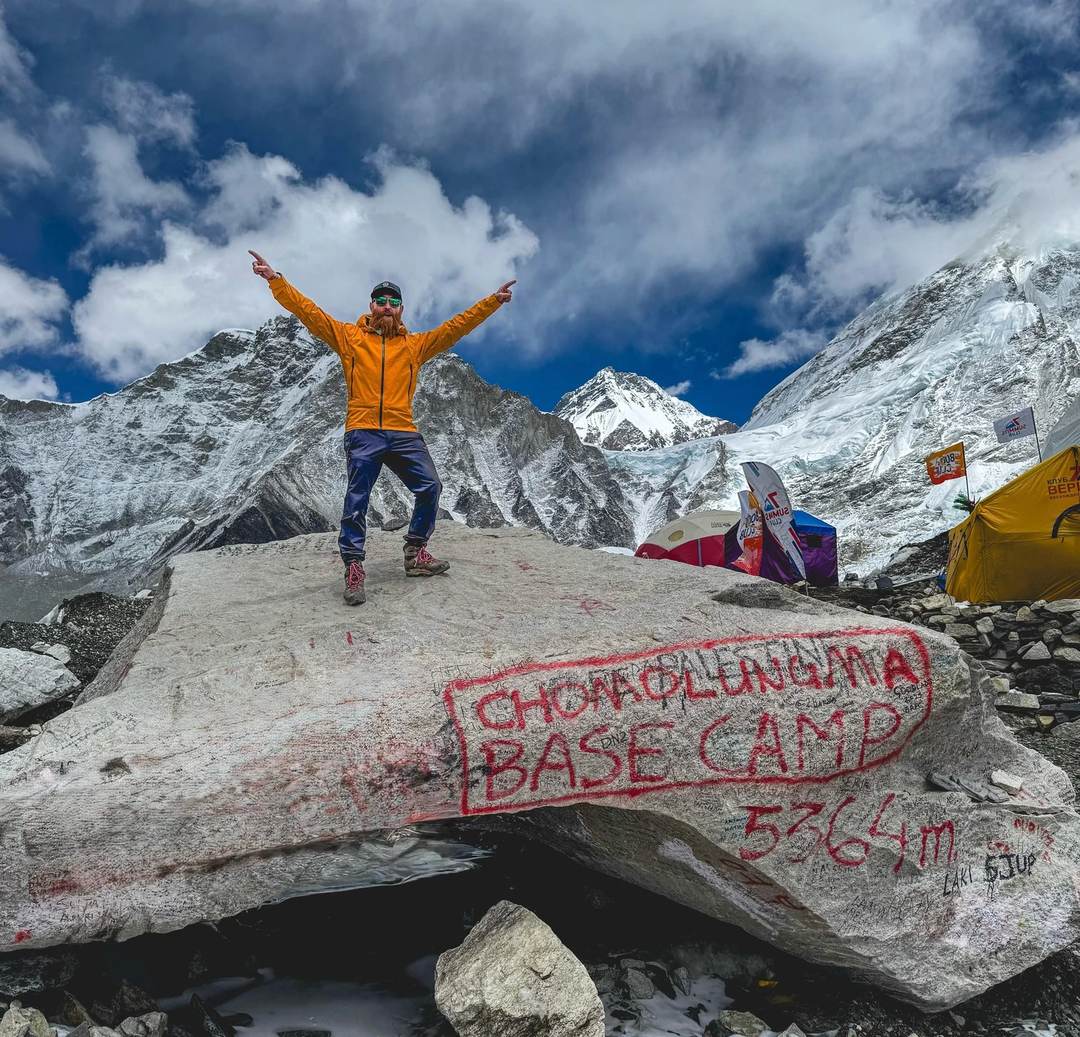
Your travel insurance covers the Everest Base Camp trek only if the policy names an altitude limit of at least 5,545m, and a great many standard policies stop at 3,000m, 4,600m or 5,000m. Base Camp is about 5,364m, but Kala Patthar — the viewpoint almost every group walks up on the same trip, because you cannot actually see Everest from Base Camp — is quoted at about 5,545m and as high as 5,644m on GPS-measured figures. Insure to the higher number, not the one in the trek’s name.
The second thing this trek needs, and the one people forget entirely, is cover for the Lukla flight. Everything else on an EBC policy is ordinary travel insurance.
- The altitude number that matters is 5,545m, not 5,364m. A policy sold as covering “trekking to 5,000m” leaves you uninsured for the last three days.
- You cross 4,000m on about day five and then stay above it for a week. A 4,000m cap does not fail you briefly — it fails you for the entire back half of the trek.
- Delay and missed-departure cover for the Lukla flight is the clause unique to this trek. Read what triggers it before you buy.
- Buy the altitude band and the rescue clause. Almost every other benefit on the quote is optional.
What altitude does an Everest Base Camp policy actually need
5,545m. Not 5,364m, and not “above 5,000m” as a vague phrase on a marketing page.
Insurers do not price altitude by trek name. They price it by a number in an activity schedule, and if your highest point sits above that number the medical and rescue sections can decline. Work out your highest walking and sleeping altitudes first, then shop.
Most insurers draw the line somewhere; not all of them tell you where. Here are the ones that do, quoted from their own published activity and policy pages and checked in August 2026. We have no commercial relationship with any of them and earn nothing whichever you buy.
| Provider | Tier | Published trekking ceiling | Covers Kala Patthar? |
|---|---|---|---|
| True Traveller | Standard | “Trekking up to 3,000 metres” | No |
| True Traveller | Adventure Pack | “Trekking up to 4,600 metres” | No |
| True Traveller | Extreme Pack | “Trekking over 4,600 metres” | Yes — and you must also add the “Trekking in Nepal” option |
| BMC | Trek | “hill walking, trekking and backpacking up to 5,000m” | No |
| BMC | Rock | rock climbing, bouldering and graded scrambling up to 5,000m | No |
| BMC | Alpine & Ski | “trekking above 5,000m”, peaks to 6,500m | Yes |
| Snowcard | Adventure Plus | “Trekking upto 4000m excluding Nepal” | No — Nepal excluded outright |
| Snowcard | Adventure Max | “Trekking below 4000m including Nepal” | No |
| Snowcard | Expedition | “Trekking in Nepal (high altitude trekking below 6000m e.g. Everest Base Camp…)” | Yes — EBC is named in the wording |
| World Nomads | Depends where you live | US residents: hikes to 6,000m (Standard), 6,500m (Explorer), 8,000m (Epic). Elsewhere, e.g. New Zealand: 2,000m automatically, up to 6,000m if you add trekking to the quote and state your altitude | Yes on the US plans; elsewhere only if you add trekking to 5,545m or more |
Read the two BMC rows and then read the trek profile again. Base Camp is about 5,364m and Kala Patthar about 5,545m. Both sit above the 5,000m ceiling on the tier the BMC calls “Trek” — and above the Rock tier too. Somebody planning a trek, shopping for insurance, seeing a product called Trek and buying it has done nothing careless, and is nevertheless uninsured on the highest, coldest and most remote morning of the trip. The tier that actually covers EBC is the one named after alpinism and skiing. On the Snowcard ladder the same thing happens in a different shape: Nepal is carved out by name, and only the Expedition tier — which names Everest Base Camp in its own wording — reaches it.
| Point on the trek | Altitude | Policy capped at 4,000m | Policy capped at 5,000m | Policy to 6,500m |
|---|---|---|---|---|
| Lukla | ~2,840m | Covered | Covered | Covered |
| Namche Bazaar | 3,440m | Covered | Covered | Covered |
| Dingboche | 4,410m | Not covered | Covered | Covered |
| Lobuche | 4,940m | Not covered | Covered | Covered |
| Gorak Shep | 5,164m | Not covered | Not covered | Covered |
| Everest Base Camp | about 5,364m | Not covered | Not covered | Covered |
| Kala Patthar | about 5,545m (to 5,644m) | Not covered | Not covered | Covered |
The 5,000m and 6,500m columns are the two rungs the BMC publishes. The 4,000m column is there because it is the cap we see most often on policies bought as a bolt-on to a flight or a bank account, and because it is where the largest number of EBC trekkers are quietly uninsured.
One more thing about Kala Patthar, since it is the number the whole policy hangs on. It is a shoulder of Pumori rather than a distinct summit, and different parties have measured different high points on it — which is why you will see about 5,545m in most places and up to 5,644m in GPS-derived figures. Do not try to match a policy to it exactly. Buy a band that clears the top of the range with room, and the argument never happens.
Why a 4,000m cap fails on this trek specifically
Because you cross 4,000m around day five and do not come back down for roughly a week. This is not a policy that lapses for an hour at a summit and then resumes.
On a standard 12-day itinerary you sleep at Dingboche, then Lobuche, then Gorak Shep, then walk to Base Camp and up Kala Patthar. Every night in that stretch is above the cap — and that back half is exactly when altitude illness, chest infections and rolled ankles happen. The days you most need the policy are the days it is not in force.
A policy that says it covers “trekking in Nepal” with no number attached is not a promise, it is a category. The binding figure lives in the activity schedule or the policy wording, usually as a single line with a metre value. Find that line before you pay. If you cannot find it, phone them and get the answer in writing — an email naming 5,545m is worth more at claim time than any web page.
The Lukla flight is the second thing your policy has to handle
EBC is the one Nepal trek where a domestic flight can cost you your trip, and it is not covered by the altitude clause. It sits under trip delay, curtailment and missed departure — different sections, different triggers, different limits.
Lukla is weather-dependent in a way no schedule survives, and in the busy seasons the flights usually run out of Manthali in Ramechhap rather than Kathmandu. Groups get held for days in both directions. The direction that hurts is the way home — a two-day hold in Lukla against an international flight out of Kathmandu on day thirteen.
Three questions for your insurer, in this order:
- Does the delay benefit apply to domestic flights inside the destination country, or only the international legs?
- How many hours of delay trigger it, and what is the daily cap? A benefit paying a small fixed amount per 12 hours will not buy a helicopter seat out of Lukla.
- If a weather hold makes you miss the flight home, does missed departure pay for the replacement ticket?
The honest planning answer costs nothing: build two buffer days in Kathmandu before your international flight home. Cheaper and far more reliable than any delay benefit, and it is what we build into our own itineraries.
What a Khumbu evacuation actually looks like
A helicopter, in daylight, in good weather, costing roughly $4,000–6,000 — and the bill is the small part. The full picture, including hospital and repatriation, is in our Annapurna and trekking-peak cover work differently again. helicopter rescue costs guide; here is what is specific to this valley.
There is no road above Lukla. Machines fly from first light to late morning and are grounded by cloud, and a bad afternoon means you walk down or you wait until tomorrow. The UK Foreign Office puts helicopter evacuation at £1,000 to £2,000 or more per flying hour and tells travellers plainly to “make sure your insurance includes cover for mountain rescue services and helicopter costs”. Take that literally — those are named benefits, not something implied by a medical limit.
Before it gets to a helicopter, there is a doctor. The Himalayan Rescue Association runs a volunteer-staffed aid post at Pheriche, 4,250m, open through the spring and autumn seasons, and many cases that feel like an emergency at 4,900m are resolved there with oxygen, a diagnosis and a night lower down. Descent is the treatment; the helicopter is for when descent is not possible.
The FCDO warns of “isolated reports of some trekking guides taking inexperienced trekkers to high altitudes too quickly, and then calling in expensive helicopter medivacs from which the guides take a cut”. Nepal has prosecuted a large fake-rescue fraud, and the direct consequence for you is that insurers now scrutinise Nepal heli claims hard. Insist that any evacuation decision is made with a clinical reason recorded — a pulse-oximeter reading, a diagnosis, a named symptom. That paperwork is what gets the claim paid.
Where cheap cover is genuinely fine, and where it is not
On this trek, cheap altitude cover is fine and cheap rescue cover is not. We would rather say that than sell you an upgrade.
Safe to economise on: baggage cover (your duffel travels by porter, and the airline owes you first for anything lost in transit); gadget cover; the top end of personal liability; and cancel-for-any-reason, which is expensive and which most EBC trekkers never use.
Not safe: the altitude band, the medical and repatriation limit, and helicopter evacuation named as its own benefit. On that middle one, be careful with the figure everybody repeats. US$100,000 is the usual floor for an evacuation, and it is a thin number for medical treatment and repatriation, which is the bigger bill — intensive care in Kathmandu or Delhi, then a medically escorted flight home. The specialists write far more: True Traveller and the BMC both carry £10 million of emergency medical and repatriation cover, and the BMC and Snowcard both cap search and rescue separately at £100,000. Ripcord shows how separate the two really are — $1,000,000 of medical evacuation, but only $100,000 of emergency medical expense. Read the two limits as two numbers, because that is what they are.
Make sure somebody can authorise the flight when you cannot
The clause people never read is the one about who says yes. True Traveller covers helicopter rescue “when it is medically necessary and authorised by the Emergency Medical Assistance Service” — and most policies are written the same way. Nepali helicopter operators want a guarantee of payment before the rotors turn, so in practice the flight starts when your insurer’s 24-hour line answers and commits.
Which is a problem if the person who needs the flight is you. Severe altitude illness makes people confused before it makes them unconscious. So do this before you leave home: give your trekking company a copy of your insurance certificate and your insurer’s 24-hour emergency number, and carry both on paper as well as on your phone. There is no signal above Namche and a dead battery is not an insured event. We ask every client for this at the pre-trip briefing; ask any operator who does not.
If you are over 65, the problem is availability, not price
Everyone assumes the premium is the obstacle. Often the real one is that the product simply is not sold to you. True Traveller sets a maximum insurable age of 75 for single-trip policies and 65 for annual multi-trip policies — so a fit 68-year-old walking to Base Camp can buy the single-trip policy and cannot renew an annual one. Age caps differ by insurer and by tier, and the high-altitude tiers are usually the tightest.
The practical advice, if you are over 65: check the maximum age before you compare prices, check it for the specific activity pack rather than the base policy, and start early — you may be choosing between two products rather than ten. Alpine-club membership schemes are worth pricing at this age too. None of this is a reason not to go. We have taken plenty of people over 65 to Base Camp and they walk it well; the paperwork just takes longer than theirs did at forty.
One more, because nobody enjoys it: declare pre-existing conditions in writing. Asthma, heart conditions, anything you take daily. An undeclared condition is the commonest reason a large Nepal medical claim is reduced or refused, and it is entirely avoidable.
What we would actually buy
An annual or single-trip policy with an activity band that covers trekking to at least 5,545m — and a Nepal endorsement if your insurer sells one separately; medical and repatriation cover well above the US$100,000 floor; helicopter evacuation named in the wording with its own limit; delay cover that explicitly includes domestic flights; the maximum age checked against the activity pack, not the base policy; and every pre-existing condition declared and confirmed by email.
Buy it from whoever sells you that combination. It does not have to be through us, and we do not earn anything from your policy. Specialist mountaineering insurers, alpine-club membership schemes and mainstream travel insurers with a proper adventure tier all sell workable EBC cover; what separates them is the altitude number and the rescue wording, not the brand.
The wider framework — limits, exclusions, how a claim is assembled — is in our Nepal trekking insurance guide. Permit costs for this trek are separate and small: two permits, Sagarmatha National Park and the Khumbu Pasang Lhamu municipality fee, about US$45 in total. There is no TIMS card in the Khumbu.
We run Everest Base Camp as a 12-day trip with the acclimatisation days at Namche and Dingboche kept in — $1,700 solo, from $1,230 per person in a group of eight. Permits, licensed guide, porters and lodges handled. Buy your insurance wherever you like; we will tell you the exact maximum altitude of your itinerary in writing so you can match the policy to it.
See the itinerary & price →Everest Base Camp insurance questions we get asked
Is Everest Base Camp above 5,000m?
Yes. Base Camp is 5,364m and Kala Patthar is 5,545m. Gorak Shep, where you sleep the night before, is 5,164m. A policy capped at 5,000m does not cover the last three days of the trek.
Does travel insurance cover altitude sickness in Nepal?
Only if the policy covers your maximum altitude. Where it does, acute mountain sickness is normally treated as an ordinary medical event. Where the altitude band is exceeded, insurers can decline the whole claim — including the evacuation — because you were engaged in an activity outside the schedule.
Do I need mountaineering insurance for Everest Base Camp?
No. EBC is a walking trek on a trail, with no ropes, crampons or ice axe, so you do not need a technical mountaineering policy. You need a trekking policy whose altitude ceiling reaches 5,545m — which on some insurers’ ladders happens to be the same tier they sell to mountaineers.
Does my insurance pay for a Lukla flight cancellation?
Sometimes, and rarely enough to plan around. Check whether the delay benefit applies to domestic flights, what delay length triggers it and what the daily cap is. Two buffer days in Kathmandu before your flight home protect you better than the benefit does.
Is trekking insurance legally required in Nepal?
No. There is no blanket national law requiring a trekker to hold personal travel insurance, and we can find no primary source for the widely repeated claim that insurance became a legal condition of a restricted-area permit in 2026 — neither the Nepal Tourism Board’s nor TAAN’s published permit pages mention it, and the operator blogs asserting it contradict each other. The registered agency handling a restricted-area permit will ask you for a certificate, but that is an operator requirement. What is confirmed is the guide rule: the UK Foreign Office states that all foreign independent trekkers must use a local guide or porter in Nepal’s national parks and protected areas, and the Khumbu is one. So nobody checks your policy at the Sagarmatha gate — but every reputable operator does, us included.
Will a credit-card travel policy cover the EBC trek?
Usually not at altitude, and you should assume not until you have read the wording. Card policies are typically written for ordinary leisure travel and carry low or unstated altitude limits. If yours does state a limit of 5,545m or higher and names helicopter rescue, it is fine — but get that confirmed in writing rather than inferred from a benefits summary.
Keep reading
The framework this page sits inside — limits, exclusions and how a claim is assembled.
How an evacuation is called, flown and billed, and what the insurer asks for afterwards.
Why the highest point of the trek is not Base Camp, and why that matters to your policy.
Manthali, weather holds, and how to build an itinerary that survives one.
Ready to plan it? Contact us and we will send you the day-by-day maximum altitudes in writing, so you can buy the right policy before you book anything.
Written by
Bishnu AdhikariPokhara-based, NMA-certified trekking guides. We’ve led 5,000+ treks across the Annapurna and Everest regions since 1998 — every word here comes from the trail. More from this author →
Share this article
Ready to Trek?
From reading about it to standing on it
Our Pokhara-based guides have been doing this since 1998. Tell us your dates and fitness level — we'll build your perfect itinerary. Free, no obligation.
Why trek with our licensed agencyMore guides like this
Popular trips to consider
View all treks & toursFree Trekker’s Insider Guide
Permits, packing lists, cost breakdowns — no fluff.
We send one useful email. You can unsubscribe anytime.