

The short version
Island Peak, Mera and Lobuche East need mountaineering cover to 6,500m. A tier that stops at 6,000m does not reach any of them.
If you are climbing Island Peak, Mera or Lobuche East, your trekking insurance almost certainly does not cover you — not because of the altitude, but because you will be roped up, in crampons, holding an ice axe. Insurers sell trekking and mountaineering as two different products, and the moment technical equipment comes out you have moved from one to the other.
Nepal’s own vocabulary is what causes this. The Nepal Mountaineering Association calls these mountains trekking peaks. Your insurer does not care what Nepal calls them. It cares what you were doing when the accident happened.
- The test is two-part: the policy must cover your maximum altitude and name the activity. Getting the altitude right and the activity wrong is the classic failure.
- All three sit just above 6,000m — and that is the trap, because several specialists cap mountaineering cover at 6,000m. You do not need an 8,000m expedition product; you do need to clear 6,000m.
- “Trekking peak” is an NMA permit category, not an insurance category. Never quote the phrase to an insurer as if it settles anything.
- You will be buying two things at once: cover for the climb, and cover for the long high approach trek that gets you there.
What separates a trekking policy from a mountaineering one
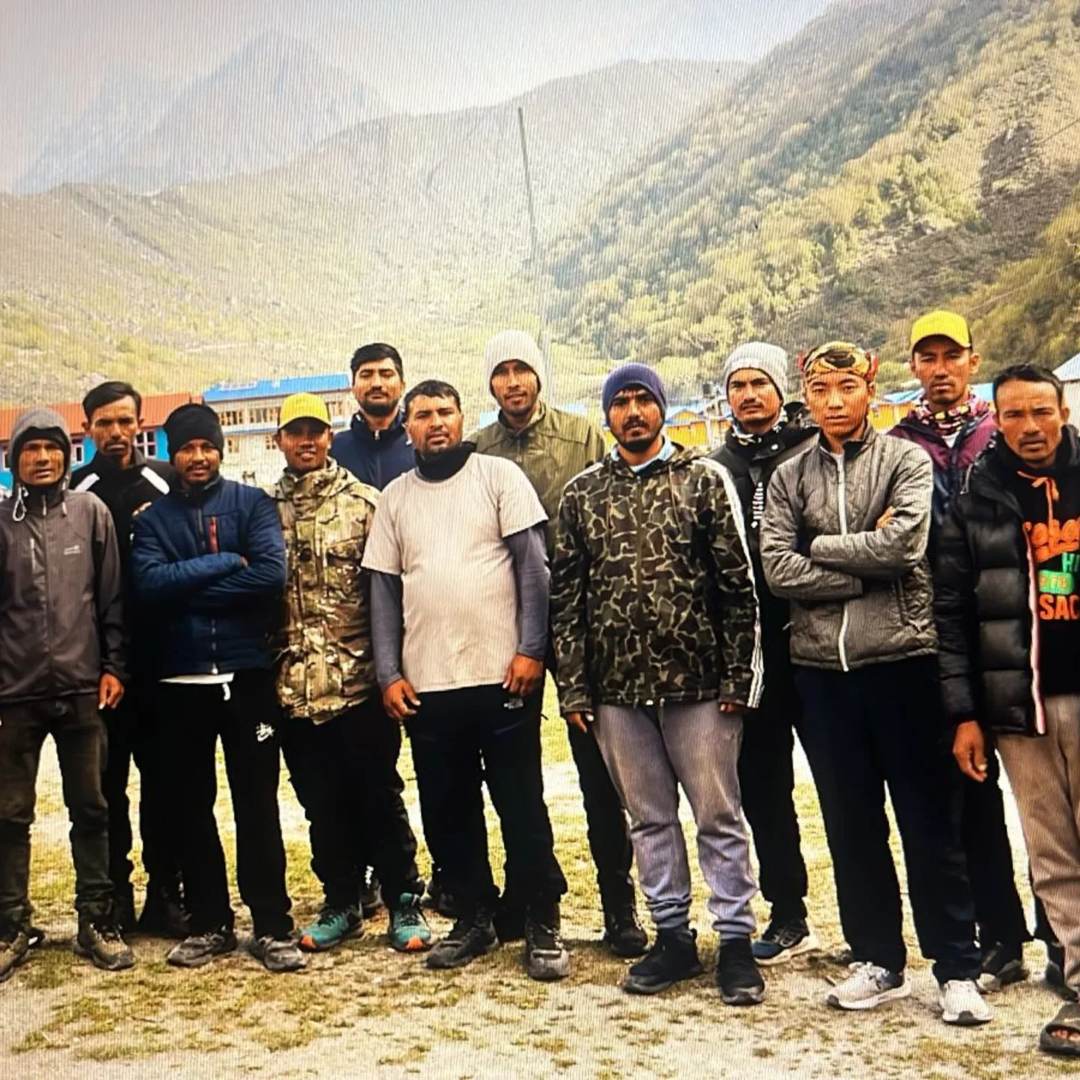
Equipment and technique, not height. The line insurers draw is roughly this: if you are walking on a trail in boots, that is trekking. If you are using ropes, crampons, an ice axe, a harness or a jumar, that is mountaineering, and it is a different tier at a different price.
The British Mountaineering Council publishes the clearest version of this ladder, which is why it is worth reading even if you buy elsewhere. Its Trek policy covers “hill walking, trekking and backpacking up to 5,000m”. Its Rock policy covers “rock climbing and bouldering and graded scrambling up to 5,000m”. Its Alpine & Ski policy covers “trekking above 5,000m, and most types of skiing, climbing and mountaineering on most peaks of up to 6,500m”. Above and beyond that sits High Altitude & Remote, for expeditions to extreme peaks.
Read the Alpine & Ski line carefully, because it does two jobs at once. It is the first tier covering trekking above 5,000m, and the first tier covering mountaineering at all. Island Peak, Mera and Lobuche East land inside that band on both counts, all three being under 6,500m. That is the money-saving half of the conclusion: for a standard trekking peak you need the mountaineering tier, and you do not need the expedition tier.
The 6,000m ceiling that catches everybody
Here is the half nobody warns you about, and it is the reason to check a number rather than a tier name. Several specialists cap mountaineering cover at exactly 6,000m — which is below all three of these summits, by 119, 165 and 470 metres. Every figure below is quoted from the provider’s own published pages, checked in August 2026. We sell no insurance and take nothing from your policy.
| Provider | Top mountaineering tier | Published ceiling | Reaches Island Peak, Mera, Lobuche East? |
|---|---|---|---|
| BMC | Alpine & Ski | “trekking above 5,000m, and most types of skiing, climbing and mountaineering on most peaks of up to 6,500m” | Yes — all three |
| BMC | High Altitude & Remote | expeditions to extreme and inaccessible peaks | Yes, and more than you need |
| True Traveller | Ultimate Pack | “Mountaineering to 6,000M (with ropes, picks or specialist climbing equipment)” | No — the ceiling is below all three summits |
| Snowcard | Expedition (worldwide mountaineering) | “the maximum altitude we can offer cover for is 6000m” | No — and a professional guide and commercial operator are required |
| World Nomads | — | No altitude figure published on the activity list — check the policy wording | Unknown until you read it |
So the sentence to carry into a quote form is not “I need mountaineering cover”. It is “I need mountaineering cover to 6,500m”. A tier that stops at 6,000m sounds enormous and is, for these three mountains, useless — you would be uninsured on summit day and covered for the entire walk-in, which is exactly the wrong way round.
And one honest complication, because the rule is not universal. True Traveller puts these two peaks on the other side of its own line: its Extreme Pack note states that “trekking will include peaks such as Mera Peak and Island Peak in Nepal, as these are treks and no mountaineering skills are required for these summits”. We do not agree with the mountaineering judgement — you will be roped, in crampons, holding an axe — but that is their wording, and their wording is what pays your claim. It is the clearest possible demonstration of the point: you cannot reason your way to what is covered. You read the schedule, or you ask them in writing and keep the reply.
| Peak | Altitude | What you use on summit day | Trekking policy | Mountaineering policy to 6,500m |
|---|---|---|---|---|
| Lobuche East (Lobuje East) | 6,119m | Rope, crampons, axe, harness | Not covered | Covered |
| Island Peak (Imja Tse) | 6,165m | Fixed line, jumar, crampons, axe | Not covered | Covered |
| Mera Peak | 6,470m | Roped glacier travel, crampons, axe | Not covered | Covered |
| Everest Base Camp (approach) | about 5,364m | Boots only | Only above a 5,364m band | Covered |
| Kala Patthar (approach) | about 5,545m | Boots only | Only above a 5,545m band | Covered |
The heights above are the ones on the NMA’s own published schedule of service charges — Imja Tse 6,165m, Mera 6,470m, Lobuje East 6,119m — because that is the document your climbing permit is issued under, though the industry commonly prints 6,189m and 6,476m instead and the NMA’s descriptive pages differ again. The discrepancy is old and harmless: every version sits above 6,000m and below 6,500m, so it changes nothing about which policy you need. If a form asks for a maximum altitude, give the highest figure you have seen quoted, not the lowest.
“It’s only a trekking peak.” That sentence is an NMA permit classification and nothing more. It describes the paperwork, not the pitch. If you tell an insurer you are trekking and you are photographed on a fixed line in crampons, the insurer is entitled to treat the activity as undeclared — and an undeclared activity can void the whole claim, including the ordinary medical parts and the evacuation.
The approach trek is half of what you are insuring
You are buying cover for two weeks at altitude, not for one summit morning. This is the part people forget when they compare quotes.
Island Peak and Lobuche East are reached through the Khumbu on the same trail as Everest Base Camp, sleeping at Dingboche and Lobuche for days. Mera is reached over a high pass out of the Hinku valley, with even less around it. Far more goes wrong on the approach than on the climb — altitude illness, chest infections, an ankle on the moraine — and all of it happens well above where a standard trekking band expires.
So check two things, both in writing: that the altitude band covers the approach, and that the activity definition covers the summit day. A policy that names one and not the other has a hole in the middle of your trip.
What rescue looks like above 6,000m
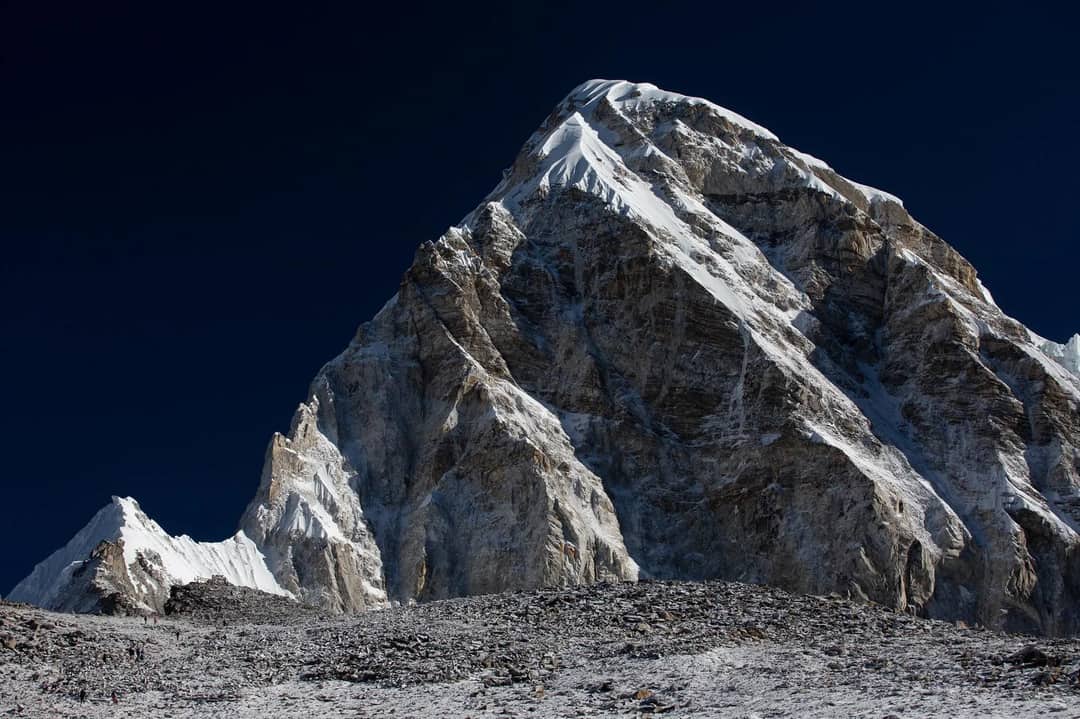
Thinner than you would like, and that is a physical limit rather than an insurance one. Helicopters in Nepal fly mostly from first light to late morning, are grounded by cloud, and rarely operate above about 6,000m — which is at or below the summits of all three peaks.
In practice a rescue from a trekking-peak summit is a descent under your own power or your team’s, to a landing site lower down. Your policy pays for the flight from there; it cannot buy you a machine at 6,400m. The Everest Base Camp and Annapurna trekking cover are a different question again. costs and mechanics are set out here, and the UK Foreign Office puts helicopter evacuation at £1,000 to £2,000 or more per flying hour while telling travellers to “make sure your insurance includes cover for mountain rescue services and helicopter costs”.
Which is why the guiding ratio matters more than the policy on a climbing trip. On a fixed line at 6,100m, what gets you down is a competent climbing guide and a sensible turnaround time. Insurance pays the invoice afterwards. It does not come and get you.
The permit, and what it does and does not prove
An NMA climbing permit costs US$350 per person in spring and US$175 in autumn, winter and summer, according to the association’s own published schedule of service charges for foreign climbers, and Island Peak, Mera and Lobuche East all sit in that standard band. It is issued through a registered agency, not over a counter to individuals.
The permit proves you are allowed on the mountain. It proves nothing to your insurer, and holding one does not make an activity covered. Our Nepal permits hub sets out how the climbing permit sits alongside the national park and municipality fees you will also pay on the approach.
Where cheap cover is genuinely fine, and where it never is
On a trekking peak, the mid-tier is the right answer and the expedition tier is a waste of your money. We would rather tell you that than watch you buy an 8,000m product for a 6,189m mountain.
Two genuinely cheap routes are worth checking before you pay a specialist premium. Alpine club membership schemes — the Austrian Alpine Club and its UK section being the best known — bundle mountain rescue and repatriation cover into an annual membership at a price that embarrasses most standalone policies. They are rescue-and-repatriation cover rather than full travel insurance, and they carry their own altitude ceiling and expedition conditions, so read the club’s current insurance page and confirm the ceiling covers your peak before relying on it. Second, if you already hold an annual policy, check whether your insurer sells a mountaineering upgrade as an add-on; that is often cheaper than a fresh specialist policy.
What is never optional: the mountaineering activity named explicitly, an altitude band above your summit rather than near it, helicopter evacuation named as its own benefit with its own limit, a serious medical and repatriation limit, and every pre-existing condition declared in writing.
On that medical limit — treat US$100,000 as a floor for the evacuation, not a target for the medical cover. A fall on a fixed line means a Kathmandu hospital and then a medically escorted flight home, which is the far larger bill. The specialists carry much more: True Traveller and the BMC both write £10 million of emergency medical and repatriation cover, and the BMC and Snowcard both cap search and rescue separately at £100,000. Ripcord is the useful illustration of how independent those numbers are — $1,000,000 of medical evacuation, but $100,000 of emergency medical expense. Two limits, two questions.
One more, and it costs nothing. Most wordings pay for a helicopter only when it is authorised by the insurer’s assistance service first — True Traveller covers it “when it is medically necessary and authorised by the Emergency Medical Assistance Service” — and Nepali operators want a guarantee of payment before they fly. On a climb, the person calling will be your guide, not you. Give your climbing company a copy of your certificate and your insurer’s 24-hour number before you leave home, and carry both on paper.
And you do not have to buy any of it through us. We do not sell insurance and take nothing from your policy. What we will give you is the exact maximum altitude and the technical equipment list for your itinerary, in writing, so you can hand an insurer facts instead of a trek name.
We run Island Peak as a 14-day trip with the Khumbu acclimatisation kept in and a climbing guide on summit day — $3,400 solo, from $2,550 per person in a group of eight. Worth knowing before you pick dates: the NMA permit is US$350 in spring and US$175 in autumn, so an October climb costs $175 less per person in permit fees alone.
See the itinerary & price →Trekking-peak insurance questions we get asked
Does travel insurance cover Island Peak?
Only if the policy names mountaineering or climbing with ropes, crampons and ice axe as a covered activity, and its altitude band clears the summit — 6,165m on the NMA’s permit tariff, 6,189m as the industry usually prints it. Ask for a 6,500m mountaineering band, because a 6,000m one does not reach it. Most trekking policies do not cover it at any altitude band, because the exclusion is about the activity rather than the height — though True Traveller is a published exception that treats Island Peak as a trek. Read your own wording.
Is Mera Peak technically easier, so can I insure it as trekking?
No. Mera is less technical than Island Peak — it is largely roped glacier travel rather than a steep headwall — but you are still roped, in crampons, on a glacier. That is mountaineering to most insurers, and Mera is the highest of the three at 6,470m on the NMA tariff. True Traveller is the exception that proves you must read your own wording — it classes Mera and Island Peak as treks. Nobody else we have seen does.
Do I need an expedition policy for a 6,000m trekking peak?
Usually not — but check the ceiling rather than the tier name. The BMC’s Alpine & Ski tier covers mountaineering on peaks to 6,500m and reaches all three. Others stop lower: True Traveller’s top pack covers “mountaineering to 6,000M” and Snowcard states that “the maximum altitude we can offer cover for is 6000m”, both of which are below these summits. The true expedition products exist for 7,000m and 8,000m objectives and cost considerably more; you do not need those. Ask for 6,500m of mountaineering cover and stop there.
Does my policy need to cover the trek to the peak as well?
Yes, and this is where people get caught. The approach to Island Peak and Lobuche East runs for days above 4,400m. A policy that covers the summit day but bands your trekking at 5,000m leaves you exposed for most of the trip.
Is insurance required to get an NMA climbing permit?
Insurance for the staff is the documented requirement. The NMA’s rules state that all employees going above base camp must be insured for personal accident to the value of Rs. 200,000 — an obligation on the operator, not on you. Your own policy is required by every registered agency, ours included, before a climb is confirmed, but that is an operator condition rather than a law. The same is true of the widely repeated claim that insurance became a legal condition of restricted-area trekking permits in 2026: we can find no primary source for it, and neither the Nepal Tourism Board’s nor TAAN’s published permit pages mention insurance. Treat your own cover as compulsory anyway, because the mountain does not care which rule made you buy it.
What if I decide not to summit and only do the trek?
You remain covered for what you actually did, and nothing is forfeited by turning around — which on a first 6,000m peak is a common and entirely sensible outcome. Insure for the climb anyway. Deciding on the mountain that you will attempt it after all, without cover, is the worst version of this.
Keep reading
The framework this page sits inside — limits, exclusions and how claims are paid.
Which of the two makes a better first 6,000m climb, and why.
Route, preparation, permit and what summit day actually involves.
Why machines rarely fly above 6,000m, and what that means for a climb.
Ready to plan it? Contact us and we will send the maximum altitude and the technical kit list in writing, so you can buy the correct policy before you commit to dates.
Written by
Bishnu AdhikariPokhara-based, NMA-certified trekking guides. We’ve led 5,000+ treks across the Annapurna and Everest regions since 1998 — every word here comes from the trail. More from this author →
Share this article
Ready to Trek?
From reading about it to standing on it
Our Pokhara-based guides have been doing this since 1998. Tell us your dates and fitness level — we'll build your perfect itinerary. Free, no obligation.
Why trek with our licensed agencyMore guides like this
Popular trips to consider
View all treks & toursFree Trekker’s Insider Guide
Permits, packing lists, cost breakdowns — no fluff.
We send one useful email. You can unsubscribe anytime.