
The short version
How to prevent altitude sickness in Nepal: the golden rules, AMS vs HACE vs HAPE, a safe ascent pattern, Diamox, and when to descend — from Himalayan guides.
- Altitude sickness (AMS) can affect anyone above ~3,000m regardless of fitness — the young and fit are often more at risk because they ascend too fast.
- The golden rules: climb high, sleep low, gain no more than 300–500m sleeping altitude per day above 3,000m, and take acclimatisation days.
- Know the danger signs (loss of coordination, breathlessness at rest, confusion) — and if severe, descend immediately.
- Diamox can aid acclimatisation; discuss it with a doctor before your trip.
This is general trekking information from working Himalayan guides, not personal medical advice. It does not replace a consultation with a travel-medicine doctor, and nothing here should override a doctor's guidance for your own health, medications or conditions. See a clinician before your trip — especially if you have heart or lung conditions, are pregnant, or take regular medication.
What altitude sickness actually is
Acute Mountain Sickness (AMS) occurs when you ascend faster than your body can adapt to lower oxygen. It can affect anyone regardless of age or fitness, and commonly begins above 3,000m.
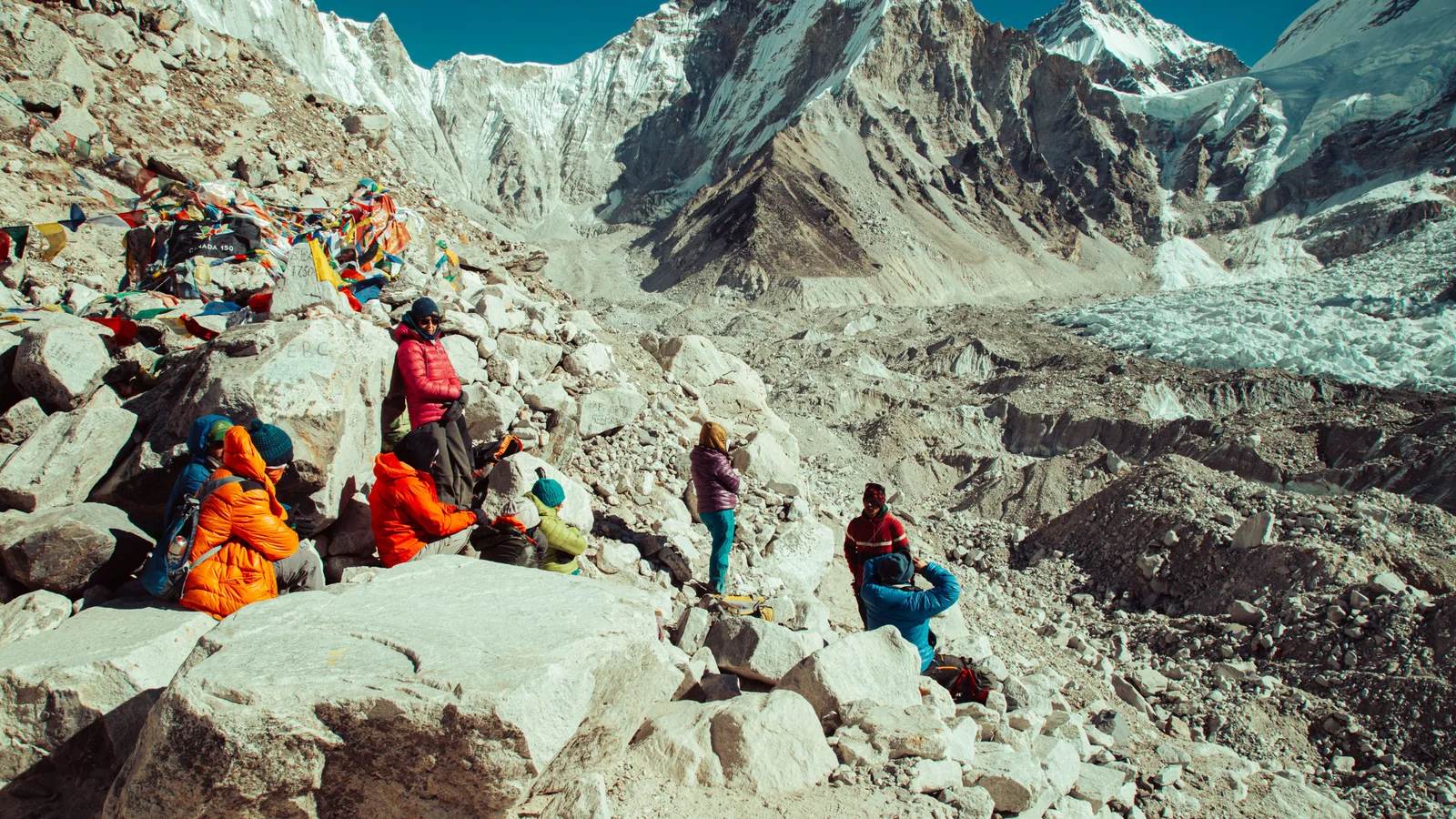
The air at Everest Base Camp holds roughly half the oxygen of sea level; at the top of a 5,000m pass, closer to 55%. Your body copes by breathing faster and, over days, making changes to your blood — but that adaptation takes time you cannot rush. AMS is what happens in the gap between how fast you climbed and how fast your body caught up. This is why fitness is no shield: a fit trekker who races to Namche in two days is at more risk than an unfit one who takes five. On the classic Nepal routes — Everest Base Camp, Annapurna Base Camp, Manaslu — the itinerary is your single most important piece of safety equipment.
Recognising the symptoms
Mild AMS: headache, nausea, loss of appetite, fatigue, disturbed sleep — like a hangover. Stop ascending; rest until it resolves.
Severe — HACE (brain): loss of coordination (ataxia), confusion, severe headache. Test by walking heel-to-toe in a straight line.
Severe — HAPE (lungs): breathlessness at rest, a wet cough, gurgling breath, blue lips.
| Condition | Onset altitude | Key signs | What to do |
|---|---|---|---|
| Mild AMS | ~2,500–3,000m+ | Headache, nausea, poor appetite, broken sleep, tiredness | Stop ascending. Rest, hydrate, treat the headache. Only go higher once symptoms fully clear. |
| HACE (brain swelling) | Usually >3,500m | Loss of coordination, confusion, drowsiness, crushing headache, vomiting | Medical emergency. Descend immediately, even at night. Guide will arrange evacuation. |
| HAPE (fluid in lungs) | Usually >3,000m | Breathlessness at rest, wet/crackly cough, gurgling breath, blue lips, chest tightness | Medical emergency. Descend immediately. Both HACE and HAPE can kill within hours if ignored. |
If symptoms are severe or worsening, descend immediately — even at night. A few hundred metres of descent can reverse symptoms dramatically. No summit, view or schedule is worth your life.
The golden rules of prevention
- Climb high, sleep low. Above 3,000m, increase sleeping altitude by no more than 300–500m per day.
- Take acclimatisation days. Every ~1,000m of gain, take a rest day with an active "climb high, sleep low" hike.
- Hydrate: 3–4 litres a day. Avoid alcohol and sleeping pills.
- Go slow. "Bistari, bistari" — slowly, slowly — is every good Nepali guide's mantra.
What safe ascent looks like on the trail
The rules are easy to recite and easy to break the moment a good weather window tempts you to push on. Here is what disciplined ascent actually looks like on a typical high-altitude Nepal trek:
| Sleeping altitude | Rule in play | What to do that day |
|---|---|---|
| Below 3,000m | Baseline | Walk normally; start hydrating and pacing habits early. |
| 3,000–3,500m | First acclimatisation stop | Build a rest day here (e.g. Namche on EBC). Hike higher by day, sleep low. |
| 3,500–4,500m | 300–500m/day cap | Keep sleeping-altitude gains small. Add a second rest day around 4,000–4,500m. |
| Above 4,500m | Highest vigilance | Short days, constant symptom checks, be ready to turn back. This is where HACE/HAPE live. |
Acetazolamide (Diamox) helps the body acclimatise and can prevent and reduce AMS. Many trekkers take a preventative dose; some keep it for treatment. Discuss it with a doctor — it's a sulfa drug and not for everyone. It's an aid, not a substitute for sensible ascent.
The unprofitable truth about turning back
Here is the thing an honest guide has to say: we would far rather refund the last few days of your trek because you sensibly stopped at Dingboche than carry you down from Lobuche on a stretcher. Reaching Base Camp is not the measure of a successful trek — coming home healthy is. A good guide will call the descent before you want to hear it, and the right response is to trust that call, not to argue for one more day. We build our itineraries with the extra acclimatisation day already in, even though a shorter trip would be cheaper to sell, because the shortcut is where people get hurt.
Trek with a trained guide
A licensed guide recognises AMS symptoms early and makes the descent call — one of the most important safety reasons to trek guided. Pair that with proper acclimatisation built into your itinerary, and altitude becomes a manageable challenge. See our EBC guide for how the rest days work in practice. Our guides carry a pulse oximeter and a first-aid kit, know where the nearest help is on each route, and — on the higher treks — can arrange a helicopter evacuation when descent on foot is not fast enough.
Who should think twice before going high
- Anyone with unmanaged heart or lung disease — get cleared by a doctor first; high altitude stresses both.
- Trekkers on a rigid, no-buffer schedule. If your flights leave no room to add an acclimatisation day or descend and retry, you have designed pressure into your trip — and pressure is what pushes people past sensible limits.
- People who "don't do slow." If waiting a day at Namche while you feel fine sounds unbearable, a high trek will test your patience before it tests your legs. Consider a lower trek like Langtang Valley (max 3,870m) or Poon Hill first.
- Sulfa-allergic trekkers planning to rely on Diamox — talk to your doctor about alternatives well before you fly.
At what altitude does altitude sickness start?
AMS commonly begins above 3,000m, though it can occur lower. The risk increases the higher and faster you ascend. Above 4,000m, careful acclimatisation becomes essential regardless of fitness.
Does being fit prevent altitude sickness?
No — fitness does not prevent AMS, and fit people are often more at risk because they ascend too quickly. Slow, staged ascent and acclimatisation days are what protect you, not fitness.
What is the single best way to prevent altitude sickness in Nepal?
A slow, staged itinerary with acclimatisation days built in. No pill, gadget or fitness level substitutes for gaining sleeping altitude gradually. Choosing a route and operator that schedules proper rest days is the most effective decision you make.
Can you get a helicopter rescue if altitude sickness gets serious?
Yes — helicopter evacuation is available on the major trekking routes and is why comprehensive travel insurance covering high-altitude rescue is essential. Your guide coordinates it. But rescue is the last resort; the first and best response to worsening symptoms is always to descend on foot immediately.
Every Travel Himalaya Nepal high-altitude trek is built with real acclimatisation days and a guide trained to make the descent call. See how it works on our 14-day Everest Base Camp Trek, or contact us to match a route to your experience level.

Written by
Bikash ThapaPokhara-based, NMA-certified trekking guides. We’ve led 5,000+ treks across the Annapurna and Everest regions since 1998 — every word here comes from the trail. More from this author →
Share this article
Ready to Trek?
From reading about it to standing on it
Our Pokhara-based guides have been doing this since 1998. Tell us your dates and fitness level — we'll build your perfect itinerary. Free, no obligation.
Why trek with our licensed agencyMore guides like this
Popular trips to consider
View all treks & toursFree Trekker’s Insider Guide
Permits, packing lists, cost breakdowns — no fluff.
We send one useful email. You can unsubscribe anytime.