
The short version
The Manaslu Circuit is the wild, road-free teahouse trek the Annapurna Circuit used to be. Permits, difficulty, seasons, costs and who it's really for.
- The Manaslu Circuit is a remote, road-free loop around the world's eighth-highest mountain, Manaslu (8,163m) — the wild experience the Annapurna Circuit has largely lost.
- The climax is the Larkya La Pass (5,160m), one of Nepal's most dramatic and demanding pass crossings.
- It's a restricted area: you need a Manaslu RAP, MCAP and ACAP, a registered guide, and a group of at least two — no solo trekking.
- Typically 14 days; harder than ABC, with a serious high pass requiring good acclimatisation.
If you have already trekked in Nepal once and want the classic teahouse traverse without the jeeps and crowds, Manaslu is the best trek in the country right now. If it would be your first multi-day trek at altitude, it is the wrong place to start — build up on Annapurna Base Camp first. We will say so on WhatsApp rather than sell you a trek you will not enjoy.
The circuit Annapurna used to be
Before roads reached the Annapurna Circuit, it was the world's greatest teahouse trek. Many of those who mourn that change now walk the Manaslu Circuit instead — a remote loop around the world's eighth-highest mountain, Manaslu (8,163m), that delivers the wild, road-free experience the Annapurna Circuit has largely lost.
The word Manaslu comes from the Sanskrit manasa, meaning "mountain of the spirit," and the trek earns the name. You walk a genuine transition — from steamy, terraced Gurung farmland in the south to wind-scoured, prayer-flag Tibetan Buddhist country in the north, all in a single arc. There is no road bailout for most of it, no espresso machines, and often no phone signal for days. That remoteness is the whole point.
The route
The trek follows the Budhi Gandaki river north from Soti Khola through steep gorges and Gurung villages, gradually entering Tibetan-influenced Nubri culture around Samagaon (3,520m). The climax is the crossing of Larkya La Pass (5,160m), one of the most dramatic and demanding pass crossings in Nepal, before descending into the Annapurna region at Dharapani.
The rhythm builds deliberately: dense sub-tropical gorge for the first few days, then Namrung and Lho where Manaslu itself first fills the skyline, then the wide glacial basin at Samagaon where you rest and acclimatise. From Samdo you push to Dharamsala (Larkya Phedi, ~4,460m), the cold, spartan huddle of stone huts you sleep in before the pass. Larkya La day is long — a pre-dawn start, six to nine hours of walking, and a knee-punishing descent to Bimthang on the far side. It is the day the whole trek is organised around.
How Manaslu compares
The honest way to choose between Nepal's big treks is side by side, not on brochure adjectives:
| Trek | Days | Max altitude | Crowds | Solo allowed? | From (1 pax) |
|---|---|---|---|---|---|
| Manaslu Circuit | 14 | 5,160m | Low | No — guide + 2 required | $2,100 |
| Everest Base Camp | 14 | 5,545m | High | Guide required | $1,850 |
| Annapurna Base Camp | 9 | 4,130m | Medium–high | Guide required | $920 |
| Langtang Valley | 7 | 3,870m | Low–medium | Guide required | $800 |
Manaslu costs more than Everest despite being a lower summit for a simple reason: the restricted-area permit, the mandatory guide, the two-person minimum and the sheer logistics of resupplying a road-free valley all sit inside the price. You are paying for solitude, and it is worth it.
Permits
Manaslu is a restricted area. You need a Manaslu Restricted Area Permit (RAP), the Manaslu Conservation Area Permit (MCAP), and the Annapurna Conservation Area Permit (ACAP) for the final section. The RAP requires you to trek with a registered guide and in a group of at least two — solo trekking is not permitted.
The RAP is priced per person per week and is more expensive in the September–November high season than in the December–August window; your agency buys all three permits together and holds the originals for the checkpoints at Jagat, Sama and Dharapani. You cannot buy the Manaslu RAP as an individual walking in off the street — it is issued only through a registered trekking company, which is the mechanism that makes the guide-and-group rule enforceable. For the current fee bands see the permits hub.
The Manaslu RAP requires a registered guide and a group of at least two. Solo trekking is not permitted. Your agency arranges the RAP, MCAP and ACAP together.
Difficulty & duration
Typically 14 days. It is harder than the Annapurna Base Camp trek: longer, more remote, with a serious high pass and fewer comforts. Good acclimatisation (including a rest day at Samagaon with a side trip to Manaslu Base Camp or Birendra Lake) is essential.
Expect five to seven hours of walking on a normal day and up to nine on Larkya La day, with total daily ascent that is rarely brutal but relentless — this is a trek that wears you down through accumulation rather than single killer climbs. Teahouses exist the whole way but get progressively simpler the higher you go; above Samagaon, rooms are unheated plywood, meals are dal bhat and instant noodles, and hot showers become a bucket if they exist at all. None of that is a hardship if you expect it. It is a genuine problem if you arrived picturing the Annapurna region's lodges.
Take the rest day at Samagaon (3,520m) with a side trip to Manaslu Base Camp or Birendra Lake. Good acclimatisation here is essential for safely crossing Larkya La (5,160m).
Training and preparation
You do not need to be an athlete, but you do need trained legs and lungs. In the two to three months before you fly, build up to back-to-back long walking days with a loaded daypack — the ability to walk six hours, sleep in a cold room, and do it again the next morning matters far more than gym fitness. Stair and hill repeats prepare your knees for the Larkya La descent, which is where most people's legs finally complain. Read our altitude sickness prevention guide before you come; on a 5,160m pass, ascent discipline is not optional. Pack for real cold at Dharamsala and on the pass — see the Nepal trek packing list and rent a down jacket and a warm sleeping bag in Kathmandu rather than buying them.
Best season
October–November is prime, with stable weather and clear views. April–May is the spring alternative. Larkya La can be blocked by snow in winter and is unsafe during monsoon.
The two shoulders behave differently. Autumn gives you the crispest air and the highest chance of a clear pass, but Larkya La day can be bitterly cold and the trail is at its busiest (which, on Manaslu, still means quiet). Spring is warmer, greener and brings the rhododendron bloom lower down, at the cost of more afternoon haze and a slightly higher chance of fresh snow slowing the pass. We will not run the pass in a whiteout — if the weather closes in at Dharamsala, the safe call is to wait a day or turn back, and a sensible itinerary keeps a buffer day for exactly that.
Who this trek is NOT for
- First-time trekkers. If you have never done a multi-day trek at altitude, start with Poon Hill or Annapurna Base Camp. Manaslu is a poor place to discover you do not enjoy cold, simple lodges.
- Solo walkers on a tight budget. The two-person minimum and mandatory guide are legal requirements, not upsells. If you want to walk truly alone and cheaply, this is not your trek.
- Anyone needing comfort or connectivity. No hot showers guaranteed above Samagaon, patchy-to-absent signal, unheated rooms. That is the trade for the solitude.
- Tight schedules with no buffer. Larkya La can force a weather delay. If you cannot afford to lose a day, build the buffer in or pick a lower trek.
Why book it for 2026
Manaslu offers the scale of Everest, the cultural depth of Mustang, and the variety of the old Annapurna Circuit — without the crowds of any of them. It is the connoisseur's Nepal trek. For the full day-by-day plan see our Manaslu Circuit hub; for fees see the permits hub, and compare with the best treks in Nepal. Prefer a longer, deeper trip? The 19-day Manaslu & Tsum Valley adds the sacred, Tibetan-Buddhist Tsum Valley for a genuinely rare experience.
How hard is the Manaslu Circuit compared to Annapurna Base Camp?
It's harder. The Manaslu Circuit is longer (typically 14 days), more remote, and crosses the serious Larkya La pass at 5,160m with fewer comforts. Good acclimatisation, including the rest day at Samagaon, is essential.
Can I trek Manaslu without a guide?
No. Manaslu is a restricted area. The Manaslu RAP requires a registered guide and a group of at least two — solo trekking is not permitted. You also need the MCAP and ACAP.
What happens if I am travelling alone but want to do Manaslu?
The two-person minimum is about the permit, not your booking. We regularly pair solo travellers with a small group departure so the RAP can be issued, or arrange a private guide-plus-one arrangement. Message us and we will find the cleanest way to get you on the trail legally.
How much does the Manaslu Circuit cost with Travel Himalaya Nepal?
Our 14-day Manaslu Circuit starts at $2,100 per person for a solo traveller, dropping to $1,900 for two to three people and lower again for larger groups. That includes all three permits, your licensed guide, teahouse accommodation and the logistics of a restricted-area trek.
Our 14-day Manaslu Circuit Trek handles the RAP, MCAP and ACAP, your licensed guide and every logistic of a road-free valley — from $2,100 per person. Contact us to lock in your 2026 departure or to be paired into a small group.
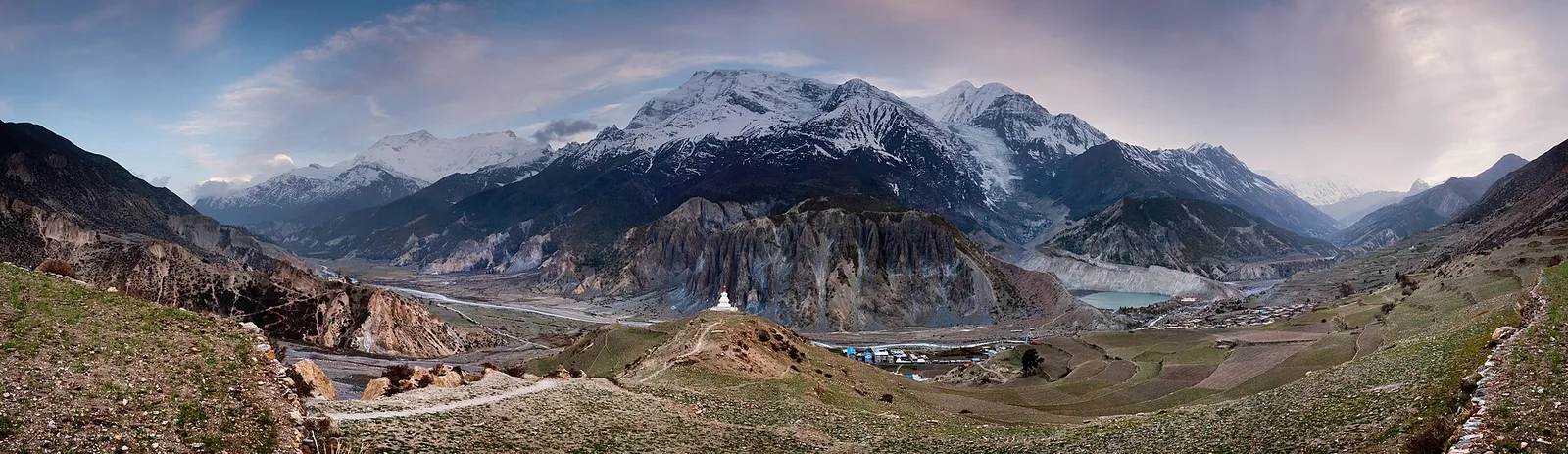
Featured image: Dmitry A. Mottl via Wikimedia Commons (CC BY-SA 3.0).

Written by
Rajan GurungPokhara-based, NMA-certified trekking guides. We’ve led 5,000+ treks across the Annapurna and Everest regions since 1998 — every word here comes from the trail. More from this author →
Share this article
Ready to Trek?
From reading about it to standing on it
Our Pokhara-based guides have been doing this since 1998. Tell us your dates and fitness level — we'll build your perfect itinerary. Free, no obligation.
Why trek with our licensed agencyMore guides like this
Popular trips to consider
Free Trekker’s Insider Guide
Permits, packing lists, cost breakdowns — no fluff.
We send one useful email. You can unsubscribe anytime.