
The short version
Nepal food guide: dal bhat, momos, Newari feasts, sel roti and juju dhau — what to order, where it is best, what to skip, plus food safety and the drinks worth trying, from a local writer.
Nepali food is not one cuisine but a conversation between three worlds — the rice-and-lentil kitchens of the middle hills, the momo-and-noodle warmth carried down from Tibet, and the intricate, feast-loving cooking of the Newars who built the Kathmandu Valley. Eat your way across a fortnight here and you taste all of it, often in a single day. This is a guide to what to order, where it is at its best, and how to keep your stomach happy while you do.
- Order dal bhat at altitude — free refills, freshly cooked, and the safest hot meal on any trail.
- The Kathmandu Valley is the flavour capital. Newari cooking — choila, bara, chatamari, samay baji — is the most rewarding thing on a Nepal plate and the hardest to find abroad.
- Go vegetarian above 3,000m. Meat is carried up unrefrigerated; the stomach trouble travellers blame on food almost always comes from water.
- Most dishes are cheap and generous. The joy of eating in Nepal is rarely about spending more.
Dal bhat power, 24 hour
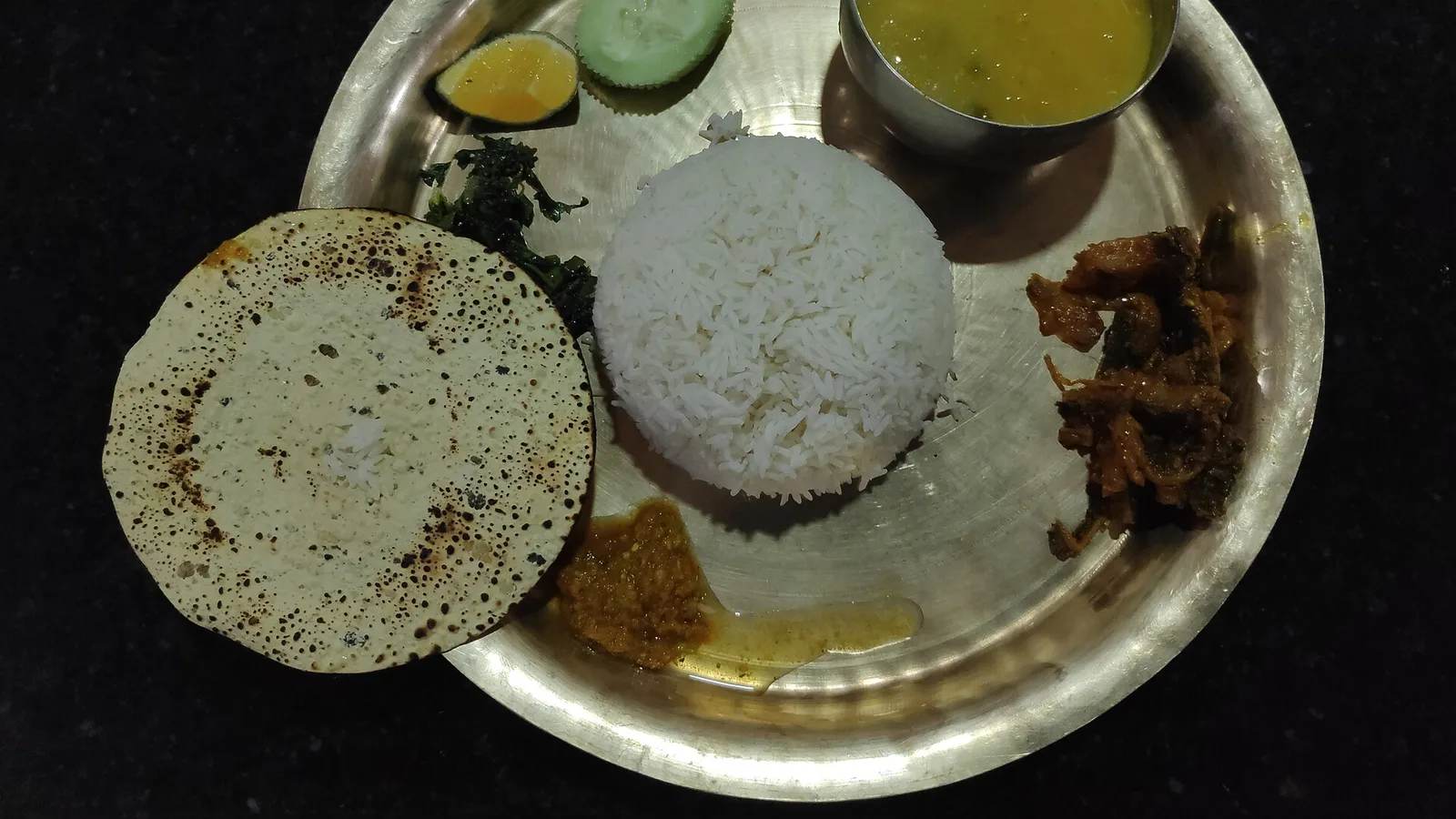
If you eat one thing in Nepal, make it dal bhat — steamed rice, lentil soup, seasonal vegetable curry, pickle (achar), and often a small portion of greens or meat. On the trail it comes with free refills, which is why trekkers swear by the slogan 'dal bhat power, 24 hour.' It is balanced, filling, freshly cooked, and the safest hot meal at altitude.
What is easy to miss is that dal bhat is also the meal Nepalis actually eat, twice a day, most days of their lives. Sitting down to a plate of it in a teahouse is not a tourist experience dressed up for you; it is you being fed the way the family eats. The achar changes with the season and the region — fermented radish in one valley, timur-peppered tomato in the next — and asking the cook what is in it is one of the warmest small conversations you can have on a trek.
The dishes you must try
Momos: Tibetan-style dumplings, steamed or fried, filled with buffalo, chicken, or vegetables. Nepal's favourite snack.
Newari cuisine: The Kathmandu Valley's indigenous Newari food is a revelation — bara (lentil pancakes), choila (spiced grilled meat), chatamari (rice-flour 'pizza'), and samay baji feast platters.
Sel roti: A sweet, ring-shaped rice-flour bread fried fresh, especially during Tihar and Dashain festivals.
Thukpa: Himalayan noodle soup, warming and perfect at altitude.
Yomari: A steamed Newari dumpling filled with molasses and sesame, eaten at the Yomari Punhi festival.
At a glance: what to order and where
| Dish | What it is | Where it shines | Veg option? |
|---|---|---|---|
| Dal bhat | Rice, lentils, curry, pickle — the national plate | Everywhere; unbeatable on trek | Yes (the default) |
| Momo | Steamed or fried dumplings | Kathmandu, any bazaar town | Yes |
| Choila | Grilled, spiced buffalo, Newari-style | Kathmandu Valley (Newari kitchens) | Rarely (mushroom versions exist) |
| Chatamari | Rice-flour crepe with toppings | Old Kathmandu, Patan, Bhaktapur | Yes |
| Thukpa | Himalayan noodle soup | High trails, Tibetan-influenced towns | Yes |
| Sel roti | Sweet fried rice-bread ring | Festival season, temple-gate stalls at dawn | Yes |
| Juju dhau | "King curd" — thick buffalo-milk yoghurt | Bhaktapur, and only Bhaktapur | Vegetarian (dairy) |
The Newari table: Nepal's great feast cuisine
If you have only one truly memorable meal in the Kathmandu Valley, make it a Newari one. The Newars are the valley's oldest inhabitants, and their food carries centuries of ritual — dishes cooked for specific festivals, ordered in a specific sequence, eaten off a leaf plate. Samay baji is the one to seek out: a platter of beaten rice (chiura), black soybeans, marinated choila, boiled egg, spiced potato, ginger, and a fierce dab of achar, traditionally shared with rice wine (aila). It is a whole culture arranged on a single plate, and it is at its best in a family-run Newari kitchen in Patan or old Kathmandu rather than a Thamel tourist restaurant.
Save room for sweetness. Beyond yomari, look for juju dhau, the "king of curds" set in clay pots in Bhaktapur — dense, faintly caramel, and impossible to replicate elsewhere because the clay and the buffalo milk are local. A clay pot of it, eaten warm from the afternoon sun on a Bhaktapur step, is one of those small meals people remember for years.
Eating on the trail
Teahouse menus are surprisingly broad — pasta, fried rice, pancakes, even pizza and apple pie at famous bakery stops like Marpha and Tatopani. As you go higher, stick to vegetarian and freshly cooked items; meat is carried up unrefrigerated and is best avoided above 3,000m. Dal bhat remains the smart choice.
A word on the higher menus: the same laminated card appears in lodge after lodge because the ingredients are hauled up the same trail by the same porters and mules. That apple pie at 3,500m is a small marvel of logistics, and it is genuinely good — but it is also slow to cook on a single shared stove. Order it as a treat, not as your evening meal, and order it early.
Food safety
Drink only treated or boiled water. Avoid raw salads and unpeeled fruit at lower elevations. Busy local restaurants with high turnover are safer than empty tourist spots. Carry rehydration salts. Most travelers' stomach issues come from water, not cooked food.
What to drink, and the rhythm of the day
Nepali eating has a rhythm worth knowing. Most people take two full rice meals — a mid-morning and an evening dal bhat — with a lighter khaja (snack) of beaten rice, tea and something fried in between. Fall into that pattern and you will eat when the kitchens are cooking freshest, rather than at the odd hours a Western clock expects.
Tea is the constant. Ask for chiya and you will usually get milky, sweet, cardamom-and-ginger spiced tea — masala chiya at its best, poured strong. On the high trails you will also meet tongba, warm fermented-millet beer sipped through a bamboo straw and topped up with hot water, and raksi, a clear home-distilled spirit that appears at festivals and in village homes. Down in the lowlands and the valley, cold lassi — sweet or salted yoghurt — is the antidote to a hot afternoon. A word of care: home-brewed raksi and unpasteurised lassi are part of the culture but not always kind to a traveller's stomach, so take them where you trust the kitchen.
What to skip — and who this guide is not for
A few honest steers. Skip the meat momos above about 3,000m — the buffalo has travelled a long way without a fridge, and vegetable momos are just as good. Skip the "multi-cuisine" tourist restaurants in Thamel that promise Thai, Italian, Indian and Nepali from one kitchen; the Nepali dishes there are the palest version of what you can find two lanes away in a Newari eatery. And be wary of the promise of an "authentic" cultural dinner show with a fixed buffet — the food is usually fine, never great, and the real Newari kitchens rarely need a stage.
This guide is not for the traveller who wants familiar flavours and predictable portions at every meal; Nepal rewards curiosity and a slightly adventurous stomach, and if that is not your holiday, that is completely fair — stick to the well-run trekking-lodge menus and the better hotel restaurants and you will still eat well. It is also not a nutrition plan for a big climb; that is its own conversation about calories and pacing.
The unprofitable truth: you do not need to spend more to eat better here. The finest meal you will have in the Kathmandu Valley is more likely to cost a few hundred rupees in a family Newari kitchen than several thousand in a hotel — chase the busy local table, not the expensive tablecloth.
The Kathmandu Valley is where Nepal's food is richest and most concentrated — three medieval cities, three food traditions, all within an hour of each other. Our small-group Kathmandu Valley Cultural Tour (3 days, from $335 per person) puts you in the old Newari quarters of Kathmandu, Patan and Bhaktapur with a local guide who knows which lane sells the best juju dhau. Tell us your dates and we will build it around what you most want to eat.
Cover photo: Gaurav Dhwaj Khadka via Wikimedia Commons (CC BY-SA 4.0).

Written by
Maya RaiPokhara-based, NMA-certified trekking guides. We’ve led 5,000+ treks across the Annapurna and Everest regions since 1998 — every word here comes from the trail. More from this author →
Share this article
Ready to Trek?
From reading about it to standing on it
Our Pokhara-based guides have been doing this since 1998. Tell us your dates and fitness level — we'll build your perfect itinerary. Free, no obligation.
Why trek with our licensed agencyMore guides like this
Popular trips to consider
View all treks & toursFree Trekker’s Insider Guide
Permits, packing lists, cost breakdowns — no fluff.
We send one useful email. You can unsubscribe anytime.