
The short version
Teahouses are family homes, not hotels. A local guide to teahouse etiquette — the eat-where-you-sleep custom, ordering, staying warm, fair fees, booking, and who teahouse trekking is really for.
The teahouse is the quiet heart of Nepali trekking. Not a hotel, not a hostel — usually a family's own home, opened to strangers walking a trail that passes their front door. Understanding how it works is the difference between being a paying guest and being a welcome one, and it shapes how the whole mountain economy holds together. None of it is complicated; most of it is simply about reading a home you have been let into.
- Eat where you sleep. Rooms are cheap because you take dinner and breakfast at the same lodge — this is the arrangement, not an upsell.
- Order together, order early. One stove feeds the whole dining room; staggered orders take hours.
- The dining room is the only warm room. Bedrooms are unheated — your sleeping bag matters more than the lodge.
- Small fees are fair. Hot showers, charging and wifi cost extra because fuel and power are hauled up by porter and mule. Don't haggle over them.
A teahouse is a family home
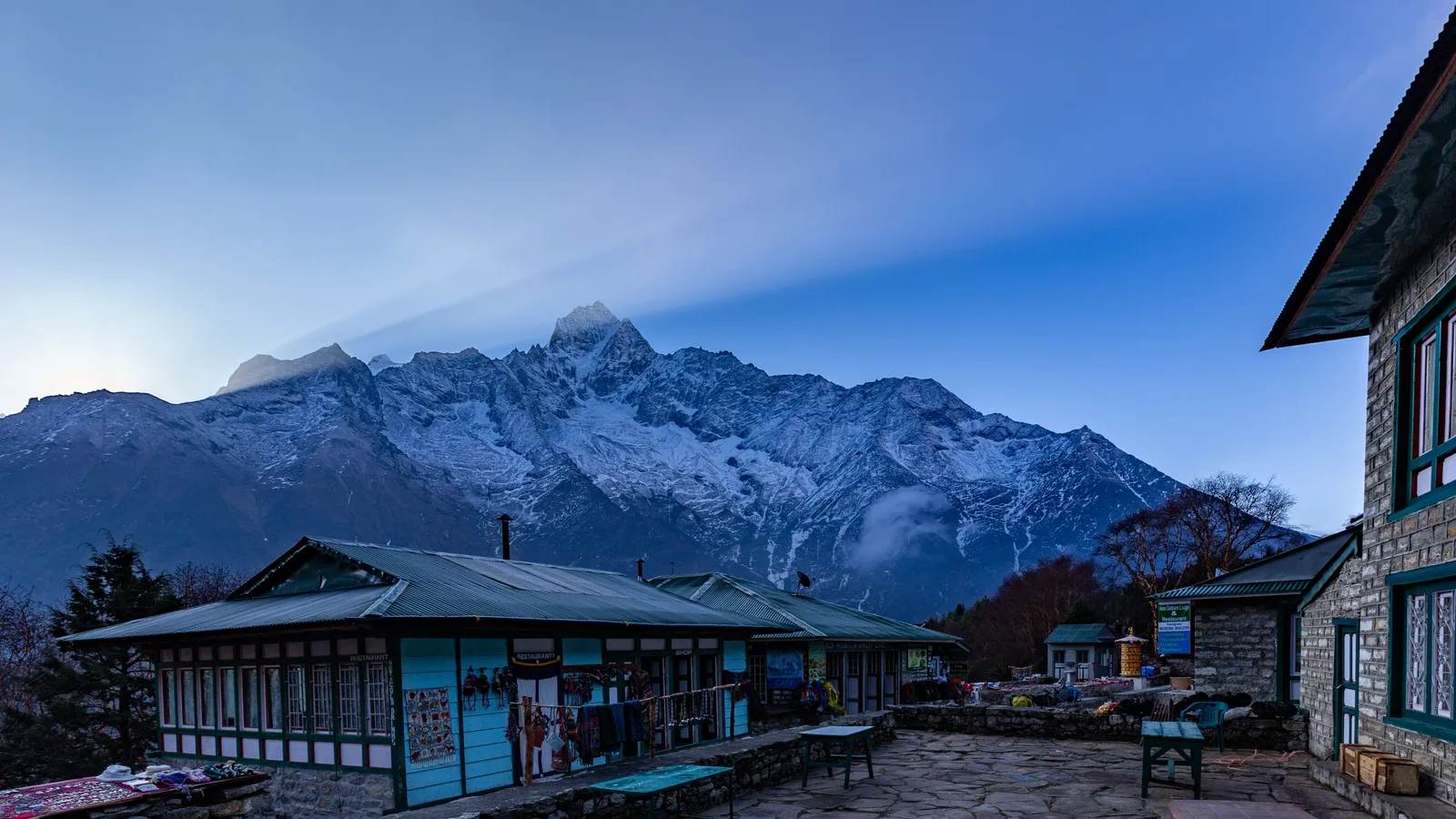
Most teahouses on Nepal's trekking routes are family-run lodges, often the owners' actual home. Understanding the unwritten rules makes you a welcome guest and supports the mountain economy fairly.
The dinner-and-room arrangement
The standard custom: rooms are cheap (sometimes nominally free) on the understanding that you eat dinner and breakfast where you sleep. Don't sleep at one lodge and eat at another — it breaks the economics that keep teahouses running. Order dinner and breakfast at your lodge.
Ordering food
Order meals together as a group and a little in advance — everything is cooked on a single stove, often over scarce wood or gas, and individual orders trickling in can take hours. Dal bhat gets free refills; most other dishes don't.
Staying warm
Only the dining room is heated, usually by a central stove or yak-dung heater lit in the evening. Bedrooms are unheated — bring a good sleeping bag. Don't expect the heater lit all day; it's an evening gathering point.
Showers, charging & wifi
Hot showers (solar or gas-heated) usually cost extra — NPR 200–500. Device charging and wifi also cost extra at altitude, where power is precious. Carry a power bank. Don't haggle over these small fees; they reflect the real cost of hauling fuel and running generators up the mountain.
Bargaining and tipping
Menu prices are fixed and rise with altitude (everything is carried up by porter or mule) — don't bargain over food and lodging. Do tip your guide and porter at the end of the trek.
What actually costs extra — and why
Almost everything beyond the bed and the two meals is a small paid extra, and each one reflects a real cost carried up the hill on someone's back. Treating these as fair — rather than something to bargain down — is the single clearest sign of a good guest.
| Item | Typical extra | Why it costs what it does |
|---|---|---|
| Bed (with two meals) | Very cheap, sometimes nominal | Subsidised by you eating there |
| Hot shower | NPR 200–500 | Solar or gas-heated; fuel is hauled up |
| Phone / battery charging | Extra, rising with altitude | Power from small solar or a generator |
| Wifi | Extra where it exists | Satellite or long-range links, precious bandwidth |
| Bottled / boiled water | Rises steeply with altitude | Carried up, or fuel burned to boil it |
| Dal bhat refills | Free | The one generous exception — always |
The unwritten courtesies
Beyond the transactions, a teahouse runs on small kindnesses. Take your boots off before the dining-room floor if that is the custom of the house — watch what others do. Greet the owner with a hand-pressed namaste rather than a wave; it costs nothing and changes the temperature of the room. If the family's children are doing homework by the stove, that stove is their living room as much as your dining room. And learn one word — dhanyabad, thank you — and use it often. In a place where the same family cooks, serves, cleans and hosts, being easy to look after is a real gift.
Twelve quick do-nots
Don't waste food; don't leave rubbish (carry out batteries and plastic); don't walk into kitchens uninvited; don't use the heater to dry smelly socks; don't play loud music; don't flush paper where signs forbid it; don't expect western toilets; don't demand meat at altitude; don't skip the dinner-where-you-sleep custom; don't under-tip; don't photograph people without asking; and don't forget 'dhanyabad' (thank you).
Do you book ahead?
On most trails, most of the year, no — you walk, you arrive, you take a room. Teahouses run on the day's flow of trekkers rather than reservations, and a good guide reads the trail and secures beds by arriving early rather than by phoning ahead. The exceptions matter, though: the busiest weeks of the spring and autumn seasons on the popular Everest and Annapurna routes can fill villages by mid-afternoon, and a few high, single-lodge stops have no overflow at all. This is one of the quiet arguments for trekking with a guide or a company — not for luxury, but because someone who knows the trail is thinking about your bed while you are still enjoying the view.
A day in a teahouse, from arrival to lights-out
The rhythm is the same on almost every trail, and knowing it makes you an easier guest. You arrive in the early afternoon, because the weather closes in later and the walking day starts at dawn. You claim a room, order dinner while there is still light for the cook to plan, and then the afternoon belongs to tea, cards, and drying your socks in the last of the sun. As dusk falls, everyone gravitates to the one heated room — the dining room — and this is the social heart of the whole trek: guides swapping trail news, trekkers comparing blisters, the owner's family folding into the same space. Dinner comes out in waves from the single stove; eat when yours arrives rather than waiting for the table. By eight or nine, people drift to cold bedrooms and good sleeping bags, because tomorrow starts early. Wake, order breakfast, settle the bill for your extras honestly, and walk on.
Understand, too, that the people looking after you are working at altitude on your behalf. The porter carrying your duffel and the teenager bringing your dal bhat are the reason the trail economy reaches these villages at all. Fair pay, a genuine dhanyabad, and patience when the wifi is slow and the shower is cold are not niceties — they are the whole point of doing this well. The mountains stay open to trekkers only for as long as the families who host them find it worth their while.
Who teahouse trekking is not for
Be honest with yourself before you book. Teahouse trekking is not for travellers who need a heated room, an ensuite bathroom and a predictable menu every night — those things mostly do not exist above the lower valleys, and no amount of paying more conjures them at 4,000m. It is not for anyone who finds shared dining rooms, thin walls and a squat toilet down a cold corridor genuinely miserable rather than part of the adventure. If that is you, a lodge trek to a comfortable mid-hill destination, or a shorter cultural trip, will make you far happier than pushing high and resenting every night of it.
The unprofitable truth: the "luxury lodge trek" upsell is worth it on only a handful of routes, and on most classic teahouse trails you are paying a large premium for a marginally warmer room. Put that money toward a better sleeping bag and an extra rest day instead — both will do more for your trek than a fancier bed.
If you want to learn teahouse life on a trail that is beautiful, culturally rich and not brutally high, the Langtang Valley Trek (7 days, from $800 per person) is one of our favourites — Tamang villages, family lodges, and a valley rebuilding warmly since 2015. Ask us about departure dates and we will match the pace to your fitness.

Written by
Maya RaiPokhara-based, NMA-certified trekking guides. We’ve led 5,000+ treks across the Annapurna and Everest regions since 1998 — every word here comes from the trail. More from this author →
Share this article
Ready to Trek?
From reading about it to standing on it
Our Pokhara-based guides have been doing this since 1998. Tell us your dates and fitness level — we'll build your perfect itinerary. Free, no obligation.
Why trek with our licensed agencyMore guides like this
Popular trips to consider
View all treks & toursFree Trekker’s Insider Guide
Permits, packing lists, cost breakdowns — no fluff.
We send one useful email. You can unsubscribe anytime.