The short version
Shey Phoksundo, Nepal deepest lake, sits in restricted Dolpo — the least-visited corner of the Himalaya. Lower vs Upper Dolpo compared, permits, two-flight access, live guided prices, and an honest word on who should skip it.
- Dolpo, in Nepal's far west, is one of the least-visited regions in the entire Himalaya — high, arid, and deeply Tibetan-Buddhist.
- Shey Phoksundo Lake is Nepal's deepest lake, a turquoise jewel at 3,611m ringed by cliffs and a famous waterfall.
- Lower Dolpo (incl. Phoksundo) is a 10–14 day trek; Upper Dolpo is a 3-week-plus expedition over multiple 5,000m passes with a much costlier permit.
- Lying in the rain shadow, Dolpo is one of the few regions trekkable in the June–August monsoon.
The Nepal almost nobody sees
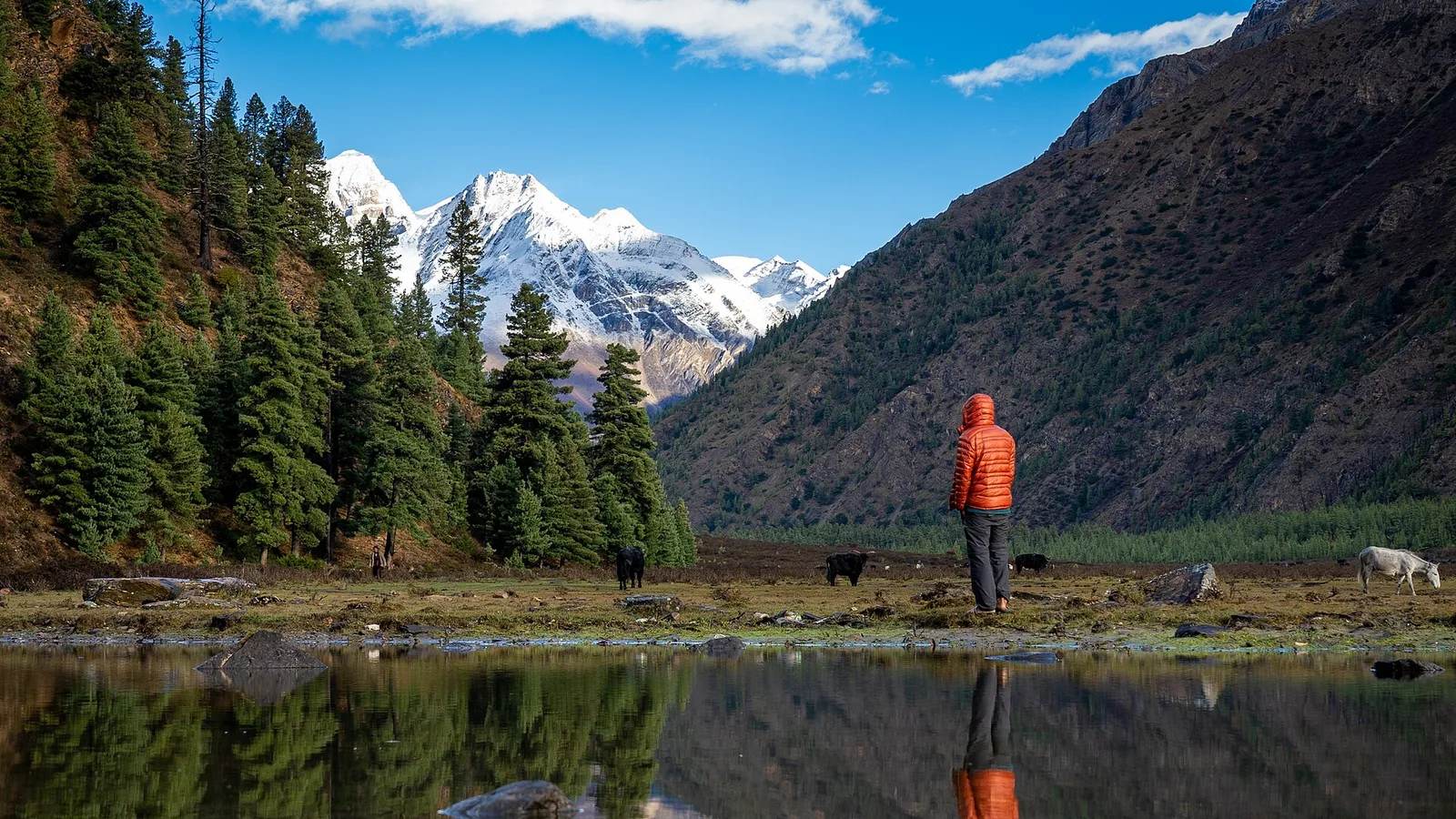
Dolpo, in Nepal's remote far west, is one of the least-visited regions in the entire Himalaya. It is a high, arid, Tibetan-Buddhist land of walled fields, ancient gompas, and the turquoise jewel of Shey Phoksundo Lake — Nepal's deepest lake at 3,611m, ringed by cliffs and a famous waterfall. This is the landscape Peter Matthiessen made famous in The Snow Leopard and that Eric Valli filmed in Himalaya (Caravan). Fewer people reach Upper Dolpo in a year than reach Everest Base Camp on a busy October morning — and that scarcity is the whole point.
Lower Dolpo vs Upper Dolpo
Lower Dolpo (including Phoksundo Lake) is accessible on a 10–14 day trek and requires a restricted-area permit. Upper Dolpo — the trans-Himalayan crossing toward Shey Gompa and the Tibetan border — is a serious 3-week-plus expedition over multiple 5,000m passes, with a much more expensive permit. These are genuinely different undertakings, and confusing them is how people end up under-budgeted and under-prepared:
| Factor | Lower Dolpo (incl. Phoksundo) | Upper Dolpo |
|---|---|---|
| Duration | 10–14 days | 22 days+ |
| Max altitude | ~5,310m (Numa La / Baga La) | ~5,360m over several passes |
| Restricted permit | ~USD 20 per week | ~USD 500 for first 10 days in Dolpo, then ~USD 50 per day |
| Accommodation | Basic lodges + some camping | Full camping expedition |
| Guided price (solo, from) | USD 2,790 (14-day) | USD 4,950 (22-day) |
| Best for | Phoksundo Lake, first taste of Dolpo | Shey Gompa, Bon culture, true wilderness |
Getting there
Access is via a flight from Nepalgunj (in the Terai) to the tiny airstrip at Juphal. From Juphal you trek up the Phoksundo river to the lake. The remoteness is the point — there are no roads, limited lodges, and you camp for much of Upper Dolpo.
Access is via a flight to Nepalgunj in the Terai, then a second small flight to the tiny Juphal airstrip. There are no roads — the remoteness is exactly the point, but it means weather delays and a camping setup for much of Upper Dolpo.
Both those flights are small, weather-dependent, and prone to cancellation. Nepalgunj is hot and low; Juphal is a short mountain strip that closes in cloud. I tell every Dolpo client the same thing: bake two spare days into your itinerary before you even reach the trail, or a single grounded morning will unravel the whole schedule.
Permits
Lower Dolpo requires a restricted-area permit plus the Shey Phoksundo National Park entry fee. Upper Dolpo's restricted permit is significantly more costly and is issued for fixed periods. A registered guide and a group of at least two are mandatory for restricted areas. See the Nepal permits hub for current fees.
Both Lower and Upper Dolpo are restricted areas: a registered guide and a group of at least two are mandatory. Upper Dolpo's permit is significantly more expensive and issued for fixed periods, so plan dates carefully.
Because the two-person minimum is a hard legal rule, a solo traveller cannot simply buy a permit and go — you must join or form a group of at least two trekkers. This is not an upsell; it is the government's rule for every restricted zone, and it is enforced at the checkposts. If you are travelling alone, tell us early so we can match you to a departure rather than turning you away at Juphal.
When to go
Because Dolpo lies in the Himalayan rain shadow, it is one of the few regions trekkable in the monsoon (June–August), as well as the standard spring and autumn windows. Winter is brutally cold and many passes close. Spring (May–June) brings the walled barley fields to life; autumn (September–October) gives the clearest passes. The monsoon window is the region's quiet secret — while the rest of Nepal is under cloud, Dolpo stays largely dry.
What it actually costs and takes
Dolpo is not a budget trek, and no honest operator will pretend otherwise. The two internal flights, the camping crew, the mandatory guide, and the restricted permits all stack up long before you take a step. A guided 14-day Lower Dolpo trek starts from USD 2,790 per person (solo booking; less in a group), and the full 22-day Upper Dolpo expedition from USD 4,950. That buys a proper camping operation — kitchen crew, tents, pack animals — in a place with no infrastructure to fall back on. Physically, expect long days on rough ground, multiple high passes, and no quick exit if things go wrong. This is expedition trekking, not a teahouse holiday.
Who it's for
Dolpo is for experienced trekkers seeking genuine wilderness, living Tibetan culture, and the chance — however slim — of glimpsing a snow leopard or blue sheep. It is among the most rewarding and demanding journeys Nepal offers. For costs see our Nepal trekking cost guide; for a more accessible restricted-area trek see our Upper Mustang guide, or compare with the best treks in Nepal.
Who this is NOT for
- First-time trekkers. Do not make Dolpo your first Himalayan trek. Cut your teeth on Annapurna Base Camp or Everest first — then come to Dolpo knowing how your body handles altitude and remoteness.
- Tight budgets. If USD 2,790+ is out of reach, Upper Mustang delivers a similar high-desert, Tibetan-Buddhist feel for far less, and needs only one flight.
- Rigid schedules. The two internal flights cancel often. If you cannot absorb two or three lost days, this trip will frustrate you.
- Comfort-first travellers. Much of Dolpo is camping with basic facilities. If a hot shower and a lodge menu matter to you, this is the wrong region.
Upper Dolpo is the most expensive trip on this page, and I still talk people out of it more often than into it. If your real dream is turquoise Phoksundo Lake and a taste of Bon-Buddhist Dolpo, the 14-day Lower Dolpo trek gives you exactly that for nearly half the price — and you keep a week of your holiday. Save Upper Dolpo for when Lower Dolpo has already told you that you love this corner of Nepal. Paying double for passes you are not ready to enjoy is not an adventure, it is an expensive regret.
How long does the Phoksundo / Dolpo trek take?
Lower Dolpo, including Shey Phoksundo Lake, is a 10–14 day trek. Upper Dolpo, the trans-Himalayan crossing toward Shey Gompa, is a 3-week-plus expedition over multiple 5,000m passes with a much more expensive permit.
Can I trek Dolpo during the monsoon?
Yes. Dolpo lies in the Himalayan rain shadow, so it's one of the few regions trekkable in the June–August monsoon, alongside the standard spring and autumn windows. Winter is brutally cold and many passes close.
We run Dolpo as a proper camping operation with a registered guide and all restricted permits handled. Start with the 14-day Lower Dolpo Trek (from USD 2,790 solo) for Phoksundo Lake, or commit to the full 22-day Upper Dolpo Trek (from USD 4,950). Ready for Nepal's wildest journey? Contact us to arrange Dolpo permits, flights, and a registered guide.
Cover photo: Nirojsedhai via Wikimedia Commons (CC BY-SA 4.0).
Written by
Bishnu AdhikariPokhara-based, NMA-certified trekking guides. We’ve led 5,000+ treks across the Annapurna and Everest regions since 1998 — every word here comes from the trail. More from this author →
Share this article
Ready to Trek?
From reading about it to standing on it
Our Pokhara-based guides have been doing this since 1998. Tell us your dates and fitness level — we'll build your perfect itinerary. Free, no obligation.
Why trek with our licensed agencyMore guides like this
Popular trips to consider
View all treks & toursFree Trekker’s Insider Guide
Permits, packing lists, cost breakdowns — no fluff.
We send one useful email. You can unsubscribe anytime.