
The short version
Everest Base Camp or Gokyo Lakes? A Pokhara guide's honest take: EBC is the pilgrimage to the foot of Everest, but you can't actually see the summit from there — Gokyo Ri gives the region's best Everest panorama with a fraction of the crowds. Real 2026 prices, who each trek is NOT for, and how to do both over the Cho La pass.
- Everest Base Camp is for the pilgrim. You want to stand at the foot of the highest mountain on earth, walk the famous Namche–Tengboche–Lobuche trail, and touch the prayer-flag boulder at 5,364m. Busy, iconic, unforgettable.
- Gokyo Lakes is for the person who came for the view and the quiet. Six frozen-turquoise lakes, the longest glacier in the Himalaya, and — from Gokyo Ri — the finest single Everest panorama in the whole region, with a fraction of the foot traffic.
- Both, linked by the Cho La pass, if you have two-and-a-half weeks and the legs for it.
- Neither is a soft option. Both cross 5,300m+ and both are graded Challenging. Fitness and unrushed acclimatisation decide who summits their viewpoint and who turns back.
I am Laxman Rawal. I started guiding in the Khumbu in the 1990s and have run Travel Himalaya Nepal out of Pokhara since 1998. Every season a version of the same message lands in my inbox: “Everest Base Camp or Gokyo Lakes — which one?” The honest answer depends on one question most brochures never ask you: did you come to stand at Everest, or to see it? They are not the same trek, and they do not reward the same traveller.
Two treks, one mountain, very different days
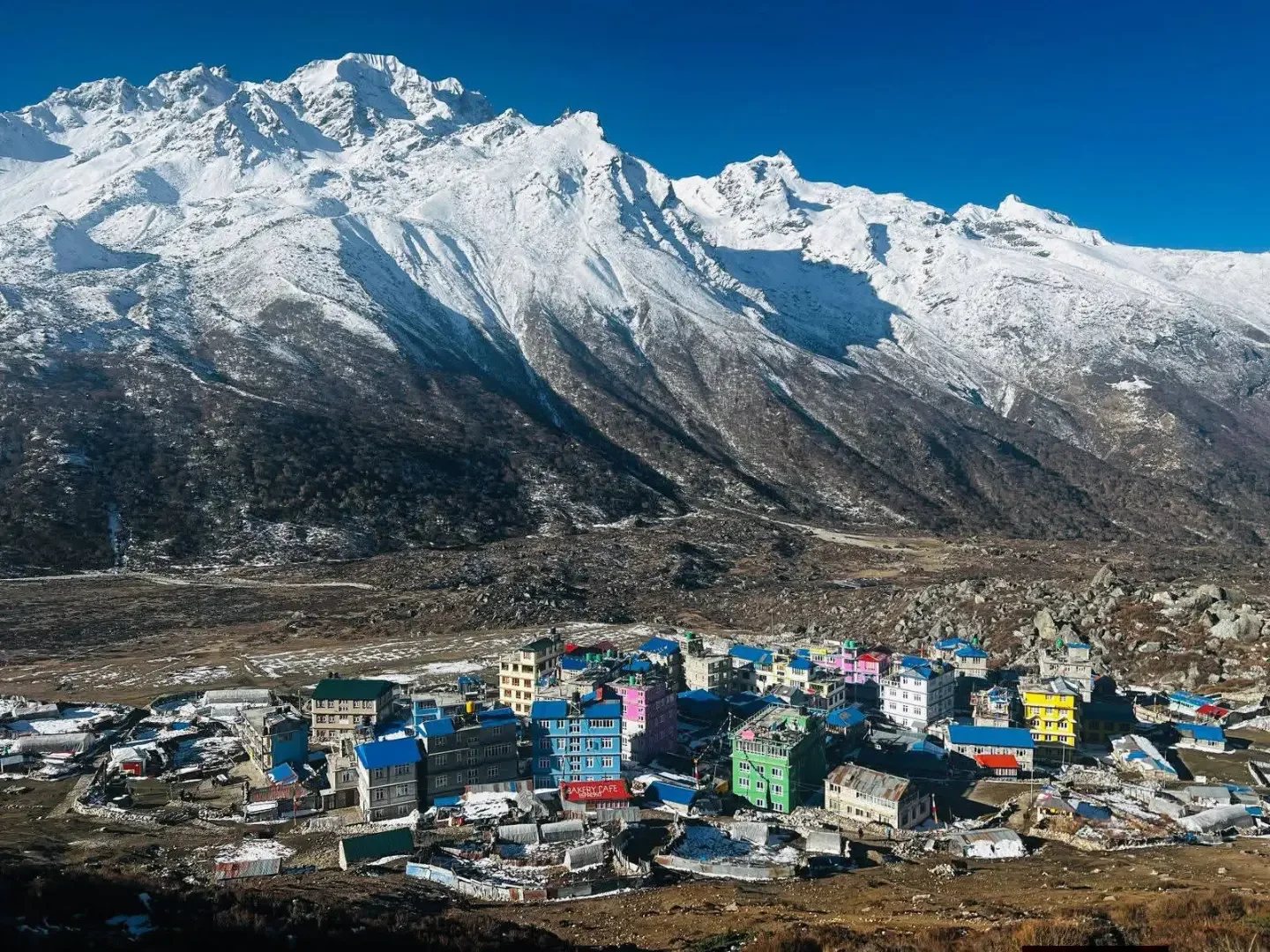
Both routes start the same way — the white-knuckle flight to Lukla, the stone-paved climb to Namche Bazaar (3,440m), the acclimatisation day above town. Then they part. The EBC trail carries on up the main Khumbu valley through Tengboche, Dingboche and Lobuche to Gorak Shep, and this is the busy artery of the region. The Gokyo trail branches west at Sanasa into the Dudh Koshi valley — greener lower down, then a wild moraine world alongside the Ngozumpa glacier, and far, far quieter.


The comparison, side by side
Durations and prices below are our real, currently published private-trek options — no invented figures. Prices shown are the solo (1-person) rate; per-person cost drops sharply in a group.
| Factor | Everest Base Camp | Gokyo Lakes |
|---|---|---|
| Typical trip length | 12–14 days on the ground | 11–12 days on the ground |
| High point | Kala Patthar 5,545m (Base Camp itself 5,364m) | Gokyo Ri 5,357m |
| Difficulty | Challenging | Challenging |
| Crowds | The region's busiest trail | Noticeably quieter and calmer |
| Signature sight | Standing at Base Camp; the Khumbu Icefall | Six glacial lakes; Ngozumpa glacier; the panorama from Gokyo Ri |
| Everest panorama | Close, but partly hidden by Nuptse & Lhotse | Everest, Lhotse, Makalu & Cho Oyu in one sweep |
| Our published price from (solo) | from $1,700 (12-day) / $1,850 (14-day) | from $1,620 (11-day) / $1,750 (12-day) |
The truth about the views — and why it matters
Here is the thing almost nobody tells you before they book: you cannot really see Mount Everest from Everest Base Camp. Standing at Base Camp, the summit is hidden behind the huge walls of Nuptse and Lhotse. What you see is the Khumbu Icefall tumbling down in front of you — spectacular in its own right, but not the pointed summit you pictured. On the EBC trek the actual Everest view comes the next dawn from Kala Patthar (5,545m), a cold, dark, breathless pre-sunrise climb.
If your one non-negotiable is seeing Everest itself — properly, in its full pyramid — Gokyo Ri beats standing at Base Camp. From the top of Gokyo Ri you get Everest, Lhotse, Makalu and Cho Oyu, four of the world's six highest peaks, in a single sweep above the lakes. That is the honest recommendation even though the Gokyo treks are, on average, the cheaper booking for us. I would rather you came home with the photo you wanted.
Local detail you won't find in a brochure
- Gokyo is the region's best-kept secret for solitude. The EBC trail can feel like a highway in October; the Gokyo valley, even in the same week, feels like you have the mountains to yourself. If teahouse crowds and queues at the lodges would spoil it for you, this matters more than any price difference.
- The lakes freeze in winter. From late December into February the Gokyo lakes ice over — beautiful and stark, but you lose the famous turquoise water. For that colour, come in the pre-monsoon spring or the post-monsoon autumn.
- The Ngozumpa glacier beside Gokyo is the longest glacier in the Nepal Himalaya. Crossing its rubble-strewn back to the fourth and fifth lakes is one of the most otherworldly half-days in the whole Khumbu, and almost no one on the EBC side ever sees it.
- Lukla flights are not guaranteed. In the busy spring and autumn seasons, the mountain flights are moved out of Kathmandu to Ramechhap (Manthali), which means a 4–5 hour pre-dawn drive to catch the plane. Weather delays happen on both treks equally — always build a buffer day at the end before an international flight. This bites first-timers on either route.
- The Cho La pass (5,420m) is the bridge between the two worlds. If you cannot decide, you do not have to — our 15-day EBC via Gokyo Lakes trek (from $2,300) strings Gokyo Ri, the Cho La and Base Camp into one loop, and the EBC & Cho La Pass trek (from $2,400) does the same the other way round. Both need genuine hill fitness and a head for a snowy, sometimes icy pass.
Who Everest Base Camp is NOT for
I will talk people out of EBC more often than you would expect. It is not the trek for you if:
- Your main goal is the classic view of Everest. As above — Base Camp does not give it to you. Choose Gokyo, or add Kala Patthar and know you are climbing for it.
- Crowds ruin the mountains for you. In peak weeks the trail and the lodges at Lobuche and Gorak Shep are full. If solitude is the point, this is the wrong side.
- You want easy nights. Gorak Shep at 5,140m is a cold, thin-aired, rough-and-ready place to sleep. There is no getting comfortable up there.
Who Gokyo Lakes is NOT for
- The bucket-list pilgrim. If the entire reason for the trip is to stand at Everest Base Camp and touch that boulder, Gokyo will not scratch the itch, however good the view. Book EBC.
- Winter travellers chasing turquoise. If you can only come in deep winter and you have your heart set on the blue lakes, the ice will disappoint you.
- Anyone nervous on steep, remote ground. The Gokyo Ri climb and, especially, the Ngozumpa glacier crossing are more exposed and less trafficked than the EBC path. If something went wrong you are further from help.
Both treks cross well above 5,300m, and altitude — not fitness — is what sends people home early. Take the acclimatisation days, climb high and sleep low, and never gain sleeping altitude with a headache you cannot shake. Read our acclimatisation notes before you come. This advice is identical whichever route you pick.
The unprofitable but honest bit: gear
You need a serious down jacket and a four-season sleeping bag for either trek. You almost certainly do not need to buy them. Rent both in Kathmandu or Pokhara for a few dollars a day — good, clean kit is easy to find — and save the couple of hundred dollars for the trip itself, unless you already trek in winter at home. We would happily sell you a rental add-on, and we will still tell you: for a once-in-a-lifetime trek, renting is the smart money.
So — which one?
Come for the pilgrimage and the icon: book Everest Base Camp. Come for the best view and the quiet: book Gokyo Lakes. Cannot choose and have the time: do both over the Cho La. There is no wrong answer here — only the one that matches why you are really coming.
Can you actually see Everest from Everest Base Camp?
Not the summit — it is hidden behind Nuptse and Lhotse. From Base Camp you see the Khumbu Icefall. The classic Everest view on the EBC trek comes from Kala Patthar (5,545m). For the best Everest panorama in the region, Gokyo Ri wins.
Which trek is less crowded?
Gokyo, by a wide margin. The EBC trail is the region's busiest; the Gokyo valley stays quiet even in peak season.
Is Gokyo easier than EBC?
Both are graded Challenging and cross 5,300m+. Gokyo is a touch shorter and quieter, but it is not an easy trek — the Gokyo Ri climb and the Ngozumpa glacier crossing are demanding.
When do the Gokyo lakes freeze?
Roughly late December to February. For the turquoise water, trek in spring (Mar–May) or autumn (Sep–Nov).
Do I have to fly from Ramechhap instead of Kathmandu?
In the busy spring and autumn seasons, Lukla flights often shift to Ramechhap (Manthali), a 4–5 hour pre-dawn drive from Kathmandu. We tell you your exact departure airport when you book, and always build in a buffer day for weather.
Private departures on any date, hand-picked NMA guides, and 25+ years on these exact trails. Tell me your dates and what you most want to see, and I'll point you to the right route — even if it's the cheaper one. We usually reply within a few hours on WhatsApp.
Browse Everest & Gokyo treks → Message our team →
Written by
Travel Himalaya NepalPokhara-based, NMA-certified trekking guides. We’ve led 5,000+ treks across the Annapurna and Everest regions since 1998 — every word here comes from the trail. More from this author →
Share this article
Ready to Trek?
From reading about it to standing on it
Our Pokhara-based guides have been doing this since 1998. Tell us your dates and fitness level — we'll build your perfect itinerary. Free, no obligation.
Why trek with our licensed agencyMore guides like this
Popular trips to consider
View all treks & toursFree Trekker's Insider Guide
Permits, packing lists, cost breakdowns — no fluff.
We send one useful email. You can unsubscribe anytime.