
Paragliding in Pokhara 2026: Cost, Best Time & What to Expect
Pokhara paragliding cost in 2026 (USD $70–$120), best season, the Sarangkot take-off, flight duration, safety and what to wear — a first-hand guide.
On this page (6)
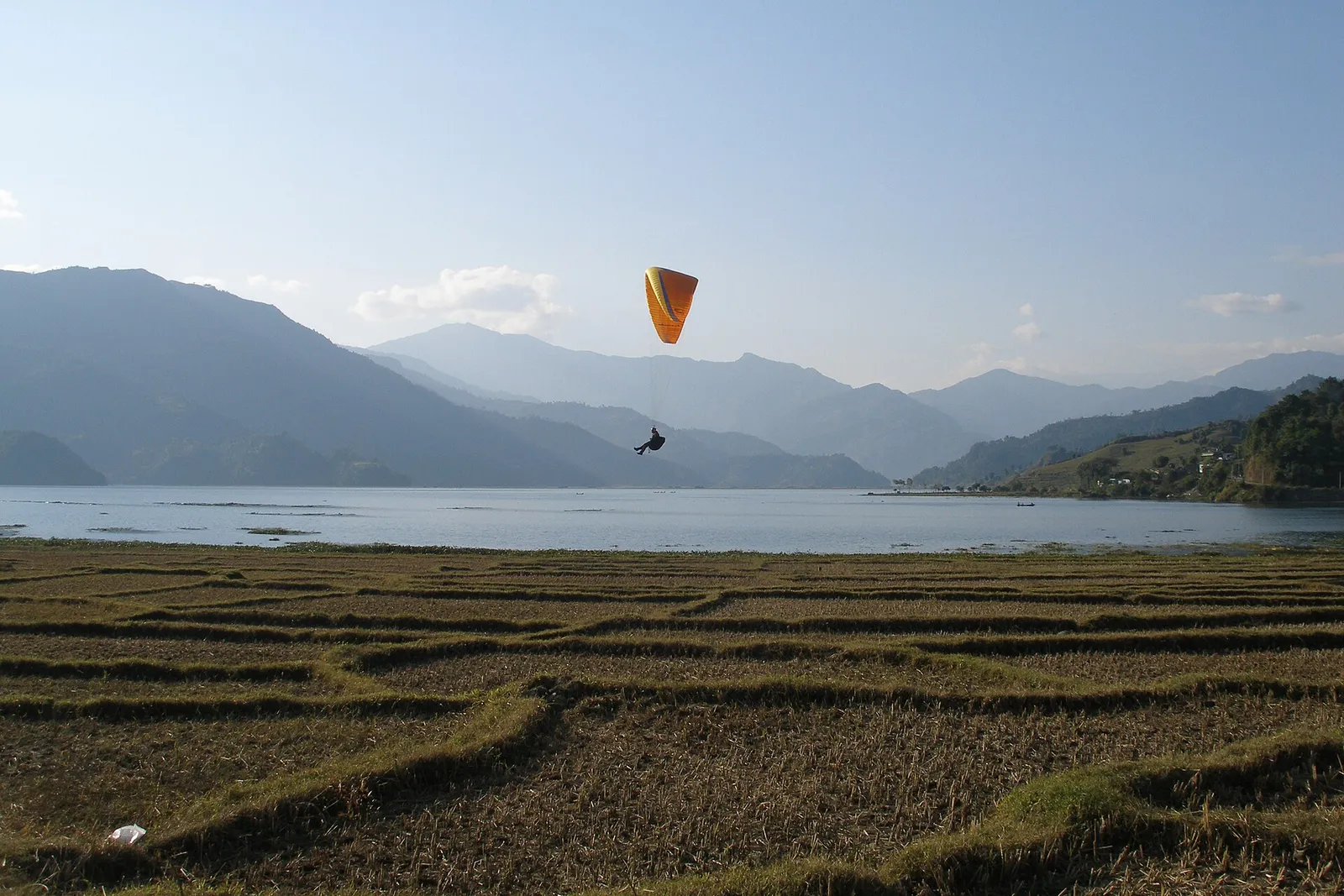
There is a moment, a few seconds after your pilot runs off the ridge at Sarangkot, when the ground simply drops away and the whole of the Pokhara valley opens beneath your boots — Phewa Lake glinting, terraced hills folding down to the water, and the Annapurnas stacked on the horizon. Paragliding here is one of the easiest, most jaw-dropping adventures in Nepal, and after twenty-five years of sending guests up this ridge we know exactly how to make your flight smooth, safe and worth every rupee.
- Cost (2026): roughly USD $70–$120 for a standard tandem flight; cross-country/longer flights run higher.
- Best season: September–November and March–May — clear skies, stable thermals, big mountain views.
- Take-off: Sarangkot (1,592 m). Landing: lakeshore beside Phewa Lake.
- Flight time: 20–30 minutes airborne for the standard tandem; allow ~2 hours door to door.
- No experience or training needed — you fly tandem with a licensed pilot.
How much does paragliding in Pokhara cost in 2026?
For the 2026 season, a standard tandem flight from Sarangkot generally costs USD $70–$120 (roughly NPR 9,000–13,000), depending on operator, flight length and the time of day. A short, gentle "scenic" tandem of around 20–30 minutes sits at the lower end; longer thermal or cross-country flights that climb high and stay up for 45–60 minutes cost more. Festival and shoulder-season promotions can dip a little lower, but be wary of anything priced suspiciously cheap — that usually means an unlicensed pilot or worn equipment.
| Flight type | Airborne time | Typical 2026 price |
|---|---|---|
| Standard scenic tandem | 20–30 min | $70–$100 |
| Thermal / cross-country | 45–60 min | $110–$160 |
| Acro (spirals, wing-overs add-on) | 25–35 min | $110–$140 |
| Photo / video package (add-on) | — | +$15–$25 |
A fair Pokhara tandem package should include hotel pick-up and drop-off, the jeep transfer up to Sarangkot, all flight equipment, a licensed pilot, and accident insurance. Many operators add a GoPro photo/video clip — confirm whether it is bundled or charged separately before you book.
When is the best time to fly?
The two trekking seasons are also the two flying seasons. Autumn (September–November) brings the cleanest air of the year — post-monsoon skies, sharp Himalayan views and reliable thermals. Spring (March–May) is warmer with strong, buoyant thermals (great for longer flights) though afternoon haze can build. We plan most guests' flights around these windows; see our wider best time to visit Nepal in 2026 guide for how the seasons line up with the rest of your trip.
Flights run roughly three times a day — early morning (calm, smooth air and the best mountain light), late morning, and early afternoon (stronger thermals, more climbing). Monsoon (June–August) sees frequent cancellations from cloud and rain, and deep winter (December–January) can be cold and hazy, though crisp clear mornings do happen.
Book the first morning slot (~9:30 am). The air is glassy, the valley is lit golden, and it is the gentlest option if you are nervous about motion.
Late-morning and midday thermals let pilots climb and stay up longer — ideal for cross-country and the biggest mountain panoramas.
The Sarangkot take-off — what actually happens
After pick-up from your Lakeside hotel, you ride a jeep up the winding road to the Sarangkot launch at 1,592 m. Your pilot clips you into a tandem harness in front, runs through a 60-second briefing, and waits for the wind to fill the wing. On their cue you take a few brisk steps toward the slope — and then you are flying. There is no jump and no drop; the wing lifts you off smoothly.
You will spend 20–30 minutes circling thermals, often sharing the sky with Himalayan eagles, with Phewa Lake spread out below and the Annapurna massif and Machhapuchhre (Fishtail) filling the skyline. Your pilot lands you gently on the flat lakeshore landing zone beside Phewa Lake, a short walk from Lakeside's cafes.
Is paragliding in Pokhara safe?
Pokhara is one of the world's premier tandem sites precisely because the conditions are forgiving — wide launch, soft thermals and a huge lakeside landing area. The single biggest safety factor is your operator. Fly only with a company whose pilots hold valid licences, whose wings and reserve parachutes are within service life, and which carries proper insurance. We work only with vetted, certified tandem pilots.
Avoid rock-bottom street prices and pilots who skip the harness/reserve check. A reputable operator weighs you, briefs you, and inspects the gear in front of you. Tandem flights have a weight range — roughly 25–110 kg — so declare children's and very light or heavy passengers when booking.
What to wear and bring
- Closed shoes — trainers or trekking shoes for the running take-off and landing. No sandals or flip-flops.
- Layers — it is cooler aloft than on the ground; a light fleece or windproof jacket is ideal, even in spring.
- Sunglasses and sunscreen — the sun is strong at altitude with no shade.
- A light, empty stomach — eat a small breakfast; skip a heavy meal right before to avoid motion queasiness.
- Leave loose hats, scarves and anything that can fly off behind. Your pilot secures your phone, or buy the video package and keep your hands free.
Build a perfect Pokhara day (or week)
A morning flight leaves your whole day free. Pokhara is Nepal's adventure capital and our home base, so it is easy to pair flying with the lake, the caves, or a short trek into the foothills you just flew over. If you have a few extra days, the classic Ghorepani Poon Hill trek and the 4-day Mardi Himal trek both start from Pokhara and deliver the same Annapurna skyline from the ground. See our roundup of the best short treks from Pokhara for more ideas, or browse the full Annapurna region guide.
Planning a bigger Himalayan adventure? Many guests fly in Pokhara as a warm-up before the 6-day Annapurna Base Camp trek or the full Annapurna Circuit. You will need a Nepal tourist visa to enter — our Nepal visa guide walks through the visa-on-arrival process.
Do I need any experience or training to paraglide in Pokhara?
None at all. You fly tandem, strapped in front of a licensed pilot who handles take-off, steering and landing. Your only job is to run a few steps off the launch and enjoy the view.
How long does the whole experience take?
Allow about two hours door to door: hotel pick-up, the jeep up to Sarangkot, the briefing and wait for conditions, 20–30 minutes airborne, and the drive back from the lakeshore. The flight itself is short but the morning is unforgettable.
Is there a weight or age limit?
Tandem flights typically accept passengers from roughly 25 kg up to about 110 kg. Children can usually fly if they meet the minimum weight, and very light or heavy passengers should declare their weight when booking so the pilot can match wing size.
What happens if the weather cancels my flight?
Safety comes first — pilots will not launch in rain, high wind or low cloud. A reputable operator reschedules you to the next suitable slot or refunds you. Build a spare day into your Pokhara plans during monsoon or winter.
Can I get photos and video of my flight?
Yes. Most operators offer a GoPro package where the pilot films you on a hand-held arm. It is usually a small add-on (around $15–$25) — confirm whether it is included in your quoted price.
Will I feel sick?
Smooth morning flights rarely cause nausea. Afternoon thermal and acro flights involve more spiralling, which sensitive stomachs may find queasy — choose a gentle morning slot and eat lightly beforehand.
We arrange tandem paragliding from Sarangkot with licensed pilots, hotel transfers and insurance — and can fold it into your wider Pokhara or Annapurna itinerary. Tell us your dates and we will book your slot.
See our Pokhara paragliding experience →Prices and conditions shift with the season and the operator, so always confirm current rates and licensing before you pay. The Nepal Tourism Board is a useful starting point for official adventure-tourism information. When you are ready, our Pokhara team will handle the rest — all you have to do is run off the ridge.
Featured image: Vyacheslav Argenberg via Wikimedia Commons (CC BY 4.0).
Written by
Bishnu AdhikariPokhara-based, NMA-certified trekking guides. We’ve led 5,000+ treks across the Annapurna and Everest regions since 1998 — every word here comes from the trail. More from this author →
Ready to Trek?
From reading about it to standing on it
Our Pokhara-based guides have been doing this since 1998. Tell us your dates and fitness level — we'll build your perfect itinerary. Free, no obligation.
More guides like this
Popular trips to consider
View all treks & toursFree Trekker’s Insider Guide
Permits, packing lists, cost breakdowns — no fluff.
We send one useful email. You can unsubscribe anytime.