
DVT on long-haul flights and who actually needs compression socks
About 1 in 6,000 travellers get a clot after a flight over four hours; most already had a risk factor. Walk the aisle. Stockings are for higher-risk people.
On this page (7)
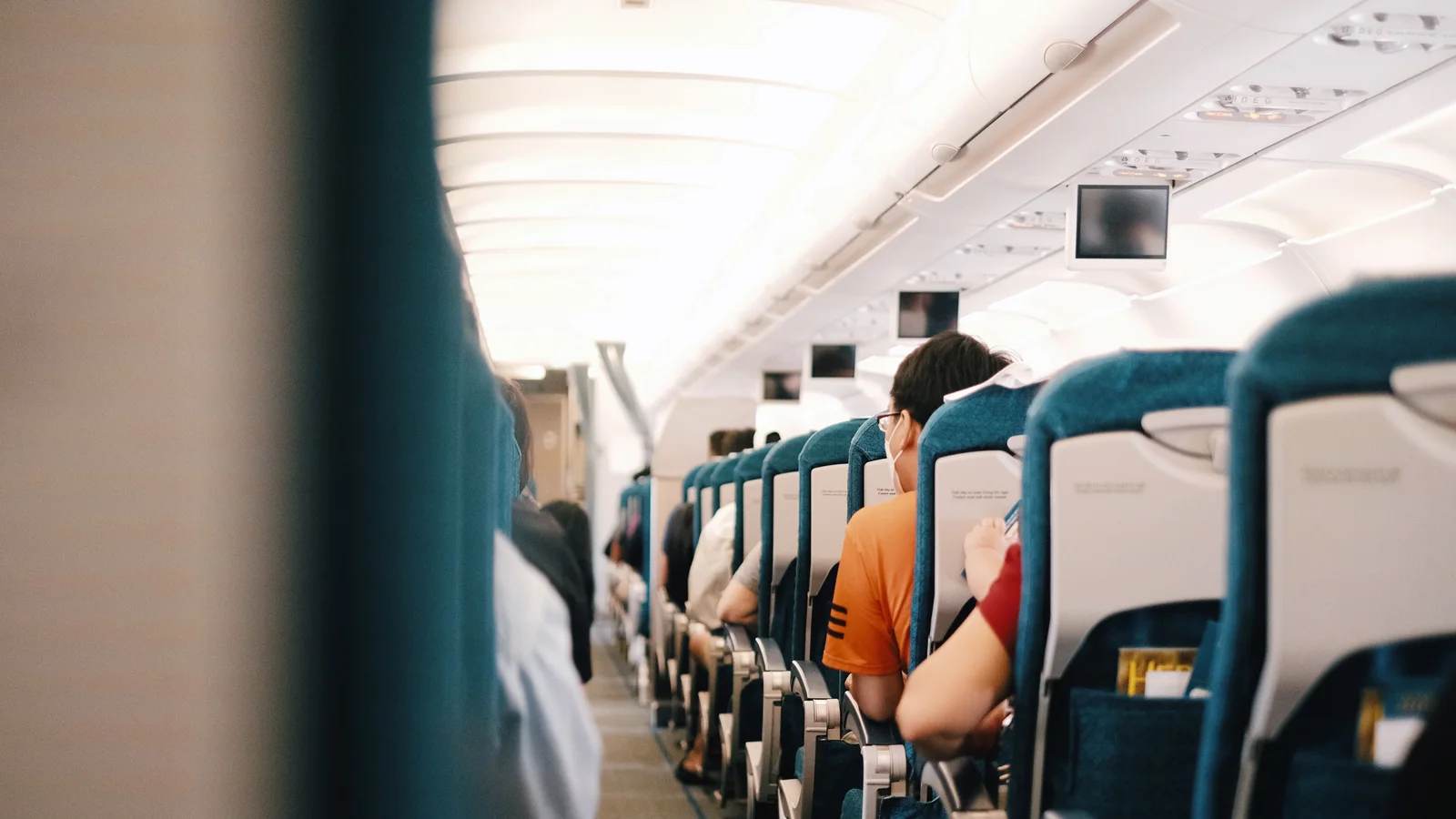
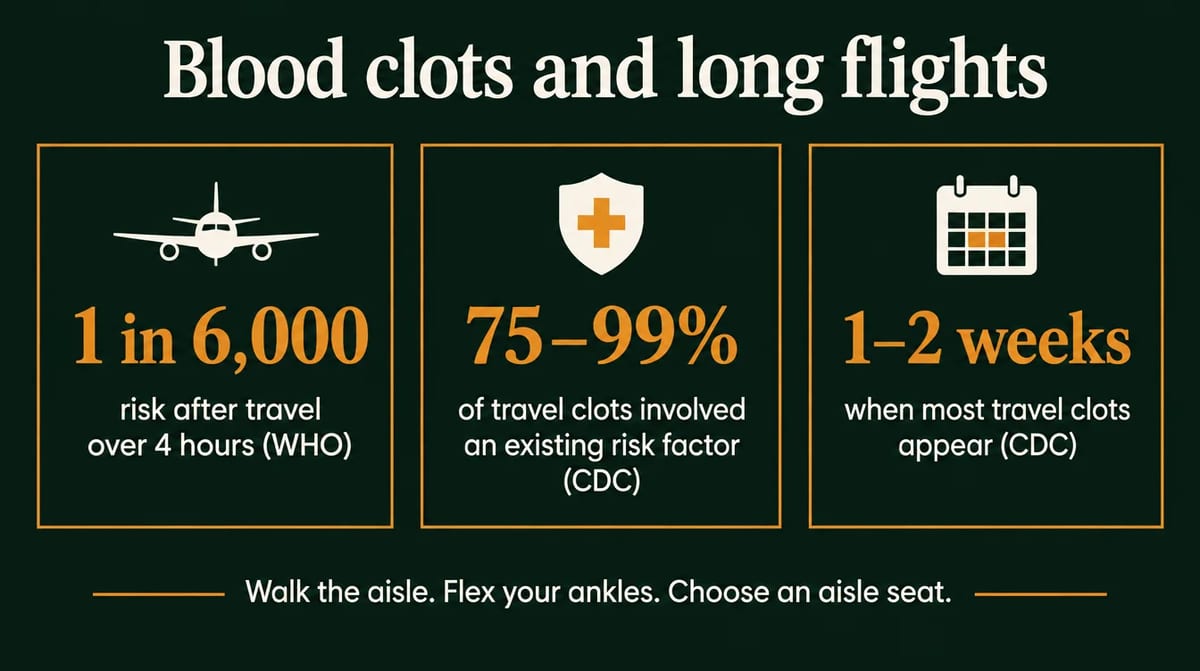
For a healthy traveller, the risk of a blood clot on a long-haul flight is small: about 1 in 6,000 for a journey of more than four hours, according to the World Health Organization. The risk is real but concentrated. The US Centers for Disease Control and Prevention says 75–99% of people who develop a travel-related clot already had at least one other risk factor, such as a previous clot, recent surgery, pregnancy, oestrogen-containing medicine or obesity. For everyone else, the useful habits are free: get up and walk, work your calf muscles, and take an aisle seat if you can.
- Move. Walking the aisle and flexing your ankles is the advice every health agency agrees on.
- Stockings are for people at increased risk, not for everyone. Guidelines from US medical societies recommend against them for travellers with no risk factors.
- Do not take aspirin “just for the flight” without a doctor’s advice.
- The danger window lasts weeks. A painful, swollen calf or sudden breathlessness in the month after landing needs a doctor that day.
How big the risk actually is
The chance of a clot after one long flight is low, and most of it sits with people who were already at risk. The WHO’s WRIGHT research project found that the risk of venous thromboembolism — a deep vein thrombosis (DVT) in the leg, or a pulmonary embolism (PE) in the lung — roughly doubles after four or more hours of seated travel, but that the absolute risk stays at about 1 in 6,000.
The cabin itself is not the main culprit. The CDC Yellow Book notes a similar rise in risk on long bus, car and train journeys, which points to hours of sitting still rather than cabin pressure.
| Measure | What the evidence says | Source |
|---|---|---|
| Absolute risk, travel over 4 hours | About 1 in 6,000 | WHO WRIGHT project |
| Absolute risk, flights over 4 hours | 1 in 4,656 to 1 in 6,000 person-flights | CDC Yellow Book |
| Relative increase | About 2 times, possibly up to 4 (data inconsistent) | WHO; CDC |
| Flights under 4 hours | Negligible risk of a symptomatic clot | CDC Yellow Book |
| When risk returns to normal | By 8 weeks; most clots within 1–2 weeks | CDC Yellow Book |
| Several flights close together | Higher risk; elevated for about 4 weeks after each | WHO WRIGHT project |
The journey to Kathmandu from the US, the UK or Australia means at least one long-haul leg, usually with a connection. That puts most visitors to Nepal inside the group the research describes — which does not make a clot likely.
Who is actually at risk
Most travel-related clots happen to people with at least one existing risk factor; the CDC puts the share at 75–99%. One study it cites found that 20% had five or more. The CDC and the NHS list broadly the same factors:
- a previous clot, or a family history of clots or an inherited clotting disorder;
- surgery or injury in the past three months, or a leg in a cast;
- pregnancy, or having given birth recently (the CDC says up to three months; the NHS says six weeks);
- the combined contraceptive pill, other oestrogen-containing contraception, or hormone replacement therapy;
- active cancer or recent cancer treatment, or obesity;
- older age — the CDC says risk rises after 40; the NHS lists being over 60.
Height is the factor few people know. The WHO and the CDC both report higher risk for air travellers shorter than 1.6 metres, whose legs may press on the seat edge, or taller than 1.9 metres, who have less room to move.
What works on the plane
Walking the aisle, calf exercises and an aisle seat are the measures every agency recommends; stockings and medicine are for people at increased risk only. The evidence is thinner than the confident advice suggests, and the CDC Yellow Book says so plainly.
| Measure | Who it is for | What the evidence says |
|---|---|---|
| Walking, ankle flexes, calf exercises | Everyone on a long flight | Indirect evidence; the CDC calls it reasonable because stillness drives the risk |
| Aisle seat | Everyone, especially at higher risk | One study found a window seat doubled risk; with a BMI of 30 or more, a window seat was linked to six times the risk |
| Below-knee compression stockings | Travellers at increased risk | Appear to reduce symptomless clots; not recommended for people with no risk factors |
| Drinking water, less alcohol | Everyone | Sensible and harmless, but the CDC finds no direct evidence it prevents clots |
| Aspirin or blood thinners | Only on a doctor’s advice, for high-risk travellers | Advised against for low-risk travellers by US guideline bodies |
The CDC’s routine is simple: stretch your legs out and pull your toes towards you, or pull each knee to your chest and hold it for 15 seconds, up to ten times. Walk whenever the seatbelt sign is off.
On stockings, the two US guideline bodies the CDC summarises agree. The American College of Chest Physicians recommends fitted below-knee stockings of 15–30 mmHg at the ankle for travellers at increased risk on journeys over six hours, and not for anyone else. The American Society of Hematology advises against stockings, injected blood thinners and aspirin for travellers without risk factors.
Hydration deserves an honest footnote. The NHS recommends plenty of water and little alcohol, and there is no harm in either, but the CDC Yellow Book finds no evidence that dehydration is linked to travel clots. Drink water because a long flight dries you out, not as a clot plan.
You have had a clot, had surgery in the last three months, are pregnant or recently gave birth, or are being treated for cancer. If you already take blood thinners, follow your own doctor’s travel instructions.
Warning signs after you land
A clot can appear days or weeks after the flight, so a painful swollen leg or sudden breathlessness in the following month needs urgent attention. The CDC says most appear within one to two weeks, and that about half of people with a DVT have no symptoms at all.
| Possible DVT (leg) | Possible pulmonary embolism (lung) |
|---|---|
| Throbbing pain or tenderness, usually in one calf or thigh | Sudden shortness of breath |
| Swelling in one leg | Chest pain that worsens with a deep breath or a cough |
| Skin that is warm, red or darkened around the painful area | A fast or irregular heartbeat |
| Swollen veins | Coughing up blood, light-headedness or fainting |
| Action: see a doctor as soon as possible (NHS: urgent GP or 111) | Action: emergency care now (NHS: 999 or A&E) |
Why this matters on a Nepal trek
The weeks after a long flight overlap with a trek, so breathlessness or a swollen calf on the trail should never be written off as altitude or a hard day. Most Annapurna and Everest itineraries start within days of landing in Kathmandu, inside the window when travel-related clots appear.
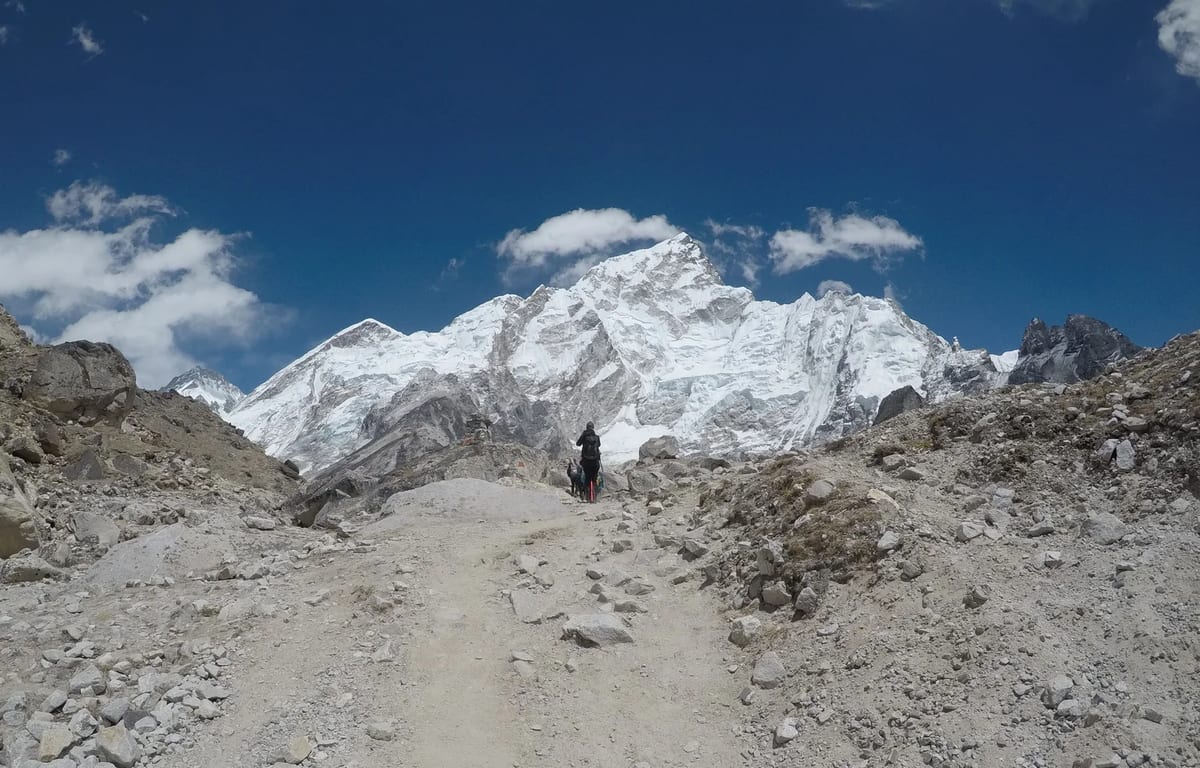
Altitude brings its own breathlessness, and the altitude sickness guide explains why breathlessness at rest is already a reason to stop climbing. Nobody should try to diagnose on the trail. Tell the guide about new calf pain, one-sided swelling or chest pain at once; both a clot and serious altitude illness need medical care.
Note any clot history or blood-thinning medicine in the trek first aid kit and on the insurance paperwork. Higher-risk travellers should book the pre-travel appointment early, as the Nepal vaccinations guide already advises.
The verdict
If you are healthy and have no risk factors, you need no stockings and no medicine — just move, choose the aisle and know the warning signs. If you have had a clot, recent surgery, a pregnancy, cancer treatment or take oestrogen, talk to your doctor before the trip, because that is the group the research says carries most of the risk.
Nobody should buy aspirin at the airport “to be safe”: the guideline bodies advise against it for low-risk travellers. The correct plan here is also the free one.
Give yourself a rest day in Kathmandu after the long haul, then walk. Annapurna Base Camp is nine days at $920 USD solo and Everest Base Camp is twelve days at $1,700 USD solo, including permits, a government-registered guide, a porter, teahouses and meals.
See the Annapurna Base Camp trek →What is the risk of a blood clot on a long flight?
About 1 in 6,000 for a journey of more than four hours, according to the WHO. The CDC says the risk on flights under four hours is negligible.
Should I wear compression socks on a long-haul flight?
Only if you are at increased risk, such as after a previous clot, recent surgery or during pregnancy. US guideline bodies do not recommend them for travellers without risk factors. Ask a pharmacist about fit and pressure.
Should I take aspirin before flying to prevent DVT?
Not unless a doctor advises it. The American College of Chest Physicians advises against aspirin or anticoagulants for long-distance travellers, and the American Society of Hematology advises against them for travellers without risk factors.
How long after a flight can a blood clot happen?
Weeks. The CDC says most appear within one to two weeks and that risk returns to normal by eight weeks.
What are the signs of a blood clot after flying?
Pain, tenderness or swelling in one leg, with warm or discoloured skin, can mean a DVT. Sudden breathlessness, chest pain that worsens when you breathe in, a racing heart or coughing up blood can mean a pulmonary embolism and needs emergency care.
Keep reading
Seat, kit and timing for the long way to Kathmandu.
The symptoms that mean stop climbing, and when to descend.
What to carry, and what the lodges will not have.
The evidence behind patches, tablets, ginger and wristbands.
Sources: World Health Organization, “Study results released on travel and blood clots” (WRIGHT project, Phase I); US Centers for Disease Control and Prevention, CDC Yellow Book 2026, “Deep Vein Thrombosis and Pulmonary Embolism”, for absolute risk, risk factors, timing, compression stockings, hydration, seat position and the ACCP and ASH guideline summaries; CDC, “Understanding Your Risk for Blood Clots with Travel”, for symptoms and in-seat exercises; NHS, “DVT (deep vein thrombosis)”, reviewed 30 April 2026, for symptoms, risk factors and when to seek urgent help; all read on 27 September 2026. Trek timing and altitude context from Travel Himalaya Nepal field reporting. This is general information, not medical advice; speak to a doctor or pharmacist about your own situation.
Photos via Pexels: Pew Nguyen (cover), Natã Romualdo, Lisanne W.

Written by
Anjali ShresthaPokhara-based, NMA-certified trekking guides. We’ve led 5,000+ treks across the Annapurna and Everest regions since 1998 — every word here comes from the trail. More from this author →
Ready to Trek?
From reading about it to standing on it
Our Pokhara-based guides have been doing this since 1998. Tell us your dates and fitness level — we'll build your perfect itinerary. Free, no obligation.
More guides like this
Popular trips to consider
View all treks & toursFree Trekker’s Insider Guide
Permits, packing lists, cost breakdowns — no fluff.
We send one useful email. You can unsubscribe anytime.