
The short version
A good first-aid kit is essential on remote Himalayan trails where help is hours or days away. Guide to exactly what to pack — altitude meds, blister care, stomach remedies, and the essentials.
- On Nepal's trails a clinic can be hours or days away — carry your own kit even though your guide carries one too.
- Cover five categories: altitude meds (doctor-advised), stomach & hydration (ORS, loperamide), blister/foot care, wound & injury basics, and your personal medication.
- Foot care is the most-used part of any trekker's kit — treat hotspots before they become blisters.
- Keep it compact and waterproof, split essentials between daypack and main bag, and pair it with proper insurance covering helicopter evacuation.
Why your kit matters
On Nepal's trails, a pharmacy or clinic can be hours or days away. A well-chosen personal first-aid kit lets you handle the common trail ailments — blisters, stomach upsets, headaches, minor injuries — and the altitude-related issues that matter most. Your guide carries a kit too, but bring your own essentials.
Acetazolamide (Diamox, doctor-advised) and ibuprofen/paracetamol for altitude headaches and aches.
Oral rehydration salts, loperamide, a doctor-prescribed antibiotic for severe gut infections, and antacids.
Blister plasters (Compeed), zinc oxide tape, antiseptic cream and alcohol wipes — the most-used part of any kit.
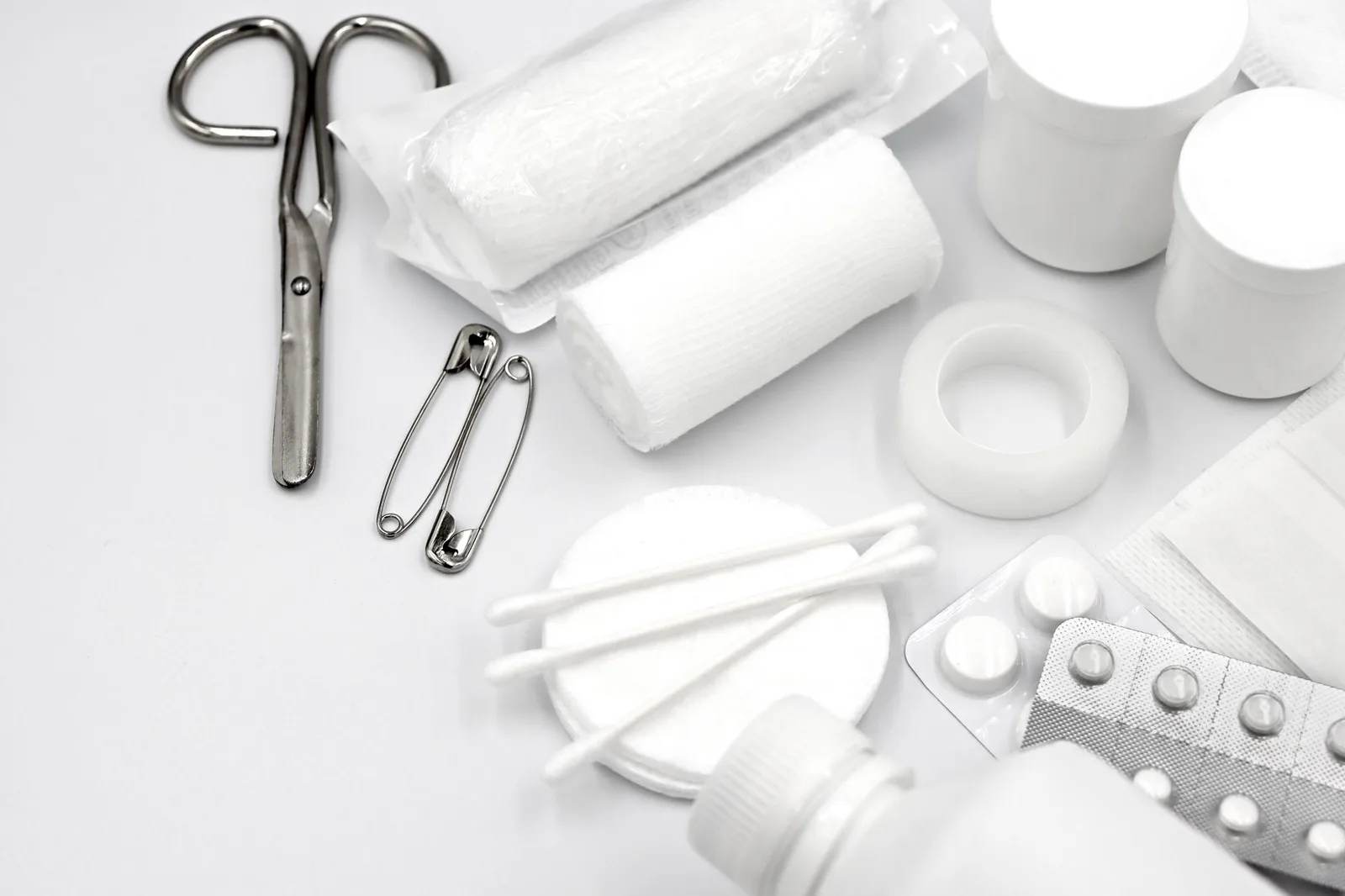
Plasters, gauze and bandage, antiseptic, tweezers, safety pins and a crepe bandage for sprains.
Altitude essentials
Acetazolamide (Diamox): For preventing/treating altitude sickness — discuss with a doctor before your trip; it's a sulfa drug.
Ibuprofen / paracetamol: For altitude headaches and aches.
Know the AMS symptoms and the golden rule: if severe, descend. Meds are an aid, not a fix.
Diamox and painkillers can ease altitude symptoms, but they do not replace sensible ascent. If symptoms are severe — worsening headache, vomiting, breathlessness at rest — the only reliable cure is to descend immediately.
Stomach & hydration
Oral rehydration salts (ORS): Crucial for diarrhoea and dehydration at altitude.
Anti-diarrhoeal (loperamide/Imodium): For travel and managing symptoms on long days.
Antibiotic for travellers' diarrhoea (e.g. a course prescribed by your doctor): for severe gut infections far from care.
Antacids for indigestion.
On the links below. Some go to Amazon, and as an Amazon Associate we earn from qualifying purchases — at no extra cost to you. It changes nothing about what we recommend: we tell people to rent down jackets and sleeping bags in Thamel rather than buy them, and we earn nothing when they do. These are the things worth owning.
Blister plasters — twice as many as you think
Hydrocolloid blister plasters are the single most-used item in any trekking kit, and the hardest to replace once you are above Chhomrong. Buy a proper pack before you fly. Your guide carries a kit, but it is not there to resupply eight people with blisters.
Do not rely on a pre-made "travel first aid kit" for this. They are thin on exactly the thing you will need daily.
Compare blister care →Blister & foot care
Blister plasters (Compeed) and zinc oxide tape — treat hotspots before they become blisters.
Antiseptic cream and a few alcohol wipes.
Foot care is the most-used part of any trekker's kit.
The moment you feel a hotspot, stop and tape it. A 30-second fix with zinc oxide tape or a blister plaster prevents a blister that could compromise days of walking.
Wound & injury care
Assorted plasters/band-aids, sterile gauze and a bandage, antiseptic, tweezers (splinters/ticks), safety pins, and a crepe/elastic bandage for sprains (ankles and knees take a beating on descents).
Other useful items
Throat lozenges (the dry, dusty 'Khumbu cough' is real), antihistamine (allergies/bites), any personal medication in original packaging with a doctor's note, high-SPF sunscreen and SPF lip balm, hand sanitiser, and a small supply of any prescription you rely on (carry extra in case of delays).
Pack smart
Keep it compact and waterproof (a dry bag or zip pouch). Split essentials between your daypack (blister kit, painkillers, ORS, sunscreen) and main bag. Know how to use everything before you go. Tell your guide about any medical conditions or allergies.
The bottom line
A focused kit — altitude meds (doctor-advised), rehydration salts and anti-diarrhoeals, blister care, wound basics, and your personal medication — covers the vast majority of trail issues. Combined with a trained guide and proper insurance (with heli-evacuation), it's your front line for staying healthy in the remote Himalaya.
Do I need my own first aid kit if my guide carries one?
Yes. Your guide carries a group kit, but you should bring your own essentials — blister care, painkillers, ORS, personal medication and altitude meds — so you can manage minor issues immediately without waiting.
What is the most-used item in a trekking first aid kit?
Foot care. Blister plasters and zinc oxide tape get used more than anything else — treating hotspots before they become blisters is the single best way to protect your trek.
Pack the rest of your gear with confidence: see our complete Nepal trekking packing list, and if you're new to the Himalaya read the beginner's guide to trekking in Nepal. Questions about clinics, insurance or evacuation on a specific route? Contact our team.


Private departures on any date, hand-picked NMA guides, and 25+ years on the trail. Tell us your dates — we usually reply within a few hours.
Browse all treks & tours →The rest of our gear advice. We keep every recommendation in one place at what to buy and what to rent — organised by category, and including the expensive things we think you should rent in Thamel rather than buy. Those carry no buy links, because there is nothing there for us to earn.
Featured image: Marta Branco via Pexels.
As an Amazon Associate we earn from qualifying purchases, at no extra cost to you.
Written by
Travel Himalaya NepalPokhara-based, NMA-certified trekking guides. We’ve led 5,000+ treks across the Annapurna and Everest regions since 1998 — every word here comes from the trail. More from this author →
Share this article
Ready to Trek?
From reading about it to standing on it
Our Pokhara-based guides have been doing this since 1998. Tell us your dates and fitness level — we'll build your perfect itinerary. Free, no obligation.
Why trek with our licensed agencyMore guides like this
Popular trips to consider
View all treks & toursFree Trekker's Insider Guide
Permits, packing lists, cost breakdowns — no fluff.
We send one useful email. You can unsubscribe anytime.