
The short version
Always choose the local currency. Dynamic currency conversion lets the terminal set its own rate, and EU law makes it show you the markup first.
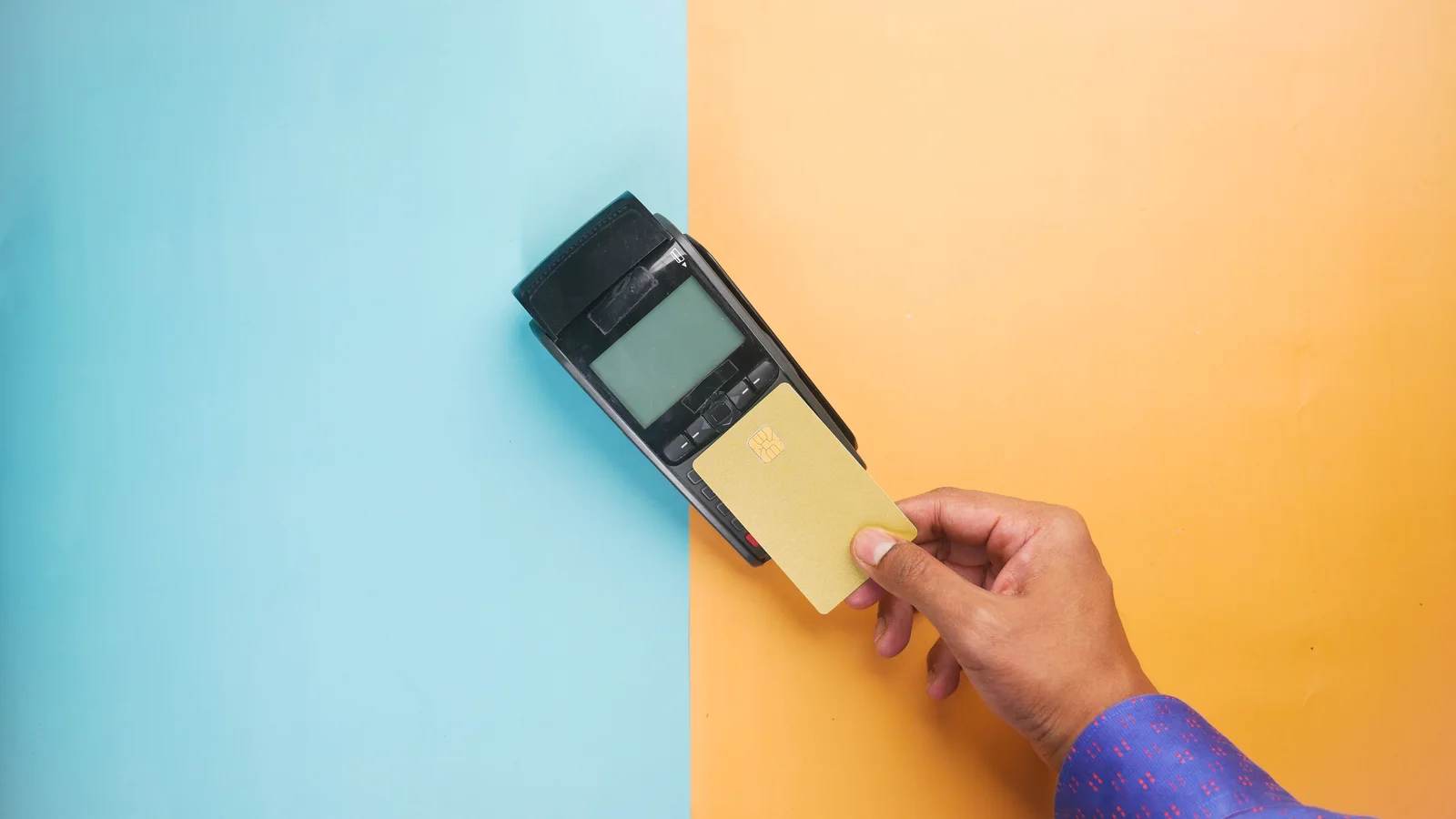
Pay in the local currency. Every time. When a card machine or an ATM abroad offers to charge you in pounds, dollars or euros instead of the local money, that is a service called dynamic currency conversion, and you are being asked to let the shop’s payment provider set the exchange rate instead of your own bank. It is the one question on the terminal where the polite-looking option is the expensive one, and under EU law the machine has to show you the size of the markup before you agree to it.
- Always choose the local currency — rupees in Nepal, euros in Spain, yen in Japan.
- The machine is required to tell you it is optional, and in the EU to show the markup as a percentage.
- You can be charged in up to four separate places, and only one of them is the exchange rate.
- Above Namche there are no ATMs at all, which makes this a planning question, not just a checkout one.
What the machine is actually offering you
It is offering to do the currency conversion itself, at a rate it chooses, before the transaction ever reaches your bank. Normally a foreign card payment travels to your own bank in the local currency, and your bank converts it using the card network’s rate. With dynamic currency conversion, the merchant’s payment provider converts it at the till instead, and hands your bank a figure already in your home currency.
The appeal is obvious and it is deliberate: you see a number in money you understand, which feels like certainty rather than a gamble. What you are not shown as clearly is that the provider doing that conversion is not doing it for free, and that a share of the difference commonly goes back to the merchant as an incentive to offer it. That is why the screen so often nudges toward it, and why the local-currency button is sometimes the smaller, greyer one.
The law makes them show you the markup, so read it
Inside the EU, the percentage markup has to be on the screen before you press anything. Regulation (EU) 2019/518, which amended the earlier cross-border payments regulation, requires that currency conversion charges on card payments and ATM withdrawals be expressed as a percentage markup over the most recent euro reference rate published by the European Central Bank, and disclosed to the payer before the payment is initiated. Pinning it to the ECB rate was about comparability: a percentage over a public benchmark can be compared, while a bare exchange rate cannot.
The card networks add their own requirement. Visa’s operating rules state that a merchant must inform the cardholder that dynamic currency conversion is optional, and must not use language or procedures that cause the cardholder to choose it by default. Mastercard requires equivalent disclosure. So if a terminal ever presents the home-currency option as the only way forward, or makes the choice for you, that is not merely annoying — it breaks the rules the merchant agreed to.
You will find articles quoting a precise average markup — five per cent, seven per cent, twelve. We went looking for those figures at source and could not read them in the original consumer-body and academic publications, several of which sit behind paywalls or unreadable files. So we are not repeating a number we cannot stand behind. You do not need it: in the EU the markup is required to be on the screen in front of you, for your transaction, at that moment. Read that, not an average.
The four places a trip abroad loses money on payments
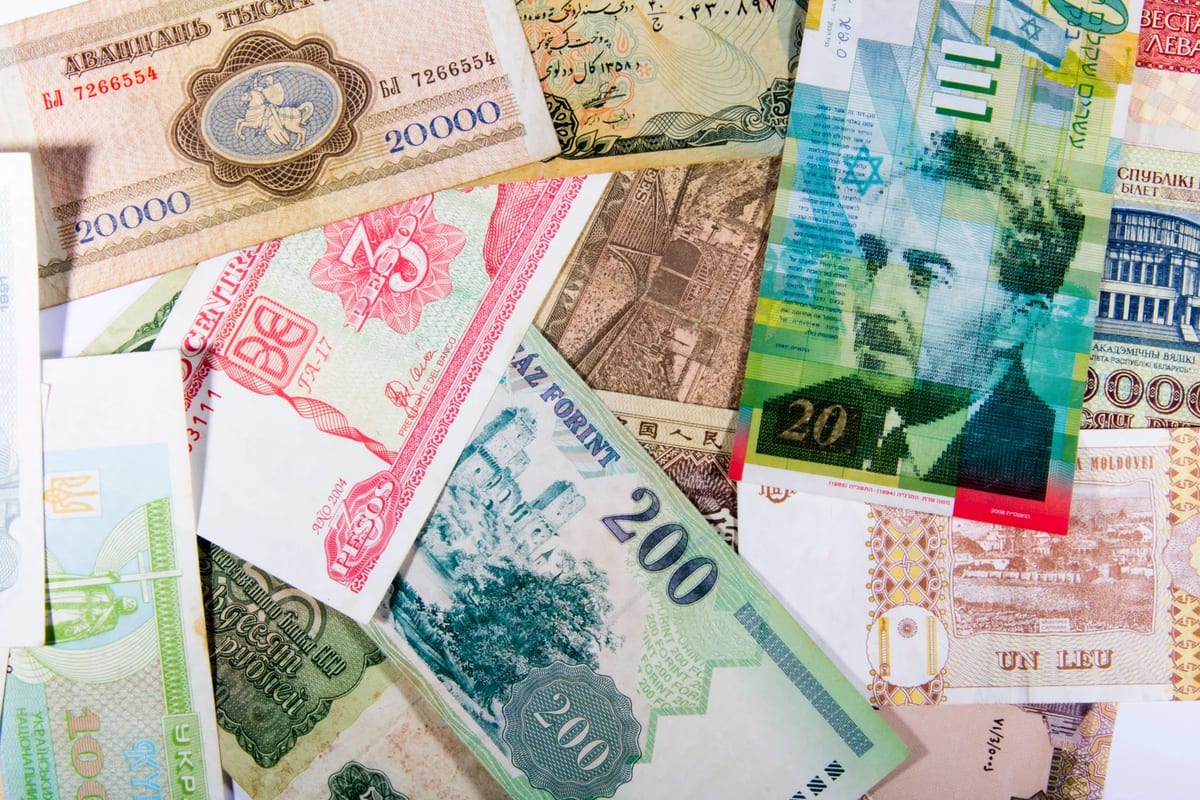
The exchange rate is only one of four charges, and travellers who fix the rate often still pay the other three. They stack, they come from different companies, and each one can be found before you travel.
| Charge | Who takes it | Where to find the number |
|---|---|---|
| Conversion markup (DCC) | The merchant’s or ATM operator’s payment provider | On the terminal screen — decline and it disappears |
| Foreign transaction fee | Your own card issuer | Your card’s terms, as a percentage per transaction |
| ATM operator fee | The bank that owns the machine | On screen before you confirm; in Nepal about NPR 500 |
| Cash advance interest | Your card issuer, on a credit card | Your card’s terms — often charged from day one |
That last row catches people out because it is invisible at the machine. A cash withdrawal on a credit card is frequently treated as a cash advance, which can attract interest immediately with no interest-free period, on top of every other fee. A debit card avoids that entirely, and it is the single easiest change most travellers can make. Which cards charge no foreign transaction fee at all is covered in our guide to avoiding card and ATM fees abroad.
The ATM version is the same trick with a worse screen
Cash machines abroad offer dynamic currency conversion too, and the wording is built to confuse. You will be asked something like “with conversion” or “without conversion”, or shown a rate alongside a warning that declining means your bank will set the rate. Declining is the answer. “Your bank sets the rate” is not a risk being flagged to you; it is the outcome you want.
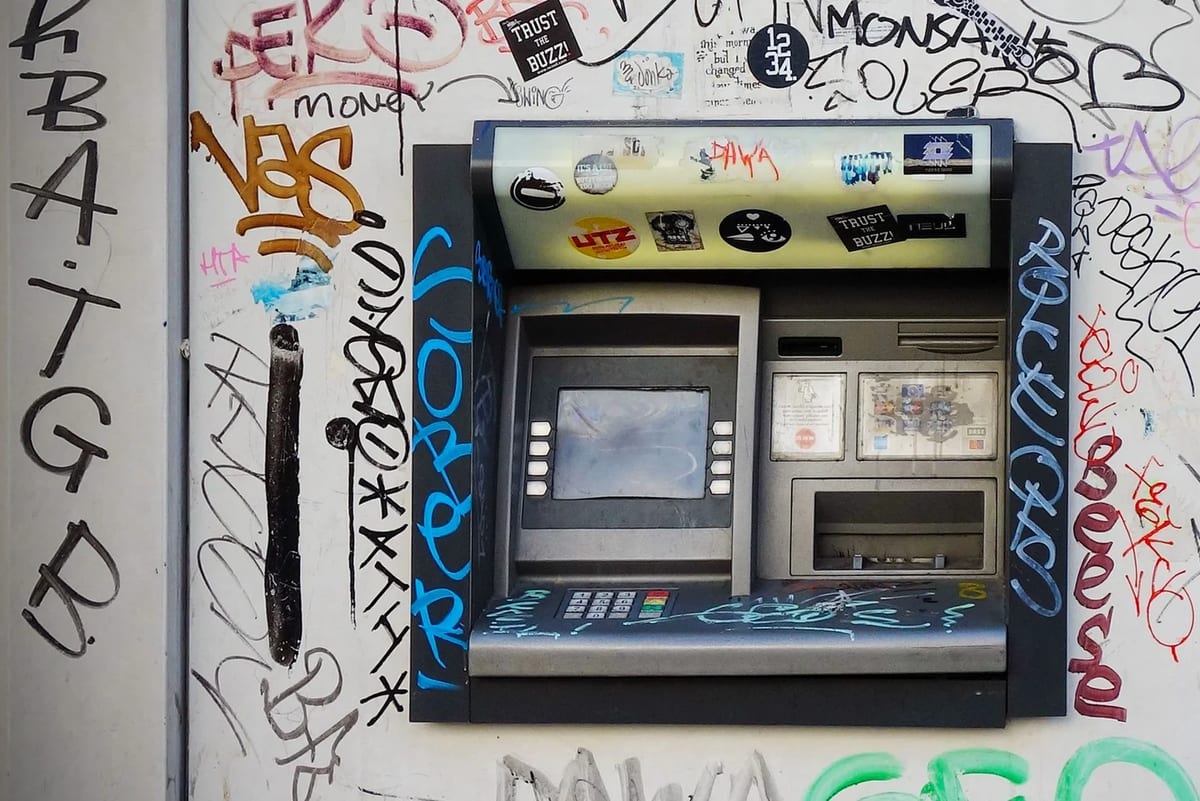
The operator’s own withdrawal fee is separate and survives your choice. Declining the conversion removes only the rate markup, not that fee. The way to shrink the operator fee is to make fewer, larger withdrawals — the opposite of what most people instinctively do in an unfamiliar country.
What this means on a trek in Nepal
In Nepal the payments question becomes a logistics question, because past a certain altitude there is nowhere to pay by card at all. Kathmandu and Pokhara have plenty of machines, with a per-transaction fee of roughly NPR 500, about three US dollars, charged by the Nepali bank on top of anything your own bank adds. Counting both sides, we tell trekkers to budget three to six US dollars per withdrawal. Cards work in city hotels, restaurants and larger shops, and increasingly not much further.
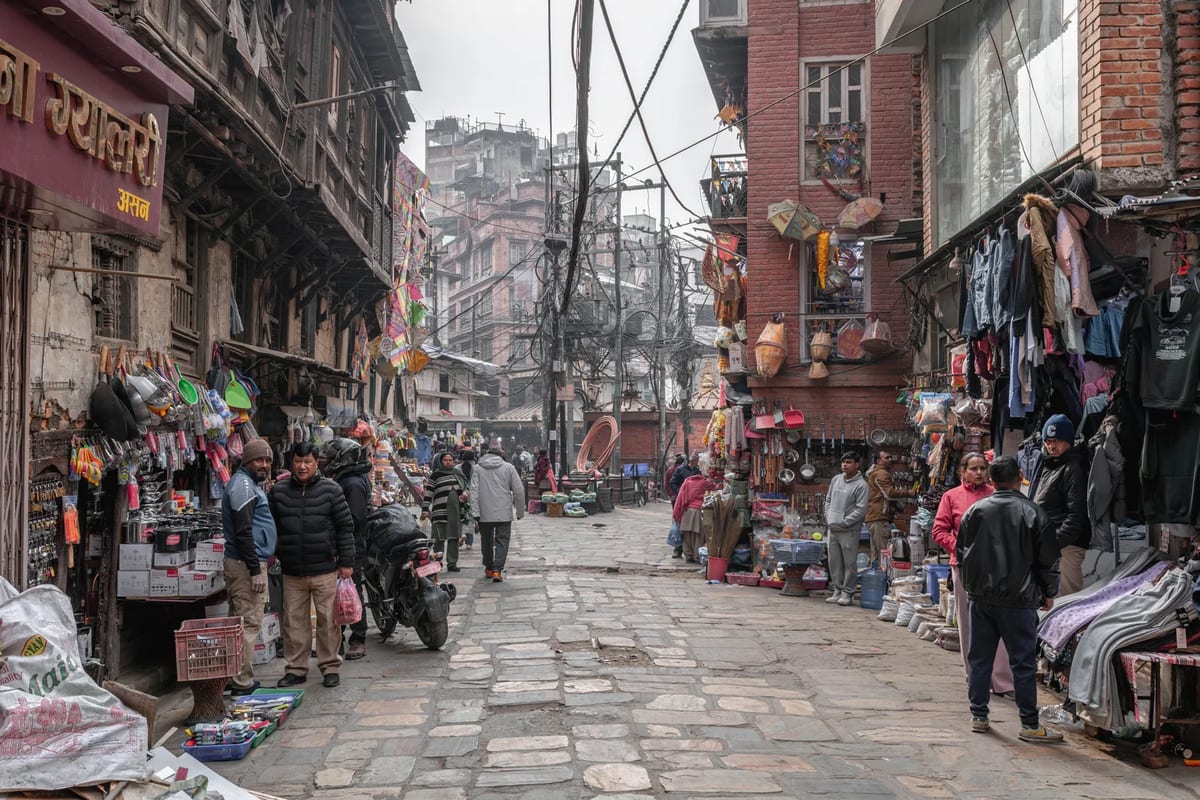
On the Everest trail, Namche Bazaar holds the last two cash machines on any Khumbu route, with a single-withdrawal cap of around NPR 30,000, roughly 225 US dollars. Above Namche everything is cash: charging your phone, hot showers, wifi, snacks, tips. On other routes the cash stops far lower — there is nothing beyond Taplejung on the Kanchenjunga side, for example. So the sensible sequence is to withdraw in the city, carry rupees in small notes, and treat Namche as a top-up rather than a plan.
Bring US dollars in cash for the visa on arrival too — it costs 30, 50 or 125 US dollars depending on the length you choose — and keep a couple of hundred dollars as a buffer for machines that are out of service during the October and November peak. Our Nepal budget guide has the wider cost picture, and the visa on arrival guide covers the payment desk at the airport.
What we would do
Carry a debit card with a low or zero foreign transaction fee, always decline the conversion, and withdraw in large amounts in Kathmandu or Pokhara rather than small ones on the trail. That combination removes the markup, removes cash-advance interest, and cuts the per-withdrawal fee by making withdrawals rare. It is three decisions, all made before you fly.
The one exception is when the home-currency figure is genuinely lower than the local-currency figure on the same screen. It happens occasionally with a badly configured terminal, and the two numbers are right there to compare — which is the whole reason the rules put them side by side. Otherwise, local currency, and do not let a hurried card machine make the choice for you.
Tell us your route and we will tell you where the last ATM is, what your days actually cost in rupees and how much cash to carry from Kathmandu. Annapurna Base Camp is nine days at $920 USD solo and Everest Base Camp is twelve days at $1,700 USD solo, including permits, a government-registered guide, a porter, teahouses and meals.
See the Annapurna Base Camp trek →Should I pay in local currency or my own currency abroad?
Local currency, almost always. Choosing your own currency hands the conversion to the merchant’s payment provider at a rate it sets, instead of your bank using the card network’s rate.
What is dynamic currency conversion?
A service that converts a foreign card transaction into your home currency at the point of sale, before it reaches your bank. It must be offered as a choice, and in the EU the percentage markup must be shown before you pay.
Is declining the conversion risky?
No. Declining simply means your own bank converts the transaction, which is usually the cheaper route. The warning some machines show about your bank setting the rate is describing the normal, better outcome.
How much do ATMs cost in Nepal?
About NPR 500 per withdrawal charged by the Nepali bank, and three to six US dollars per withdrawal once your own bank’s fees are counted. Fewer, larger withdrawals cost less overall.
Where is the last ATM on the Everest Base Camp trek?
Namche Bazaar, which has the last two machines on any Khumbu route, with a single-withdrawal cap of around NPR 30,000. Everything above Namche is cash only.
Should I use a credit card or a debit card for cash abroad?
A debit card. A cash withdrawal on a credit card is often treated as a cash advance and can attract interest from the day you take it out, with no interest-free period.
Keep reading
What card cover leaves out above 3,000 metres.
Where to change money, eat and sleep in the city.
eSIM against local SIM, worked out per gigabyte.
The travel authorisations you pay for before you fly.
Sources: Regulation (EU) 2019/518 amending Regulation (EC) No 924/2009 on cross-border payments, on expressing currency conversion charges as a percentage markup over the European Central Bank reference rate and disclosing them before the payment is initiated; Visa operating rules, rule 5.9.8.3, on dynamic currency conversion being optional and never selected by default; Mastercard dynamic currency conversion disclosure requirements. Nepal ATM fees, withdrawal caps and trail cash limits from Travel Himalaya Nepal field reporting and our own published Nepal guides. Card terms change — check yours before you travel.
Photos via Pexels: Towfiqu barbhuiya (cover), Valentin Ivantsov, mali maeder, Roman Saienko.

Written by
Bishnu AdhikariPokhara-based, NMA-certified trekking guides. We’ve led 5,000+ treks across the Annapurna and Everest regions since 1998 — every word here comes from the trail. More from this author →
Share this article
Ready to Trek?
From reading about it to standing on it
Our Pokhara-based guides have been doing this since 1998. Tell us your dates and fitness level — we'll build your perfect itinerary. Free, no obligation.
Why trek with our licensed agencyMore guides like this
Popular trips to consider
View all treks & toursFree Trekker’s Insider Guide
Permits, packing lists, cost breakdowns — no fluff.
We send one useful email. You can unsubscribe anytime.