Japan ski insurance has a backcountry gap most Australians never read
Japanese hospitals bill visitors in full and Niseko charges from 100,000 yen for backcountry rescue. What to check before you ski Japan.
On this page (8)
- Who pays for a ski rescue in Niseko or Hakuba?
- Is a police or fire helicopter rescue free in Japan?
- What a Japanese hospital charges a foreign skier
- Why an unpaid bill can stop your next trip to Japan
- Does Medicare or a US health plan cover skiing in Japan?
- The checklist for Australian and American skiers
- Our verdict
- Frequently asked questions
If you ski in Japan, your Medicare card, your US health plan and Japan’s own public insurance will not pay a Japanese hospital, and a search-and-rescue call outside a resort boundary can be billed to you. As of October 2026, Niseko’s official rules set a minimum charge of ¥100,000 for search and rescue in its backcountry, Hakuba Valley says the person rescued pays when a private rescue team is sent, and Japan’s health ministry now lets some hospitals charge uninsured visitors up to three times the public fee schedule. The fix is a travel policy that names snow sports, names off-piste on the terms you will actually ski it, and names search and rescue.
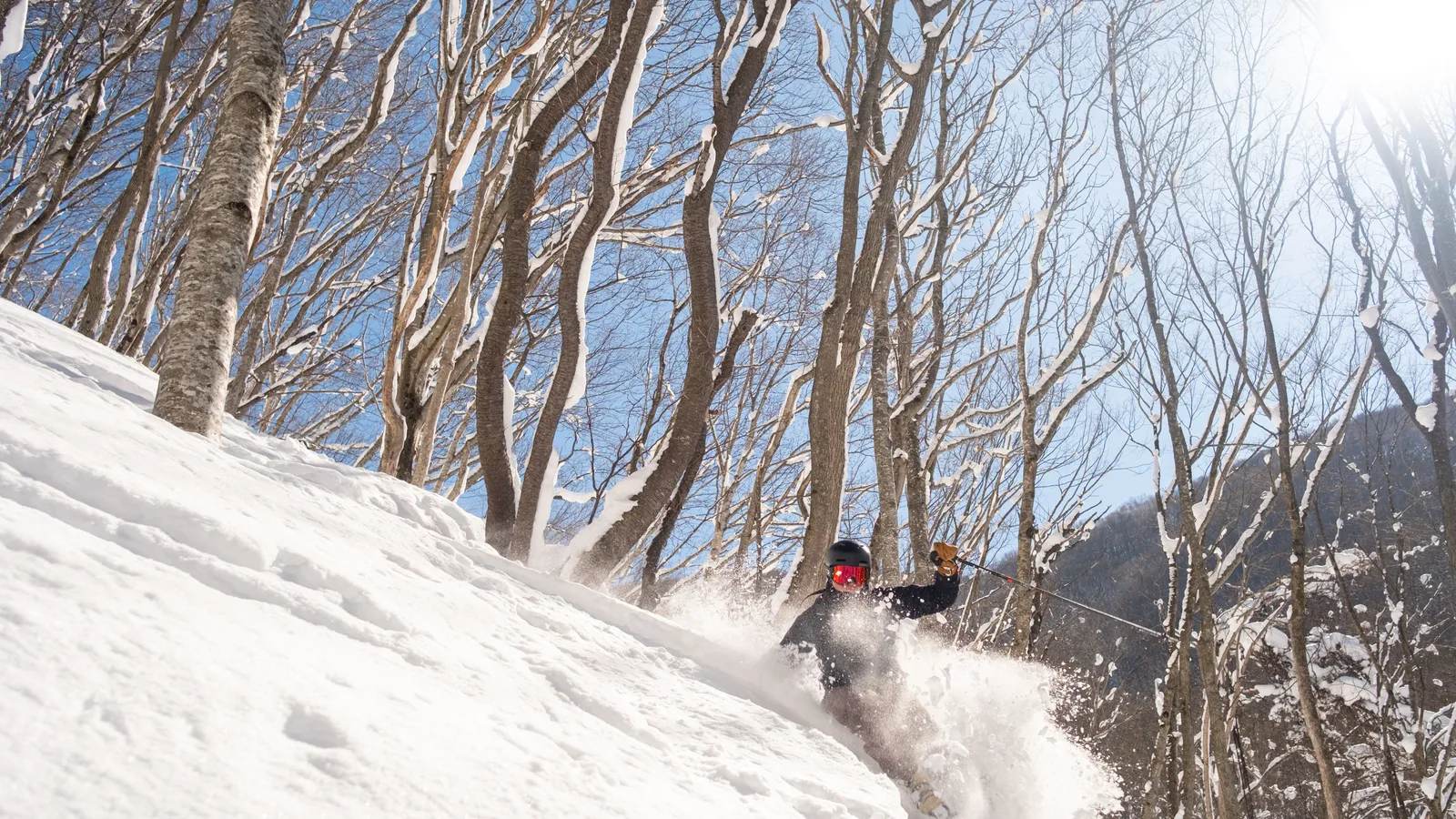
- Resort boundary is the line that matters. Inside it, ski patrol looks after you. One metre outside it, in Hakuba Valley’s words, is an uncontrolled area.
- Public rescue in Nagano is not billed today, but private teams and resort patrols working outside the boundary are.
- A hospital bill unpaid in Japan follows you. From April 2026 a debt of ¥10,000 or more can be reported to immigration.
- “Snow sports cover” is not the same as off-piste cover. Read the off-piste clause word for word.
Who pays for a ski rescue in Niseko or Hakuba?
Inside the resort, ski patrol brings you down; outside it, you should expect to be billed for any search or rescue that is not carried out by the police or fire service.
The official Niseko Rules, published on the Niseko United resort site, say that “a minimum of ¥100,000 will be charged for search and rescue operations in backcountry areas.” The same rules require gates, ban ducking ropes, ask for a helmet and avalanche beacon in the backcountry, and let the resort confiscate a rule-breaker’s lift pass.
Hakuba Valley’s official safety page is just as direct. Backcountry access is only through gates at Hakuba Goryu, Happo-one, Tsugaike, Hakuba Norikura and Hakuba Cortina. “Even areas as close as 1 metre outside of the resort boundaries are not controlled by ski patrol,” and “Hakuba Valley snow resorts accept no liability for accidents that occur in the backcountry.” On cost it says: “If a private rescue team is dispatched due to the accident location or rescue situation, search and rescue expenses shall be borne by the person being rescued.” You must also file a Mountain-Climbing Registration Form before you buy a ticket to go outside the boundary.
Hakuba Goryu publishes an hourly tariff for any out-of-boundary search and rescue, which it says “will charged with no question”: ¥20,000 per ski patroller, ¥10,000 per rescue assistant, ¥5,000 per headquarters staff member, ¥50,000 per snow-grooming machine and ¥10,000 per snowmobile. By our arithmetic, four patrollers and one snowmobile for three hours comes to ¥270,000 on that table, before any hospital.
Is a police or fire helicopter rescue free in Japan?
In Nagano Prefecture, home of Hakuba, the prefecture says it does not currently ask individuals to pay for ground or helicopter search and rescue by the police or fire service. That is from the prefecture’s published reply of 29 August 2025, which also said it is studying how the cost of mountain rescue should be shared, so treat it as today’s position rather than a promise.
The same reply gives the scale: Nagano recorded 321 mountain incidents and 350 people involved in 2024, a record. Hakuba Valley adds the practical catch: if weather, wind or another operation stops the public helicopter flying, a land rescue starts instead, and that is where private teams, and private bills, come in.
Elsewhere, Japan is starting to charge: Yamanashi Prefecture plans a helicopter fee for off-season climbers on Fuji, which we covered in Mount Fuji will now bill you for your own rescue helicopter.
What a Japanese hospital charges a foreign skier
As a visitor you pay the full cost of treatment, and since 1 April 2026 some hospital groups may charge uninsured visitors up to three times the rate a Japanese patient’s insurance is billed. The Government of Japan puts it plainly: “public health insurance and medical insurance from the visitor’s own country does not cover costs when attending a Japanese hospital,” and an uninsured patient pays in full, which “can amount to a substantial sum even in the case of minor injuries.”
The ministry of health (MHLW) sets the price ceiling. Japan’s public fee schedule values each point at ¥10. A notice of 31 March 2026 lets social medical corporations and similar non-profit hospital groups set a visitor price of up to three times the public amount, capped at ¥30 a point, provided it does not exceed the local standard and is checked by the authorities.
JNTO, the national tourism organisation, shows what a serious case costs. Its two published examples, supplied by an insurance assistance company, are a bicycle collision with a collapsed lung and broken ribs (surgery, 19 days in hospital, a business-class flight home: ¥7.5 million) and a heart attack (surgery, 45 days in hospital, flight home: ¥10 million). Neither is a ski injury, but a broken leg in Hokkaido follows the same path.
| What happens | Who pays, as of October 2026 | Source |
|---|---|---|
| Injury on a groomed run in the resort | Ski patrol brings you down; the hospital bills you in full | Government of Japan; resort rules |
| Search and rescue in Niseko’s backcountry | You, minimum ¥100,000 | Niseko Rules |
| Private rescue team sent in Hakuba Valley | The person rescued | Hakuba Valley safety tips |
| Hakuba Goryu out-of-bounds search | You, by the hour (¥20,000 per patroller) | Hakuba Goryu ski patrol |
| Police or fire rescue in Nagano | Not billed to individuals at present | Nagano Prefecture, 29 Aug 2025 |
| Hospital treatment for an uninsured visitor | You; some hospitals up to 3x the public rate | MHLW notice, 31 Mar 2026 |
| A bill you leave unpaid | Reported if ¥10,000 or more; stricter re-entry checks | MHLW notice, 4 Feb 2026 |
Why an unpaid bill can stop your next trip to Japan
Hospitals report visitors who leave a medical bill unpaid, and the ministry shares that list with the Immigration Services Agency, which can apply stricter checks the next time you arrive. The system has run since May 2021. An MHLW notice dated 4 February 2026 lowered the reporting threshold from ¥200,000 to ¥10,000, for unpaid amounts arising on or after 1 April 2026. MHLW’s English page for visitors says: “Failure to pay medical fees may result in stricter immigration procedures for future visits to Japan.”
A policy that pays the hospital directly matters as much as the cover limit.
Does Medicare or a US health plan cover skiing in Japan?
No for Australians, and usually no for Americans on Medicare. Services Australia lists 11 countries with a reciprocal health care agreement (Belgium, Finland, Italy, Malta, the Netherlands, New Zealand, Norway, Ireland, Slovenia, Sweden and the United Kingdom). Japan is not one of them, so an Australian Medicare card does nothing in a Japanese hospital. Medicare.gov says that “Medicare usually doesn’t cover health care while you’re traveling outside the U.S.,” with narrow exceptions that do not reach a ski field in Japan; some Medigap policies include an emergency benefit abroad, so check yours. On a private US plan, ask in writing what it pays abroad.
Smartraveller, the Australian government’s travel service, says adventure activities are usually an optional extra, and names the trap: a policy “may cover snowboarding in a resort but not off-piste.” One of its consular officers in Tokyo, after a night helping police reach two stranded Australians, put it this way: “Being evacuated to hospital via helicopter could clear out your savings if you don’t have travel insurance!”
For the general difference between a ski add-on and a standard policy, our winter sports insurance explainer covers the clauses that apply in any country.
Policies word this differently: some cover off-piste only “within resort boundaries”, some only “with a qualified guide”, some exclude “backcountry” or “ski touring” outright. Japan’s gate system means a run through a Niseko gate is outside the boundary. If your policy says “within resort boundaries”, that run is not covered.
The checklist for Australian and American skiers
Check seven lines of the policy wording before you pay, and keep the answers in writing.
- Snow sports are named for every day you will ski.
- Off-piste is defined, and the definition matches how you will ski: gates, sidecountry, guided backcountry, or touring with skins.
- Search and rescue is named, not just “emergency medical expenses”. A rescue that finds you uninjured is still a rescue.
- Medical evacuation and repatriation have a stated limit.
- The insurer can pay a Japanese hospital directly and runs a 24-hour assistance line.
- Helmet and alcohol clauses are read. Some policies refuse a claim if you were not wearing a helmet or had been drinking.
- Rules followed: registration filed in Hakuba, gates used in Niseko, ropes respected.
If you are weighing a membership-style evacuation product alongside travel insurance, our comparison of evacuation membership and travel insurance explains what each one actually pays for.
Heading to the Alps instead? The rules there are different again, and a UK health card does not change them; see ski insurance in Europe and the rescue gap.
Our verdict
Buy the policy for the skiing you will actually do, not the skiing you tell yourself you will do. If there is any chance you will go through a Niseko gate or file a Hakuba registration form, you need off-piste cover that does not stop at the resort boundary, plus named search and rescue and a direct-billing hospital service. If you will stay on groomed runs, a snow-sports add-on with a solid medical and evacuation limit is enough. Either way, the hospital bills you in full.
Frequently asked questions
How much does a backcountry rescue cost in Niseko?
The official Niseko Rules set a minimum of ¥100,000 for search and rescue operations in backcountry areas, as of October 2026. The rules do not publish a maximum.
Do I need a guide to go off-piste in Hakuba?
Hakuba Valley does not require one, but recommends that inexperienced skiers go with a professional local guide certified by a national body recognised by the IFMGA. You must use the designated gates and file a Mountain-Climbing Registration Form first.
Will my Australian Medicare card work in Japan?
No. Japan is not one of the 11 countries Australia has a reciprocal health care agreement with, so you pay Japanese hospital bills yourself unless a travel policy pays them.
What happens if I leave Japan without paying a hospital bill?
For unpaid amounts arising from 1 April 2026, hospitals can report debts of ¥10,000 or more to MHLW, which shares the information with the Immigration Services Agency. Your next entry to Japan may face stricter checks.
Sources, all read 9 October 2026: Niseko Rules (Niseko United); Hakuba Valley Promotion Board, Backcountry safety tips; Hakuba Goryu ski patrol, out-of-boundary search and rescue fee; Nagano Prefecture, Kenmin Hotline reply on mountain rescue costs (29 August 2025); Government of Japan, Highlighting Japan (December 2025); Ministry of Health, Labour and Welfare notices of 4 February and 31 March 2026 and its page for international visitors; JNTO, private medical insurance for visitors; Services Australia, reciprocal health care agreements; Medicare.gov, Travel outside the U.S.; Smartraveller, sports and adventure guidance and a Japan consular case study. General information, not insurance or legal advice; your policy wording decides a claim.
Written by
Bishnu AdhikariPokhara-based, NMA-certified trekking guides. We’ve led 5,000+ treks across the Annapurna and Everest regions since 1998 — every word here comes from the trail. More from this author →
Ready to Trek?
From reading about it to standing on it
Our Pokhara-based guides have been doing this since 1998. Tell us your dates and fitness level — we'll build your perfect itinerary. Free, no obligation.
More guides like this
Popular trips to consider
View all treks & toursFree Trekker’s Insider Guide
Permits, packing lists, cost breakdowns — no fluff.
We send one useful email. You can unsubscribe anytime.