
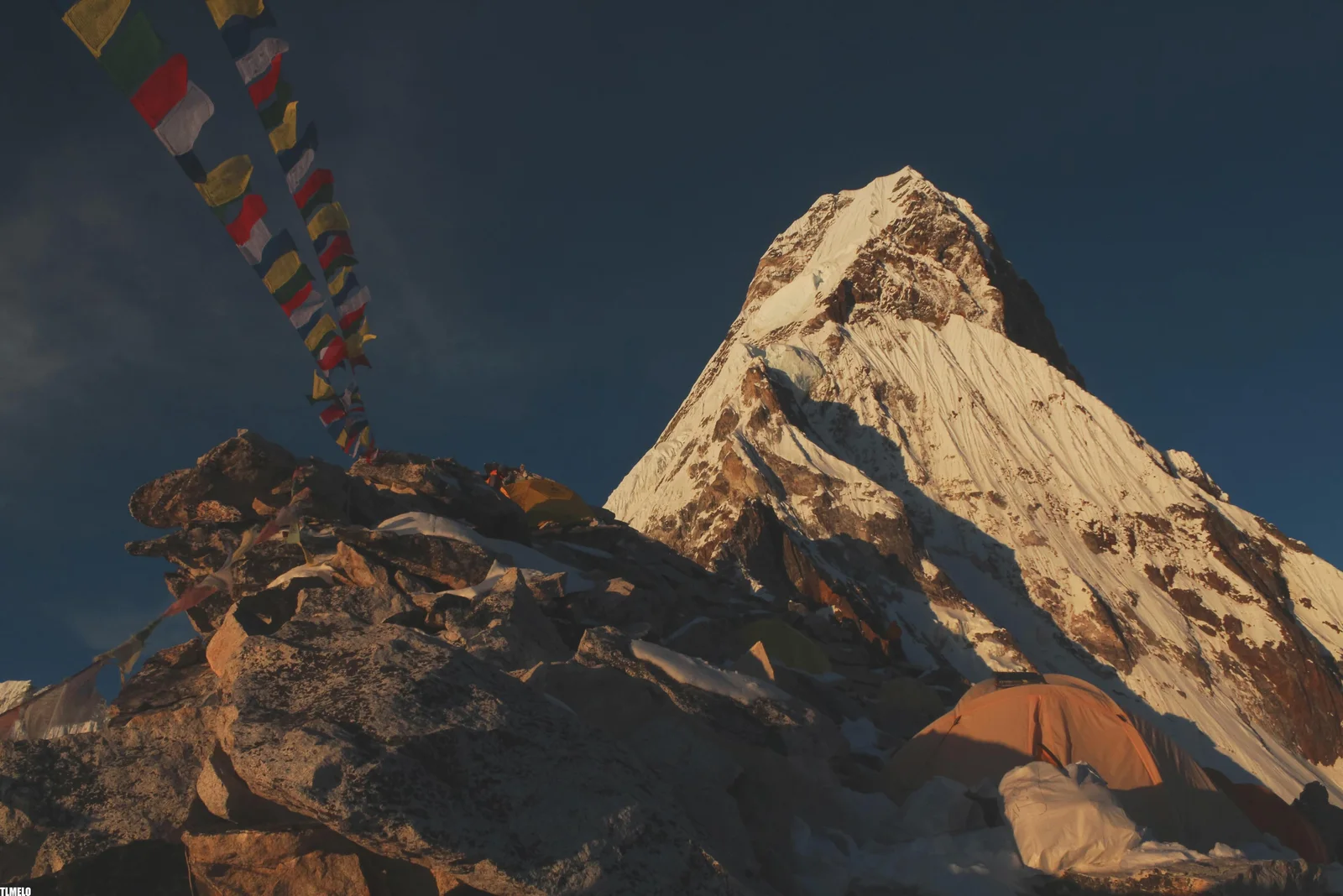
内容速览
Island Peak, Mera and Lobuche East need mountaineering cover, not trekking cover. The trap is the words trekking peak.
If you are climbing Island Peak, Mera or Lobuche East, your trekking insurance almost certainly does not cover you — not because of the altitude, but because you will be roped up, in crampons, holding an ice axe. Insurers sell trekking and mountaineering as two different products, and the moment technical equipment comes out you have moved from one to the other.
Nepal’s own vocabulary is what causes this. The Nepal Mountaineering Association calls these mountains trekking peaks. Your insurer does not care what Nepal calls them. It cares what you were doing when the accident happened.
- The test is two-part: the policy must cover your maximum altitude and name the activity. Getting the altitude right and the activity wrong is the classic failure.
- All three peaks sit above 6,000m and below 6,500m, so a mid-tier mountaineering policy reaches them. You do not need an 8,000m expedition product.
- “Trekking peak” is an NMA permit category, not an insurance category. Never quote the phrase to an insurer as if it settles anything.
- You will be buying two things at once: cover for the climb, and cover for the long high approach trek that gets you there.

What separates a trekking policy from a mountaineering one
Equipment and technique, not height. The line insurers draw is roughly this: if you are walking on a trail in boots, that is trekking. If you are using ropes, crampons, an ice axe, a harness or a jumar, that is mountaineering, and it is a different tier at a different price.
The British Mountaineering Council publishes the clearest version of this ladder, which is why it is worth reading even if you buy elsewhere. Its Trek policy covers “hill walking, trekking and backpacking up to 5,000m”. Its Rock policy covers “rock climbing and bouldering and graded scrambling up to 5,000m”. Its Alpine & Ski policy covers “trekking above 5,000m, and most types of skiing, climbing and mountaineering on most peaks of up to 6,500m”. Above and beyond that sits High Altitude & Remote, for expeditions to extreme peaks.
Read the Alpine & Ski line carefully, because it does two jobs at once. It is the first tier covering trekking above 5,000m, and the first tier covering mountaineering at all. Island Peak, Mera and Lobuche East land inside that band on both counts, all three being under 6,500m. That is the money-saving conclusion of this whole article: for a standard trekking peak you need the mountaineering tier, and you do not need the expedition tier.
| Peak | Altitude | What you use on summit day | Trekking policy | Mountaineering policy to 6,500m |
|---|---|---|---|---|
| Lobuche East | 6,119m | Rope, crampons, axe, harness | Not covered | Covered |
| Island Peak (Imja Tse) | 6,189m | Fixed line, jumar, crampons, axe | Not covered | Covered |
| Mera Peak | 6,476m | Roped glacier travel, crampons, axe | Not covered | Covered |
| Everest Base Camp (approach) | 5,364m | Boots only | Only above a 5,364m band | Covered |
| Kala Patthar (approach) | 5,545m | Boots only | Only above a 5,545m band | Covered |
A note on the numbers, because we would rather be exact than tidy. Operators, us included, publish Island Peak as 6,189m and Mera as 6,476m. The NMA’s own permit schedule lists them as 6,165m and 6,470m. The discrepancy is old and harmless — every version is above 6,000m and below 6,500m, so it changes nothing about which policy you need. If a form asks for a maximum altitude, give the higher figure.
“It’s only a trekking peak.” That sentence is an NMA permit classification and nothing more. It describes the paperwork, not the pitch. If you tell an insurer you are trekking and you are photographed on a fixed line in crampons, the insurer is entitled to treat the activity as undeclared — and an undeclared activity can void the whole claim, including the ordinary medical parts and the evacuation.
The approach trek is half of what you are insuring
You are buying cover for two weeks at altitude, not for one summit morning. This is the part people forget when they compare quotes.
Island Peak and Lobuche East are reached through the Khumbu on the same trail as Everest Base Camp, sleeping at Dingboche and Lobuche for days. Mera is reached over a high pass out of the Hinku valley, with even less around it. Far more goes wrong on the approach than on the climb — altitude illness, chest infections, an ankle on the moraine — and all of it happens well above where a standard trekking band expires.
So check two things, both in writing: that the altitude band covers the approach, and that the activity definition covers the summit day. A policy that names one and not the other has a hole in the middle of your trip.

What rescue looks like above 6,000m
Thinner than you would like, and that is a physical limit rather than an insurance one. Helicopters in Nepal fly mostly from first light to late morning, are grounded by cloud, and rarely operate above about 6,000m — which is at or below the summits of all three peaks.
In practice a rescue from a trekking-peak summit is a descent under your own power or your team’s, to a landing site lower down. Your policy pays for the flight from there; it cannot buy you a machine at 6,400m. The costs and mechanics are set out here, and the UK Foreign Office puts helicopter evacuation at £1,000 to £2,000 or more per flying hour while telling travellers to “make sure your insurance includes cover for mountain rescue services and helicopter costs”.
Which is why the guiding ratio matters more than the policy on a climbing trip. On a fixed line at 6,100m, what gets you down is a competent climbing guide and a sensible turnaround time. Insurance pays the invoice afterwards. It does not come and get you.
The permit, and what it does and does not prove
An NMA climbing permit costs US$350 per person in spring and US$175 in autumn, winter and summer, according to the association’s own published schedule of service charges for foreign climbers, and Island Peak, Mera and Lobuche East all sit in that standard band. It is issued through a registered agency, not over a counter to individuals.
The permit proves you are allowed on the mountain. It proves nothing to your insurer, and holding one does not make an activity covered. Our Nepal permits hub sets out how the climbing permit sits alongside the national park and municipality fees you will also pay on the approach.
Where cheap cover is genuinely fine, and where it never is
On a trekking peak, the mid-tier is the right answer and the expedition tier is a waste of your money. We would rather tell you that than watch you buy an 8,000m product for a 6,189m mountain.
Two genuinely cheap routes are worth checking before you pay a specialist premium. Alpine club membership schemes — the Austrian Alpine Club and its UK section being the best known — bundle mountain rescue and repatriation cover into an annual membership at a price that embarrasses most standalone policies. They are rescue-and-repatriation cover rather than full travel insurance, and they carry their own altitude ceiling and expedition conditions, so read the club’s current insurance page and confirm the ceiling covers your peak before relying on it. Second, if you already hold an annual policy, check whether your insurer sells a mountaineering upgrade as an add-on; that is often cheaper than a fresh specialist policy.
What is never optional: emergency medical of at least US$100,000, helicopter evacuation and repatriation named as benefits, the mountaineering activity named explicitly, an altitude band above your summit, and every pre-existing condition declared in writing.
And you do not have to buy any of it through us. We do not sell insurance and take nothing from your policy. What we will give you is the exact maximum altitude and the technical equipment list for your itinerary, in writing, so you can hand an insurer facts instead of a trek name.
We run Island Peak as a 14-day trip with the Khumbu acclimatisation kept in and a climbing guide on summit day — $3,400 solo, from $2,550 per person in a group of eight. Worth knowing before you pick dates: the NMA permit is US$350 in spring and US$175 in autumn, so an October climb costs $175 less per person in permit fees alone.
See the itinerary & price →Trekking-peak insurance questions we get asked
Does travel insurance cover Island Peak?
Only if the policy names mountaineering or climbing with ropes, crampons and ice axe as a covered activity, and its altitude band reaches at least 6,189m. A trekking policy does not cover it at any altitude band, because the exclusion is about the activity, not the height.
Is Mera Peak technically easier, so can I insure it as trekking?
No. Mera is less technical than Island Peak — it is largely roped glacier travel rather than a steep headwall — but you are still roped, in crampons, on a glacier. That is mountaineering to every insurer we have seen, and Mera is also the highest of the three at 6,476m.
Do I need an expedition policy for a 6,000m trekking peak?
No. Peaks between 6,000m and 6,500m sit inside the standard mountaineering tier of most specialist ladders. The expedition tier exists for 7,000m and 8,000m objectives and remote unsupported climbs, and it costs considerably more. Buying it for Island Peak is money you could put toward a better guide ratio.
Does my policy need to cover the trek to the peak as well?
Yes, and this is where people get caught. The approach to Island Peak and Lobuche East runs for days above 4,400m. A policy that covers the summit day but bands your trekking at 5,000m leaves you exposed for most of the trip.
Is insurance required to get an NMA climbing permit?
Rescue and medical insurance for the climbing staff is a standard condition of operating, and every registered agency — ours included — will require proof of your own policy before confirming a climb. Since March 2026 proof of insurance is also required for restricted-area trekking permits. Treat your own cover as compulsory regardless of what a counter asks for.
What if I decide not to summit and only do the trek?
You remain covered for what you actually did, and nothing is forfeited by turning around — which on a first 6,000m peak is a common and entirely sensible outcome. Insure for the climb anyway. Deciding on the mountain that you will attempt it after all, without cover, is the worst version of this.
Keep reading
The framework this page sits inside — limits, exclusions and how claims are paid.
Which of the two makes a better first 6,000m climb, and why.
Route, preparation, permit and what summit day actually involves.
Why machines rarely fly above 6,000m, and what that means for a climb.
Ready to plan it? Contact us and we will send the maximum altitude and the technical kit list in writing, so you can buy the correct policy before you commit to dates.
撰文
Bishnu Adhikari我们是常驻博卡拉、经NMA认证的徒步向导。自1998年以来,已在安纳普尔纳与珠峰地区带领超过5,000次徒步——这里的每一句话都源自山路。 More from this author →
分享这篇文章
准备好出发了吗?
从读到它,到站上它
我们常驻博卡拉的向导自1998年以来一直从事此行。告诉我们您的日期与体能水平——我们将为您打造完美行程。免费,无任何义务。
Why trek with our licensed agencyFree Trekker's Insider Guide
Permits, packing lists, cost breakdowns — no fluff.
We send one useful email. You can unsubscribe anytime.