
The short version
Capital One Quicksilver Student is the best pick for most: $0 fee, no foreign fee, 1.5% back. Discover it Student Cash Back earns most in year one.
The best student credit card for most students in 2026 is the Capital One Quicksilver Student: no annual fee, no foreign transaction fee and 1.5% cash back on every purchase from the first swipe. If you want the most rewards in your first year, the Discover it Student Cash Back matches all the cash back you earn in your first 365 days. If you already bank with Chase, the Chase Freedom Rise is built for people with no credit history. And if you are studying or travelling abroad, the no-foreign-fee cards — the Quicksilver Student and the Bank of America Travel Rewards for Students — are the ones to take with you.

- Every card on this list has no annual fee, so the only way to lose money on one is to pay interest or pay late.
- Studying abroad changes the answer. A card with a foreign transaction fee charges you on every purchase overseas.
- Pay the full statement balance every month and use a small share of your limit. Those two habits do most of the credit-building.
- Rewards are the bonus, not the point. A 1.5% card cannot outrun an APR of 18% or more.
The four picks at a glance
Each of these cards is designed for students or people new to credit, and each suits a different student. Every figure was read on the issuer’s own page on 27 September 2026.
| Card | Rewards | Bonus | Foreign fee | Purchase APR |
|---|---|---|---|---|
| Capital One Quicksilver Student | 1.5% on everything | $50 after $100 in 3 months | None | 18.49%–28.49% variable |
| Discover it Student Cash Back | 5% rotating quarterly categories, 1% other | Cashback Match in year one | Not stated on the page | 16.49%–25.49% variable |
| Chase Freedom Rise | 1.5% on everything | $25 for enrolling in autopay | Not on Chase’s no-fee list | 18.24%–27.74% variable |
| BofA Travel Rewards for Students | 1.5 points per $1 | Check Bank of America | None | 17.49%–27.49% variable |
How a student card actually builds your credit
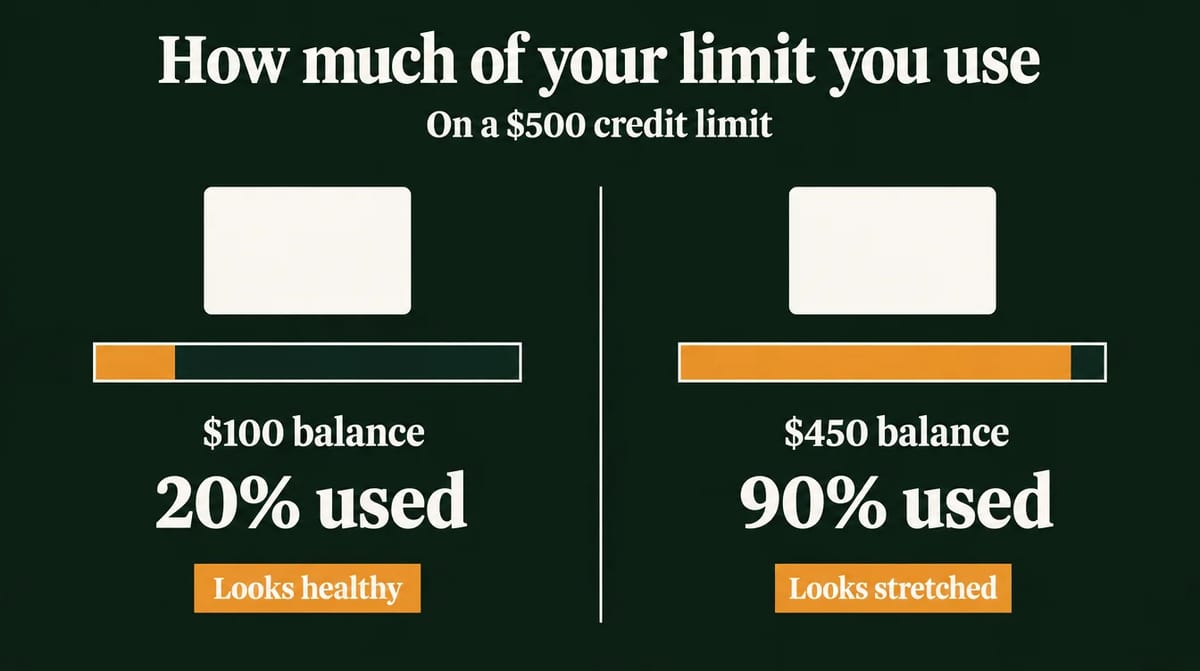
A student card builds credit because the issuer reports how you handle it to the credit bureaus every month, and two habits decide whether that report helps you. The first is paying on time, every time. A single payment more than a month late can stay on your report for years, so set up autopay for at least the minimum on day one. The second is keeping your balance low compared with your limit. On a $500 limit, a $100 balance uses 20% of your available credit; a $450 balance uses 90%, and that reads as someone stretched.
The simplest routine: put one or two regular bills on the card, such as a phone plan or a streaming subscription, and pay the full statement balance each month. You pay no interest, your report shows a steady on-time record, and after six months to a year you have a credit history where you had none. That history is what later gets you a better card, a car loan or an apartment lease.
Best overall: Capital One Quicksilver Student
The Quicksilver Student wins because it pays the same 1.5% on everything and charges nothing for using it abroad. There is no annual fee, and the welcome offer is $50 after just $100 in purchases within three months — a spend almost any student reaches with textbooks or groceries, so you never need to spend extra to get it. What it costs you: no category ever earns more than 1.5%. Pick something else if you want bigger rewards in your first year and are happy to track rotating categories.
Best first-year rewards: Discover it Student Cash Back
The Discover it Student Cash Back earns the most in year one if you use its quarterly categories, because Discover matches every dollar of cash back you earn in your first 365 days, with no limit. It pays 5% on everyday purchases at places that change each quarter, up to a quarterly maximum when you activate, and 1% on everything else. Earn $150 in cash back in your first year and the match makes it $300. Discover says no credit score is required to apply; you must be at least 18 and show income. It has a 0% intro APR for six months on purchases.
What it costs you: you must remember to activate the categories each quarter, and Discover’s student page does not state a foreign transaction fee, so check with Discover before you rely on it overseas. The Discover it Student Chrome is the simpler sibling: 2% at gas stations and restaurants on up to $1,000 in combined purchases each quarter, 1% on everything else, with the same first-year match.
Best for Chase customers: Chase Freedom Rise
The Freedom Rise is Chase’s card for people new to credit, and having at least $250 in a Chase checking or savings account improves your chances of approval. It pays 1.5% cash back on all purchases, gives $25 for enrolling in automatic payments within your first three months, and Chase says you are automatically evaluated for a credit line increase in as soon as six months. What it costs you: it is not on Chase’s own list of no-foreign-transaction-fee cards, and its APR range tops out at 27.74%. Pick the Quicksilver Student instead if you will spend a semester abroad.
Studying or travelling abroad
If you will spend time outside the US, carry a card with no foreign transaction fee, because the fee applies to every purchase in another currency. The Quicksilver Student and the Bank of America Travel Rewards for Students both list none. The Bank of America card earns 1.5 points per $1 on every purchase, with no annual fee and a 17.49%–27.49% variable APR; its online bonus changes, so check the current offer on Bank of America’s page.
| Semester abroad spending | No-fee card | Card with a 3% fee (example) |
|---|---|---|
| $500 a month for 4 months | $0 in fees | $60 in fees |
| $1,000 a month for 4 months | $0 in fees | $120 in fees |
Two more habits save money abroad. When a card machine offers to charge you in dollars, choose the local currency instead; our guide to paying in local currency explains why. And keep a debit card for cash, because a credit card cash advance starts charging interest at once. Our guide to avoiding foreign transaction and ATM fees covers the rest.
If you know you will not be able to pay the full balance each month, wait. Interest at 16% to 30% turns a $600 laptop into a much bigger bill, and a missed payment hurts the very credit history you are trying to build. A debit card builds no credit, but it cannot put you in debt.
Students who travel on a budget often end up in Nepal, where a teahouse trek costs far less than people expect. Cards work in Kathmandu and Pokhara, but the trails run on cash, so read cash versus card on a trip before you go.
If your first card is helping you save for travel, Nepal goes a long way on a student budget. Annapurna Base Camp is nine days at $920 USD solo and Everest Base Camp is twelve days at $1,700 USD solo, including permits, a government-registered guide, a porter, teahouses and meals.
See the Annapurna Base Camp trek →What is the best student credit card in 2026?
For most students, the Capital One Quicksilver Student: no annual fee, no foreign transaction fee and 1.5% cash back on everything. The Discover it Student Cash Back can earn more in the first year thanks to its Cashback Match.
Can I get a student credit card with no credit history?
Yes. These cards are designed for people new to credit. Discover says no credit score is required to apply for its student cards, and Chase says a $250 balance in a Chase account improves approval chances for the Freedom Rise.
How long does it take a student card to build credit?
Each on-time month adds to your history, and some issuers review you for a higher limit after about six months — Chase says the Freedom Rise is evaluated in as soon as six months. Paying in full and keeping balances low is what makes that history count.
Which student card is best for studying abroad?
One with no foreign transaction fee. The Capital One Quicksilver Student and the Bank of America Travel Rewards for Students both list no foreign transaction fee.
Should I carry a balance to build credit?
No. You do not need to pay interest to build credit. Pay the full statement balance every month; your on-time payment record is what gets reported.
Keep reading
The four decisions that choose a card, with every comparison in one place.
The four charges on a trip abroad, and how to dodge them.
When each one wins, and how much to carry.
The costly habits to drop before your first trip.
How earning and redeeming really work.
Sources: Capital One’s Quicksilver Student card page; Discover’s student credit cards page; Chase’s Freedom Rise card page and its no-foreign-transaction-fee credit cards page; Bank of America’s Travel Rewards for Students card page, all read on 27 September 2026 for fees, rewards, bonuses, foreign fees and APRs. The utilisation, Cashback Match and fee examples are our own arithmetic. This is general information, not financial advice; card offers change, so confirm the current terms with the issuer before you apply. No card issuer pays us for placement on this page.

Written by
Bishnu AdhikariPokhara-based, NMA-certified trekking guides. We’ve led 5,000+ treks across the Annapurna and Everest regions since 1998 — every word here comes from the trail. More from this author →
Share this article
Ready to Trek?
From reading about it to standing on it
Our Pokhara-based guides have been doing this since 1998. Tell us your dates and fitness level — we'll build your perfect itinerary. Free, no obligation.
Why trek with our licensed agencyMore guides like this
Popular trips to consider
View all treks & toursFree Trekker’s Insider Guide
Permits, packing lists, cost breakdowns — no fluff.
We send one useful email. You can unsubscribe anytime.