
Nepal picks a living goddess while she is still a toddler, here is how it works
The Kumari is chosen as a small child, kept in a Kathmandu palace and worshipped as a deity. How the selection runs, how she lives, why it is argued over.
At a glance
- Published · updated
- TopicCulture & Heritage
- Verified againstWikipedia
- Treks coveredEverest Base Camp Trek — 14 Days, Kathmandu UNESCO Heritage Sites — 1 Day, Kathmandu Valley Cultural Tour — 3 Days
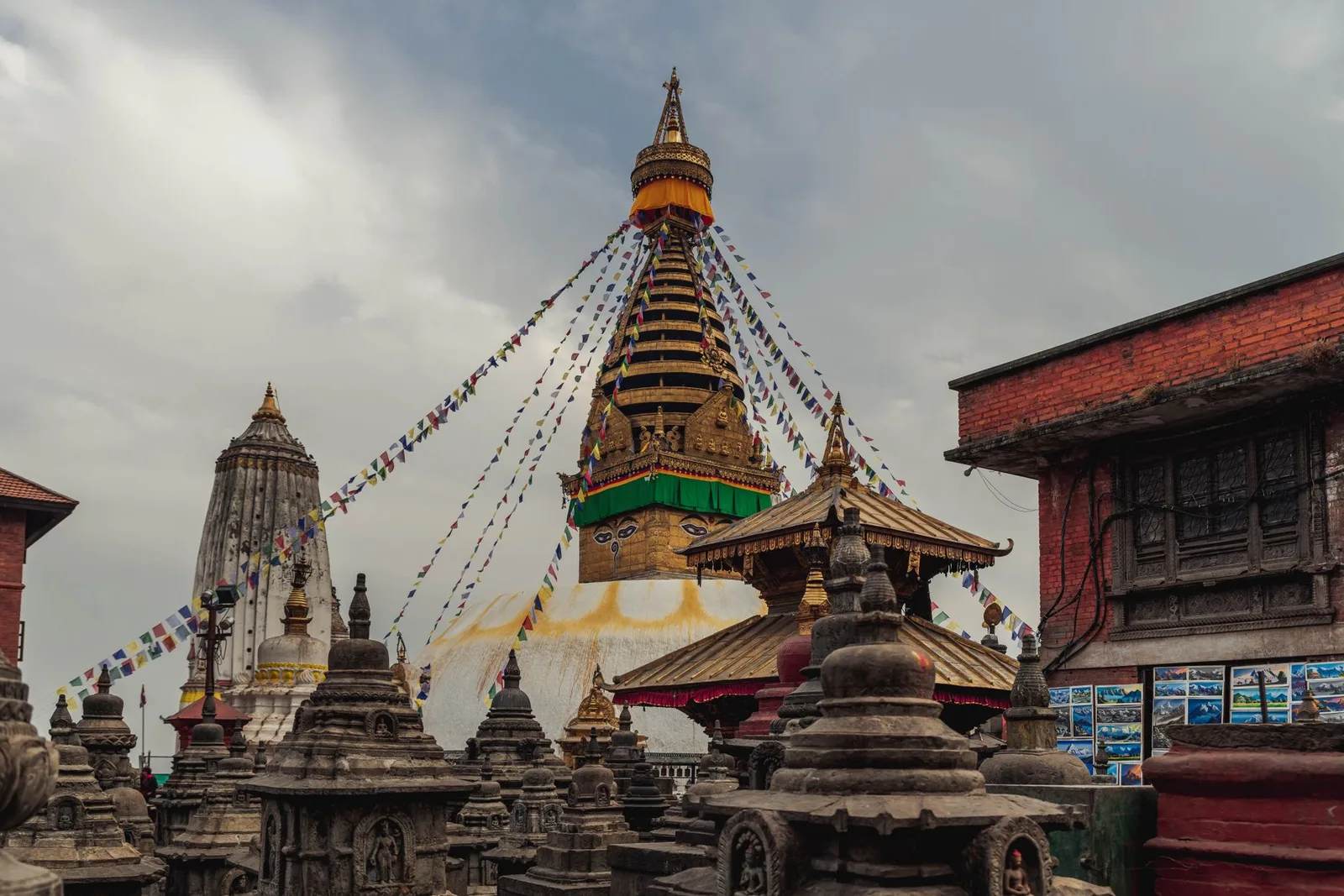
In the heart of Kathmandu, a few steps from the temples of the old Durbar Square, a young girl is venerated as a living goddess. She is the Kumari — the earthly embodiment of the goddess Taleju Bhawani, a form of Durga — and she is one of the most extraordinary living traditions of the Kathmandu Valley, honoured by Hindus and Buddhists alike.
Key facts
- Who: a prepubescent girl, usually from the Newar Shakya community, worshipped as the living embodiment of the goddess Taleju (a form of Durga).
- Selection: judged against the thirty-two battis lakshanas — traditional physical perfections — including an unblemished body and a calm, fearless temperament.
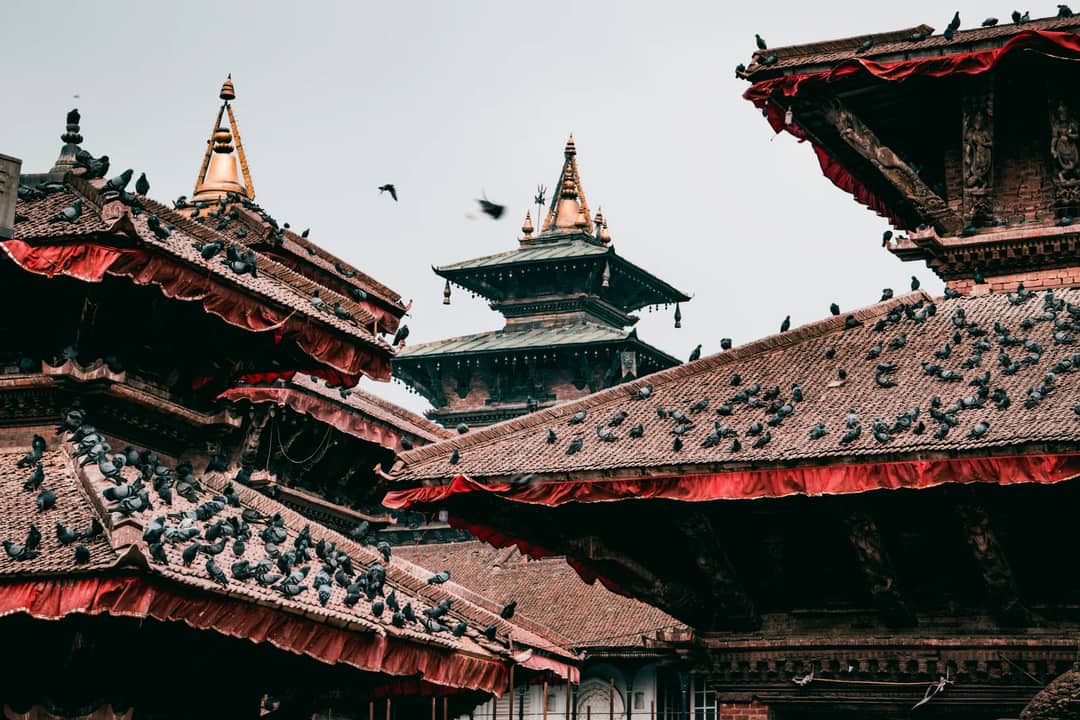
- Where: the Royal Kumari of Kathmandu lives in the Kumari Ghar (Kumari Bahal) on Kathmandu Durbar Square; other Kumaris serve in Patan, Bhaktapur and Bungamati.
- When seen: at her latticed window most days, and most publicly during the eight-day Indra Jatra festival each autumn.
What the Kumari is
The word kumari means "young girl" in Nepali and Sanskrit. In the theology of the Kathmandu Valley, she embodies shakti — primordial feminine energy — and is believed to hold the presence of the goddess until her body changes. A young girl is chosen, tradition holds, because she has not yet experienced any form of bodily bleeding that could cause the goddess to depart.
The most prominent of several Kumaris is the Royal Kumari of Kathmandu. The tradition is old: the office is documented in an inscription from 1280 during the reign of King Ananta Malla, and ritual practice points to still older roots. The legend most often told credits King Jaya Prakash Malla, the last Malla king of Kathmandu, with formalising the worship after the goddess Taleju is said to have instructed him to seek her in a young Shakya girl.
How the Kumari is chosen
Candidates come from the Shakya lineage of the Newar community. They are assessed against the thirty-two battis lakshanas, a set of physical perfections drawn from traditional iconography — perfect health with no scars or birthmarks, a full set of teeth, and features described in poetic terms such as a neck like a conch shell, thighs like a deer and a voice as soft as a duck's. A steady, unafraid temperament is valued above all.
A word on the myths: former Royal Kumari Rashmila Shakya has explained that the widely repeated story of a "terrifying room" test with severed animal heads is not a selection ordeal but an annual ritual performed by an already-installed Kumari — one of several places where reality is gentler than legend.
Daily life in the Kumari Ghar
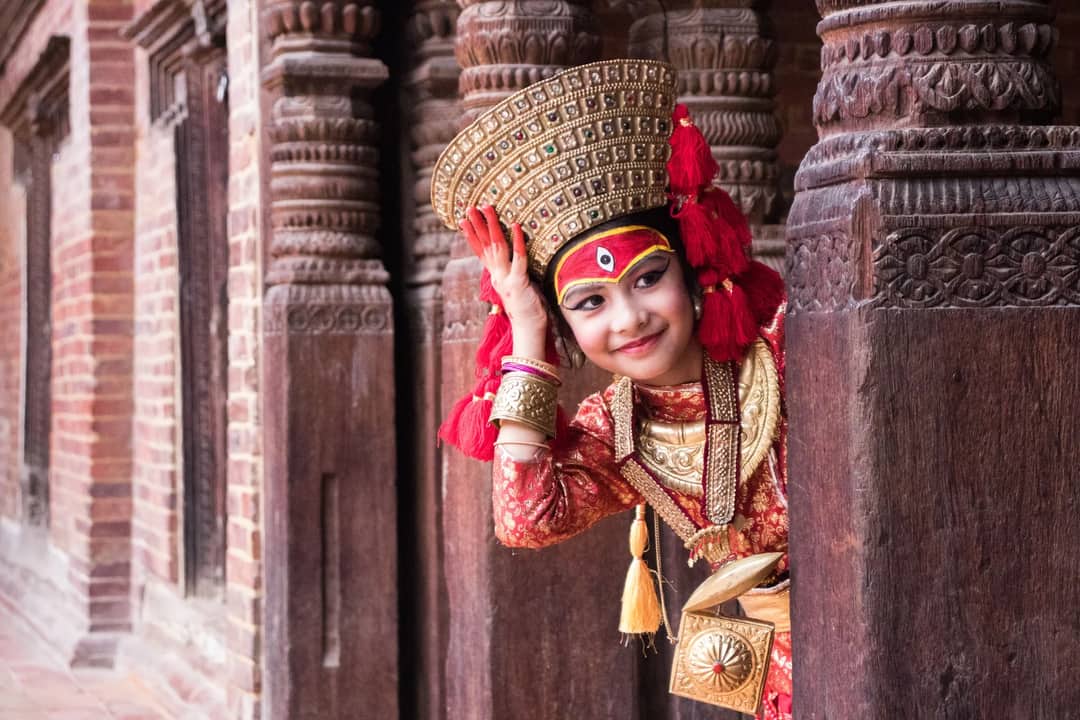
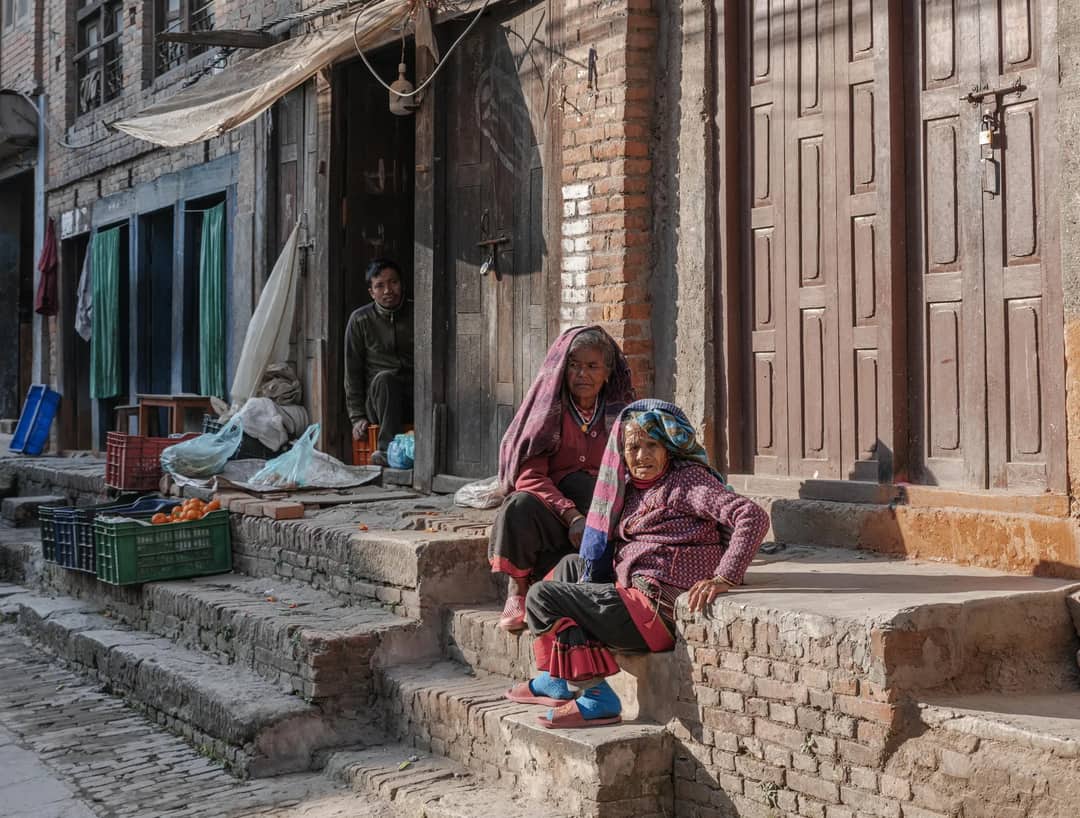
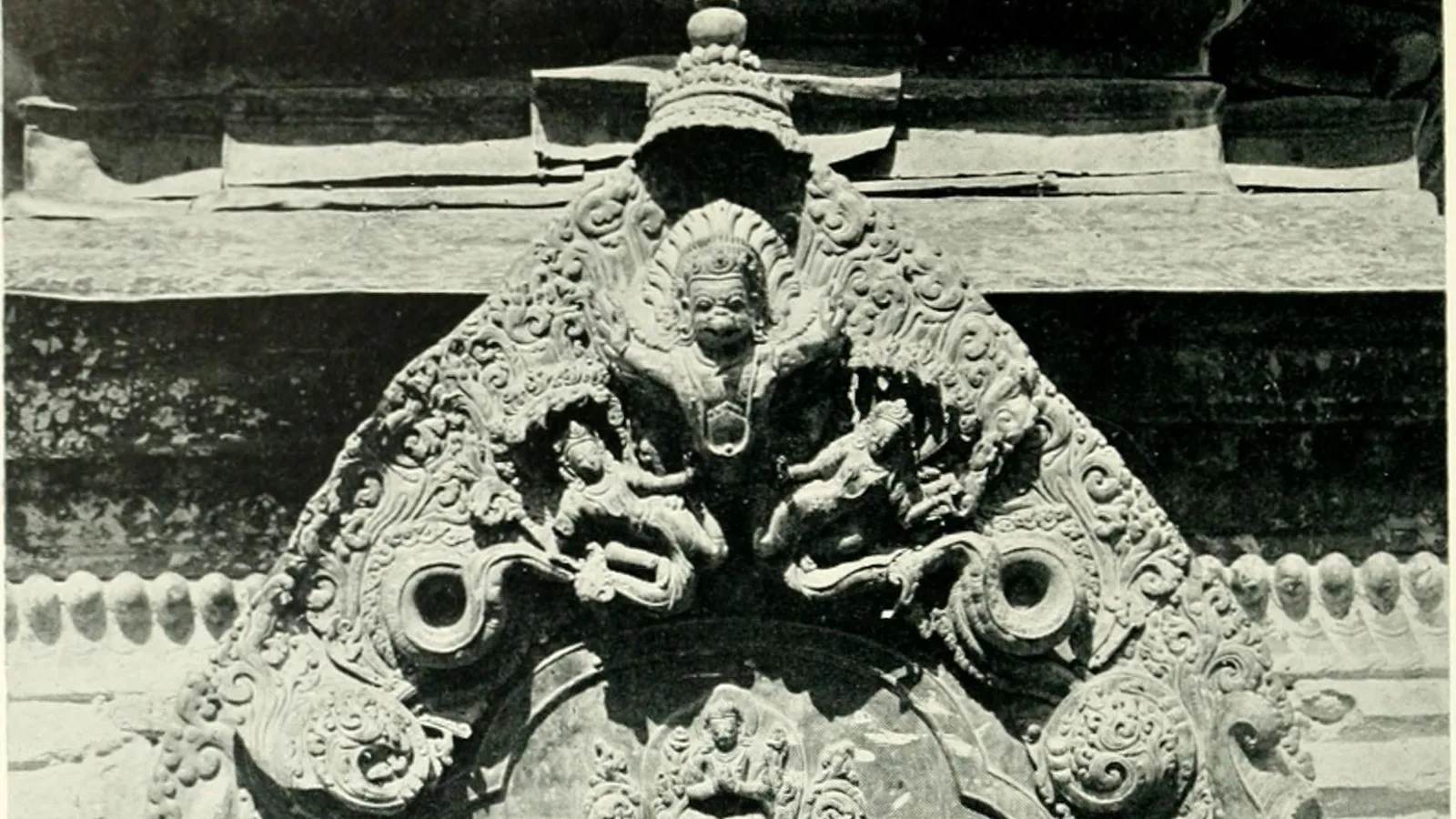
Life inside the Kumari Ghar is bound by ritual. When the Kumari leaves her residence her feet are not to touch the ground; she is carried in a palanquin or by attendants. She wears red and gold, her hair in a topknot, with the agni chakshu — the "fire eye" — painted on her forehead. Devotees come to the courtyard to seek her blessing, and every gesture is read as an omen. She appears briefly at a carved wooden window overlooking the square, and her caretakers' children are often her closest companions.
| Aspect | How it works today |
|---|---|
| Community | Usually the Shakya lineage of the Newar people |
| Deity embodied | Taleju Bhawani, a form of the goddess Durga |
| Residence | Kumari Ghar, Kathmandu Durbar Square |
| Tenure ends | At first menstruation or significant blood loss |
| After the role | Formal schooling now permitted; a modest state pension |
Indra Jatra: when the goddess rides out
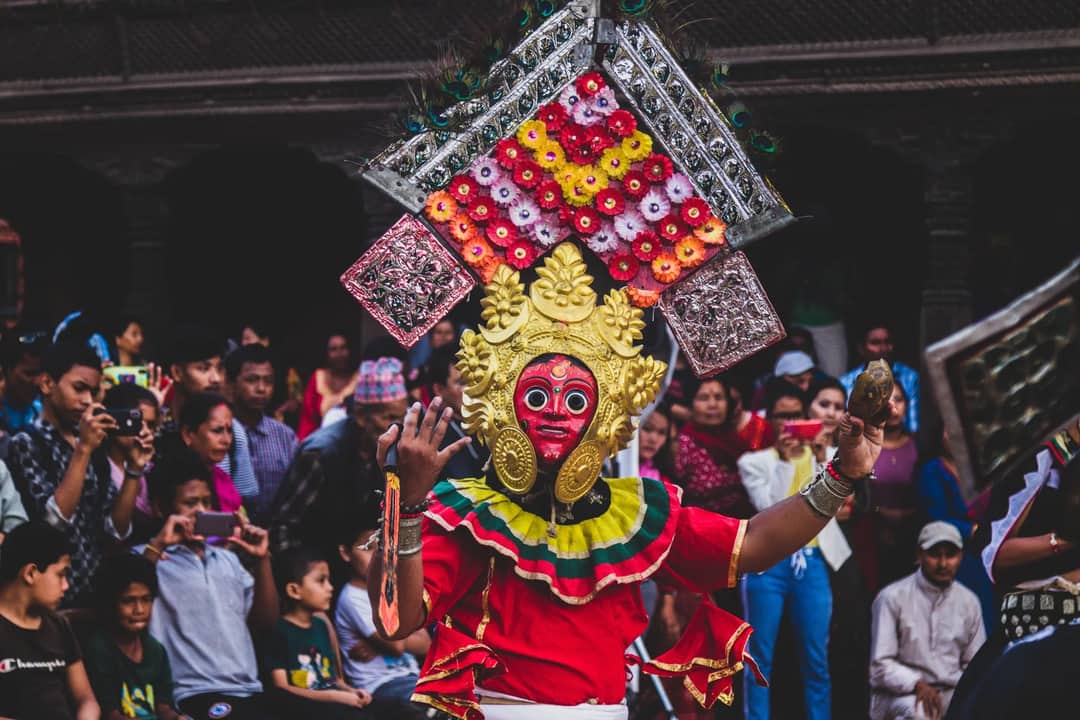
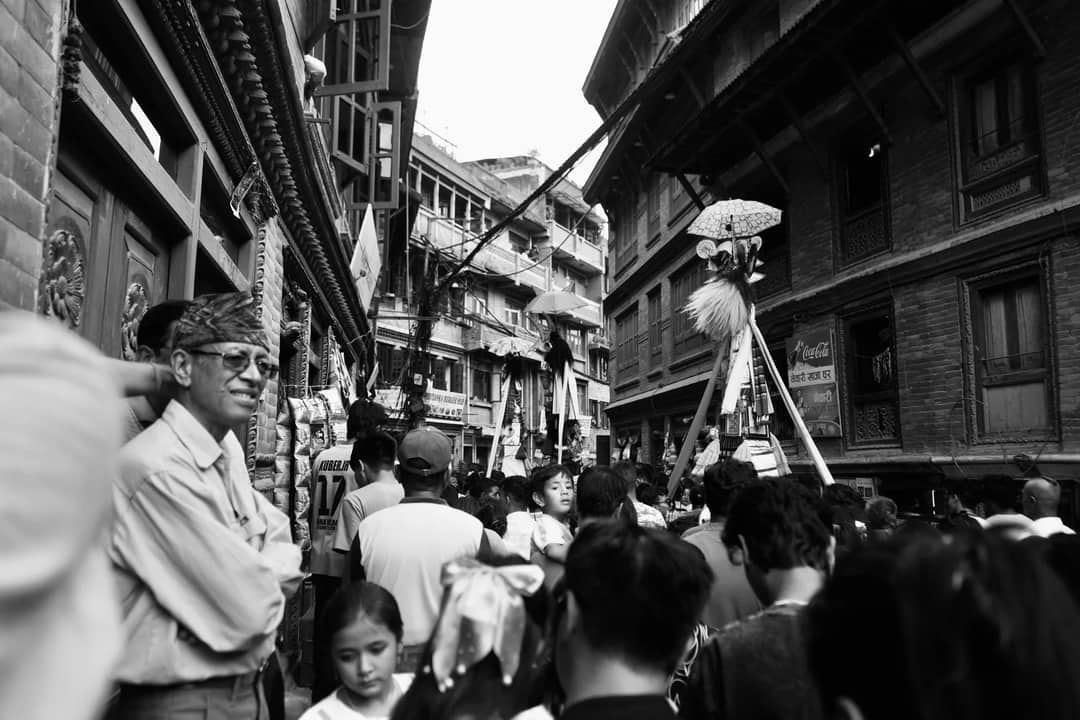
The Kumari is most publicly seen during Indra Jatra, described as the biggest religious street festival in Kathmandu. Running for eight days around Kathmandu Durbar Square and dated by the lunar calendar, it honours Indra, the king of heaven, with masked dances and deity displays. Its most famous element is the Kumari Jatra — a chariot procession in which the living goddess is drawn through the old city over three days. This chariot festival is recorded as beginning in 1756 under Jaya Prakash Malla.
Leaving the role
A Kumari's tenure ends when she reaches puberty or experiences significant blood loss, at which point the goddess is believed to leave her. Returning to ordinary life can be a difficult transition, and modern practice has tried to soften it: today's Kumaris receive formal lessons — in Nepali, English and mathematics — and former Kumaris are granted a modest government pension.
The modern debate, stated fairly
The tradition has drawn respectful debate about the rights, schooling and social life of the children involved. Nepal's Supreme Court took up a petition on whether the practice conflicted with the rights of the child while recognising its deep religious significance; the outcome was not abolition but reform, including guaranteed access to education and a pension for former Kumaris. Child-rights advocates continue to raise concerns about isolation and schooling, while many Newar families and devotees regard the role as a profound honour and a living link to the valley's heritage. Both views are held sincerely, and both are part of the conversation in Nepal today. When the monarchy was abolished in 2008, some assumed the tradition would fade; instead it continues under the republic, with the president now receiving the Kumari's blessing that a king once did. A new Royal Kumari was installed in 2025.
Seeing the Kumari respectfully
If you visit the Kumari Ghar, treat it as an active place of worship, not a photo opportunity. Wait quietly in the courtyard for the moment she may appear at the window, and do not photograph the Kumari without permission — photography of her is generally not allowed. Observe from the courtyard, follow the caretakers' guidance, and let the visit be about witness rather than a snapshot.
Where this fits on your Nepal trip
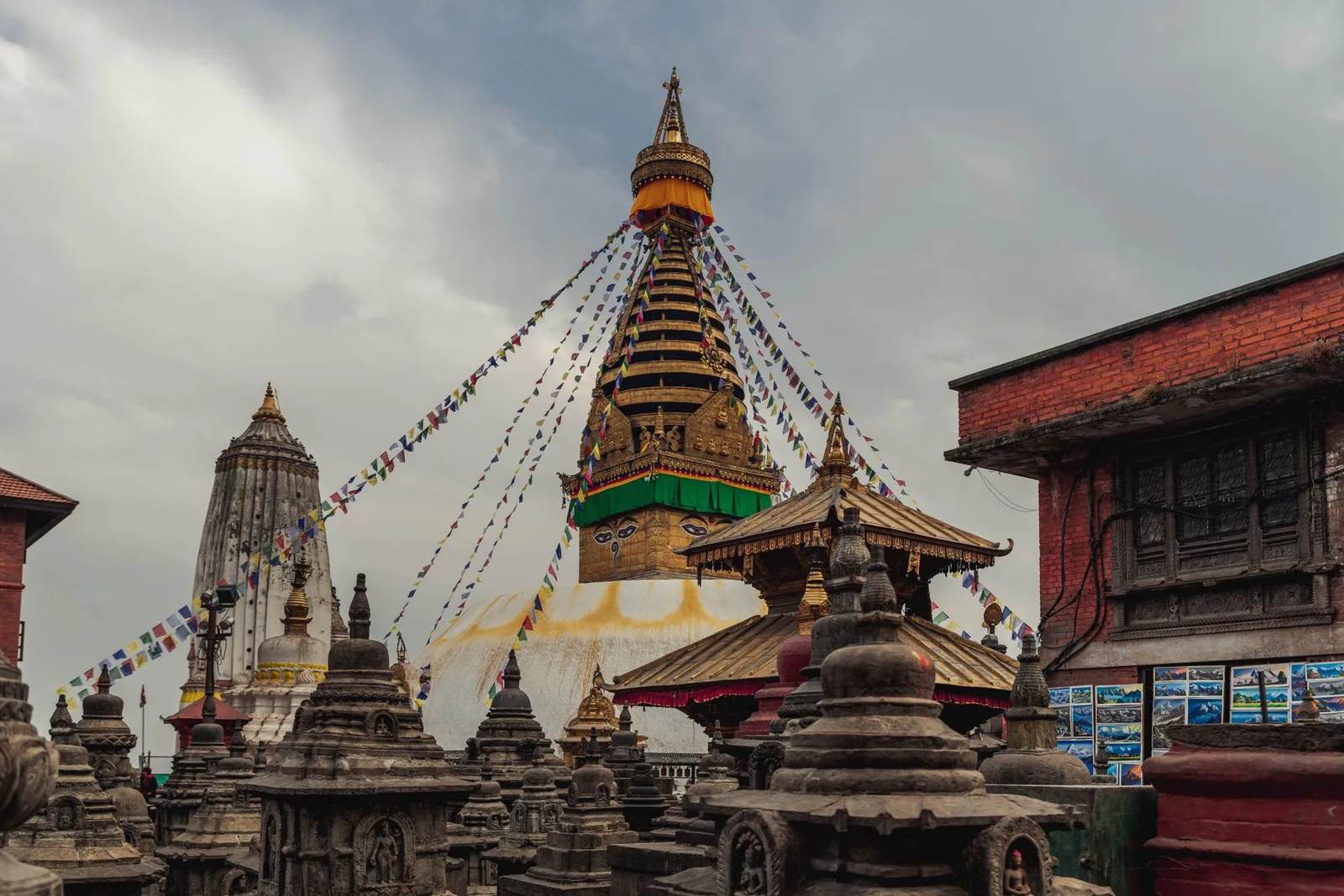
The Kumari Ghar sits on Kathmandu Durbar Square, in the same old city where nearly every Nepal trek begins and ends. Almost all travellers spend a day or two in Kathmandu for permits and briefings before flying to the mountains — time enough to walk the Durbar Square, see the Newari wood-carving that frames the goddess's window, and understand a little of the culture that surrounds the trails. The valley's living heritage runs deep: for another window onto it, read our story on Nepal's Gurung honey hunters, and explore more of the country's traditions on our Authentic Nepal page.
If you would like to weave a respectful half-day around Kathmandu Durbar Square into your itinerary — before an Everest or Annapurna trek, or as part of a cultural tour of the valley — our team can arrange it with a local guide who knows the customs. Message us on WhatsApp or request a free, no-obligation quote below.
Timing a visit around Kathmandu’s festival calendar? The Dashain and Tihar 2026 dates are here.
Cover photo: Rajesh Dhungana via Wikimedia Commons (CC BY-SA 4.0). Section photos: Sudip Shrestha via Pexels (Pexels licence); Bimal Ranabhat via Pexels (Pexels licence); Sulav Jung Hamal via Pexels (Pexels licence); Roman Saienko via Pexels (Pexels licence); Dinesh lens via Pexels (Pexels licence).
This story is part of Travel Himalaya Nepal’s guide to Nepal's culture and living heritage.
Still running this season
Everest Base Camp Trek — 14 Days is running normally
NMA-certified local guides, transparent pricing, 5,000+ treks since 1998. Message us your dates and we'll sort the permits, lodges and logistics — reply within 24 hours, no obligation.
Popular Nepal treks
All treks →
Related coverage
Festivals & Events
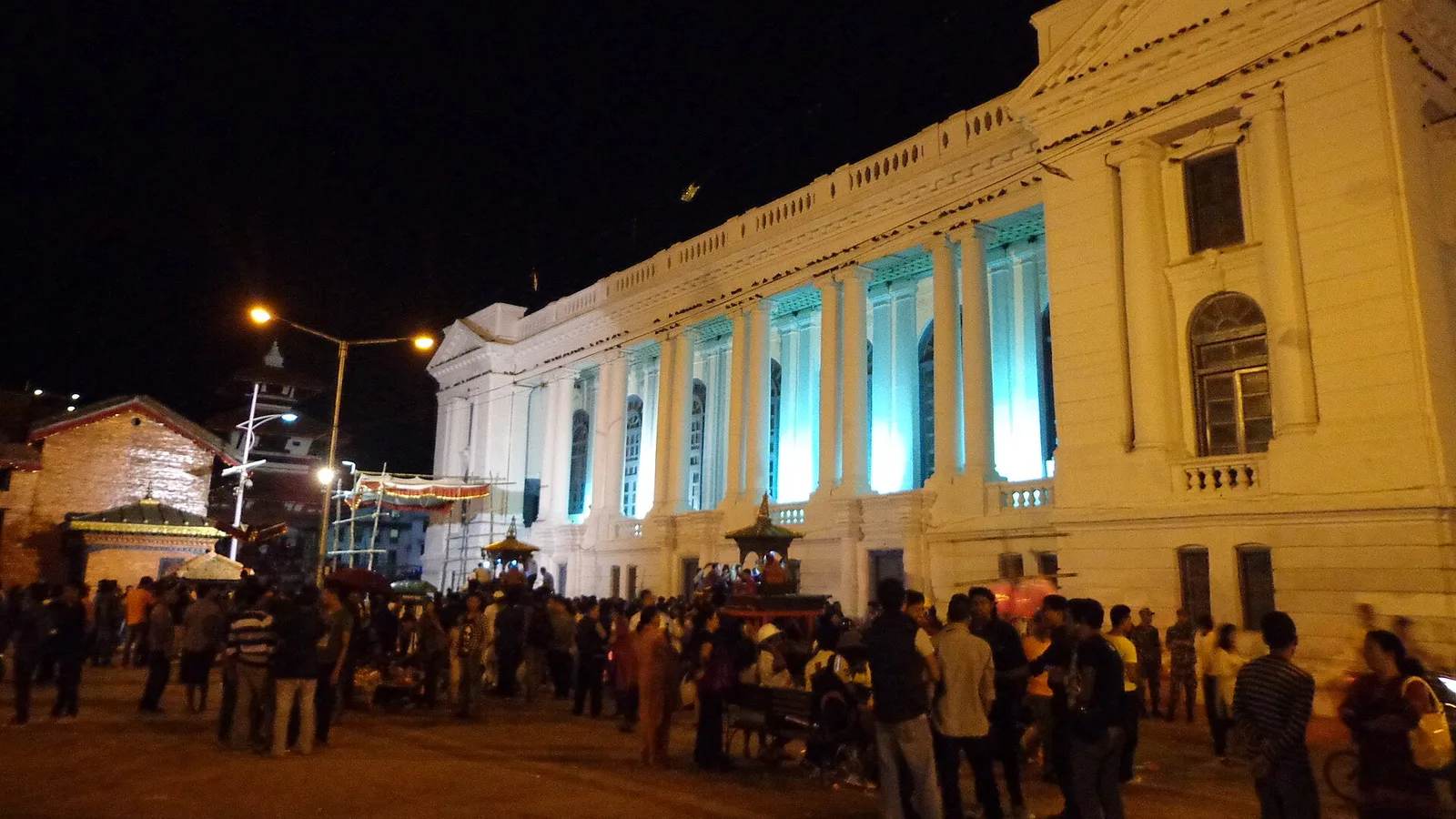
Kathmandu's Biggest Street Festival Has a Stone Demon That Spits Rice Beer Into the Crowd
Indra Jatra runs 23 to 29 September 2026, with the Kumari chariot on Friday the 25th. Masked dancers, chariots and a god that pours rice beer.
Safety & Advisories
Is a Kathmandu Valley Tour Affected by the 2026 Nepal Floods?
No — Kathmandu is the capital, at about 1,400 m in central Nepal, well south of the Rasuwa flood. The airport is running normally and every UNESCO heritage site in the valley is open. Here is the honest, detailed status.
Festivals & Events
If you are taking tika in the US this Dashain, the auspicious hours start on Tuesday night
Dashain’s tika day is Wednesday 21 October in Nepal. Across US time zones that window opens on Tuesday evening and closes before dawn.
Festivals & Events
Nepal Gives Every Dog a Flower Garland and a Tika, Even the Ones on the Street
On the second day of Tihar, Nepal puts a mark of worship on its street dogs, from the stray on the corner to the police dog on duty.
Latest from the desk
Breaking Safety & Advisories
An Avalanche Buried Himlung Himal's Base Camp in Nepal, and Ten Climbers and Staff Are Missing
An avalanche hit Himlung Himal's base camp in Nepal's Manang district on 27 September, and rescuers are searching snow for ten missing climbers and staff.

Money & Insurance
You Could Be Owed Cash From a $167 Million Visa and Mastercard Settlement, Here's How to Check
Visa and Mastercard are paying $167.5 million after allegedly blocking cheaper ATM fees, and the claim deadline is 10 February 2027.
Wildlife & Nature
Chitwan or Bardia, here's which Nepal safari you should actually book
Nepal's 2026 tiger census found record numbers in Chitwan and a rare decline in Bardia, and it changes the honest answer to which safari to book.