
Breaking · Flights & Access
Mount Etna’s ash cloud shut Catania airport again, here’s what your airline actually owes you
Catania halted arrivals after a 4km Etna ash plume, and EU261 treats volcanic ash as ‘extraordinary’, so no cash payout, but care and rerouting are owed.
At a glance
- Published
- TopicFlights & Access
- Verified againstReuters
- Treks coveredEverest Base Camp Trek — 12 Days
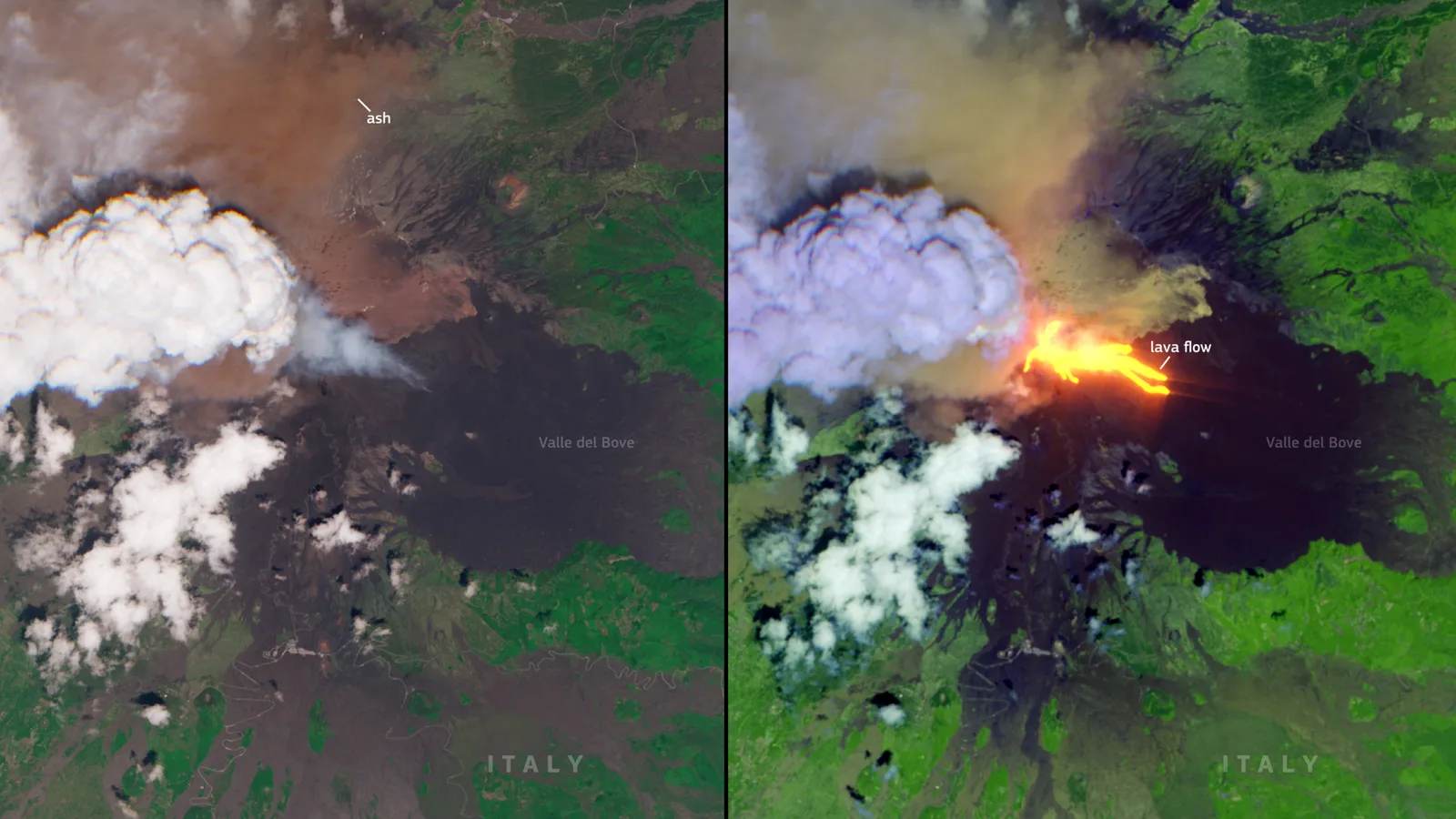
Mount Etna erupted strongly enough overnight into 26 September 2026 to push an ash cloud roughly 4km high over eastern Sicily, and Catania–Fontanarossa airport — Italy’s fifth-busiest by passenger traffic — suspended all arrivals until 1000 GMT (12:00 local time) on Sunday 27 September. If you are booked through Catania this weekend, here is the one thing worth knowing before you call your airline: volcanic ash counts as an ‘extraordinary circumstance’ under EU261 and UK261, so cash compensation is very unlikely — but the airline still owes you care and a way to your destination.
Key facts
- Catania–Fontanarossa suspended all arrivals until 1000 GMT / 12:00 local, Sunday 27 September 2026
- Italy’s volcano institute (INGV) measured the ash cloud at roughly 4km high and issued a red aviation alert, the highest of four levels
- Landing capacity had already been cut to 4 an hour, down from the normal 12, before the full suspension
- Volcanic ash is an ‘extraordinary circumstance’ under EU261/UK261 — no cash payout, but meals, a hotel and rerouting are still owed
What actually happened at Catania airport
A violent overnight storm combined with ash drifting south from Etna’s North-East crater to shut down normal operations in two stages. Controllers first cut arrivals to four a hour — a third of the airport’s usual 12 — as the plume crossed the approach paths, then suspended arrivals entirely once INGV measured the cloud at around 4km and raised the aviation alert to red. Ten flights were diverted before the full suspension: five to Palermo, three to Trapani and two to Comiso. Catania handles roughly 10 million passengers a year, and this is not an isolated event — Etna’s ash has forced repeated restrictions here through July, August and now September 2026.
What EU261 and UK261 actually say about volcanic ash
Both rules say the same thing: volcanic ash, alongside air traffic control strikes and severe weather, is an ‘extraordinary circumstance’, so the airline does not owe the usual €250–€600 (£220–£520) per-passenger payout. That classification survived its biggest test in 2010, when an Icelandic volcanic eruption grounded most of European airspace for six days — regulators and courts subsequently confirmed an ash-cloud closure is exactly the kind of event the extraordinary-circumstances clause was written for.

What does not change is the airline’s duty of care. Whatever caused the disruption, a cancelled or badly delayed passenger is still owed meals and refreshments while they wait, a hotel and transport if an overnight stay is needed, and a route to their final destination — either rebooking on the next available flight or a full refund.
What you can still claim, even when cash compensation is off the table
The extraordinary-circumstances clause only removes the fixed cash sum. Everything else on the airline’s duty-of-care list still applies, and it is worth knowing the difference before you argue with a check-in desk.
| Cause | Cash compensation | Meals & hotel | Rerouting or refund |
|---|---|---|---|
| Volcanic ash, ATC strike, severe weather (extraordinary) | No | Yes | Yes |
| Technical fault, crew scheduling, overbooking (airline’s own fault) | Yes, up to €600/£520 | Yes | Yes |
Keep every receipt for meals, transport and accommodation you pay for yourself — airlines will reimburse reasonable costs against a receipt even when they cannot arrange a hotel directly, and a claim backed by paperwork moves faster than a verbal account after the fact.
What this means if you are flying through Sicily this week
If your flight touches Catania before Sunday afternoon, check your airline’s app before you leave for the airport rather than trusting the departure board once you arrive — Etna’s ash has closed and reopened Catania several times this year, sometimes within the same day. Ask explicitly for rerouting if your flight is cancelled outright; airlines are required to offer it but do not always volunteer it. A separately booked connecting flight elsewhere is not protected the same way a single ticket is, so if you booked Catania-to-somewhere-else on two separate tickets, the second one is your own risk to manage.

What this means for you
Don’t waste time chasing cash compensation for an Etna disruption — you almost certainly will not get it, and asking will not speed anything up. Spend that energy on the rerouting request instead: that is the right the airline actually owes you, and it is the one that gets you moving again.
Common questions about the Etna disruption
Will Mount Etna keep disrupting Catania flights?
Likely, at least through this eruptive phase. Etna has forced repeated ash-related restrictions at Catania across July, August and September 2026, and the airport operator has become practised at the capacity-cut-then-suspend pattern used this weekend.
Does travel insurance cover the costs the airline will not?
Check your policy’s travel delay section — some plans pay a fixed daily amount once delay hours pass a set threshold, regardless of what the airline provides, which can cover incidentals the airline’s duty of care does not stretch to.
What if my missed connection was on a different ticket?
Rerouting and refund rights apply to the ticket that was disrupted, not to a separately booked onward flight — two separate tickets means the second airline owes you nothing for a delay caused by the first.
Diversion and red-alert detail: La Sicilia, 26 September 2026.
A grounded flight is a reminder that nature runs on its own schedule, not an airline’s — it is the same lesson in the Himalaya, which is why our Everest Base Camp itineraries build in spare days for exactly this kind of disruption.
Cover photo: European Union, Copernicus Sentinel-2 imagery via Wikimedia Commons (Attribution). Section photos: Ahmet Yüksek ✪ via Pexels (Pexels licence); K via Pexels (Pexels licence); Gustavo Fring via Pexels (Pexels licence); dongfang xiaowu via Pexels (Pexels licence); Dmitry Romanoff via Pexels (Pexels licence).
Still running this season
Everest Base Camp Trek — 12 Days is running normally
NMA-certified local guides, transparent pricing, 5,000+ treks since 1998. Message us your dates and we'll sort the permits, lodges and logistics — reply within 24 hours, no obligation.
Popular Nepal treks
All treks →


Related coverage

Flights & Access
What airlines actually owe you when air traffic control fails, in the US, UK and EU
Usually no cash payout, because ATC failures count as extraordinary. But UK and EU airlines still owe meals and hotels, and US refund rules still apply.
Breaking Flights & Access
Berlin's Airport Got Grounded by a Drone Again Wednesday, Here's Whether You Should Worry About Your Flight Through Germany
A drone shut Berlin Brandenburg's runway for 45 minutes, the airport's seventh such disruption this year. Here's what it means for your Germany connection.
Flights & Access
What a Canadian airline owes you when your flight is delayed, in dollars
Up to $1,000 on a large airline, $500 on a small one, and $2,400 if you are bumped. What counts as within the airline's control, and the one-year deadline.
Flights & Access
Italy's controllers strike on 30 September and two windows protect your flight
A four-hour national ENAV stoppage from 13:00, plus Linate, Naples, Bologna, Bari and Rome. Which flights are protected, and what the airline owes you.
Latest from the desk
Breaking Flights & Access
Bangkok just declared a flood disaster in all 50 districts, here’s what it means if you’re flying through to Nepal
Bangkok declared all 50 districts disaster zones after 300mm of rain in 48 hours, and five airlines, Thai Airways included, are waiving change fees this week.
Breaking Flights & Access
Four Airlines Are Waiving Fees for Hurricane Nolo, Here's Exactly What Each One Covers
Hurricane Nolo has grounded at least 21 Hilo flights, and four airlines have separate waiver rules — here’s what each requires.

Breaking Safety & Advisories
A Melbourne Man Is Missing After Trekking Alone in Peru, Here's Why We Never Let a Client Do That in Nepal
Jordan Yap, 30, hasn’t been heard from since he set off solo into Peru’s Huayhuash range on 14 September — Nepal’s guide rule exists for this.