
What happens at Nepal's Teej festival, and the morning deadline most people miss
Haritalika Teej 2026 fell on 14 September. What the fast involves, why the puja window closes when the tithi does, and how to witness it respectfully.
At a glance
- Published · updated
- TopicFestivals & Events
- Verified againstDrik Panchang (Kathmandu) and Travel Himalaya Nepal field reporting
- Treks coveredKathmandu UNESCO Heritage Sites — 1 Day, Kathmandu Valley Cultural Tour — 3 Days, Nepal Classic Tour — 7 Days
Haritalika Teej 2026 fell on Monday 14 September. The night before, Sunday 13 September, was dar khane din — the feast that carries women into the fast. The fast was kept through the 14th, and the morning puja window closed at 7.21am, when the Tritiya tithi ended.
If you are reading this after the day itself, the rest of this page is still the part worth having: what Teej actually is, why the timing works the way it does, and how to be present at one without intruding. Teej moves with the lunar calendar, so the 2027 date shifts — we will confirm it against the panchang rather than guess it here.
What is next in the festival calendar
Teej opens Nepal’s autumn run. Dashain and Tihar are the two biggest celebrations of the Nepali year and both fall inside the October–November trekking window — which is the timing question that actually affects an autumn trip.
Teej 2026 — the dates that matter
- Sunday 13 September — dar khane din, the shared feast the night before.
- Monday 14 September — Haritalika Teej. Bhadra 29, 2083 BS. A gazetted public holiday for women in Nepal.
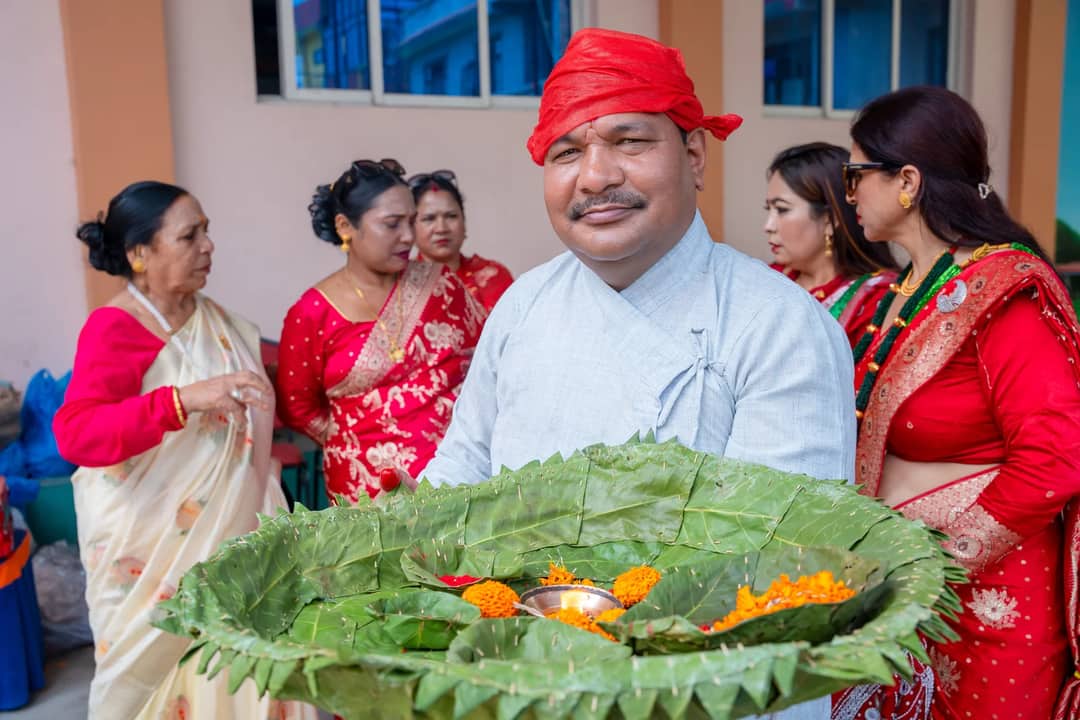
- Puja window 5.48am to 7.21am on the 14th — it closes when the tithi does, not at a time of anyone’s choosing.
- Around Wednesday 16 September — Rishi Panchami, which closes the sequence two days after Teej.
The timing people get wrong
The puja window and the tithi end at the same minute, 7.21am, so the morning worship is not something to drift into late. This is the detail that catches people out every year.
| Moment | Date | Time (NPT) |
|---|---|---|
| Tritiya tithi begins | Sunday 13 September | 07:23 |
| Dar khane din (the feast) | Sunday 13 September | evening |
| Pratahkala puja muhurat | Monday 14 September | 05:48 – 07:21 |
| Tritiya tithi ends | Monday 14 September | 07:21 |
These timings are computed for Kathmandu and shift by a few minutes elsewhere in Nepal. Because Teej follows the lunar calendar rather than the Gregorian one, the date moves each year — which is why the tithi, not the clock, is what actually governs the window.
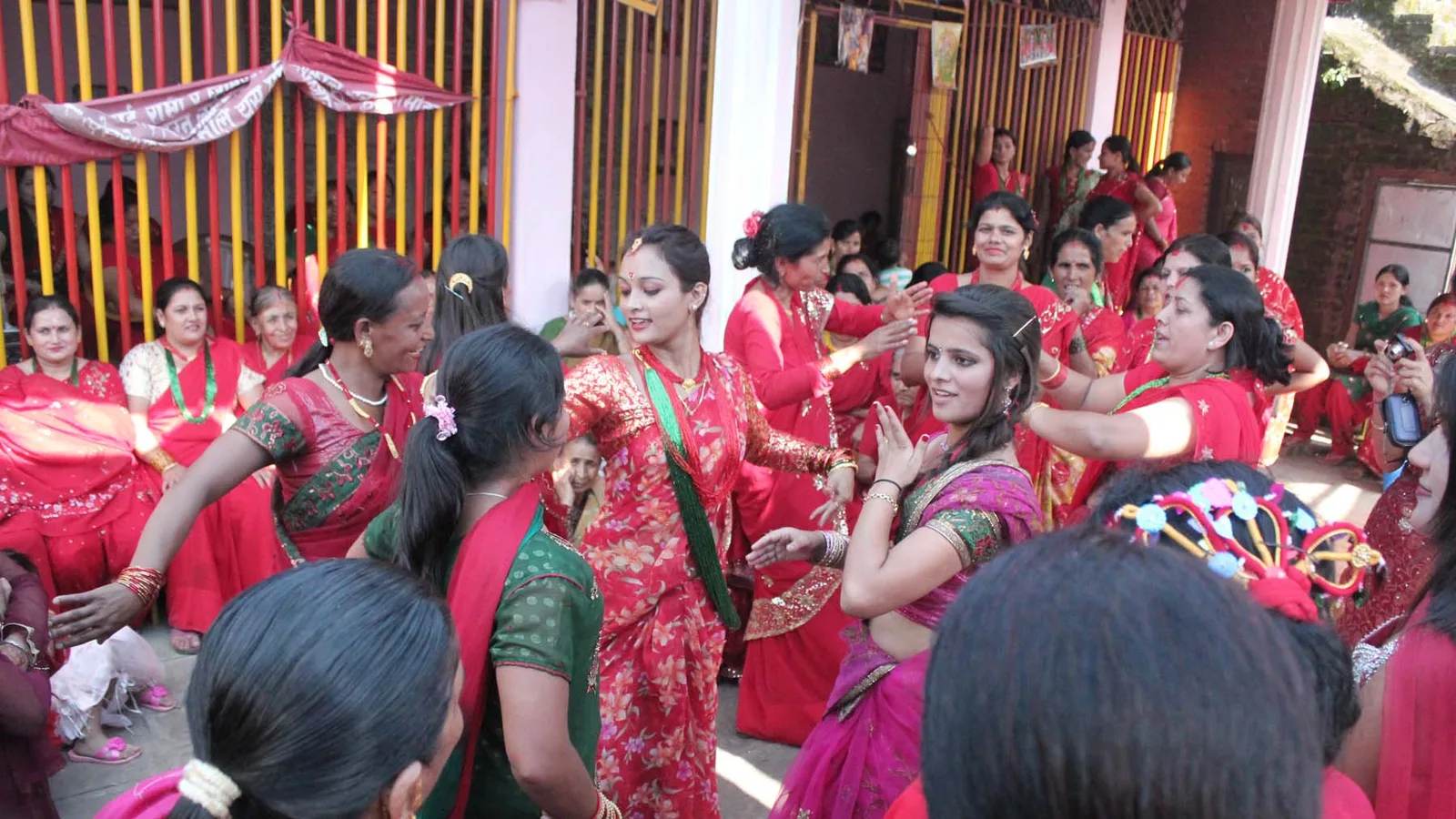
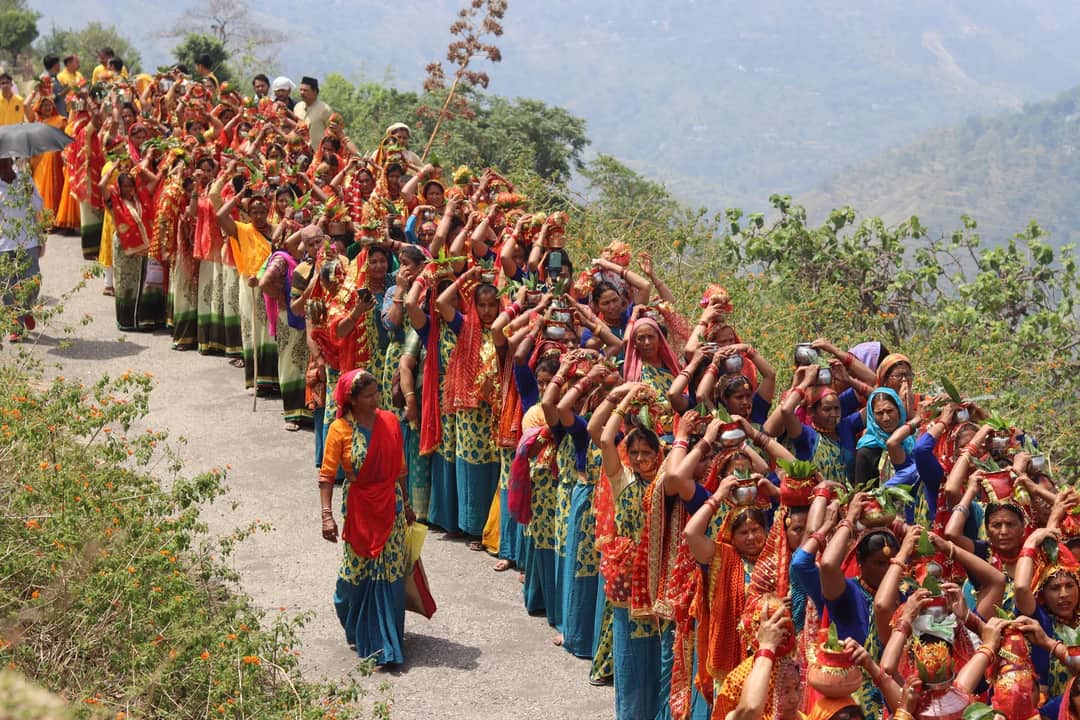
If you arrive in Nepal at the tail end of the monsoon, you may step off the plane into a river of red. Women in scarlet saris, singing and dancing their way through the streets of Kathmandu towards Pashupatinath, are celebrating one of the most important festivals in the Nepali year, and the one most closely bound up with the lives of women. It is a spectacle, yes, but it is also a fast, a prayer and a rare public space in which women sing openly about their own lives. Understanding what it means is the difference between gawping and genuinely witnessing it.
What Teej actually is
Teej is not a single day but a family of festivals dedicated to Parvati and her consort Shiva. The name covers three related celebrations that fall across the monsoon and its close.
They are Haryali Teej, on the third day after the new moon in the month of Shravana; Kajari Teej, about a fortnight later; and Haritalika (Hartalika) Teej, one lunar month after Haryali, on the third day of the bright fortnight of Bhadra. It is Haritalika Teej that is kept most widely in Nepal, and it is the one you are most likely to encounter.
| Festival | Lunar timing | Note |
|---|---|---|
| Haryali (Hariyali) Teej | 3rd day after the new moon, Shravana | Marks the greening of the monsoon |
| Kajari Teej | About 15 days after Haryali Teej | Observed mainly in parts of northern India |
| Haritalika (Hartalika) Teej | 3rd day of the bright fortnight, Bhadra | The form most widely kept in Nepal |
It is not only a festival for husbands
Reading Teej purely as a day women keep for their husbands misses half of what it is. The festivals commemorate Parvati’s long devotion and penance to win Shiva, and from that story flows the meaning women attach to the day: married women fast and pray for the long life and welfare of their husbands, unmarried women for a good future partner.
But Teej is also a homecoming. Daughters return to their maternal homes, women gather away from daily chores, and the songs they sing range from the devotional to the frankly candid about marriage, hardship and joy.
The fast, the feast and the red sari
The heart of Haritalika Teej is the nirjala vrata — a fast kept without food and, most strikingly, without even water, from sunrise through the following day. It is demanding, and it is undertaken willingly and communally.
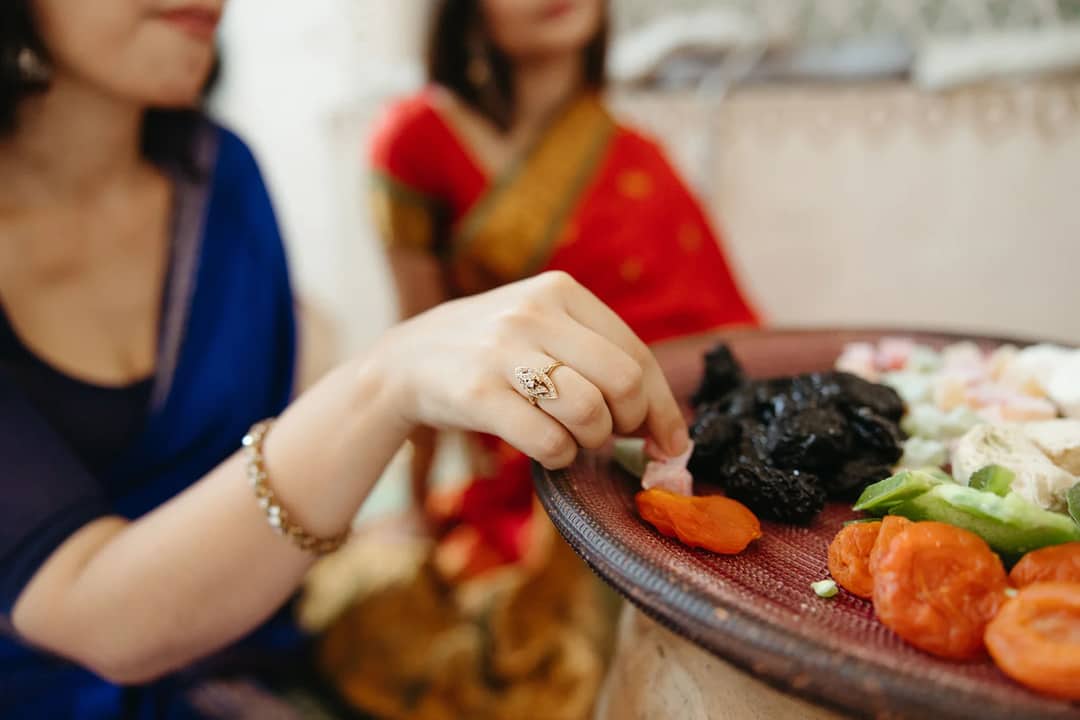
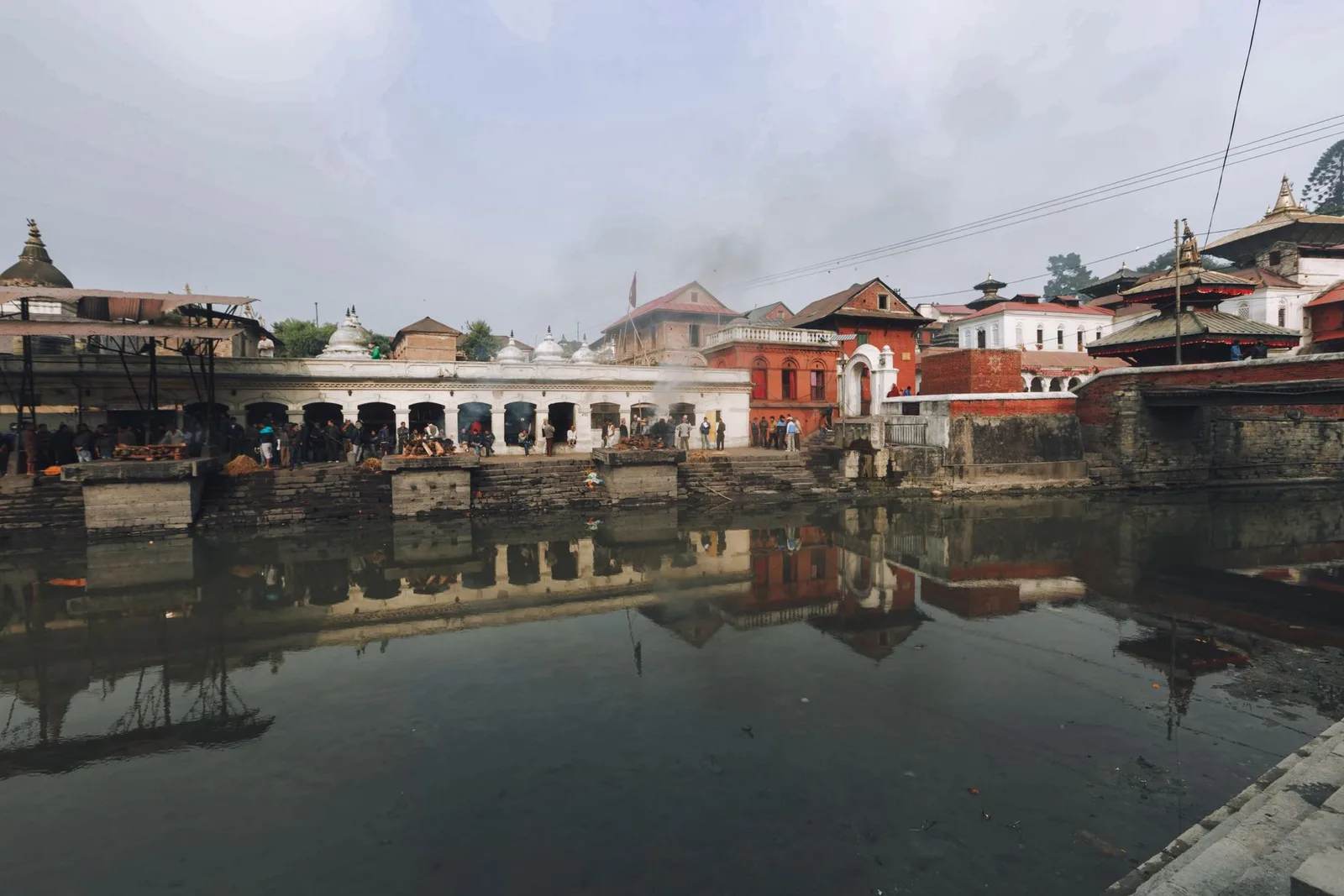
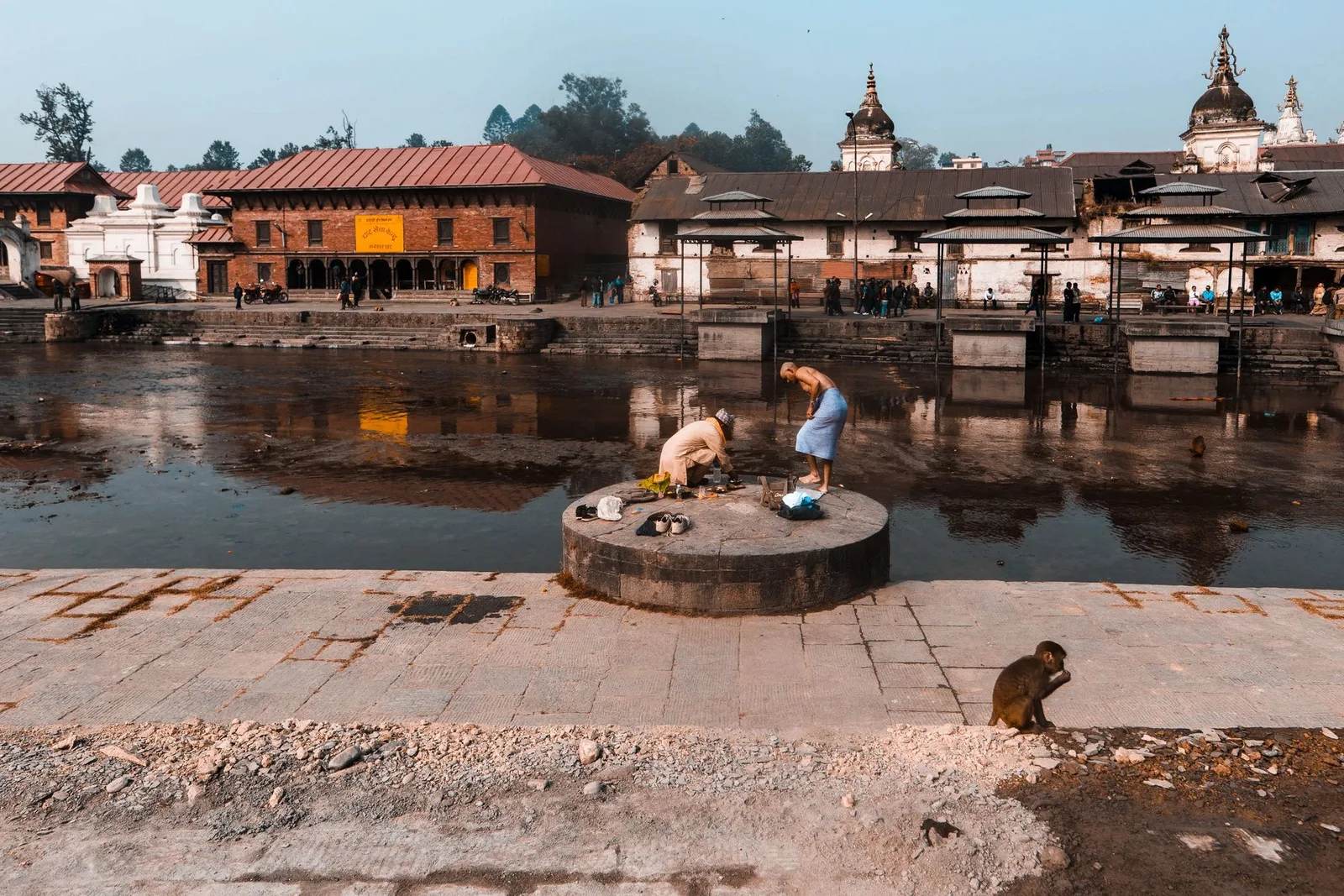
The night before, women gather for dar, a rich shared meal that carries them into the fasting day. Then comes the day of the fast itself: worship, and for many the pilgrimage to a temple of Shiva, with Pashupatinath in Kathmandu drawing the largest crowds. The festival closes with ritual bathing and puja.
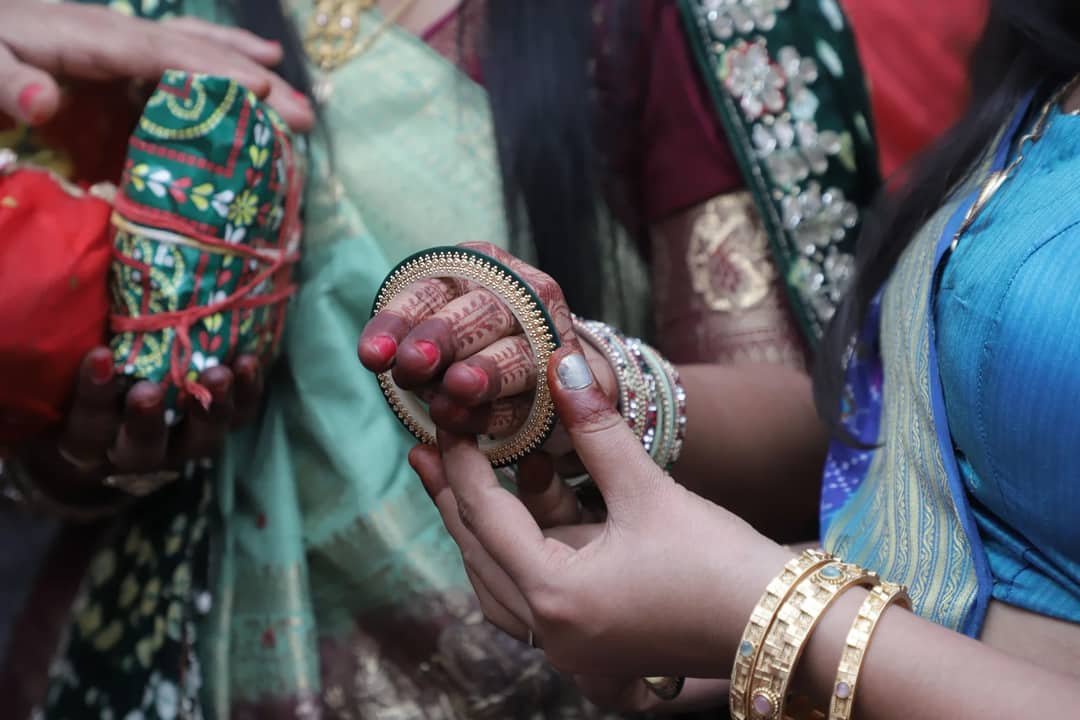
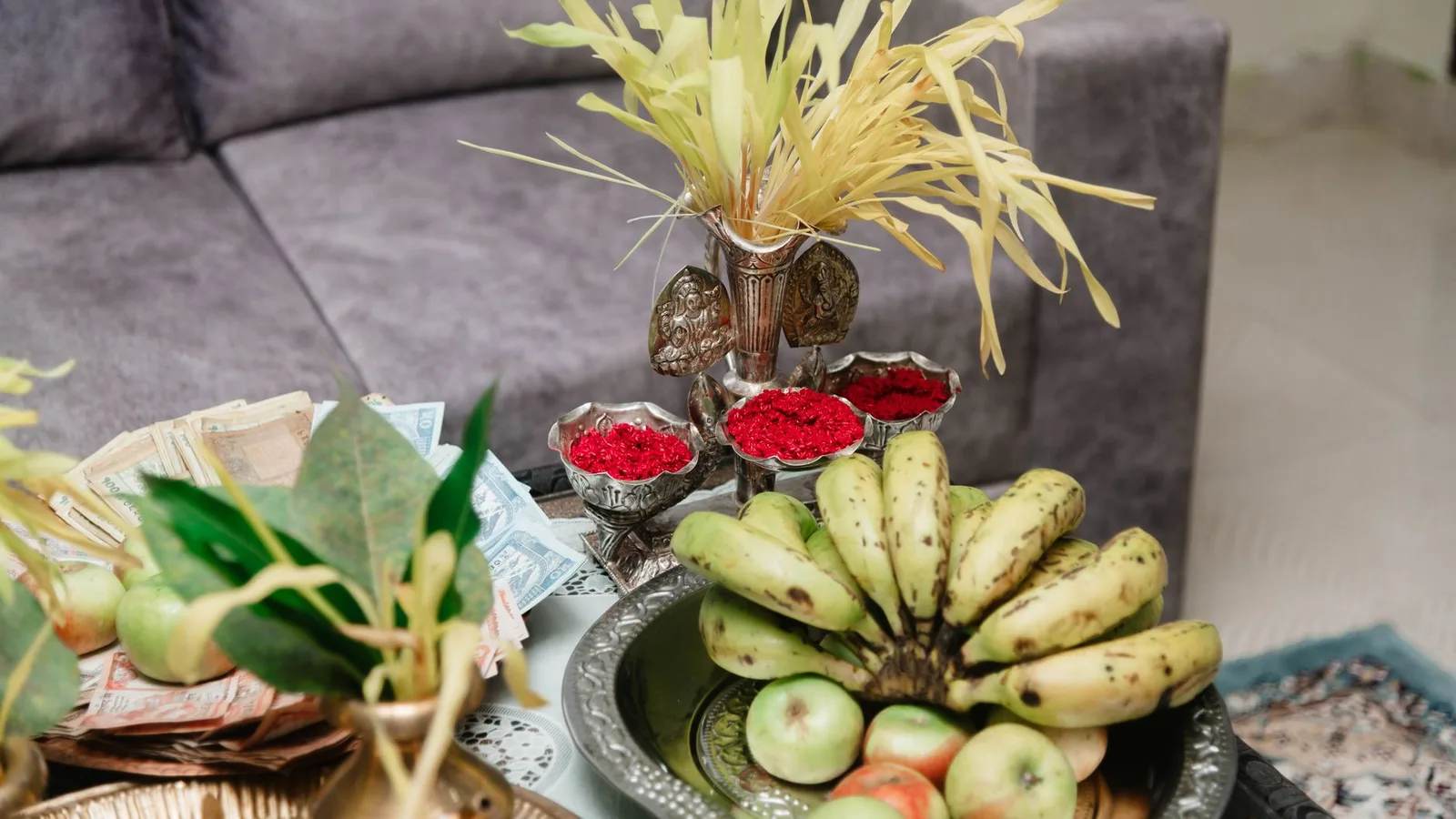
The colour of it all is red — the auspicious colour of marriage in Nepal — often set off with green and gold, fresh henna on the hands, and bangles that catch the light. The singing and dancing are not a performance staged for visitors; they are the festival. Groups of women fill temple courtyards and public squares, and the sound carries for streets.
How to witness it without intruding
Watch and enjoy, but remember this is a religious observance and not a show. So much of it unfolds in the open that Teej is one of the most visible windows into Nepali women’s culture a traveller will ever get — which is exactly why it is worth being careful with.
Witnessing Teej respectfully
Ask before photographing individuals, especially women mid-prayer, and never crowd the temple queues at Pashupatinath — the inner areas are for worshippers. Dress modestly; red is welcome if you want to join the spirit of the day. Do not offer food or water to anyone who is fasting, however kindly meant. If you are invited to watch the singing, accept graciously and keep to the edges. A little Nepali — Teej ko subhakamana, best wishes for Teej — goes a long way. And if you photograph the day, share it in a way that honours the women in it rather than exoticising them.
Teej and the trekking season
Teej sits right at the hinge of the year. It falls as the monsoon fades and the first clear autumn skies arrive — the very weeks when Nepal’s prime trekking season begins to open.
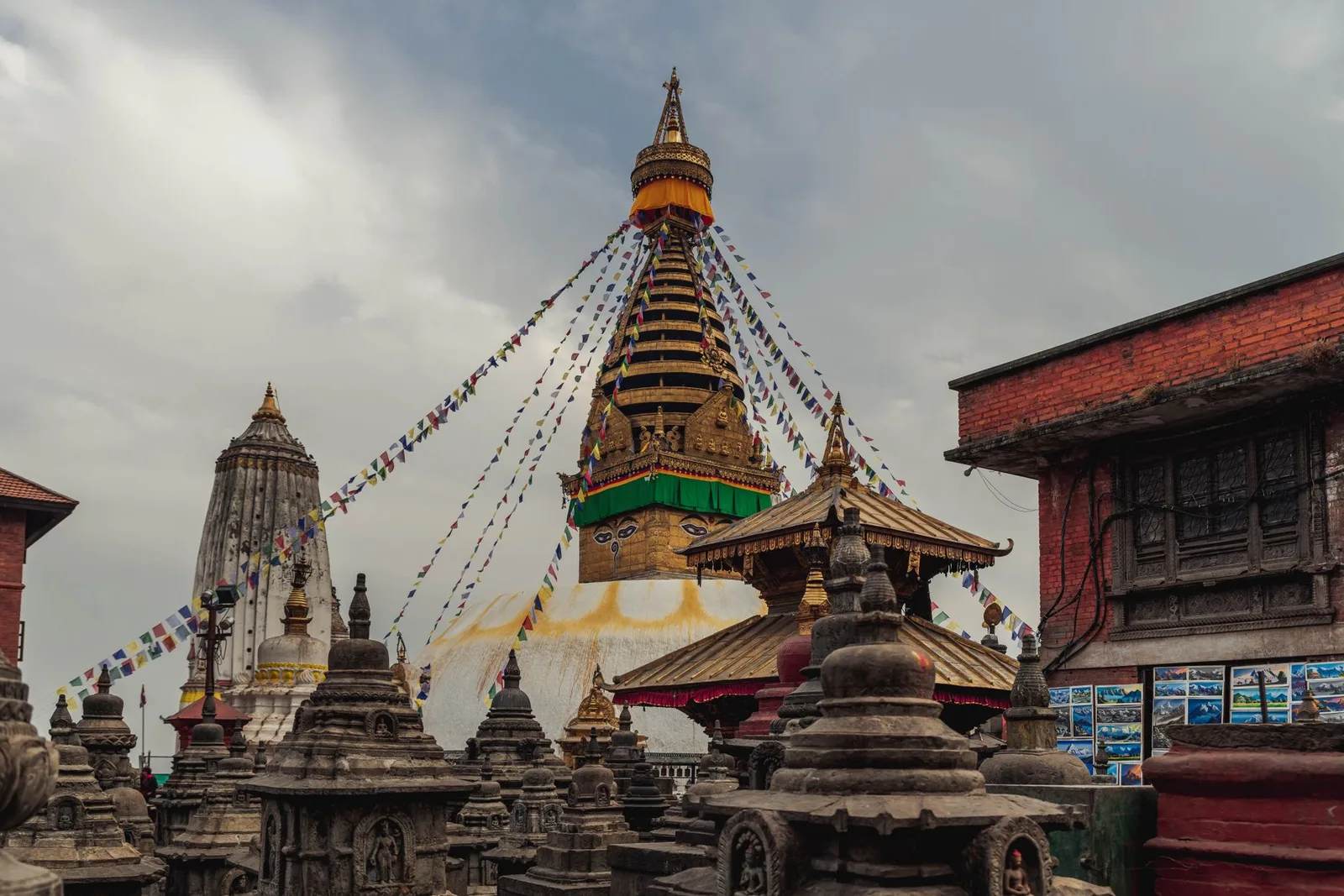
Arrive for Teej and you can spend a few days in the Kathmandu Valley soaking up the festival before walking into the mountains as the trails dry out. It also opens a run of autumn festivals: a few weeks later come Dashain and Tihar, the two biggest celebrations of the Nepali calendar, both falling inside the October–November trekking window. For more on Nepal’s living culture beyond the trail, see our guide to authentic Nepal.
If you would like to be in Kathmandu for the festival and on the trail soon after, our 3-day Kathmandu Valley cultural tour takes in Pashupatinath and the valley’s heritage sites — a natural way to begin an autumn journey in the Himalaya. Reach out and we will help you time it right.
Cover photo: Ganesh Paudel at ne.wikipedia via Wikimedia Commons (CC BY-SA 3.0). Section photos: Photographer Gyanu via Pexels (Pexels licence); Darshan Dave via Pexels (Pexels licence); Anastasia Shuraeva via Pexels (Pexels licence); Sandeep Kumar via Pexels (Pexels licence).
More Nepal festivals
Still running this season
Kathmandu UNESCO Heritage Sites — 1 Day is running normally
NMA-certified local guides, transparent pricing, 5,000+ treks since 1998. Message us your dates and we'll sort the permits, lodges and logistics — reply within 24 hours, no obligation.
Popular Nepal treks
All treks →
Related coverage
Festivals & Events
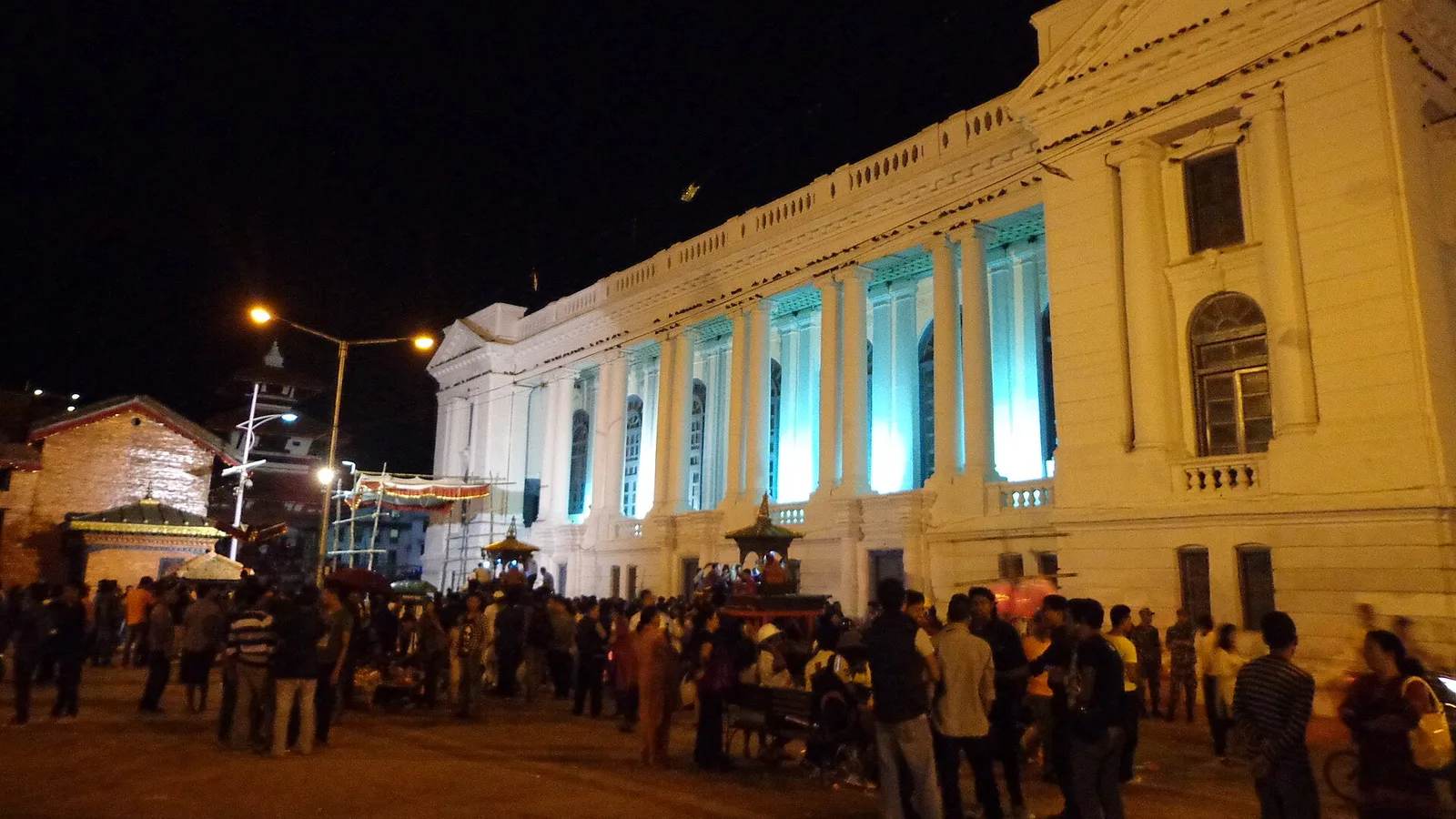
Kathmandu's Biggest Street Festival Has a Stone Demon That Spits Rice Beer Into the Crowd
Indra Jatra runs 23 to 29 September 2026, with the Kumari chariot on Friday the 25th. Masked dancers, chariots and a god that pours rice beer.
Festivals & Events
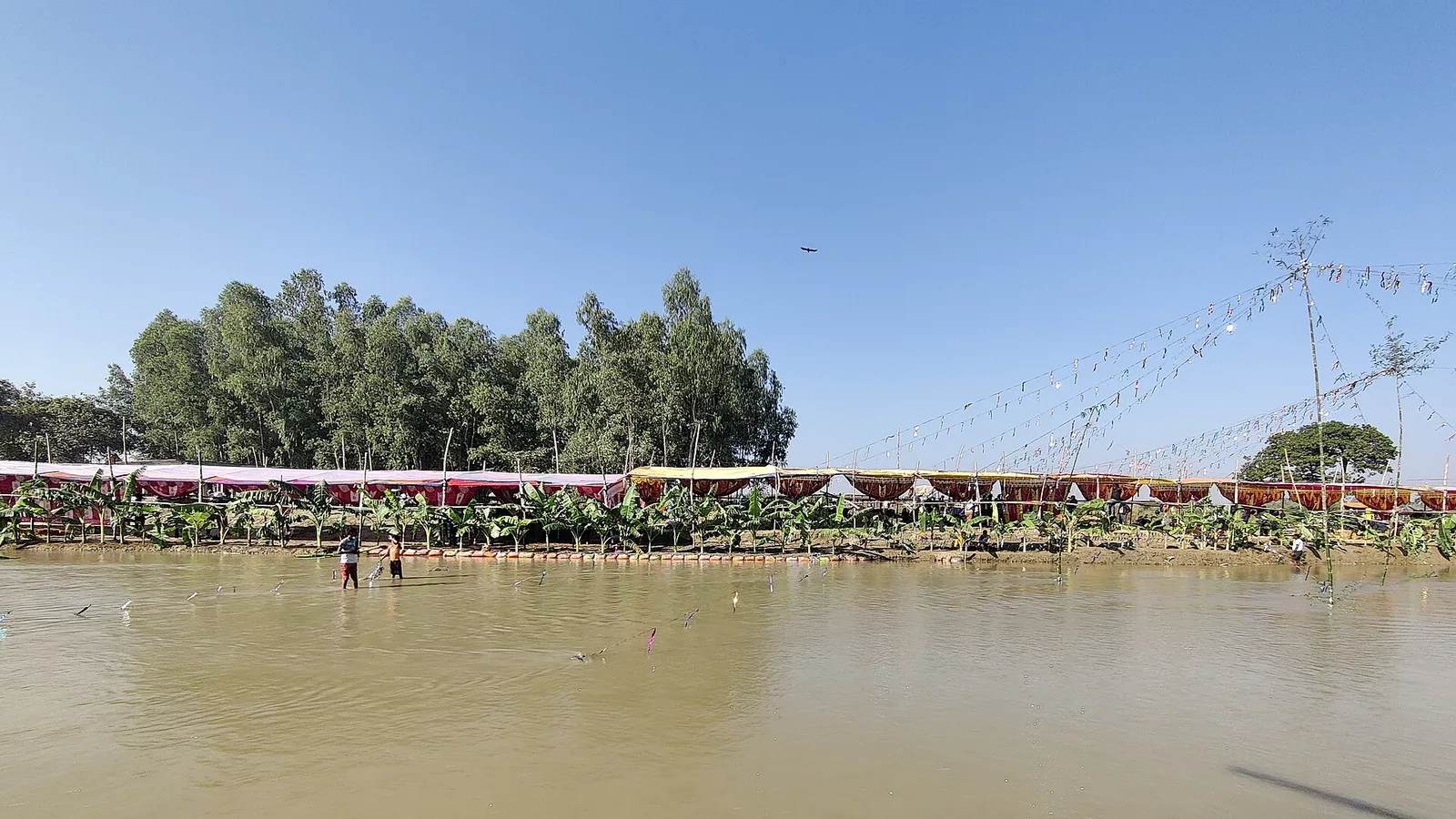
Chhath 2026 in Nepal, the Terai’s sun-worship festival explained
Four days of fasting, river-standing and dawn offerings
Festivals & Events
If you are taking tika in the US this Dashain, the auspicious hours start on Tuesday night
Dashain’s tika day is Wednesday 21 October in Nepal. Across US time zones that window opens on Tuesday evening and closes before dawn.
Festivals & Events
Nepal Gives Every Dog a Flower Garland and a Tika, Even the Ones on the Street
On the second day of Tihar, Nepal puts a mark of worship on its street dogs, from the stray on the corner to the police dog on duty.
Latest from the desk
Breaking Safety & Advisories
An Avalanche Buried Himlung Himal's Base Camp in Nepal, and Ten Climbers and Staff Are Missing
An avalanche hit Himlung Himal's base camp in Nepal's Manang district on 27 September, and rescuers are searching snow for ten missing climbers and staff.

Money & Insurance
You Could Be Owed Cash From a $167 Million Visa and Mastercard Settlement, Here's How to Check
Visa and Mastercard are paying $167.5 million after allegedly blocking cheaper ATM fees, and the claim deadline is 10 February 2027.
Wildlife & Nature
Chitwan or Bardia, here's which Nepal safari you should actually book
Nepal's 2026 tiger census found record numbers in Chitwan and a rare decline in Bardia, and it changes the honest answer to which safari to book.