
Can you really work remotely on a tourist visa? Here is where it is allowed
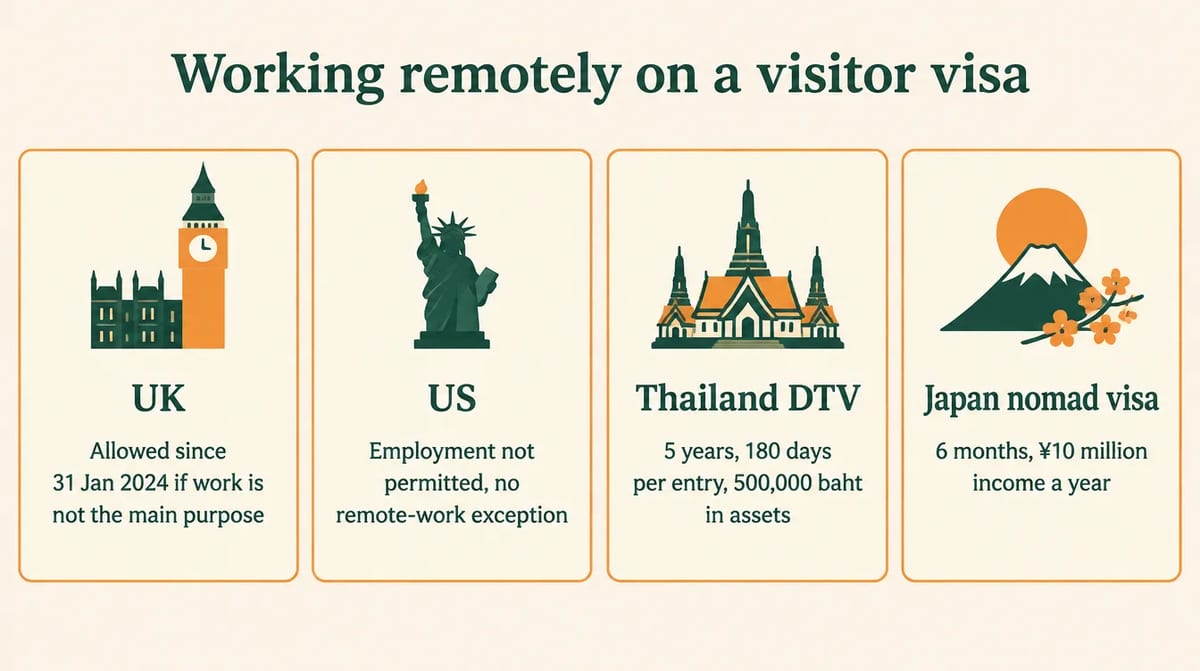
The UK has allowed it since January 2024 if work is not the main purpose. The US does not. Thailand and Japan built visas for it, and Nepal's is not live yet.

On this page (8)
Working remotely for your own employer while on a tourist visa is expressly allowed in only a few places; the United Kingdom has permitted it since 31 January 2024 as long as work is not the main purpose of the visit. Most countries’ visitor rules say nothing clear about it, and the United States lists employment as something visitors may not do, with no remote-work exception. Where the rules are silent, a dedicated remote-work visa such as Thailand’s DTV or Japan’s digital nomad visa is the safe route.
- “Nobody checks” is not the same as “allowed”. Border officers ask what you will do, and “work” is an answer with consequences.
- Working for a local client is almost never allowed on a visitor visa, even when working for your home employer is.
- Nomad visas trade paperwork for certainty. Thailand wants proof of 500,000 baht; Japan wants ¥10 million a year in income.
- The visa does not settle your tax. Staying long enough can make you tax resident wherever you are.
Where the rules actually say something
Only a handful of countries address remote work for a foreign employer in their visitor rules, and they fall into three groups: expressly allowed, expressly not allowed, and silent.
| Country | Visitor rules on remote work | The safer alternative |
|---|---|---|
| United Kingdom | Allowed for your overseas employer, if not the main purpose of the visit; stays usually up to 6 months | Not needed for incidental work |
| United States | Visitors may not take employment; the rules contain no remote-work exception | Keep to ordinary business-visitor activity |
| Thailand | Tourist entry is for tourism | Destination Thailand Visa (DTV) |
| Japan | Temporary visitor status is not for work | Digital nomad visa (designated activities) |
| Nepal | No published rule on remote work | Nomad visa announced in 2025, not yet launched |
| Schengen area | No single rule; each country decides | A national digital nomad visa where one exists |
The pattern matters more than any one row. A visitor visa exists so you can visit. The further your trip drifts from visiting towards living and working, the more the dedicated visas are built for you, and the less a tourist stamp protects you.
The United Kingdom says yes, with a condition
Since 31 January 2024, UK visitors may carry out work for their overseas employer remotely from inside the UK, provided that is not the primary purpose of the visit.
The rule sits in the Immigration Rules, Appendix Visitor: Permitted Activities, which allows visitors to “undertake activities relating to their employment overseas remotely from within the UK, providing this is not the primary purpose of their visit.” It came in through the statement of changes published on 7 December 2023. The same GOV.UK guidance still says a visitor cannot do paid or unpaid work for a UK company or as a self-employed person, unless it is a permitted paid engagement.
In practice that means answering emails and joining calls during a month visiting family in London is fine. Flying in to spend six months working full time from a London flat is the kind of trip the “primary purpose” test is written to catch.
The United States is the cautious case
US visitor visas list employment as something visitors may not do, and the rules contain no exception for remote work for a foreign employer, so a working holiday in the US carries real risk.
The State Department’s visitor visa page sets employment among the activities a B-1 or B-2 visitor cannot undertake. Checking email or joining the odd call while on holiday is ordinary. A full working week, every week, from a US address is a different thing, and neither the State Department nor USCIS has published a rule that makes it safe. The consequences of being found to have worked without authorisation can include refusal of future visas. If your plans involve real working time in the US, take proper immigration advice before you book.
Always answer truthfully. If you are on holiday and will keep an eye on work email, say so. What gets people refused is not an honest answer; it is a trip that is plainly something other than a visit.
Thailand and Japan built a visa for it
Thailand’s Destination Thailand Visa and Japan’s digital nomad visa exist precisely so remote workers do not have to rely on a tourist stamp, and they set out their conditions openly.

| Thailand DTV | Japan digital nomad visa | |
|---|---|---|
| Validity | 5 years, multiple entry | 6 months, not renewable |
| Stay | Up to 180 days per entry, extendable once by 180 days | Up to 6 months |
| Money test | Proof of at least 500,000 baht in assets | Annual income of at least ¥10 million |
| Who qualifies | Remote workers paid from outside Thailand, plus some activity categories | Citizens of 49 countries and territories with a Japanese tax treaty and visa exemption |
| Local work | Not for Thai employers or Thai clients | Work for employers or clients outside Japan |
Thailand launched the DTV in July 2024, announced through the Tourism Authority of Thailand, and the Thai foreign ministry’s embassy checklists set out the 500,000-baht evidence. Japan introduced its digital nomad route in March 2024; The Japan Times reported the ¥10 million income bar before launch, and Japan’s foreign ministry lists the private medical insurance it requires. Our roundup of digital nomad visas covers the wider list, from Europe to the Gulf.
Where Nepal stands
Nepal has no working digital nomad visa yet, so anyone working remotely from Kathmandu or Pokhara is on an ordinary tourist visa, which stops at 150 days in a calendar year.
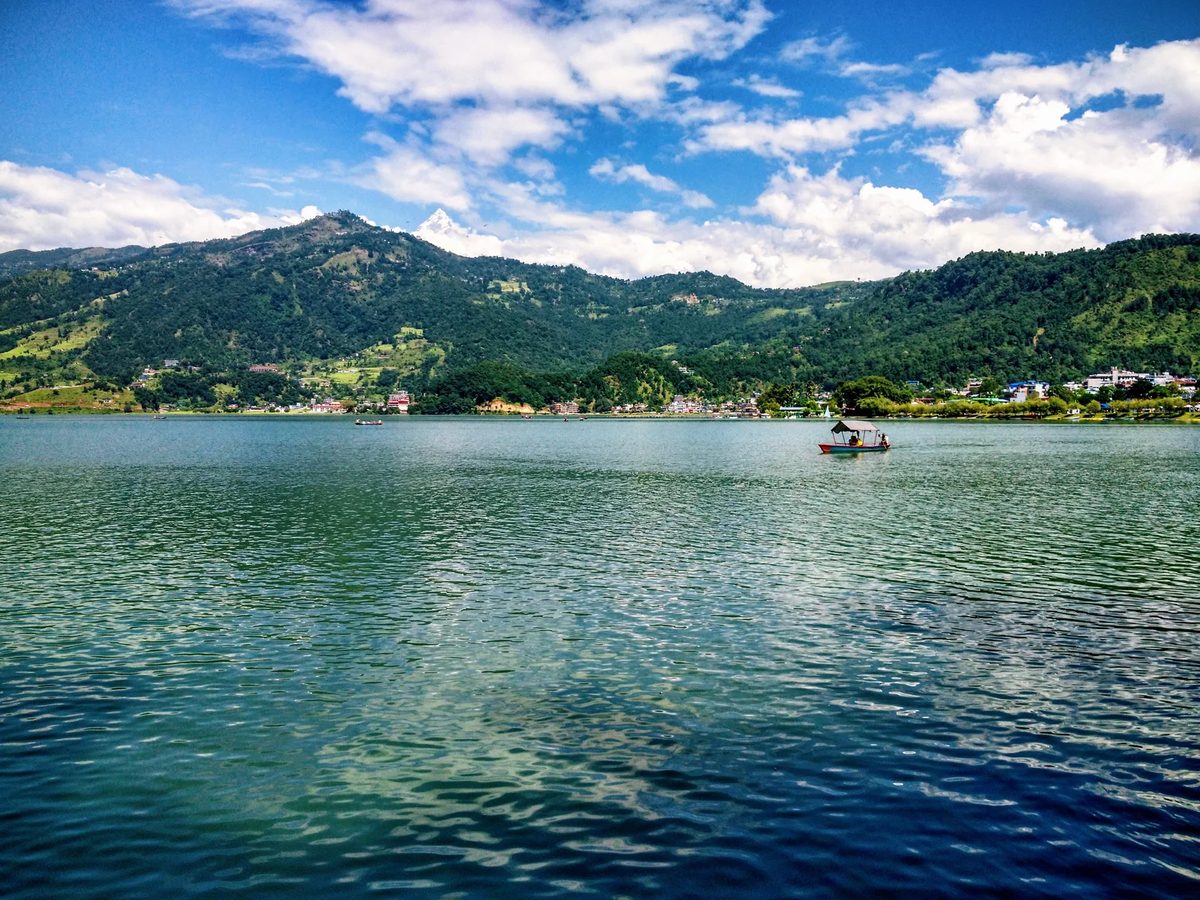
Nepal’s tourist visa costs US$30 for 15 days, US$50 for 30 and US$125 for 90, and can be extended up to that 150-day ceiling. The government announced a five-year digital nomad visa in May 2025, and as of late September 2026 we can find no launch and no application process; where that visa actually stands tracks it. Nepal publishes no rule that expressly covers remote work for a foreign employer on a tourist visa. Many remote workers in Pokhara do exactly that, quietly, and that grey area is what the nomad visa is meant to close.
What we can tell you with confidence is the practical side, because we live it. In Lakeside Pokhara the cafés and guesthouses aimed at longer stays generally have fibre, a working day can end with the Annapurna range turning pink, and a long weekend fits a short trek. Working remotely from Pokhara covers internet, costs and neighbourhoods, and nomad health insurance covers the cover you will want.
Our seven-day Annapurna Base Camp trek from Pokhara is US$800 solo, or from US$600 each in a group, with permits, a government-registered guide, a porter, teahouses and meals included. It fits between two working weeks.
See the Annapurna Base Camp trek →Your visa and your tax are two different questions
A visa decides whether you may be in a country; tax residency decides where you owe tax, and a long stay can make you tax resident even on a tourist visa.
Many countries use a test around 183 days in a year, and some have their own rules that catch you sooner. Your home country may keep taxing you too. The remote-work visas above do not, on their own, settle any of this. Digital nomad taxes explains how it works, and the Schengen 90/180 rule explains the limit that most often ends a European working trip early.
Our verdict
For a holiday with some email, a tourist visa is normal almost everywhere; for months of full-time work, get the visa built for it. The UK is the rare country that says the first case out loud. Thailand and Japan offer a clean answer for the second. Everywhere else, a trip that is really a job relocated to somewhere sunnier is a risk you carry, not a loophole.
Can I work remotely on a tourist visa?
It depends on the country. The UK expressly allows visitors to work remotely for an overseas employer if it is not the main purpose of the trip. The US lists employment as not permitted for visitors. Many countries say nothing, which is not the same as permission.
Can I work remotely in the UK as a visitor?
Yes, since 31 January 2024, for your overseas employer, as long as remote work is not the primary purpose of your visit. You still cannot work for a UK company or as a self-employed person.
Can I work remotely in the US on a B-2 visa?
Visitor visas do not permit employment, and there is no published exception for remote work. Occasional email is ordinary; regular full-time work is a risk. Take immigration advice if you plan to work there.
Does Nepal have a digital nomad visa?
Not yet. A five-year nomad visa was announced in May 2025, but as of late September 2026 there is no launch and no application process. Visitors use the tourist visa, capped at 150 days a year.
Does a digital nomad visa mean I pay no tax?
No. The visa governs your right to stay; tax residency depends on the number of days you spend and each country’s own rules, often around 183 days.
Keep reading
Which countries offer one, and what they ask for.
Internet, costs and neighbourhoods for a Nepal base.
Why working abroad does not make you tax-free.
Where the five-year visa actually stands.
Sources: GOV.UK, Immigration Rules Appendix Visitor: Permitted Activities, and the Explanatory Memorandum to HC 246 (7 December 2023); GOV.UK, Visit the UK as a Standard Visitor; US Department of State, Visitor Visa, and USCIS, B-1 temporary business visitor; Tourism Authority of Thailand newsroom (July 2024) and Thai Ministry of Foreign Affairs DTV checklists; Ministry of Foreign Affairs of Japan, Designated activities (Digital Nomad), and The Japan Times, 2 February 2024; Travel Himalaya Nepal field reporting and our verified Nepal visa pages. Where an official page did not load for us we relied on its published summary. All read on 27–28 September 2026. This is general information, not legal or tax advice; check the official source before you travel.
Photos: Pexels.

Written by
Bishnu AdhikariPokhara-based, NMA-certified trekking guides. We’ve led 5,000+ treks across the Annapurna and Everest regions since 1998 — every word here comes from the trail. More from this author →
Ready to Trek?
From reading about it to standing on it
Our Pokhara-based guides have been doing this since 1998. Tell us your dates and fitness level — we'll build your perfect itinerary. Free, no obligation.
More guides like this
Popular trips to consider
View all treks & toursFree Trekker’s Insider Guide
Permits, packing lists, cost breakdowns — no fluff.
We send one useful email. You can unsubscribe anytime.