
Renting a scooter abroad can quietly cancel your travel insurance
Most rental scooters are over 50cc, a motorcycle to insurers. Without the matching home licence, a helmet and the right add-on, a crash may not be covered.
On this page (7)
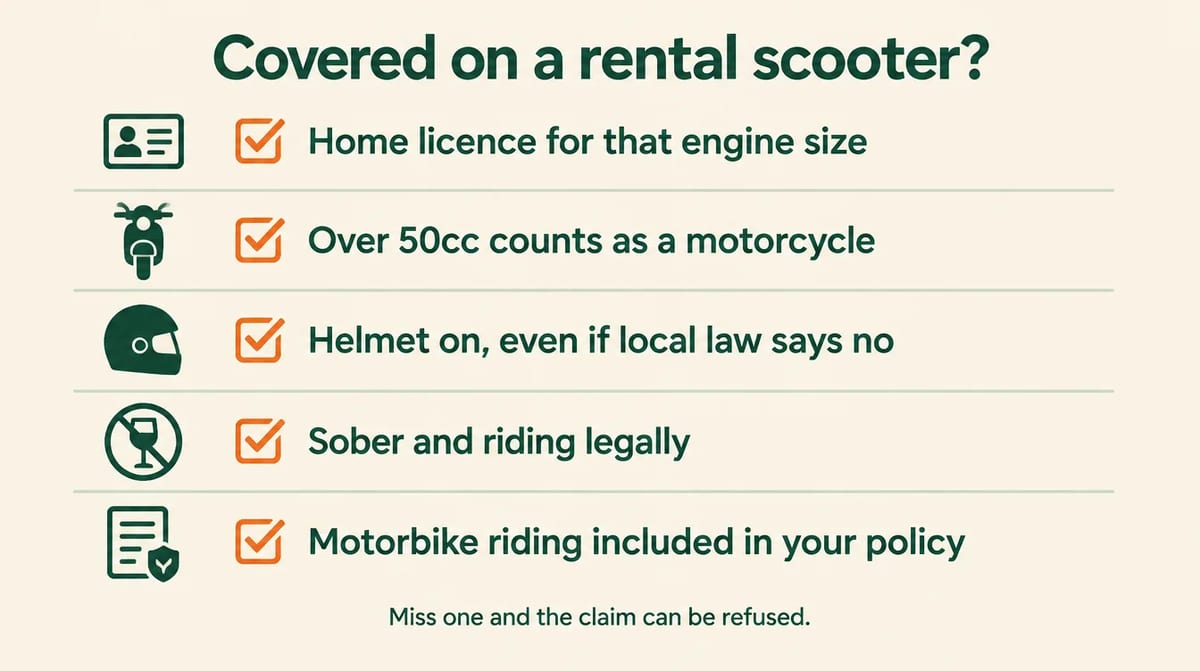
Your travel insurance will usually cover a scooter crash abroad only if you hold the right licence for that engine size at home, wore a helmet, were sober and within the local law, and your policy includes motorbike riding. Most rental scooters in Asia are well over 50cc, which insurers and licensing authorities treat as a motorcycle, so a car licence alone often means no cover at all. Check all four before you take the keys, not after.
- Your home licence is the test, not the rental desk. A shop that hands you keys has not checked whether your insurer will pay.
- An international driving permit cannot add a motorcycle category you do not hold at home. It translates the licence you already have.
- A helmet is a policy condition, even where local law does not require one.
- Medical cover is the part that matters. An uninsured hospital stay and flight home can cost more than the whole trip.
The four conditions that decide whether you are covered
Insurers look at the licence you hold at home, the engine size, whether you wore a helmet and whether you broke the law, and a failure on any one can void the claim. Australia’s government travel service, Smartraveller, sets these out plainly in the travel insurance guide it publishes with the consumer group CHOICE.
| Condition | What insurers commonly require | What catches people out |
|---|---|---|
| Licence | A home licence for that class of vehicle | Some policies require a home motorcycle licence even where the country you are visiting does not |
| Engine size | Moped means under 50cc for most insurers | A 125cc scooter is a motorcycle, so it needs a motorcycle licence |
| Helmet | Worn, whatever the local law | Rental shops often do not include one, or offer a thin one |
| Local law | Riding legally, sober and licensed there | Riding without the local permit or after a drink voids cover |
| Policy scope | Motorbike riding listed as covered | Many policies sell it as an extra activity |
Smartraveller’s wording on the helmet is the shortest rule in travel insurance: not wearing a helmet means no cover. On licences, it warns that some policies still will not cover you unless you have an Australian motorcycle licence, even if the country you are in does not require you to hold one. British and American policies use the same logic with a UK or US licence.
Why a car licence usually is not enough
A car licence covers a small moped at most, and the scooters rented to tourists are almost always bigger than that.
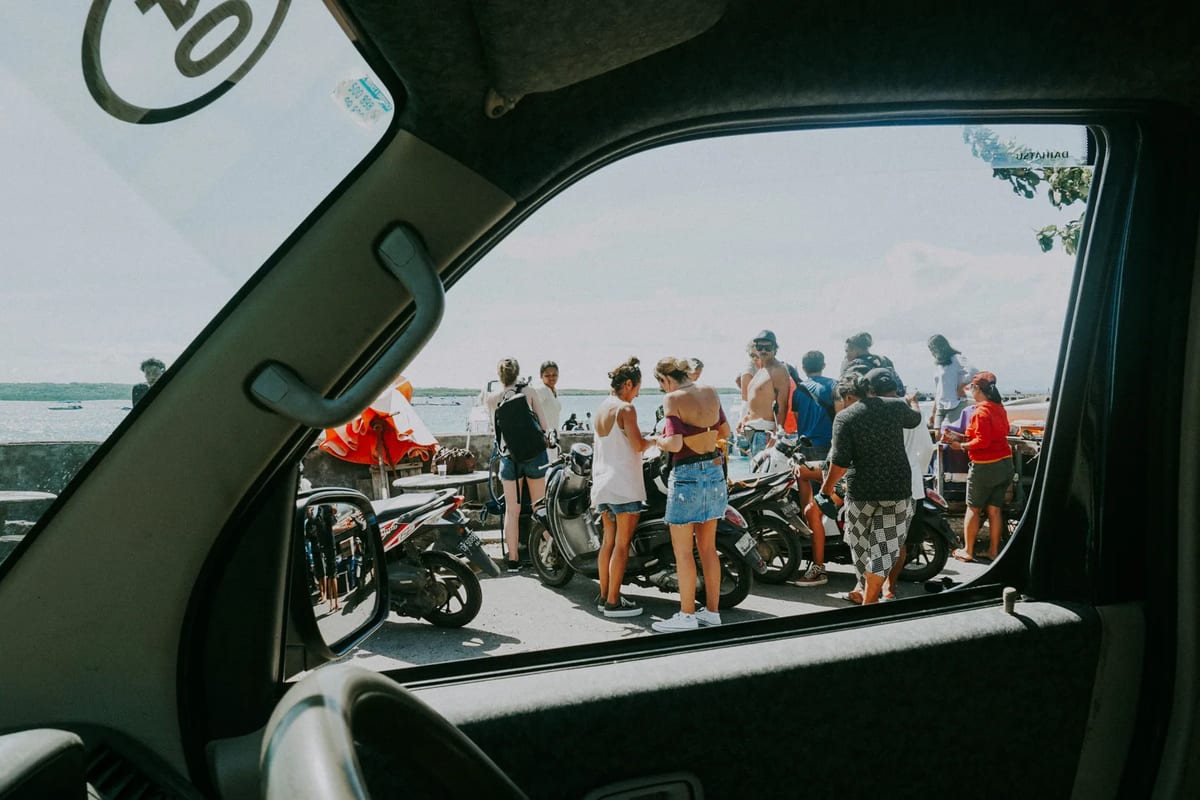
Smartraveller says most insurers adopt the national standard for a moped, an engine under 50cc; anything bigger is a motorcycle and needs a motorcycle licence. In Britain, GOV.UK says a car licence passed before 1 February 2001 lets you ride a moped up to 50cc, and a later car licence needs a compulsory basic training certificate even for that. A 125cc motorbike needs a full category A1 licence. A US driver needs a motorcycle endorsement from their state to ride one at home.
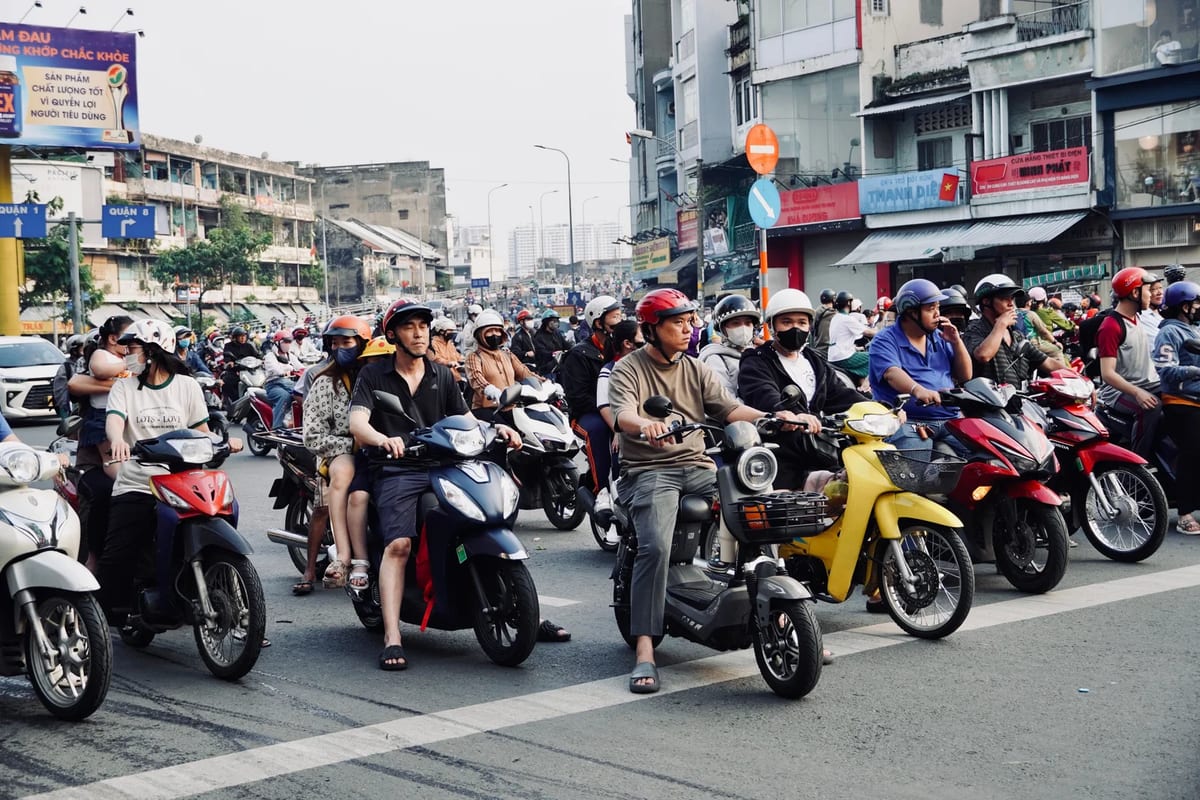
Now look at the rental rack. In Pokhara, where our office is, the scooters on Lakeside are 110cc to 125cc and the motorbikes start around 150cc. The popular scooters in Bali and Thailand are in the same range. A traveller with only a car licence is, in the eyes of most insurers, riding an unlicensed motorcycle.
An IDP is a translation of your home licence, recognised abroad. It shows the categories your licence already carries. If your licence has no motorcycle category, neither does the permit. See our guide to international driving permits for which countries ask for one.
What an uncovered crash can cost
The expensive part is not the scooter; it is the hospital and the journey home, and that is exactly the cover you lose.
In Nepal, we publish the numbers because we deal with them. A Kathmandu hospital admission runs roughly US$500 to US$3,000 a day, and a medically escorted repatriation can cost US$15,000 to US$60,000. A helicopter from a trail in the Annapurna region runs US$3,000 to US$5,000. Other countries in the region are no cheaper once you need a private hospital and a flight home. Our rescue cost breakdown has the detail.
Smartraveller notes that Australians have been seriously injured and killed in motorcycle and moped accidents in tourist areas, particularly Bali, Lombok and the Gili Islands. Its case study goes the other way: a traveller in Bali who confirmed the engine size and held the matching Australian licence had his medical bills paid. The difference between those two outcomes was a licence check that takes a minute.
Damage to the scooter and to other people
Travel insurance is mainly about your medical bills; damage to the rented bike and injury to someone else are usually a separate problem.
Many travel policies exclude personal liability arising from motor vehicles, and few pay for a damaged rental scooter. That leaves the rental contract. Read what it says about theft and damage, and whether the shop holds your passport as a deposit, before you sign. Photograph the scooter, scratches included, before you ride off. Our rental insurance explainer covers how excess and damage waivers work, and the same logic applies on two wheels.
The four-day Mardi Himal trek starts a short drive from Pokhara and is US$455 solo, or from US$330 each in a group, with permits, a government-registered guide, teahouses and meals included. You get the mountain views without a policy exclusion.
See the Mardi Himal trek →A five-minute check before you ride
Read your policy’s motorcycle clause, compare it with your licence and the engine size, and buy the add-on if you need it.
- Find the clause. Search your policy wording for “motorcycle”, “moped” and “scooter”. Note any engine limit and licence condition.
- Check your licence. Does it carry a motorcycle category that covers this engine size? If not, ride nothing bigger than the policy’s moped definition, or do not ride.
- Check the destination. Does the country want an international driving permit? Get it at home before you leave.
- Buy the activity if needed. Many policies sell motorbike riding as an extra. It is cheap next to a hospital bill.
- Ride the way the policy assumes. Helmet on, sober, within the law. That goes for passengers too: GOV.UK tells riders and passengers alike to wear a helmet and protective clothing.
If you are still choosing a policy, what travel insurance does not cover and cover for adventure activities explain the other common exclusions.
Our verdict
If you do not hold a motorcycle licence at home, do not rent a motorbike-sized scooter abroad. It is the one travel decision that routinely turns an ordinary fall into a five-figure bill. Take a taxi, hire a driver or walk. In Nepal that is easy advice to follow, because the roads are hard, the drivers are cheap and the best of the country is on foot anyway.
Does travel insurance cover riding a scooter abroad?
Often, but only if you meet the policy’s conditions: a home licence for that engine size, a helmet, riding legally and sober, and motorbike riding included in your cover. Miss one and the claim can be refused.
Can I ride a 125cc scooter abroad on a car licence?
Usually not with insurance. Most insurers treat anything over 50cc as a motorcycle, and a UK or US car licence does not include full motorcycle entitlement. A 125cc bike needs a category A1 licence in Britain.
Does an international driving permit let me ride a motorbike?
Only if your home licence already includes a motorcycle category. The permit translates your licence; it cannot add a class you do not hold.
Am I covered as a passenger on a scooter?
Check your policy. Passenger cover varies, and insurers commonly expect a helmet on every rider. GOV.UK advises passengers to wear a helmet and protective clothing.
Can I rent a scooter in Pokhara?
Yes, Lakeside has many rental shops. Whether you are insured to ride one is a question for your policy and your licence, not the shop.
Keep reading
The exclusions that surprise people at claim time.
Excess, damage waivers and what you already have.
Which activities need an add-on, and how to check.
What an evacuation really costs, and who pays.
Sources: Smartraveller (Australian Government) with CHOICE, travel insurance buying guide, “What are you covered for?”, and Smartraveller road safety guidance (read via their published summaries, as the pages timed out for us); GOV.UK, Riding a motorcycle, moped or motor tricycle, and CBT if you have a car driving licence; GOV.UK, Road hazards: hiring motorbikes and scooters abroad (17 August 2010); Travel Himalaya Nepal published rescue and hospital cost figures and field reporting from Pokhara. All read on 27–28 September 2026. This is general information, not insurance advice; your policy wording decides.
Photos: Pexels.

Written by
Bishnu AdhikariPokhara-based, NMA-certified trekking guides. We’ve led 5,000+ treks across the Annapurna and Everest regions since 1998 — every word here comes from the trail. More from this author →
Ready to Trek?
From reading about it to standing on it
Our Pokhara-based guides have been doing this since 1998. Tell us your dates and fitness level — we'll build your perfect itinerary. Free, no obligation.
More guides like this
Popular trips to consider
View all treks & toursFree Trekker’s Insider Guide
Permits, packing lists, cost breakdowns — no fluff.
We send one useful email. You can unsubscribe anytime.