
The 1951 photo that convinced the world yetis were real, and what DNA found instead
Eric Shipton’s footprint photograph near Everest launched a global legend. A 2017 DNA study on nine yeti specimens settled what really made the tracks.
At a glance
- Published · updated
- TopicRecords & People
- Verified againstProceedings of the Royal Society B
- Treks coveredEverest Base Camp Trek — 14 Days, Everest Three High Passes Trek — 20 Days, Gokyo Ri Trek — 11 Days
A grainy black-and-white photograph of a footprint in the snow, taken by a British mountaineer scouting a route toward Everest, ran in newspapers around the world in December 1951 and did more to convince the public that a Himalayan ‘abominable snowman’ existed than every folk tale that came before it. Sixty-six years later, a DNA lab in New York state finally told us what actually made it.

Key facts
- Photographed by Eric Shipton, with Michael Ward and the Sherpa Sen Tensing, at roughly 4,600 to 4,900 m on the Menlung Glacier, near the Nepal–Tibet border west of Everest, on 8 November 1951.
- The print was roughly 12–13 inches (30–33 cm) long — about the length of Ward’s boot — and nearly twice as broad.
- A 2017 DNA study in Proceedings of the Royal Society B tested nine supposed yeti samples from museums and private collections: eight were Asian bears, one was a dog.
- Sir Edmund Hillary suspected a wild dog or snow leopard track distorted by melting snow, decades before the genetics existed to check.
A mistranslation gave the creature its name
“Abominable Snowman” is a newspaper error, not a Himalayan term. Sherpas on the 1921 British Everest reconnaissance pointed out strange tracks to their British clients and used the word metoh-kangmi, roughly man-bear snowman.
A Calcutta newspaper editor named Henry Newman mistranslated it, and the phrase went round the world. Himalayan communities had talked about a yeti for generations before that — the first Western record is British Resident Brian Hodgson in 1832, noting Nepali guides fleeing a tall, hair-covered biped in the hills north of Kathmandu.
The 1951 photograph is when the legend went global
The photograph did not start the story; it made it international. It took a clear image, shot by a serious credentialed mountaineer with an ice axe laid beside the print for scale, to turn a mountain story into a worldwide sensation.
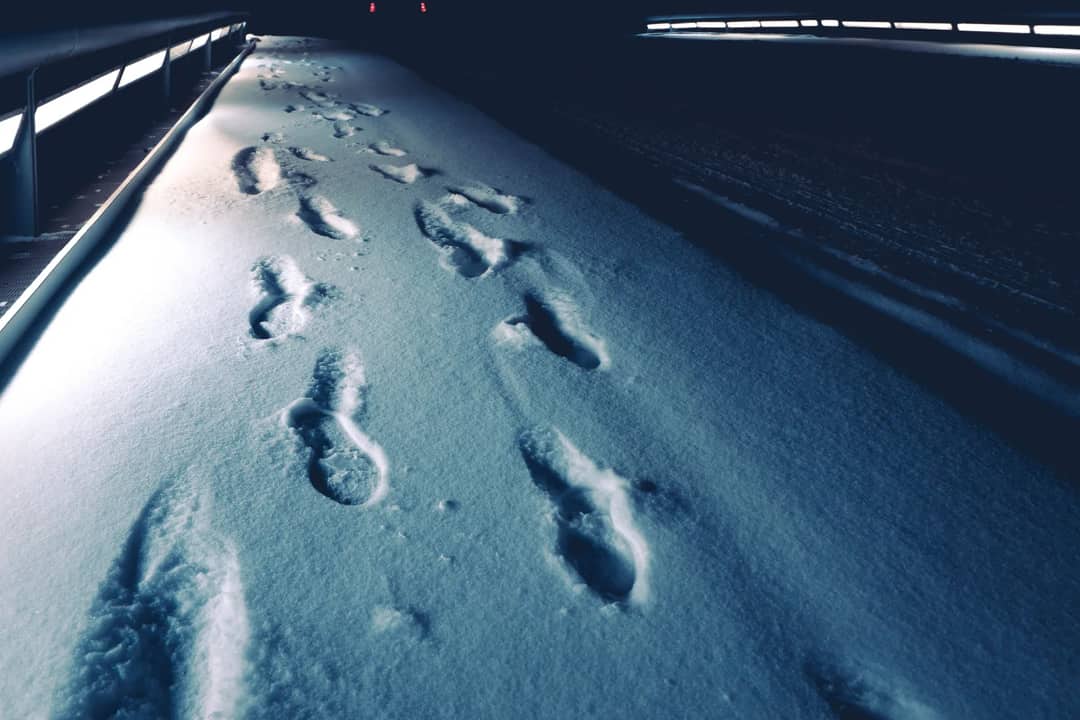
They had no measuring tape. Shipton photographed one print beside his ice axe and another beside Ward’s boot, and Ward later wrote that it was about as long as his own size-42 boot and nearly twice as wide, with a broad, short big toe.
British Resident Brian Hodgson notes Nepali guides fleeing a tall, hair-covered biped in the hills north of Kathmandu.
Sherpas on the Everest reconnaissance describe metoh-kangmi tracks; a mistranslation turns it into Abominable Snowman in the world’s press.
Eric Shipton and Michael Ward photograph a giant footprint trail on the Menlung Glacier, the image that launches the legend worldwide.
Naturalist Daniel Taylor matches plaster casts of Asiatic black bear paws, whose hind foot overprints the front, to Shipton’s photo.
Geneticist Charlotte Lindqvist’s lab sequences nine yeti specimens. Eight are Himalayan or Tibetan brown bears and Asian black bear; one is a dog.
What the DNA actually found
Eight bears and a dog. Charlotte Lindqvist, a biologist at the University at Buffalo, and her team collected hair, bone, tooth, skin and scat samples that had been kept for years in monasteries, museums and private collections as physical yeti evidence, including one specimen reportedly held as a relic at a Himalayan monastery.

They sequenced the mitochondrial DNA against a reference library of known bear species. None were an unknown primate.
| Species identified | Samples |
|---|---|
| Tibetan brown bear | 6 |
| Himalayan brown bear | 1 |
| Asian black bear | 1 |
| Dog | 1 |
The study found something real, and it was not a yeti
It rewrote part of the bear family tree. The Himalayan brown bear turns out to be one of the earliest branches in the whole brown bear lineage, meaning it split off and adapted to the high Tibetan Plateau far earlier than scientists had assumed.
That is the part worth keeping. The yeti evidence, gathered by believers over decades, helped map real bear evolution nobody had fully traced before. It was not a debunking for its own sake.
The polar-bear detour, and why it closed
For three years the leading scientific explanation was a lost polar-bear hybrid, and it did not survive a wider test. In 2014 the Oxford geneticist Bryan Sykes matched two hair samples — one from Ladakh, one from Bhutan — to an ancient polar bear, and the idea went round the world.
Other geneticists pushed back almost at once: brown bear and polar bear sequences overlap enough in that part of the genome that the match was weaker than it looked. Charlotte Lindqvist’s 2017 study, checked against a full regional bear family tree, traced every Himalayan sample to a known local bear. One of her specimens came from the mountaineer Reinhold Messner’s museum; her data also put the split of the Himalayan brown bear from other brown bears at roughly 650,000 years ago.
Why a bear print looks like a giant human foot
Because two prints fuse into one. Himalayan bears place their rear paw partly on top of the front paw’s print as they walk, and in soft melting afternoon snow the two overlapping tracks widen into a single elongated shape with what looks unmistakably like a big toe.
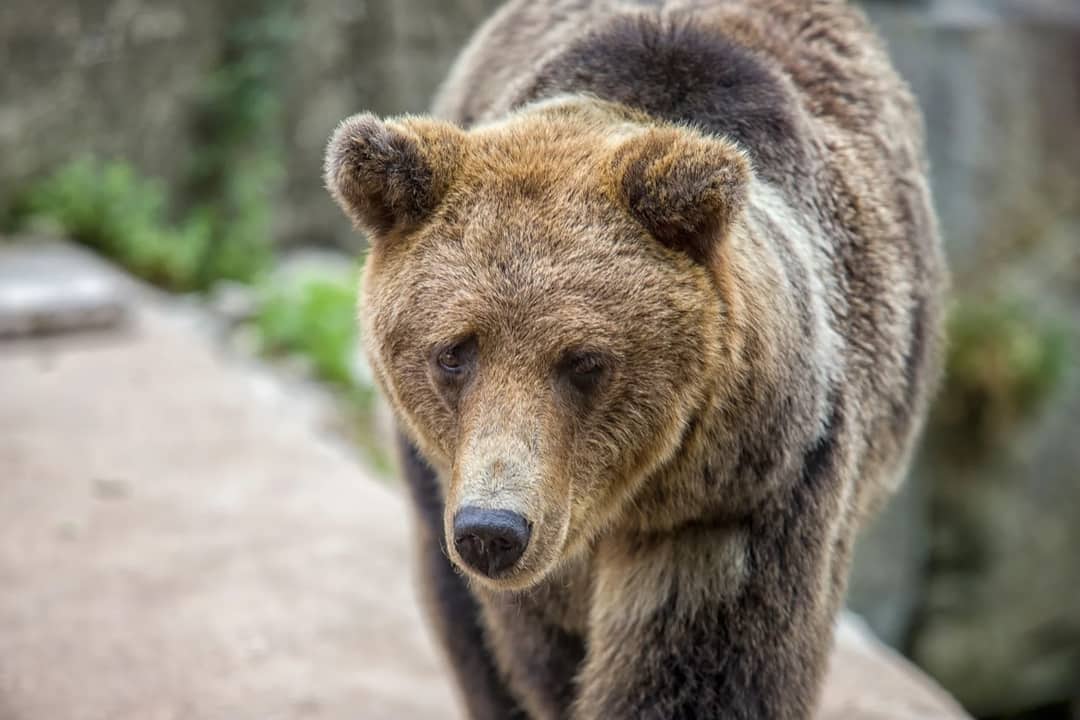
Daniel Taylor, who spent six decades chasing the mystery on the ground in Nepal, recreated the effect with a tranquilised Asiatic black bear at an Indian zoo in the 1980s. That is how a bear walking normally leaves a print as long as a climbing boot and twice as wide.
Hillary called it in 1960
Sir Edmund Hillary reached the right answer decades before the lab work existed. On a 1960 Everest-region expedition sent specifically to investigate yeti reports, he examined supposed yeti scalps and concluded the legend rested on wild dog and snow leopard tracks warped by the melt-freeze cycle of high-altitude snow.
That is essentially the same mechanism Taylor demonstrated with plaster casts and Lindqvist later confirmed with DNA. He simply had no way to prove it.
What this means for trekkers
You will not see a yeti, and you have a genuine chance of seeing the animal behind the story. Asiatic black bears are present on these trails, and at higher, more remote elevations near Rolwaling and the Tibet border so is the Himalayan brown bear — both rare, both worth respecting from a distance.
What this means for you
The Menlung Glacier where Shipton took his photo sits in the wild, lightly trekked Rolwaling region just west of the Everest trail system, but the same high glacier-fed valleys at 4,500 to 5,500 m are what you cross on the way to Gokyo Ri or over the Everest Three Passes. Read more on the DNA science coming out of these mountains in our report on the snow leopards confirmed living again in Sagarmatha National Park.
Sources: Michael Ward, “The Yeti Footprints: Myth and Reality”, Alpine Journal (1999); Proceedings of the Royal Society B, Evolutionary history of enigmatic bears in the Tibetan Plateau-Himalaya region and the identity of the yeti (Lindqvist et al., 2017).
Cover photo: Siddhartha Sen via Pexels (Pexels License). Section photo: Wallace Chuck via Pexels (Pexels licence). Section photos: Soham Kundu via Pexels (Pexels licence); Lloyd Freeman via Pexels (Pexels licence); Thirdman via Pexels (Pexels licence); ALENA MARUK via Pexels (Pexels licence).
Still running this season
Everest Base Camp Trek — 14 Days is running normally
NMA-certified local guides, transparent pricing, 5,000+ treks since 1998. Message us your dates and we'll sort the permits, lodges and logistics — reply within 24 hours, no obligation.
Popular Nepal treks
All treks →
Related coverage
Records & People
Everest is still growing, and a river that stole another river is pushing it up
A 2024 Nature Geoscience study found a river capture 89,000 years ago is still lifting Everest by up to about 2 mm a year, on top of the tectonic uplift.
Deals & Routes
Gokyo Ri or Kala Patthar, which Everest viewpoint should you actually add to your trek
Kala Patthar is 5,644m and gives you Everest up close, Gokyo Ri is 5,357m and gives you four 8,000m peaks at once. Here's which one earns the extra day.

Records & People
Nobody tells you what it really costs to climb Everest so I added up every dollar
Why a guided Everest expedition runs from about US$35,000 to well over US$100,000 — the permit, the oxygen, the Sherpa team and the logistics, line by line, with real 2026 numbers.
Records & People
Nepal Drops From 8,848 Metres to 59 in Under 250 Kilometres, and Its Lowest Point Just Moved
A 2017 survey reportedly found a lower spot than the one Nepal had used for decades, which makes the gap between jungle floor and Everest summit even harder to believe.
Latest from the desk
Breaking Safety & Advisories
An Avalanche Buried Himlung Himal's Base Camp in Nepal, and Ten Climbers and Staff Are Missing
An avalanche hit Himlung Himal's base camp in Nepal's Manang district on 27 September, and rescuers are searching snow for ten missing climbers and staff.

Money & Insurance
You Could Be Owed Cash From a $167 Million Visa and Mastercard Settlement, Here's How to Check
Visa and Mastercard are paying $167.5 million after allegedly blocking cheaper ATM fees, and the claim deadline is 10 February 2027.
Wildlife & Nature
Chitwan or Bardia, here's which Nepal safari you should actually book
Nepal's 2026 tiger census found record numbers in Chitwan and a rare decline in Bardia, and it changes the honest answer to which safari to book.