
The Flood Just Knocked Out 430 MW — Are Nepal's Winter Blackouts Coming Back?
Around 430 MW of capacity was damaged when the 26 August flood tore through the Bhote Koshi–Trishuli corridor. But Nepal already imports power from India every dry season, and these run-of-river plants produce least in winter — so the institutional data points to a wider, costlier import gap this year, not a return of the up-to-18-hour load-shedding that ended in 2018. Here are the NEA numbers.
At a glance
- Published · updated
- TopicIndustry & Tourism
- ReportingOriginal, by our guides in Pokhara
- Treks coveredEverest Base Camp Trek — 14 Days, Langtang & Gosaikunda Trek — 13 Days, Langtang Valley Trek — 7 Days
📍 Developing story — live updates
The 2026 Nepal floods are a developing, nationwide emergency and figures are rising. For the latest verified death toll, missing and rescued numbers, and trek status, follow our continuously-updated Nepal Floods 2026: Live Updates.
Key facts — as reported 26 August 2026 (all figures provisional)
Planning a trek this autumn? We keep a live region-by-region status page — which trails are open, which access roads are cut, and what we would book right now. It is updated through the season by our team in Pokhara: Nepal trekking conditions right now.
- Capacity damaged: around 430 MW of production, transmission and distribution capacity, the Nepal Electricity Authority (NEA) said.
- Facilities named: six hydropower plants along the Bhote Koshi–Trishuli corridor — Rasuwagadhi, Chilime, Upper Trishuli 3A, Upper Trishuli 3B (a 220 kV Hub substation), the Trishuli station and Devighat.
- Worst hit: the 111 MW Rasuwagadhi plant near the Tibet border, whose powerhouse and substation were reportedly destroyed.
- Where: Rasuwa and Nuwakot districts — one of the densest clusters of hydropower on Nepal's map.
- Outlook: a wider dry-season import gap this winter — not a return of nationwide load-shedding (see below).
Updated 27 August 2026: the Department of Roads puts initial road-and-bridge damage at about NPR 15 billion (19 bridges, some 42 km of road); the Minister for Physical Infrastructure, Sunil Bahadur Lamsal, estimates total infrastructure damage on the order of NPR 200 billion. This update adds Nepal Electricity Authority supply data and a dry-season power outlook below.
Around 430 MW of Nepal's electricity capacity was knocked offline in a single morning. When a flash flood tore down the Bhote Koshi River from Tibet into Rasuwa district on 26 August 2026, it ran straight through one of the country's most important hydropower valleys, and the Nepal Electricity Authority (NEA) said roughly 430 MW of production, transmission and distribution capacity was damaged across six named plants. For the human story of that day, see our report on the Bhote Koshi flash flood in Rasuwa; this piece looks at what it did to Nepal's power supply.
Which plants were hit — and how much power
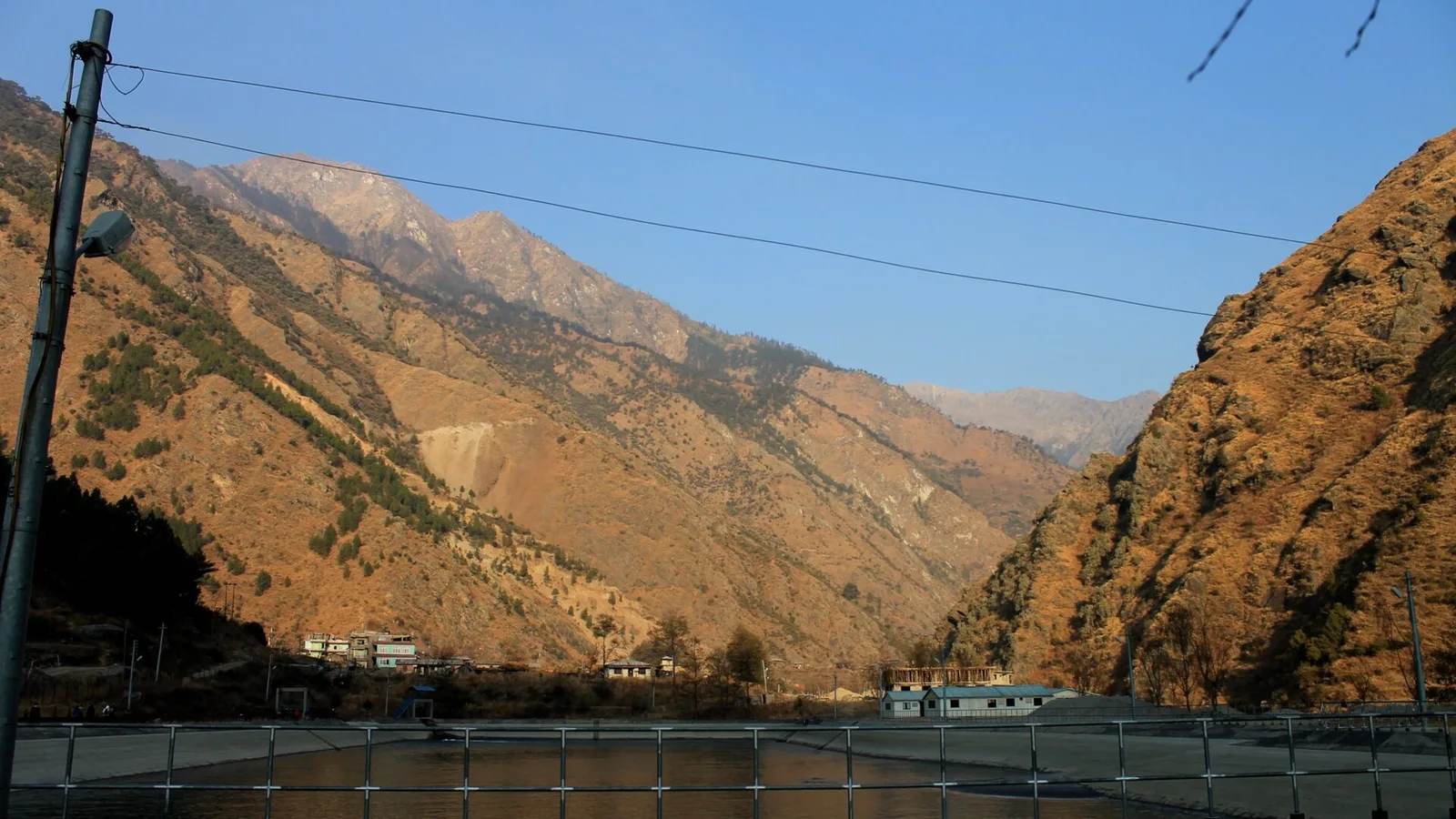
The NEA named six hydropower facilities along the Bhote Koshi and Trishuli rivers. The headline casualty is the 111 MW Rasuwagadhi project, on the Nepal–China frontier, whose powerhouse and substation were reportedly completely destroyed. The others sit downstream, including a 220 kV Hub substation tied to Upper Trishuli 3B — and substations are the nodes that lift power onto the high-voltage grid, so damage there can strand generation even where a turbine survives.
| Facility | Capacity (as reported) | Note |
|---|---|---|
| Rasuwagadhi | 111 MW | Powerhouse and substation reportedly destroyed; closest to the Tibet border |
| Upper Trishuli 3A | ~60 MW | On the Trishuli downstream in Nuwakot |
| Upper Trishuli 3B | ~37 MW | Damage centred on its 220 kV Hub substation |
| Trishuli station | ~24 MW | One of Nepal's oldest hydropower plants |
| Chilime | ~22 MW | A flagship of Nepal's community-hydropower model |
| Devighat | ~14 MW | Furthest downstream of the named plants, in Nuwakot |
Capacity for Rasuwagadhi is as reported by the NEA; the other per-plant figures are as carried by specialist trade press (International Water Power). The NEA's ~430 MW total also spans transmission and distribution damage and additional projects in the corridor.
That 430 MW is not six turbines adding up; it is the NEA's estimate of all the production, transmission and distribution capacity affected in the corridor — some reporting broke it down as roughly 405 MW across about eleven hydropower projects plus a 25 MW solar plant.
Why so many plants sit in one river
The reason one flood could take out so much capacity is geography. The Bhote Koshi drops steeply out of Tibet, gathers into the Trishuli, and falls fast through Rasuwa and Nuwakot. Steep, reliable, glacier-fed flow is exactly what run-of-river hydropower wants, so developers have packed the corridor with projects — from Rasuwagadhi on the border down through the Trishuli cascade to Devighat, plus the Sanjen, Langtang and Mailung schemes on the same stretch. That concentration is efficient in normal years and dangerous in a bad one: a single surge hit the generation, the substations that evacuate it, and the access roads all at once.
What it means for Nepal's electricity supply
How big a hit is 430 MW? Sources differ on Nepal's total installed capacity. Specialist trade press framed the loss as more than a tenth of a hydropower base put at about 3.2 GW; recent Nepali reporting puts it higher — near 3,878 MW after 631 MW was added in a year (New Business Age), and above 4,000 MW in some accounts. Either way, losing roughly 430 MW in one morning is a meaningful bite — on the order of a tenth of the national total.
Will the power cuts return this autumn and winter?
This is the question the corridor's loss really raises, and the answer runs through Nepal's dry-season arithmetic. Recent system peak demand has reached about 3,248 MW (Spotlight Nepal, July 2026), and against a total installed base near 3,878 MW that looks comfortable — until the rivers drop. Because most of the fleet is run-of-river, winter output collapses: in the dry months domestic production falls to roughly 1,500 MW against peak demand near 2,100 MW, a shortfall of about 600 MW that Nepal already covers by importing from India (Ratopati; myRepublica).
| Metric | Figure (as reported) | Source |
|---|---|---|
| Total installed capacity | ~3,878 MW (+631 MW in a year) | New Business Age |
| Recent system peak demand | ~3,248 MW (2026) | Spotlight Nepal |
| Dry-season domestic output | ~1,500 MW | Ratopati |
| Dry-season demand vs supply gap | ~600 MW, covered by imports | Ratopati / myRepublica |
| Contracted winter import from India | 180 MW round-the-clock, Jan–May 2026 (Rs 6.95/unit) | New Spotlight / NEA |
| Capacity lost in the corridor | ~430 MW | Nepal Electricity Authority |
Figures are as reported by the named bodies and Nepali press; installed-capacity totals vary by source and date, and peak demand is a monsoon-season figure while dry-season demand served is lower.
Two things follow. First, that 430 MW is a wet-season, nameplate number: run-of-river plants like Rasuwagadhi and the Trishuli cascade generate only a fraction of it in winter, so the dry-season generation actually lost is smaller than the headline. Second, Nepal already leans on Indian imports every winter — the NEA contracted 180 MW of round-the-clock supply for January–May 2026 and has secured approvals for far more in past dry seasons — so the grid has a release valve it lacked during the up-to-18-hour blackouts that ended in 2018 (Kathmandu Post). The realistic near-term effect is therefore not a return to nationwide load-shedding but a wider, costlier import bill this winter, lost monsoon export earnings while plants are down, and the risk of localised outages in Rasuwa and Nuwakot while damaged substations and lines are rebuilt.
The monsoon paradox
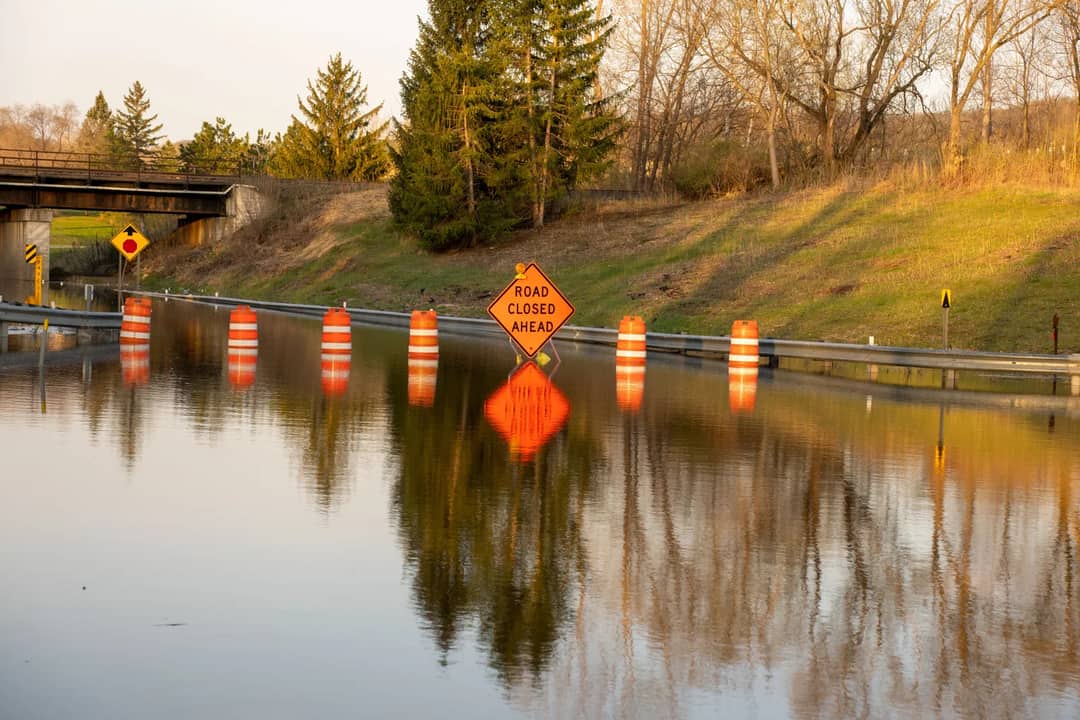
Run-of-river hydropower's strength is also its exposure. These plants have little or no storage — they turn whatever the river brings that day into electricity, which makes them cheap and clean and makes them produce most in the monsoon. But the monsoon is also when glacier-fed rivers carry the most water, debris and flood energy. A grid built on run-of-river plants is, by design, most productive and most vulnerable at the same time of year.
Run-of-river hydropower and a warming Himalaya
This is where the power story meets the climate one. The same Bhote Koshi–Lhende system flooded in July 2025 too — twice in about fourteen months — and both events point to a growing hazard off unstable, warming ice, a pace ICIMOD scientists have called "unprecedented" in the Hindu Kush Himalaya. We examine the competing explanations for the 26 August flood in our piece on glacial lakes and ice-rock avalanches.
Run-of-river hydropower is unusually exposed to this. Because these plants sit low in the valley, take water straight from the river and hold almost none in reserve, a surge that a storage dam might buffer instead arrives at the intake, powerhouse and substation at full force. As Himalayan glaciers thin and glacial lakes multiply — the wider picture in the Himalaya and climate change in 2026 — every plant strung along a glacier-fed river inherits that upstream risk. The lesson is not to abandon a corridor that produces so much clean power, but to plan for the water doing this again: upstream monitoring and early warning (which China's leadership publicly called for after the disaster), flood defences at intakes, and a grid not so concentrated in one glacier-fed valley that a single bad morning can take out a tenth of it.
For travellers to Langtang
The same corridor is the gateway to Langtang: Syabrubesi, the road-head where most Langtang treks begin, sits in the worst-hit stretch, so road and bridge access may be disrupted for some time. With the main October–November season several weeks off there is a window for repairs — check current access first on Nepal trekking conditions right now, or ask our team about timing and alternatives via the Langtang Valley Trek or the longer Langtang & Gosaikunda Trek.
Sources and further reading: International Water Power, Nepal Electricity Authority, New Business Age, New Spotlight Magazine, Ratopati, myRepublica, The Kathmandu Post, ICIMOD, and the 2026 Nepal floods record. Flood figures are as reported on 26–27 August 2026 and remain provisional; power-supply figures are the most recent published by the named bodies.
Cover photo: Shree Krishna Dhital via Wikimedia Commons (CC BY-SA 3.0). Section photos: Tom Fisk via Pexels (Pexels licence); Helena Jankovičová Kováčová via Pexels (Pexels licence); Iván Lada via Pexels (Pexels licence).
If you want to help. Nepal’s official relief channel is the government’s Prime Minister’s Disaster Relief Fund — restricted by law to rescue, relief and rehabilitation, audited annually, and it takes international cards directly. We collect nothing and receive nothing. Be careful of account numbers circulating in forwarded messages: disaster fundraising draws scams within days. Our full guide, including two vetted alternatives, is at where to donate for the Nepal floods and how to help.
Still running this season
Everest Base Camp Trek — 14 Days is running normally
NMA-certified local guides, transparent pricing, 5,000+ treks since 1998. Message us your dates and we'll sort the permits, lodges and logistics — reply within 24 hours, no obligation.
Popular Nepal treks
All treks →
Related coverage

Industry & Tourism
Should you still book Nepal this autumn after the flood, and what happens to the guides if you don't
Four Langtang and Rasuwa treks are paused on our own books, while Everest, Annapurna and Manaslu sit in different river systems and are running normally.
Safety & Advisories
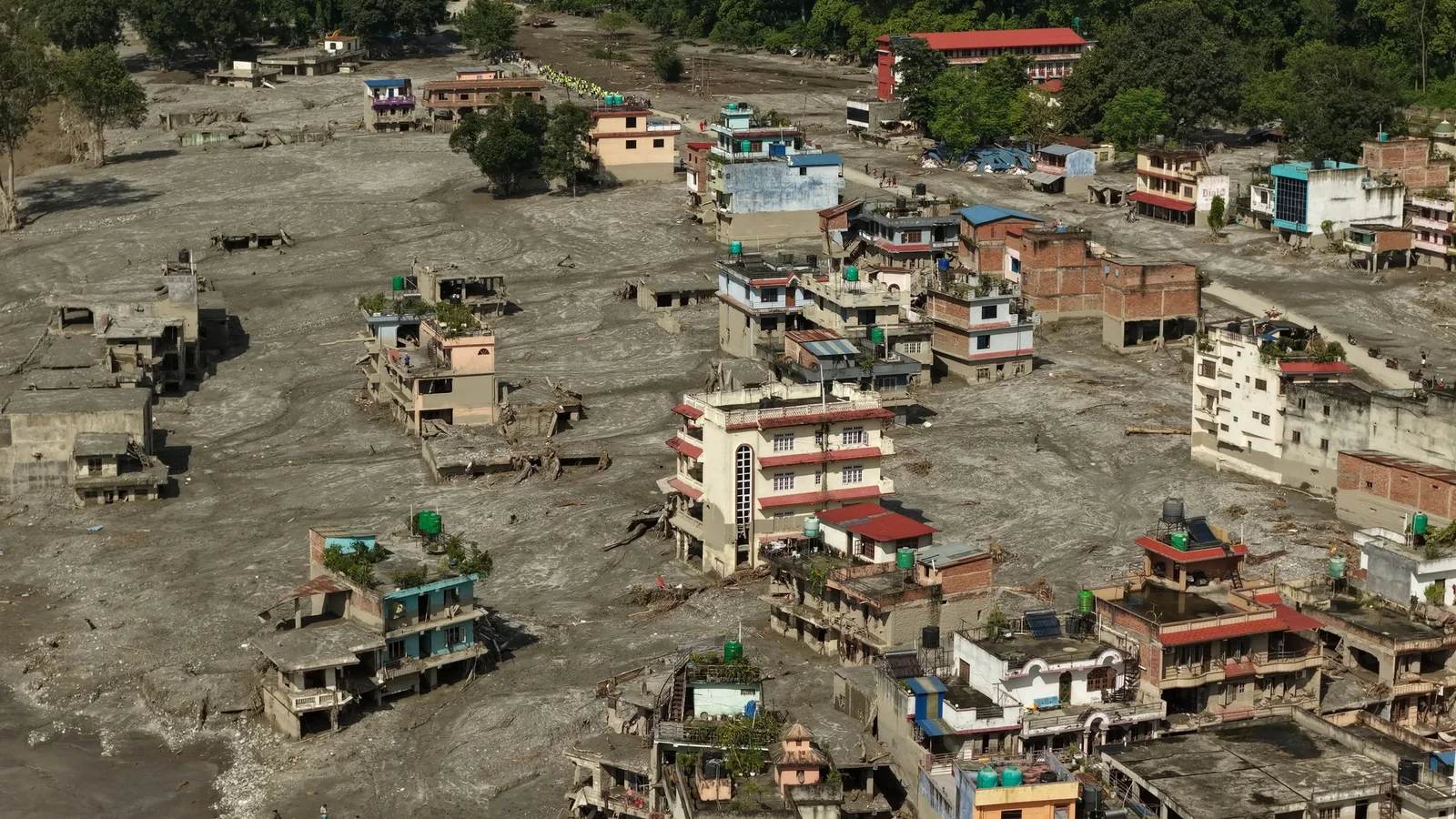
What the Bhote Koshi flood actually did to Rasuwa and Nuwakot, in seven photographs
Drone and ground pictures from Devighat, Trishuli and the Rasuwagadhi tunnels show a valley filled to the second storey with grey silt rather than washed away.
Safety & Advisories
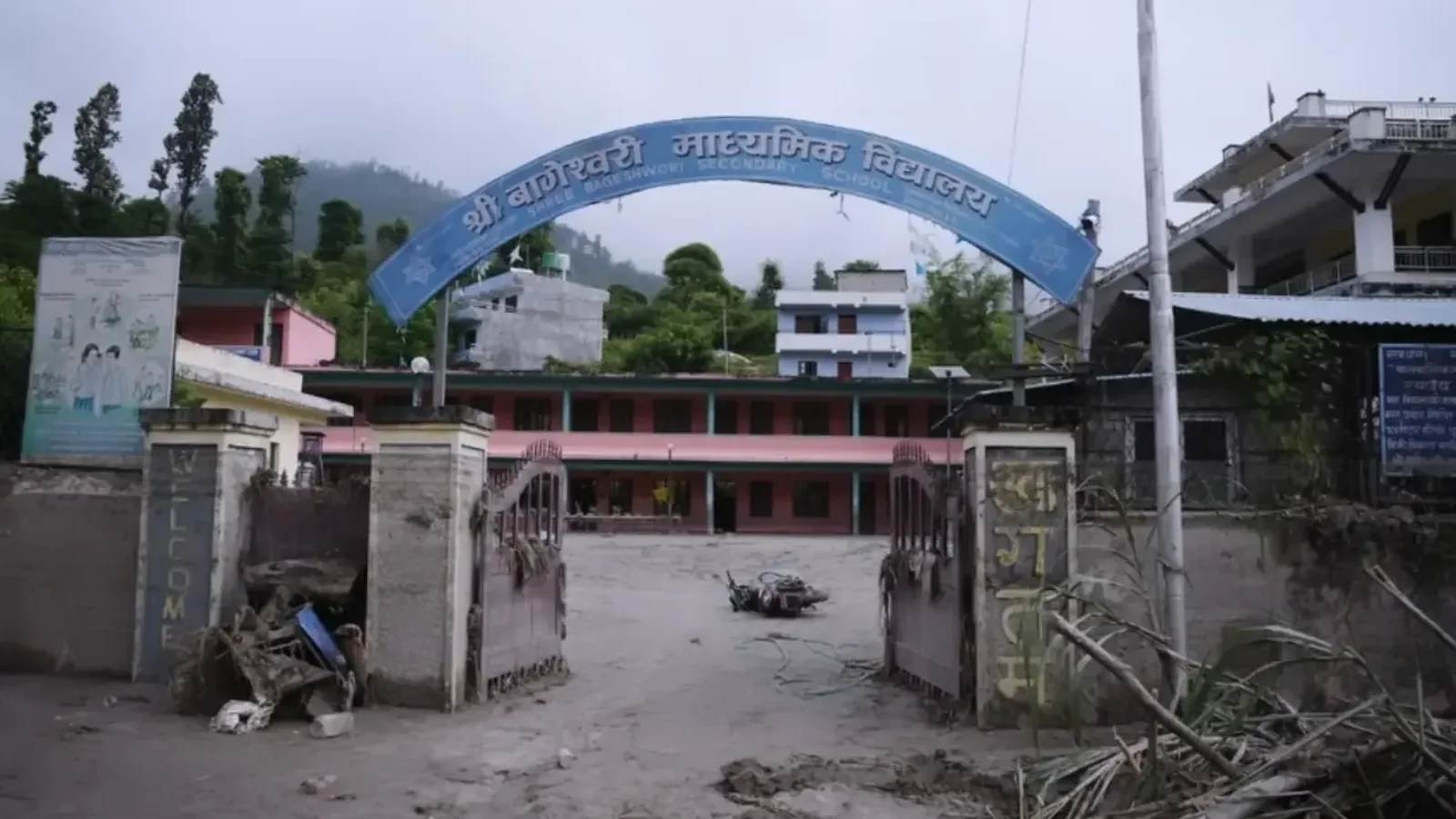
Where Nepal's flood survivors are sleeping now, and what happens when the school is the shelter
Nepal's disaster authority counts about 9,000 households hit, the shelters are school halls, and winter in Rasuwa is roughly ten weeks away.
Safety & Advisories
Nepal's flood camps are running out of water and medicine, and the doctors are warning about an epidemic
Four health facilities in Rasuwa are destroyed, Trishuli Hospital has lost its bridges and its medicines, and 1,000 people are in camps with no clean water.
Latest from the desk
Breaking Safety & Advisories
An Avalanche Buried Himlung Himal's Base Camp in Nepal, and Ten Climbers and Staff Are Missing
An avalanche hit Himlung Himal's base camp in Nepal's Manang district on 27 September, and rescuers are searching snow for ten missing climbers and staff.

Money & Insurance
You Could Be Owed Cash From a $167 Million Visa and Mastercard Settlement, Here's How to Check
Visa and Mastercard are paying $167.5 million after allegedly blocking cheaper ATM fees, and the claim deadline is 10 February 2027.
Wildlife & Nature
Chitwan or Bardia, here's which Nepal safari you should actually book
Nepal's 2026 tiger census found record numbers in Chitwan and a rare decline in Bardia, and it changes the honest answer to which safari to book.