
If You're on Blood Pressure Medication, Here's What Everest Base Camp Altitude Actually Does to You
Altitude raises blood pressure and some heart drugs slow acclimatisation, but most controlled hypertension does not rule out an Everest Base Camp trek.
At a glance
- Published
- TopicSafety & Advisories
- Verified againstCDC Yellow Book
- Treks coveredEBC Trek & Helicopter Return — 10 Days, Everest Base Camp Trek — 12 Days, Everest Base Camp Trek — 14 Days
Key facts
- Everest Base Camp sits at 5,364 m; the Kala Patthar viewpoint above it reaches 5,545 m
- Well-controlled hypertension alone is not a reason to cancel the trek, per a joint statement from the European Society of Cardiology and the International Society of Mountain Medicine
- Non-selective beta-blockers can blunt acclimatisation and lower blood oxygen saturation; cardioselective beta-blockers largely do not
- Acetazolamide (Diamox) contains a sulfa group but carries an 'extremely low' allergic-reaction risk even in people with a sulfa allergy, per the Wilderness Medical Society's 2024 guidelines
Altitude does raise blood pressure, measurably and predictably, and a handful of heart medicines change how well your body copes with it. But for most people whose hypertension is under control, neither the CDC nor the major cardiology societies consider Everest Base Camp off the table. What actually changes is the planning: which drug class you're on, how you monitor yourself above 4,000 m, and how many acclimatisation days you build into the itinerary.
Does high altitude actually raise your blood pressure?
Yes, reliably. Lower atmospheric pressure at altitude means less oxygen reaches your blood, and the body responds by raising heart rate, tightening blood vessels and increasing cardiac output to compensate. At Everest Base Camp's 5,364 m, the air holds roughly half the oxygen it does at sea level. The European Society of Cardiology's 2018 joint statement on high-altitude exposure — still the reference document cardiologists use for this — defines anything above 2,500 m as 'high altitude' precisely because that is where these cardiovascular changes become clinically relevant, including in people with completely normal blood pressure at sea level.
Are blood pressure and heart medications safe at Everest Base Camp altitude?
For most people, yes, but the specific drug matters more than the diagnosis. The CDC's Yellow Book notes that travellers whose blood pressure is well controlled and who are headed to moderate elevations generally don't need to change their dose — but anyone trekking above 4,000 m, which is most of the EBC route from Dingboche onward, should monitor their blood pressure and be prepared to adjust treatment with their doctor's guidance.
| Drug class | What changes at altitude |
|---|---|
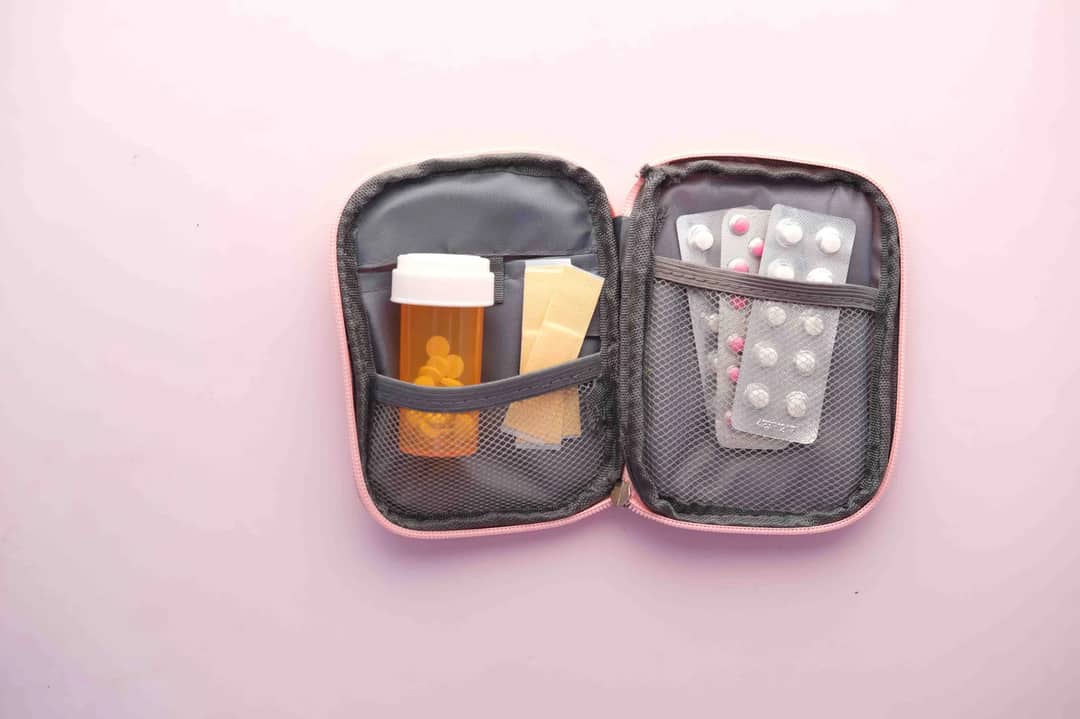
| Cardioselective beta-blockers (e.g. bisoprolol, nebivolol) | Generally continue as prescribed; nebivolol has shown effectiveness at controlling the altitude-related rise in blood pressure with less impact on exercise capacity |
| Non-selective beta-blockers | May not work fully at altitude and can reduce blood oxygen saturation — flag this to your doctor before departure |
| ACE inhibitors / ARBs (e.g. lisinopril, telmisartan) | Telmisartan has shown effective blood pressure control up to 3,400 m in studies; ACE inhibitors may interfere slightly with acclimatisation, though no evidence of harm |
| Diuretics | Same caution as ACE inhibitors — no evidence of harm, but combine with careful hydration since altitude itself is dehydrating |
| Acetazolamide (Diamox, for altitude sickness) | Sulfa-based; contraindicated only with a history of anaphylaxis or Stevens-Johnson syndrome to a sulfa drug, not a mild sulfa allergy |
What about acetazolamide if you're already on blood pressure medicine?
This is the question our guides actually get asked on the trail, because acetazolamide (brand name Diamox) is the standard altitude-sickness preventive we recommend for anyone sleeping above 2,800 m or gaining more than 500 m a day above 3,000 m — which describes almost every Everest Base Camp itinerary. The Wilderness Medical Society's 2024 clinical guidelines say people with a known sulfa allergy can usually still take it under medical supervision; only a history of severe reaction rules it out. It doesn't clash with the beta-blocker or ACE-inhibitor classes above in any way that's been shown to cause harm, but it is itself a mild diuretic, so combining it with your own blood pressure medication is exactly the kind of thing to run past your GP six to eight weeks before you fly, not on the trail at Dingboche.

So can you actually trek to Everest Base Camp on blood pressure medication?
What this means for you
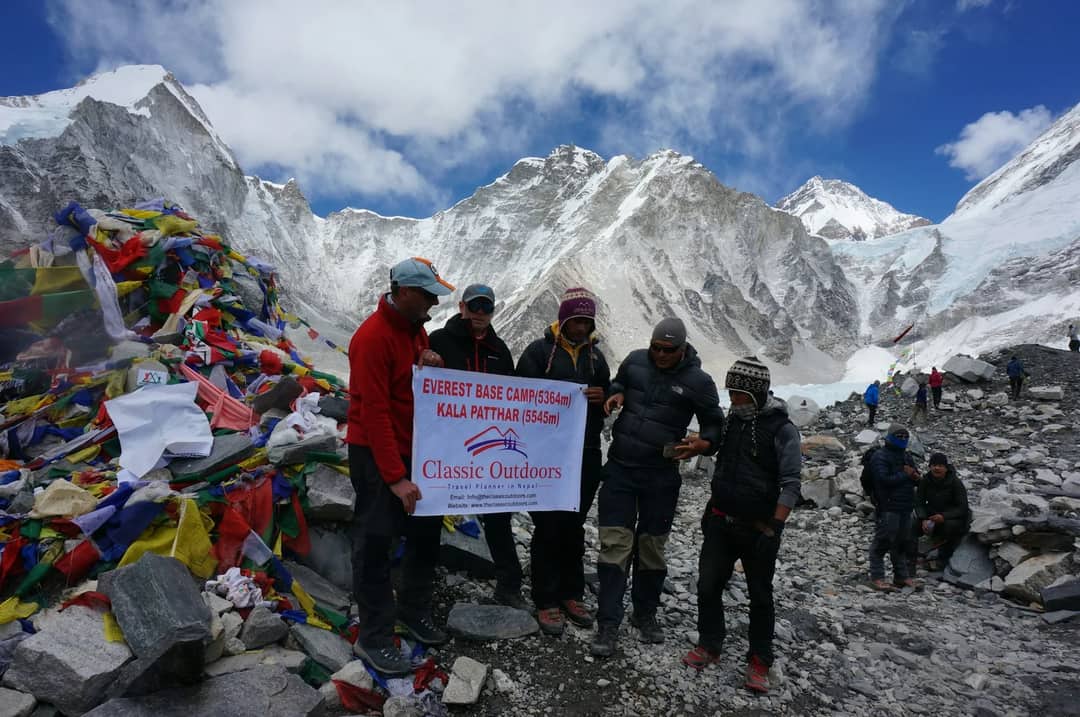
In most cases, yes. Get your blood pressure genuinely stable before you fly, not just controlled on paper — ask your doctor specifically about your drug class at altitude, not just whether you're 'fit to travel.' Bring your full prescription supply plus a printed list of names and doses (pharmacies in Namche and Lukla do not stock Western brand names), and choose an itinerary with real acclimatisation days rather than the cheapest, fastest one. Our 14-day Everest Base Camp itinerary builds in two full acclimatisation days for exactly this reason; travellers on any cardiac medication should also tell their guide on day one, not after they start feeling unwell.
Do I need my doctor's written approval to trek to Everest Base Camp?
No airline or trekking permit requires it, but any reputable operator will ask about pre-existing cardiac conditions on the booking form, and a pre-trip check with your own doctor is genuinely worth doing rather than a formality — altitude is one of the few environments that reliably exposes an undiagnosed or under-treated condition.
Is a helicopter return trek safer than walking if I have a heart condition?
Not automatically — flying straight to altitude without gradual ascent removes the days your body needs to acclimatise, which can be riskier, not safer. A shorter walking itinerary with proper acclimatisation days is usually the better choice for someone managing a cardiac condition, with a helicopter kept as the descent option if needed.
Which symptoms mean I should turn back regardless of my normal blood pressure readings?
Chest pain, unusual breathlessness at rest, a pounding irregular heartbeat, or the standard acute mountain sickness signs — severe headache, vomiting, confusion — mean descend and get evaluated. These override a good blood pressure number on your own monitor.
Cover photo: Amjad ali via Pexels (Pexels License). Section photos: Quang Nguyen Vinh via Pexels (Pexels licence); Saleh Bakhshiyev via Pexels (Pexels licence); Towfiqu barbhuiya via Pexels (Pexels licence); Castorly Stock via Pexels (Pexels licence); Classic Outdoors via Unsplash (Unsplash licence).
Still running this season
EBC Trek & Helicopter Return — 10 Days is running normally
NMA-certified local guides, transparent pricing, 5,000+ treks since 1998. Message us your dates and we'll sort the permits, lodges and logistics — reply within 24 hours, no obligation.
Popular Nepal treks
All treks →
Related coverage
Safety & Advisories
Can You Trek to Everest Base Camp at 82? What the Record and the Research Actually Say
There is no legal or medical age cutoff on the trail to Everest Base Camp, and the current record holder just proved it at 82.
Safety & Advisories
Can you trek in Nepal with kids? The ages, treks and altitude rules that actually matter
Yes, on the right route: a fit child of 5-7 can manage a low trek like Poon Hill, most operators want 12-14 for Everest Base Camp, and the altitude rule for children is the same as for adults.
Trail & Weather
Everest Base Camp or Kilimanjaro: Which Trek Should You Actually Do in 2026?
One is a five-day sprint to 5,895 metres, the other a fourteen-day walk to 5,364 — the honest trade-off between them comes down to acclimatization, not fitness.
Industry & Tourism
Everest Base Camp or Annapurna Base Camp: Which Should You Actually Trek in 2026?
Both are sold as 'base camp treks' but they differ by 1,400 metres of altitude, a week of walking and a coin-flip mountain flight — here is how to pick the right one for your fitness, budget and time.
Latest from the desk
Permits & Rules
Rara or Phoksundo, Here's Which of Nepal's Two Great Hidden Lakes You Should Actually Book
Rara and Phoksundo are Nepal's two legendary remote lakes, and almost nobody treks to both. Here's the real difference in cost, permits and days.

Gear & Tech
Packing cubes do one thing well, and it is not the thing most people buy them for
Compression cubes won the AAA space test, but no cube changes what the scale says. Which airlines limit size, which limit weight, and how to buy for yours.
Flights & Access
Qantas has dated the 20-hour flight, and here is who should actually book it
Sydney to London non-stop starts October 2027, tickets from February, New York to follow. A 238-seat A350 built for it, and who should keep the stopover.