
How Do You Actually Choose a Trekking Company in Nepal? The License, Insurance and Red-Flag Checklist for 2026
Nepal's rules on guides and insurance have tightened three times since 2023 — here is exactly what a licensed, safe operator can prove, and what a $19.6 million fraud scandal shows happens when nobody checks.
At a glance
- Published
- TopicSafety & Advisories
- Verified againstU.S. Department of State — Nepal Travel Advisory
- Treks coveredManaslu Circuit Trek — 14 Days, Everest Base Camp Trek — 14 Days, Annapurna Base Camp Trek — 9 Days
The fastest way to tell a licensed Nepali trekking company from a risky one comes down to four checkable things: a Department of Tourism trekking-agency license number, a guide who is legally registered rather than just fluent and friendly, proof the agency insures its own staff, and a written itinerary before you send a deposit. None of that requires you to already be in Nepal — you can check every one of them from your couch, and in 2026 Nepal's own rule changes make it easier than it used to be.
Key facts
- A registered guide has been legally mandatory for foreign independent trekkers in Nepal's national parks since 1 April 2023.
- Proof of trekker insurance has been required to issue a trekking permit since 1 April 2025.
- The U.S. Department of State advises trekkers to use only TAAN-registered agencies and confirm evacuation costs in advance.
- In early 2026, Nepal charged 32 people — including trekking agency and hospital staff — in a nearly $20 million fake-rescue insurance fraud scheme.
Start with the license, because it is the one document a fake operator cannot fake convincingly. Nepal's Department of Tourism issues trekking-agency licenses only after checking paid-up capital, a physical registered office and proof of insurance arrangements — a process that normally runs six to eight weeks, not overnight. A real agency will give you its license number without hesitation. An agency that dodges the question, or that only exists inside a Facebook or WhatsApp inbox, is the pattern flagged most often in scam reports to foreign embassies in Kathmandu.
Why the bar keeps rising
This is not a one-off tightening. Nepal has moved on trekking regulation three times in three years, each time raising the floor on what a legitimate operator has to prove.
Nepal ended fully independent solo trekking in its national parks, requiring every foreign trekker to hire a registered guide or porter.
Trekking permits are no longer issued without proof of travel insurance that covers medical evacuation.
Nepal charged 32 people, including agency and hospital staff, over staged helicopter rescues billed to foreign insurers — a scandal that only works when nobody upstream is checking credentials.
Nepal dropped its two-trekker minimum on restricted-area permits in March — but only for trekkers travelling with a licensed guide, not travelling alone.
Put together, the direction is consistent: Nepal is professionalising who is allowed to lead a foreign trekker, while simultaneously making it easier for a genuinely solo traveller to go, provided the guide beside them is real. That is good news for trekkers who do the checking, and it means the checking has never been more worth doing.
| Check | How | Why it matters |
|---|---|---|
| Government trekking-agency license | Ask for the license number issued by the Department of Tourism | An unlicensed operator has no legal accountability if something goes wrong |
| Guide registration | Ask your named guide's registration number before you fly | Since 2023 an unregistered guide is not legally allowed to lead a foreign trekker in a national park |
| TAAN membership | Search the agency at taan.org.np | Not legally required, but it is what foreign embassies specifically tell trekkers to check |
| Staff insurance | Ask how the agency insures its own guides and porters | Separate from your personal travel policy, and a sign the operator has actually budgeted for safety |
| Written itinerary and contract | Get the day-by-day plan, inclusions and cancellation terms in writing | Verbal WhatsApp quotes are where bait-and-switch pricing happens |
| A real, staffed office | Video-call or visit before paying anything | Agencies that exist only inside a chat app are the highest-risk pattern reported to embassies |
What this means for trekkers
What this means for you
None of this is about the flashiest website or the biggest logo. It is about paperwork a legitimate operator hands over without being asked twice. If an agency cannot produce a license number, a named and registered guide, and a written itinerary before you send money, that is the answer — not a technicality to skip past because the price looked good.
The same checklist applies whether you are booking Everest Base Camp, Annapurna Base Camp or a longer circuit like Manaslu — the paperwork does not get lighter because the trek is shorter. We have also written a companion guide on Nepal's 2026 rule change letting solo trekkers into restricted areas, and a full breakdown of the $19.6 million fake-rescue scandal that shows exactly what is at stake when nobody checks. For the permit rules themselves, our permits hub covers every region.
Cover photo: ASHOK KAPALI via Pexels (Pexels License).
Still running this season
Manaslu Circuit Trek — 14 Days is running normally
NMA-certified local guides, transparent pricing, 5,000+ treks since 1998. Message us your dates and we'll sort the permits, lodges and logistics — reply within 24 hours, no obligation.
Popular Nepal treks
All treks →
Related coverage

Industry & Tourism
How to Choose a Trekking Company in Nepal in 2026: The Licence Chain That Actually Protects You
A company registration, a Trekking Agency Licence, NTB registration, TAAN membership and a named, licensed guide — verify all five before you pay a deposit, not after you land in Kathmandu.
Safety & Advisories
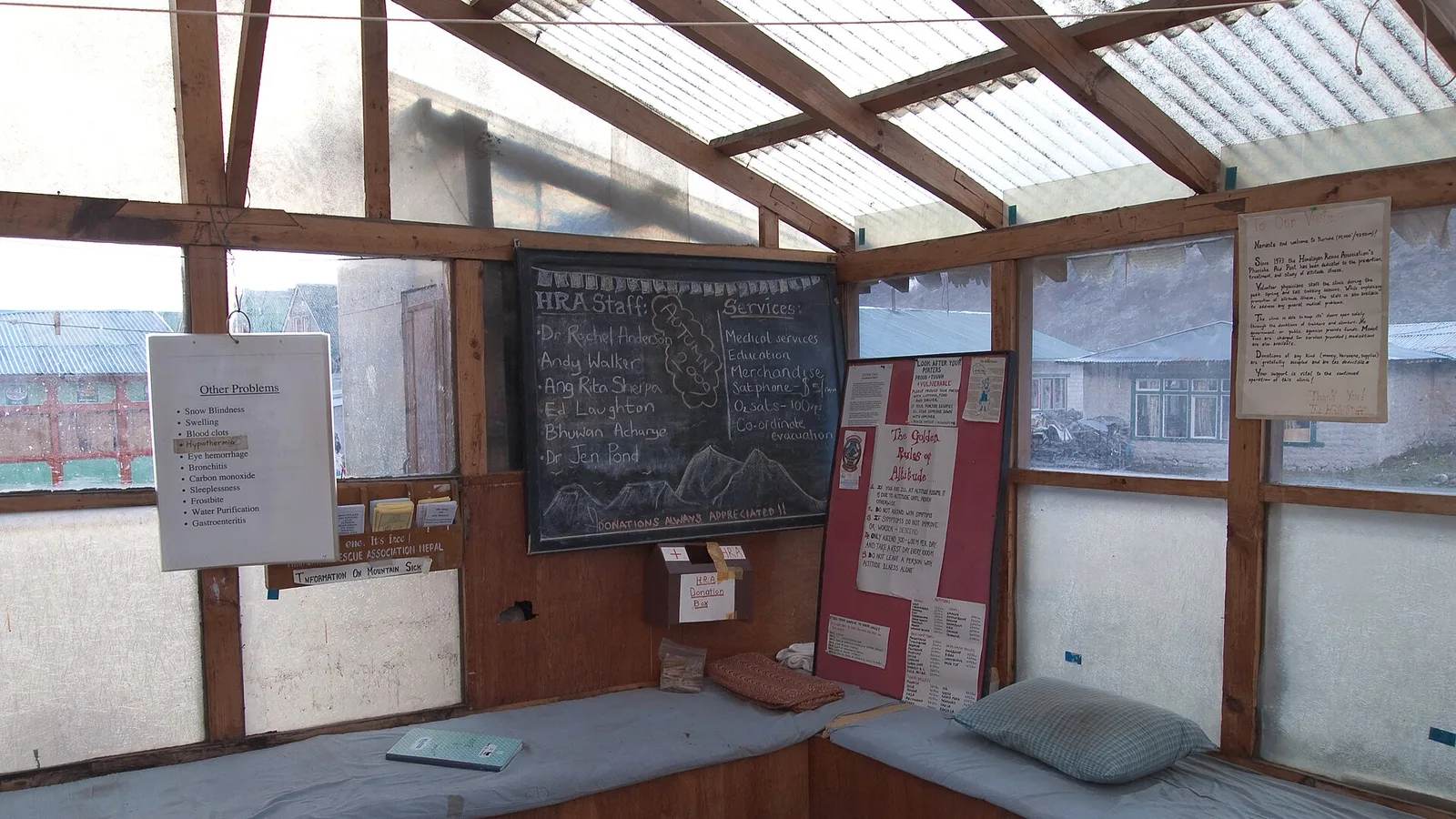
Your Nepal Trekking Guide Just Spent the Week Learning to Keep You Alive Above 4,000m
Days before Nepal's autumn trekking season opens, two of the country's oldest mountain-safety institutions ran back-to-back wilderness first-aid courses for working guides, drilling CPR, patient evacuation and the earliest signs of altitude sickness.
Trail & Weather
Nepal trekking news that actually changes your trip, updated for autumn 2026
The permit rules, fines, airfares, flight routes and road closures that changed for Nepal trekkers in 2026 — what to act on for an autumn booking, and what to ignore.
Safety & Advisories
Nepal Trekking Conditions Right Now: Region-by-Region Status After the 2026 Floods
Which trails are open, which access roads are cut, and what autumn 2026 actually looks like — updated through the season by a team based in Pokhara.
Latest from the desk
Breaking Trail & Weather
Manaslu's Trekking Trail Washed Out This September, So Climbers Are Flying to Base Camp Instead
A flash flood destroyed two bridges on the Manaslu Circuit in early September 2026, and outfitters are now helicoptering climbing teams past the damage while trekkers wait for repairs.
Breaking Safety & Advisories
Nearly 2 Billion People Depend on Himalayan Meltwater, and a New Report Says It's About to Peak
A September 2026 study of the Hindu Kush Himalaya's roughly 40,000 glaciers, only 21 of which are monitored on the ground, warns the rivers trekkers cross every day are approaching the point where they stop rising and start shrinking for good.
Industry & Tourism
Nepal Just Put a Mountain Guide on Its Tourism Board, and a 2026 Flood Recovery Fund Just Opened
Five new members joined Nepal's national tourism authority this month, including a Himalayan expedition operator speaking from Manaslu Base Camp, while the PATA Foundation opened a fund to rebuild what the 26 August flood destroyed.