
内容速览
Snow blindness is sunburn on your eye, and it hits 6-12 hours late. UV rises 10-12% per 1,000m and snow reflects 80%. Which filter category you need.
Snow blindness is sunburn. Not a metaphor — the same injury, on the surface of your eye. And the cruel part is the delay: the damage is done on the pass and the pain arrives six to twelve hours later, usually in a teahouse after dark, when you are hours from anywhere and there is nothing to do but lie in the dark and wait it out.
Almost every other expensive thing on a Nepal packing list can be rented in Thamel for a dollar or two a day. We tell people to do exactly that, and we earn nothing when they do. Eye protection is the one that does not work that way: nobody rents sunglasses, a borrowed pair never seals properly against your face, and this is the item where getting it wrong is an injury rather than an inconvenience.
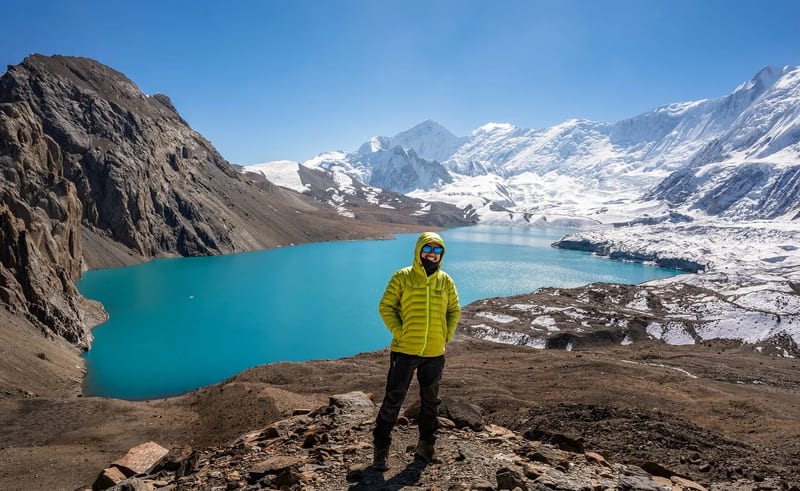
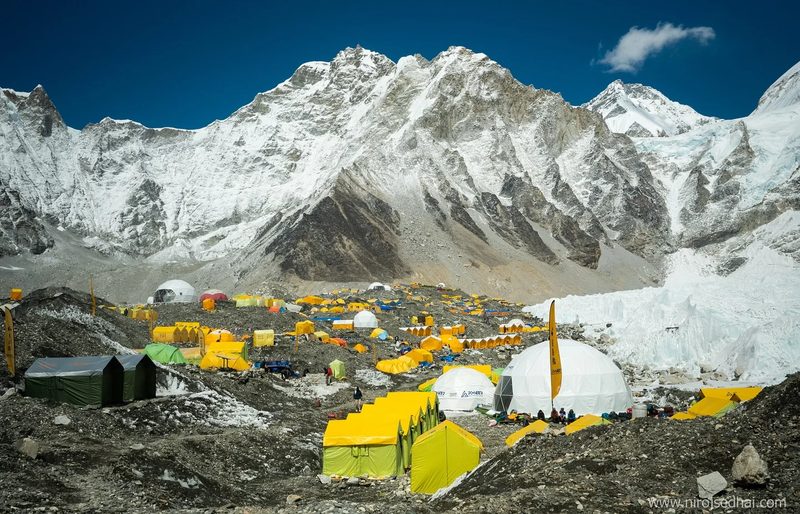
The short version. For Poon Hill, Mardi Himal or anything staying under about 4,000 m, a decent category 3 wraparound is genuinely enough. For Everest Base Camp, Gokyo, Thorong La or Larke Pass — anywhere you will walk on snow above 4,500 m — get category 4 with side coverage. Buy before you fly, because you cannot rent this and the Thamel copies are not what they claim.
Why altitude changes the maths
Two things stack up on you, and neither is obvious from the valley.
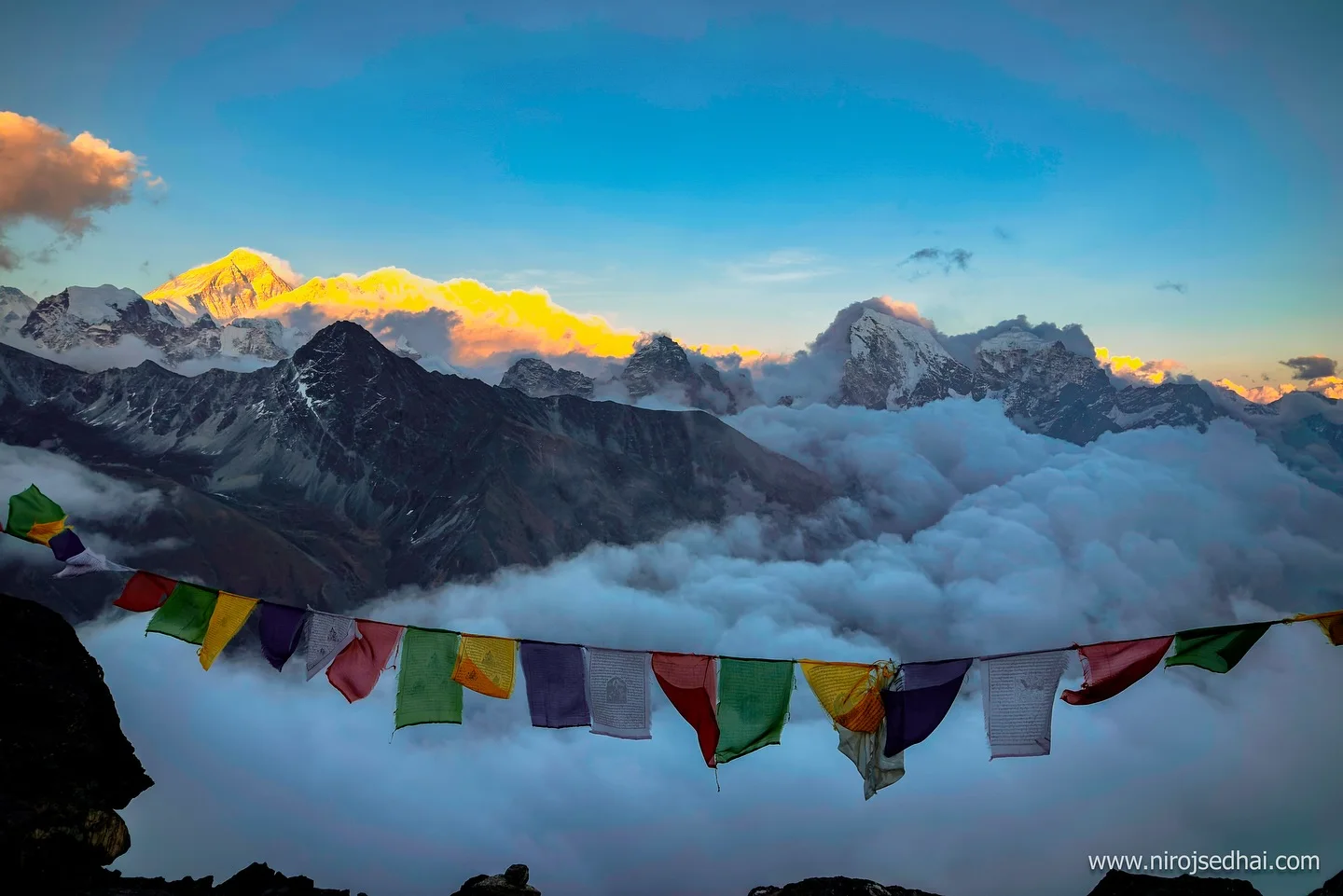
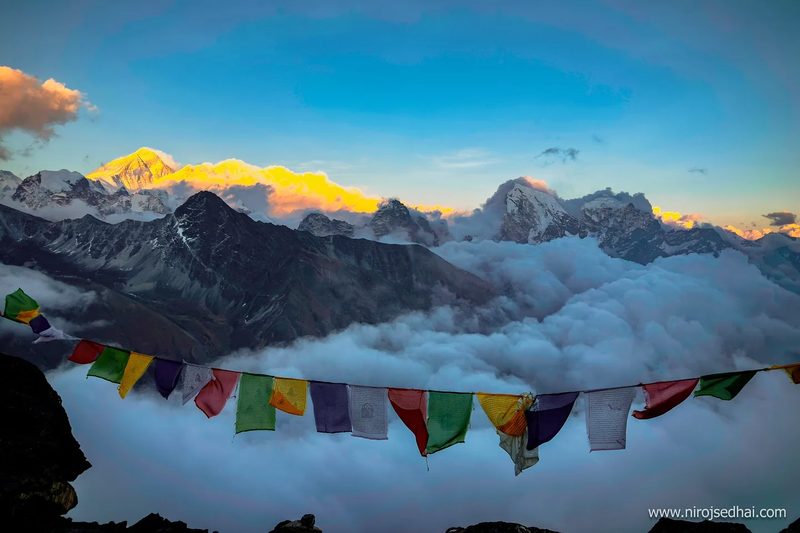
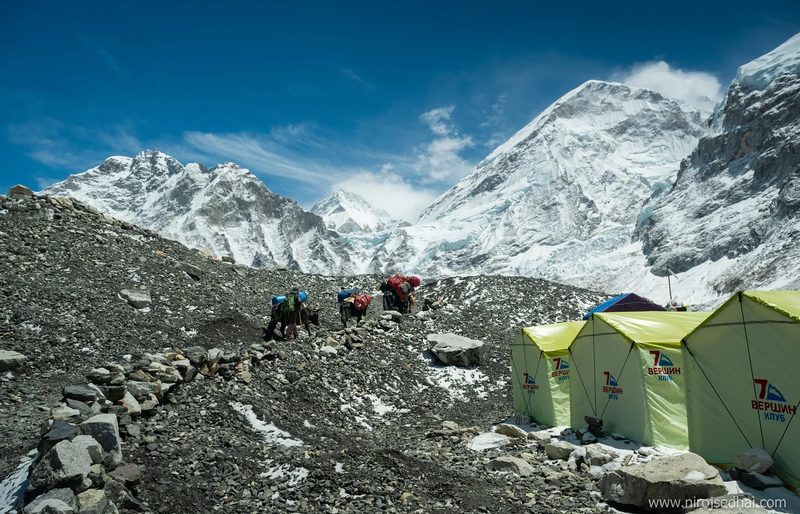
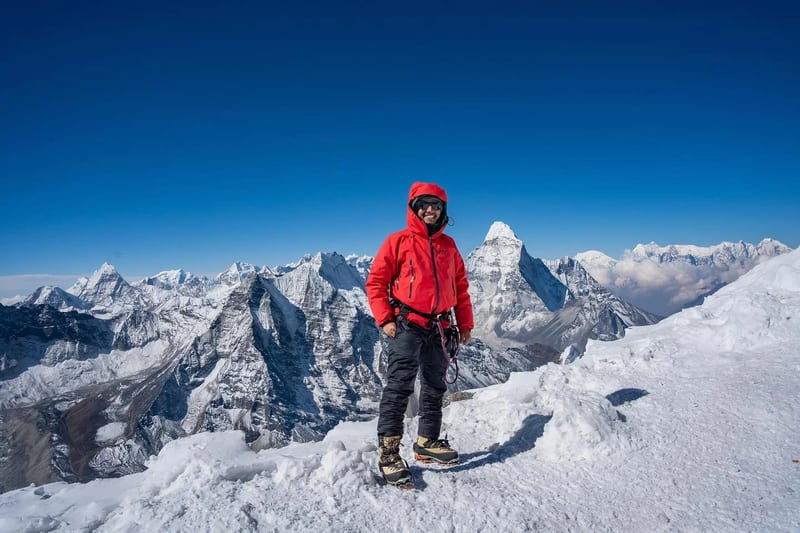
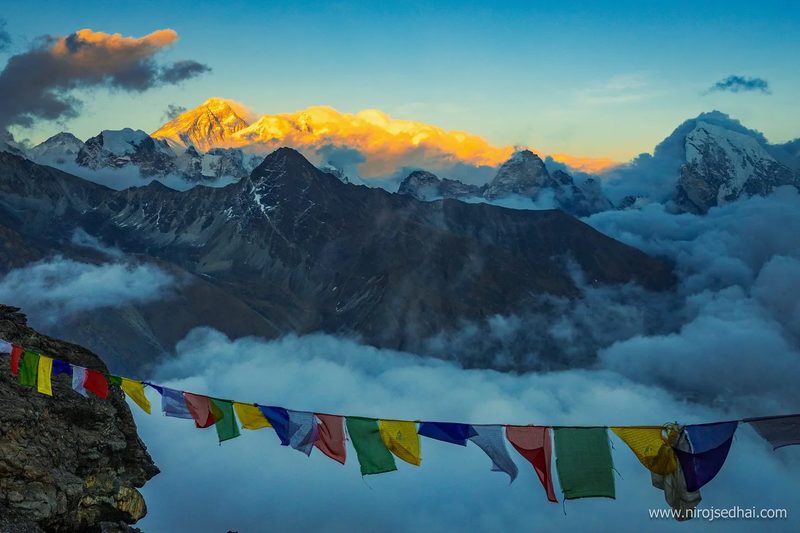
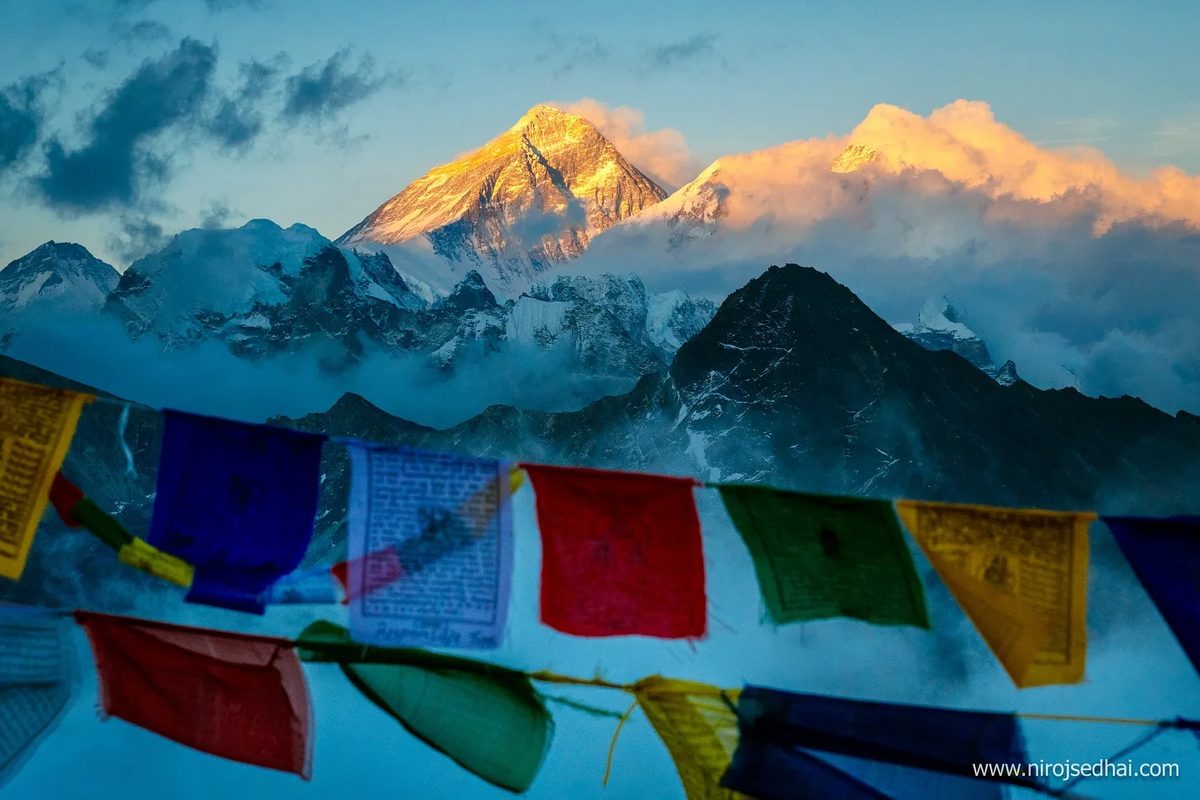
First, there is simply less atmosphere overhead to absorb ultraviolet. UV intensity rises roughly 10 to 12 per cent for every 1,000 metres you climb. By Kala Patthar at 5,545 m you are dealing with something close to double the ultraviolet you would get at sea level.
Second — and this is the one that catches people — fresh snow reflects up to 80 per cent of the UV that hits it. Dry sand manages about 15 per cent. So above the snowline you are lit twice: once from the sky, once from the ground. That is why glasses that merely sit on your nose are not enough up there, and why the injury so often happens on an overcast day, when nobody thinks to put them on.
Indicative, compounded from the published 10–12% per 1,000 m figure. Real UV on a given morning also depends on season, cloud, ozone and the angle of the sun — treat it as the shape of the problem, not a forecast.
Read the category number, ignore everything else
Under the European standard EN ISO 12312-1, every pair of sunglasses carries a filter category from 0 to 4. It tells you how much visible light gets through — the VLT figure. It is the only number on the box worth your attention, and it is usually printed inside the arm.
| Category | Light through (VLT) | What it is actually for |
|---|---|---|
| 0 | 80–100% | Clear. Safety or fashion. No glare control at all. |
| 1 | 43–80% | Light tint. Overcast days at home. |
| 2 | 18–43% | Medium. An ordinary sunny afternoon. |
| 3 | 8–18% | Most proper sunglasses. Fine for Nepal below about 4,000 m. |
| 4 | 3–8% | Glacier and high altitude. Not legal for driving in many countries — genuinely that dark. |
The trap: “100% UV protection” and “UV400” describe the invisible ultraviolet, not the visible brightness. A dark-looking category 2 lens can block all UV and still leave you squinting into a white glacier all day — and squinting all day is how you finish the trek with a headache and a sunburnt eyelid. You want both: full UV blocking and the right category.
What we would actually put in your bag
About the links below. Some go to Amazon, and as an Amazon Associate we earn from qualifying purchases — at no extra cost to you. It changes nothing about the advice: we tell people to rent down jackets and sleeping bags in Thamel rather than buy them, and we earn nothing when they do. These are the things worth owning.
Category 4, wraparound, with side coverage
For Everest Base Camp, Gokyo, Thorong La or Larke Pass. Category 4 cuts the visible glare down to 3–8% getting through, and the side shields or a deeply wrapped frame stop the light that comes off the snow at your cheekbones — which is the light that ordinary sunglasses miss entirely. Look for a nose piece that actually sits on your face; a gap under the bridge is a gap for reflected UV.
Do not drive in these. Category 4 is dark enough that traffic lights become genuinely hard to read, and in several countries it is not road legal.
Compare category 4 glacier glasses →A well-fitting category 3 wraparound
Poon Hill, Mardi Himal, Ghandruk, Langtang valley floor, Annapurna Base Camp in a normal autumn — a good category 3 is honestly enough, and you will actually keep it on, which matters more than a spec sheet. Prioritise fit and wrap over darkness. Polarised is a real comfort upgrade on wet rock and lake glare.
You do not need to spend $200 on this. Above about $60 you are mostly buying brand and frame materials, not more protection.
Compare category 3 wraparounds →A spare pair, in the bottom of your daypack
This is the single most useful sentence in this article. Sunglasses get sat on, dropped down a moraine slope, or left on a teahouse windowsill in Dingboche. Losing your only pair at 4,400 m turns a safety item into an emergency, and there is no shop. A $20 backup weighs nothing and has saved more treks than any premium frame.
It does not need to match. It needs to exist.
Compare budget backups →Going high this autumn?
Everest and Annapurna were untouched by the 2026 floods and are running normally. Our guides carry a spare pair for exactly the reason above.
- Everest Base Camp — 14 days · from US$1,650 per person
- Annapurna Base Camp — 7 days · from US$730 per person
What we would not bother with
Since we are the ones telling you to buy something, here is the other half of it.
Ski goggles. Unless you are going above 6,000 m or climbing a peak, they are overkill, they fog on a hot climb, and they are one more thing in the pack. Glasses that fit properly do the job on every teahouse trek in this country.
The $8 pairs in Thamel. Some are fine. Many carry a category marking that has no relationship to the lens in the frame, and there is no way to tell them apart in the shop. It is a strange thing to gamble your eyesight on to save twenty dollars.
Prescription-glasses-plus-clip-on. It works at home; it fails in wind because the clip-on lets light straight in at the sides. If you wear glasses, get prescription sunglasses made before you come, or bring contacts and a proper wraparound.
If it happens anyway
You will know six to twelve hours after the exposure: a gritty feeling like sand under the lids, watering, real pain, and light becoming unbearable. It is frightening and it is almost always temporary — the surface of the eye heals in a day or two.
What helps: get into the dark, take the contacts out and leave them out, cool compresses, painkillers, and do not rub. What does not help: pushing on to the next village in bright snow, which is how a bad day becomes a worse one. Tell your guide immediately — ours carry spare glasses and will rearrange the day around it rather than let you walk through it.
Is category 4 really necessary for Everest Base Camp?
Above Dingboche in snow, yes — that is exactly the condition category 4 exists for. Many people complete the trek in category 3 and are fine, particularly in a dry autumn with little snow underfoot. But the cost difference is small and the downside is an injury that ends your trek, so we would take the 4.
Can I just buy sunglasses in Kathmandu?
You can, and there are genuine outdoor shops in Thamel selling real branded stock. The problem is the copies sitting beside them at a tenth of the price with an identical-looking sticker. If you are buying in Kathmandu, buy from an established shop and expect to pay something close to Western prices for the real thing.
Do I need them on cloudy days?
Yes, and this is where most snow blindness actually happens. Cloud scatters ultraviolet rather than stopping it, the glare feels manageable so nobody puts glasses on, and the snow is still throwing 80% of it straight back up at you.
What about children on a family trek?
Children's eyes transmit more UV to the retina than adults', so if anything they need it more. Get a category 3 or 4 pair that actually stays on a smaller face — a strap helps — and be the parent who is annoying about it.
Are polarised lenses worth the extra?
For comfort, often yes — they cut reflected glare off wet rock, rivers and lakes. But polarisation is not UV protection and it is not the category. Treat it as a nice-to-have on top of the two things that matter.
Is this the only gear I should buy rather than rent?
Broadly: buy what has to fit you or touch you — boots, socks, eye protection, a base layer. Rent the bulky expensive things you will use once: down jacket, sleeping bag, and poles if you do not hike at home. That split is in our Nepal gear rental guide.
Keep reading
Questions about a specific trek and what the light will be like on it? Ask us — we walk these trails every season and we would rather tell you to spend less.
撰文
Laxman Rawal我们是常驻博卡拉、经NMA认证的徒步向导。自1998年以来,已在安纳普尔纳与珠峰地区带领超过5,000次徒步——这里的每一句话都源自山路。 More from this author →
分享这篇文章
准备好出发了吗?
从读到它,到站上它
我们常驻博卡拉的向导自1998年以来一直从事此行。告诉我们您的日期与体能水平——我们将为您打造完美行程。免费,无任何义务。
Why trek with our licensed agencyFree Trekker's Insider Guide
Permits, packing lists, cost breakdowns — no fluff.
We send one useful email. You can unsubscribe anytime.