
Amber weather warning? What it means for trains and flights
Yellow, amber and red Met Office warnings explained, how to read the impact matrix, and your refund rights on trains and flights when a storm hits.
On this page (8)
An amber weather warning means the Met Office sees an increased likelihood of severe weather that could disrupt your plans: travel delays, road and rail closures, power cuts and a potential risk to life and property. Its advice is to think about changing your plans. Yellow is the level below, a warning to check whether you will be affected. Red, the top, means dangerous weather is expected: avoid travelling where possible.
The colour is only half the message. Every Met Office warning comes from a grid of how bad the impacts could be against how likely they are, and two yellow warnings on the same day can mean very different things. Here is how to read the grid, and what each colour means for trains, flights and driving in the UK.
- Colour = impact × likelihood. Open the warning and find the ticked box on the matrix before you decide anything.
- Only one box out of sixteen is red: high impact and high likelihood together.
- A cancelled train is refundable without fees, and Delay Repay is paid whatever caused the delay.
- Bad weather rarely earns flight compensation, but the airline still owes you food, drink and an overnight hotel during a long delay.
What yellow, amber and red weather warnings mean
Yellow asks you to check, amber asks you to consider changing plans, and red tells you to act now and avoid travel. The Met Office, which the UK government recognises as the national weather warning service, issues warnings for eight types of weather — rain, thunderstorms, wind, snow, lightning, ice, fog and extreme heat — up to seven days ahead.
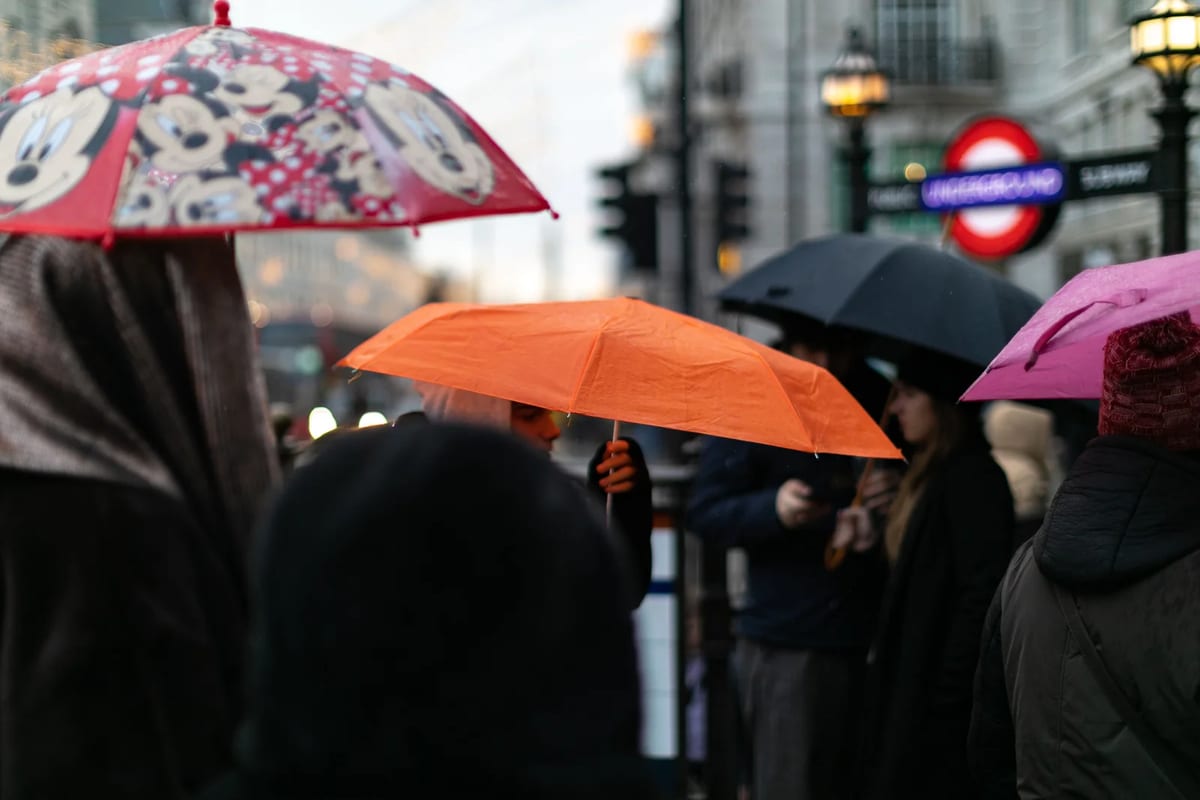
- Yellow: many are issued when the weather is likely to cause some low-level impacts, including some travel disruption in a few places. Others flag weather that could bring much more severe impacts to most people, but with much lower certainty. Read the text to know which kind you are looking at.
- Amber: an increased likelihood of impacts from severe weather, with the possibility of travel delays, road and rail closures, power cuts and a potential risk to life and property. The Met Office asks you to think about changing your plans and protecting yourself and your property.
- Red: dangerous weather is expected. It is very likely that there will be a risk to life, with substantial disruption to travel and energy supplies and possibly widespread damage. The advice is to avoid travelling where possible and follow the emergency services and local authorities.
There is nothing above red. Separately, the Met Office and the UK Health Security Agency run heat-health and cold-health alerts in the same colours; those are health alerts, not travel warnings.
How to read the Met Office impact matrix
Find the ticked box: the further right, the worse the impacts; the higher up, the more certain. The matrix sits in the Further Details section of every warning. It has four impact levels across (very low to high) and four likelihood levels up the side. Very low impacts never produce a warning. A likely low-impact event is yellow, and so is an unlikely high-impact one. Amber covers likely medium impacts and less certain high ones. Red takes a single box: high impact and high likelihood.
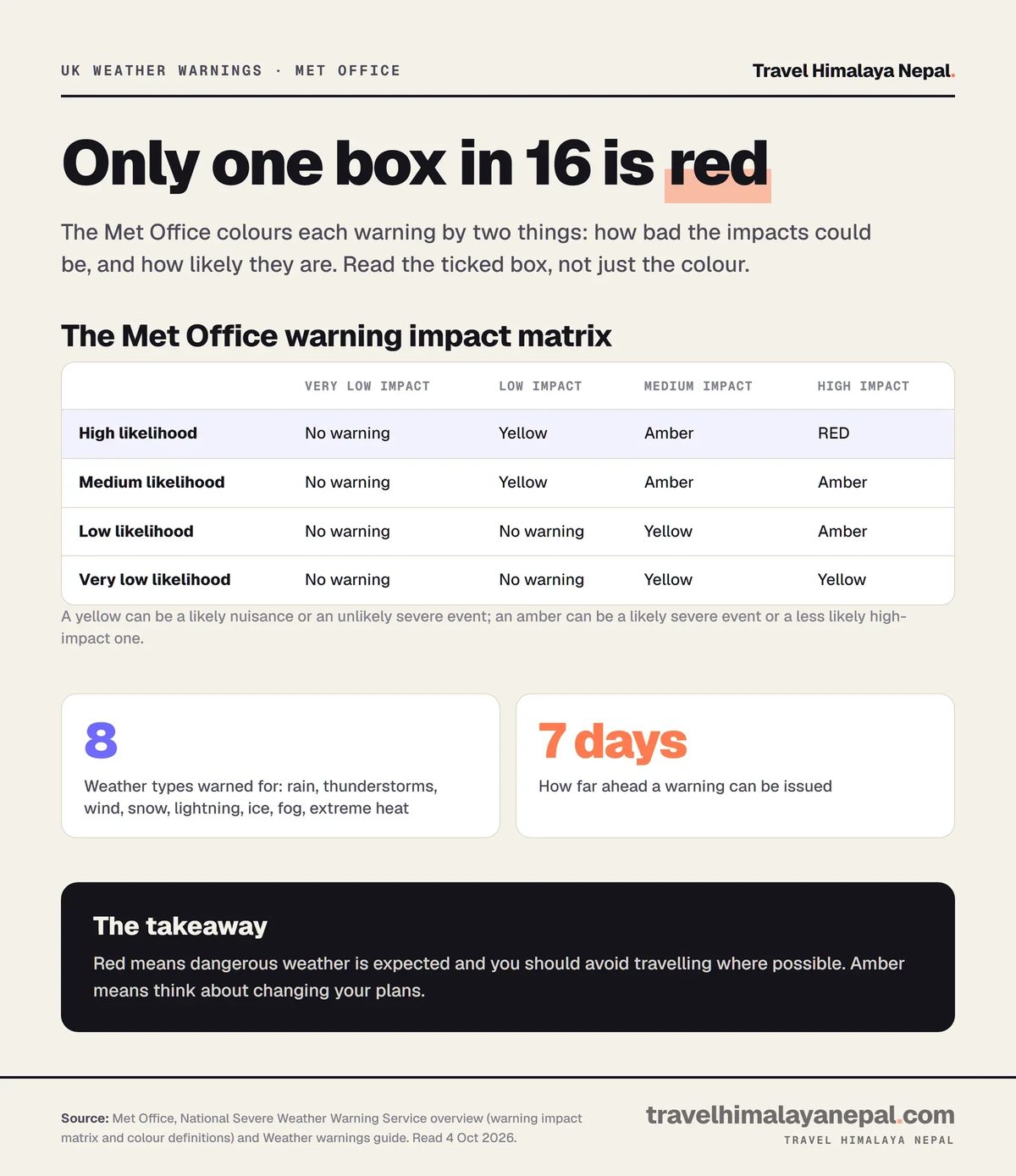
That is why the Met Office says yellow and amber “represent a range of impact levels and likelihoods”. A yellow with the tick in the bottom-right corner is a low-chance severe storm worth watching. A yellow with the tick near the top-left is near-certain drizzle-level disruption. The colour is the same; your decision is not.
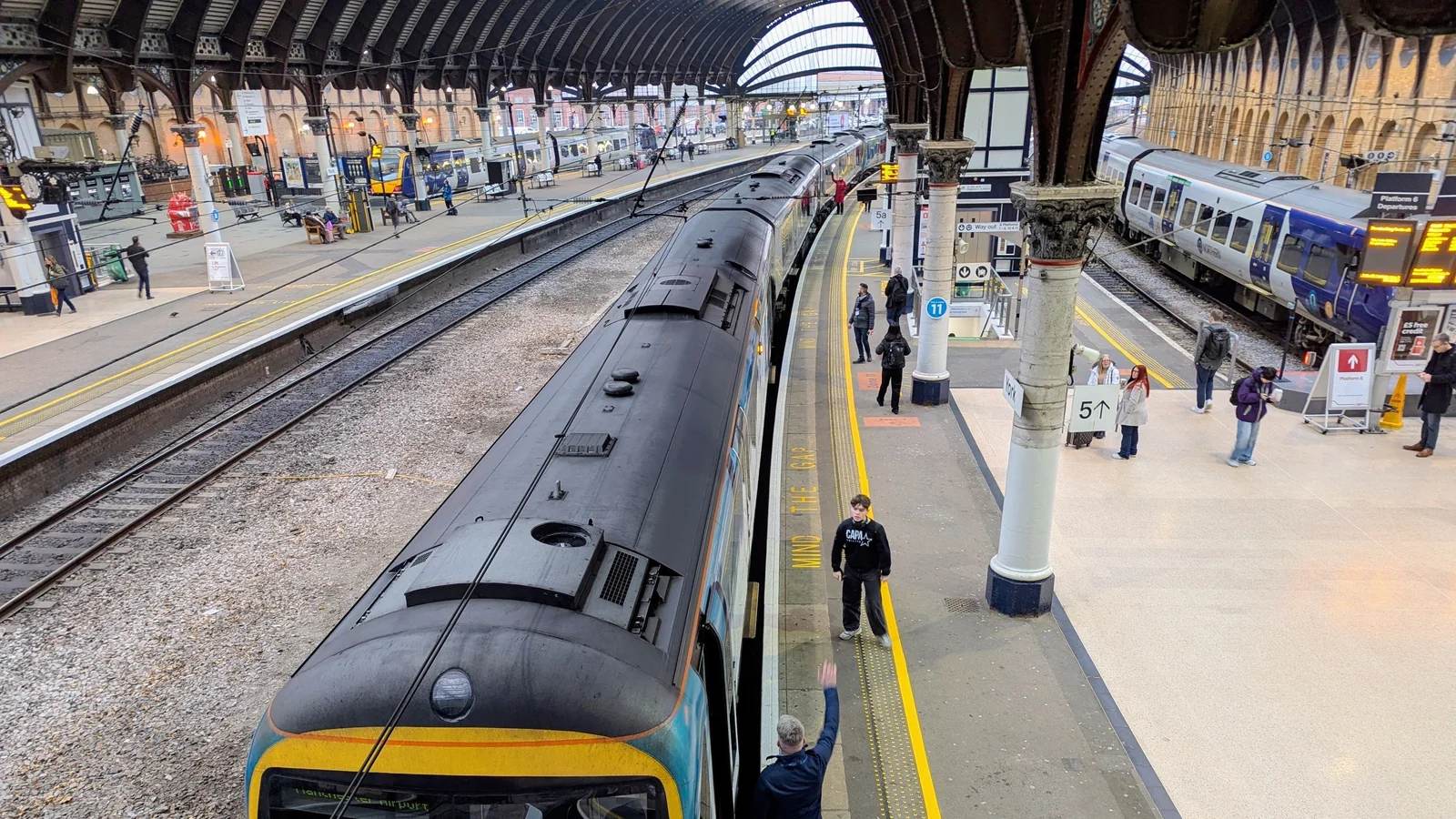
What a weather warning means for trains
If your train is cancelled or delayed and you decide not to travel, National Rail says the unused ticket can be refunded without fees by the retailer that sold it. If you do travel and arrive late, most operators pay through Delay Repay, which the Department for Transport says is paid “for whatever the cause of the delay and on all types of tickets” — storms included.
| Delay on arrival | Delay Repay compensation |
|---|---|
| 15–29 minutes | 25% of the single fare, where the operator pays from 15 minutes |
| 30–59 minutes | 50% of the single fare |
| 60 minutes or more | 100% of the single fare |
| 2 hours or more | 100% of the return fare |
On an amber day, check your operator before you leave and keep your ticket and booking reference. Each operator runs its own Delay Repay claim form, which National Rail links to.
What a weather warning means for flights
A warning does not change your rights; what the airline owes you depends on whether it delays or cancels the flight. The UK Civil Aviation Authority says airlines must provide care “regardless of the reason for the delay”: food and drink in proportion to the wait, two phone calls or emails, and accommodation plus transport if you are delayed overnight. Care starts after 2 hours on flights under 1,500 km, 3 hours on flights of 1,500 to 3,500 km, and 4 hours beyond that.
Cash compensation is different. The CAA says airlines do not have to pay it when the delay was caused by extraordinary circumstances, and airlines generally treat severe weather as one. Our flight rights guide sets out the UK261 amounts that apply when the cause was the airline’s own, and when an airline has to rebook you on another carrier.
Driving in a yellow, amber or red warning
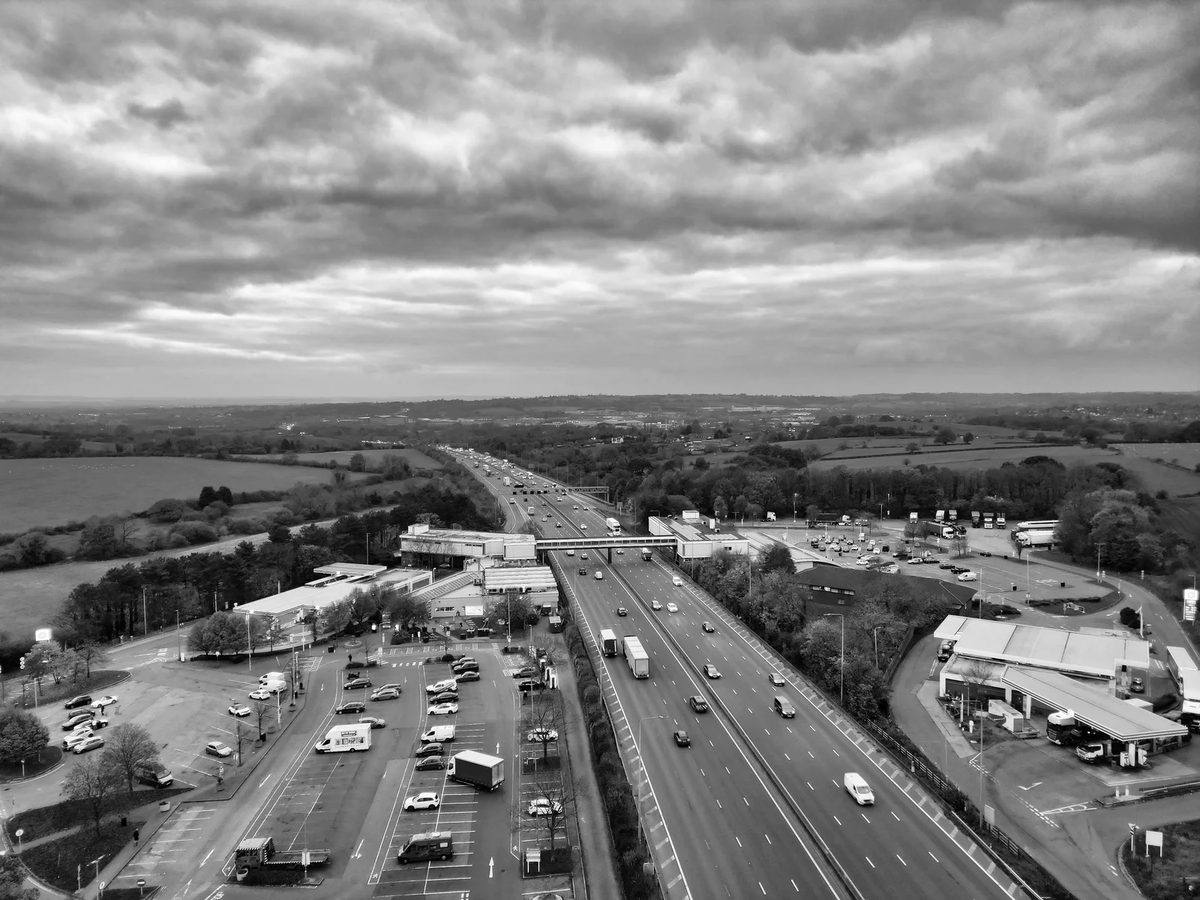
The Highway Code tells you not to drive in ice or snow unless the journey is essential, and the Met Office tells you to avoid travel under a red warning. Under an amber, the Highway Code rules for bad weather are the ones to know:
- Rule 226: you must use headlights when visibility is seriously reduced, generally under 100 metres.
- Rule 227: in wet weather, stopping distances are at least double those on dry roads.
- Rule 228: do not drive in icy or snowy weather unless the journey is essential, and carry a kit: de-icer, torch, warm clothing, first aid kit and jump leads.
- Rule 230: in snow and ice, stopping distances can be ten times greater than on dry roads.
- Rules 232–233: strong gusts can push cars and motorcycles off course near bridges and gaps in hedges, and high-sided vehicles are most at risk.
A red warning is the moment to postpone the drive, not to test the rental. If you are new to driving on the left, our guide to driving on the left for the first time covers the roundabout and junction rules that matter in bad weather too.
Our verdict
Read the box, not just the colour. For a traveller, yellow means check your train or flight the night before; amber means move what you can, especially long drives and tight connections; red means do not travel unless you must. On the railway, a weather-cancelled train is refundable and a weather delay still earns Delay Repay. In the air, expect care during a long delay but rarely cash.
Travelling further afield? Our explainers decode the US alerts the same way: winter storm watch vs warning, hurricane watch vs warning, the extreme cold warning and the beach hazards statement, plus tsunami alerts in the US, Japan and Indonesia and Australia’s cyclone categories.
Frequently asked questions
What does an amber weather warning mean?
An increased likelihood of severe weather that could disrupt your plans, with possible travel delays, road and rail closures, power cuts and risk to life and property. The Met Office advises thinking about changing your plans.
Is a yellow weather warning serious?
It can be. Some yellow warnings cover likely low-level disruption; others cover severe weather that is possible but uncertain. Check the impact matrix in the warning to see which.
Should I travel in a red weather warning?
The Met Office advises avoiding travel where possible and following the advice of the emergency services and local authorities.
How far ahead does the Met Office issue weather warnings?
Up to seven days ahead, for rain, thunderstorms, wind, snow, lightning, ice, fog and extreme heat.
Can I get a refund if a storm cancels my train?
Yes. If your train is cancelled or delayed and you choose not to travel, National Rail says your unused ticket can be refunded without fees. If you travel and arrive late, Delay Repay is paid whatever the cause.
Do airlines pay compensation for weather delays?
Usually not, because airlines generally treat severe weather as an extraordinary circumstance. They must still provide food, drink and, for overnight delays, a hotel and transport.
Keep reading
UK261, EU261 and what airlines really owe.
Daylight, snow and avalanche forecasts before you go up.
How the US alert ladder compares.
The US, Japan and Indonesia ladders, side by side.
Sources: Met Office, National Severe Weather Warning Service overview (impact matrix and colour definitions) and Weather warnings guide; National Rail, Compensation and refunds; Department for Transport, Rail passenger compensation paid by train operating companies (updated 26 February 2026); UK Civil Aviation Authority, Flight delays; The Highway Code, rules 226 to 237. All read 4 October 2026.
Photos via Pexels: Mike Norris (cover), Irina Aksenova, Altaf Shah.

Written by
Bishnu AdhikariPokhara-based, NMA-certified trekking guides. We’ve led 5,000+ treks across the Annapurna and Everest regions since 1998 — every word here comes from the trail. More from this author →
Ready to Trek?
From reading about it to standing on it
Our Pokhara-based guides have been doing this since 1998. Tell us your dates and fitness level — we'll build your perfect itinerary. Free, no obligation.
More guides like this
Popular trips to consider
View all treks & toursFree Trekker’s Insider Guide
Permits, packing lists, cost breakdowns — no fluff.
We send one useful email. You can unsubscribe anytime.