
Winter storm watch vs warning, and when to cancel the drive
A winter storm watch means a storm is possible; a warning means it is coming. What each one triggers where you are, and what to do on the road.
On this page (8)
- What is the difference between a winter storm watch and a warning?
- The winter alert ladder, from advisory to warning
- Why 4 inches is a warning in one city and nothing in another
- Driving during a winter storm warning
- What a winter storm warning means for flights
- Our verdict
- Frequently asked questions
- Keep reading
A winter storm watch means a significant storm is possible, usually a day or two out, so keep your plans flexible. A winter storm warning means it is expected or already happening, and the National Weather Service is telling you travel will be dangerous: if you can move the drive or the flight, move it now. A winter weather advisory sits below both and means slow, messy travel rather than a threat to life.
The catch is the number behind the word. A warning needs 4 inches of snow around Memphis and 12 inches in the Colorado mountains, because each Weather Service office sets its own criteria for the place it serves. Below is the full ladder, what each step triggers where, and what to do on the road and at the airport.
- Watch = possible, warning = expected. The upgrade from one to the other is your last easy moment to change plans.
- The same alert means different storms in different places. Judge it by where you are, not by the snow total you are used to at home.
- Ice and blizzards are the worst for driving. A quarter inch of ice or a whiteout stops traffic in a way that 6 inches of powder does not.
- A snow squall warning is the one to obey instantly. It lasts 30 to 60 minutes and can turn a clear highway into a whiteout.
What is the difference between a winter storm watch and a warning?
Certainty and timing. The Weather Service defines a winter storm watch as “conditions favorable for a significant winter storm event”, heavy snow, sleet, ice or a combination, and a winter storm warning as a significant event that is expected or occurring. A watch says the storm may miss you. A warning says it will not.
How early each one arrives depends on the office. NWS Memphis issues watches for the 24 to 36 hours before a storm starts and warnings usually 12 to 24 hours ahead. NWS Baltimore/Washington issues watches when a storm is possible within 48 hours. NWS Twin Cities can issue one up to 72 hours ahead. As confidence rises, the watch is upgraded to a warning, downgraded to an advisory or cancelled.
The winter weather advisory is the step people ignore and should not. It covers snow, sleet or freezing rain that will cause “significant inconvenience”. Around Washington, DC it can be issued for just 1 inch of snow if it falls during rush hour, and any freezing rain at all earns one there, because a thin glaze is what puts cars in ditches.
The winter alert ladder, from advisory to warning
There are seven winter products you are likely to see, and the warning tier splits by hazard. The criteria below are quoted from Weather Service pages; where a number varies by office, the range is given.
| Alert | What it means | Typical trigger | Your move |
|---|---|---|---|
| Winter Weather Advisory | Wintry weather that will be a nuisance and can be hazardous on untreated roads | About 1–6 in of snow by office, or any freezing rain in many places | Leave early, drive slowly |
| Winter Storm Watch | A significant storm is possible | The same thresholds as a warning, not yet certain | Make a plan B for the drive or flight |
| Winter Storm Warning | A significant storm is expected or occurring | 4–12 in of snow by office, heavy sleet, or damaging ice | Postpone travel if you can |
| Ice Storm Warning | Damaging freezing rain | About ¼ in of ice or more | Do not drive; expect power cuts |
| Blizzard Warning | Blowing snow and wind create whiteouts | Sustained winds or frequent gusts of 35 mph or more, visibility under ¼ mile, for 3 hours or more | Stay put |
| Lake Effect Snow Warning | Heavy, narrow bands of snow off the Great Lakes | Issued in New York, Pennsylvania and Ohio; other Great Lakes offices use a winter storm warning instead | Expect sudden whiteouts on short stretches |
| Snow Squall Warning | A burst of heavy snow and wind, usually 30–60 minutes | Short-fused, issued for a specific path | Delay the drive until it passes |
Two quirks catch visitors out. First, there is no separate blizzard watch any more: the Weather Service folded the blizzard and lake effect snow watches into the winter storm watch during its hazard simplification work, so a watch can turn into a blizzard warning. Second, winter has no “emergency” tier of the kind floods and tornadoes have. The blizzard, ice storm and snow squall warnings are the top of the ladder.
Why 4 inches is a warning in one city and nothing in another
Because each office sets its criteria for the roads, ploughs and drivers it serves. Memphis triggers a warning at 4 inches in 24 hours, Baltimore/Washington at 5 inches, the Twin Cities and New York City at 6, western and central New York at 7, Denver’s plains at 8 inches in 24 hours, and the Colorado mountains at 12. A Minnesotan who shrugs at a Tennessee warning is misreading it: the threshold is set where that much snow starts to cause serious trouble locally.
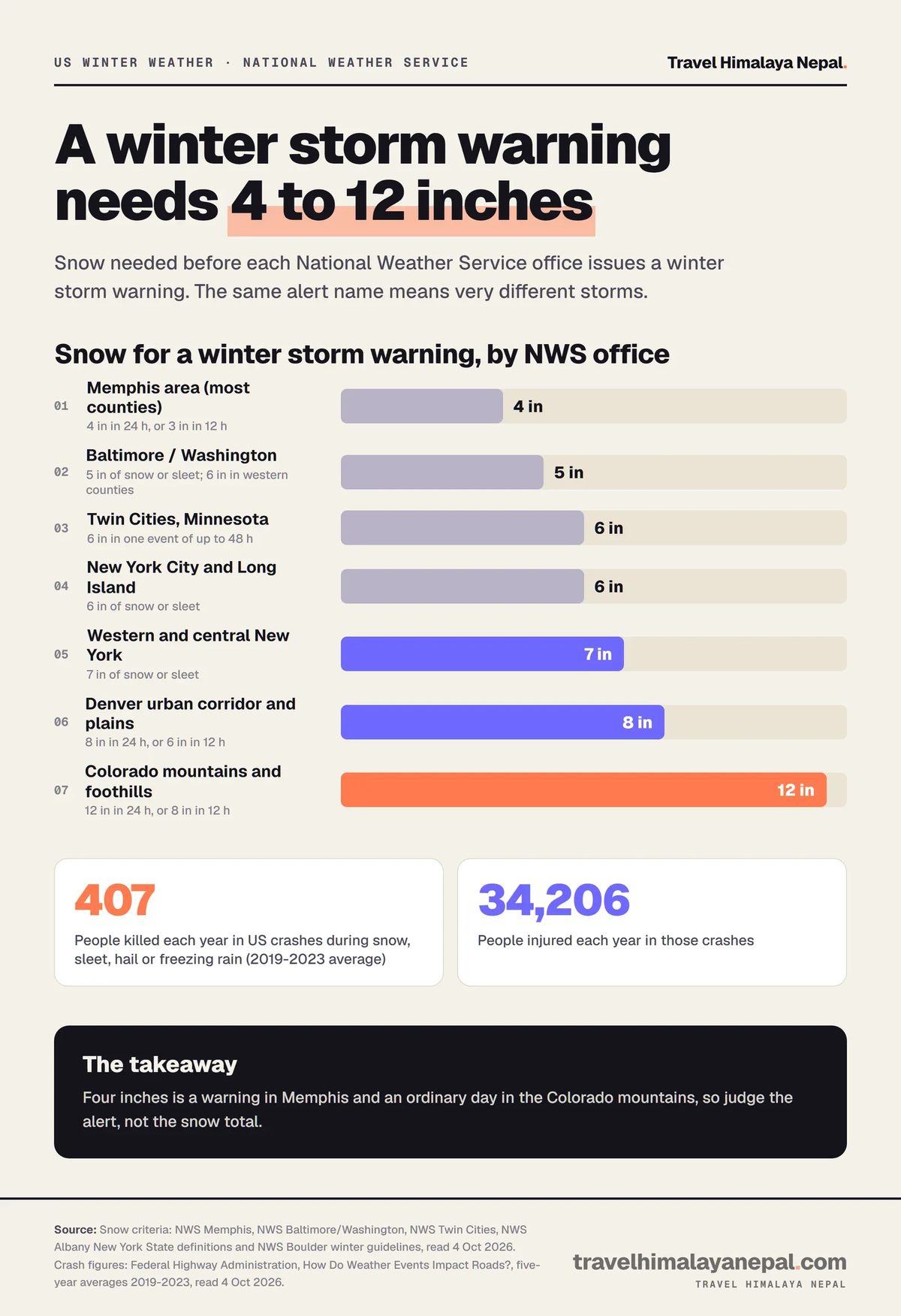
The cost of getting it wrong is real. The Federal Highway Administration counts an average of 407 people killed and 34,206 injured each year in US crashes during snow, sleet, hail or freezing rain (2019–2023), and says heavy snow can cut average freeway speeds by 5 to 40 percent.
Driving during a winter storm warning
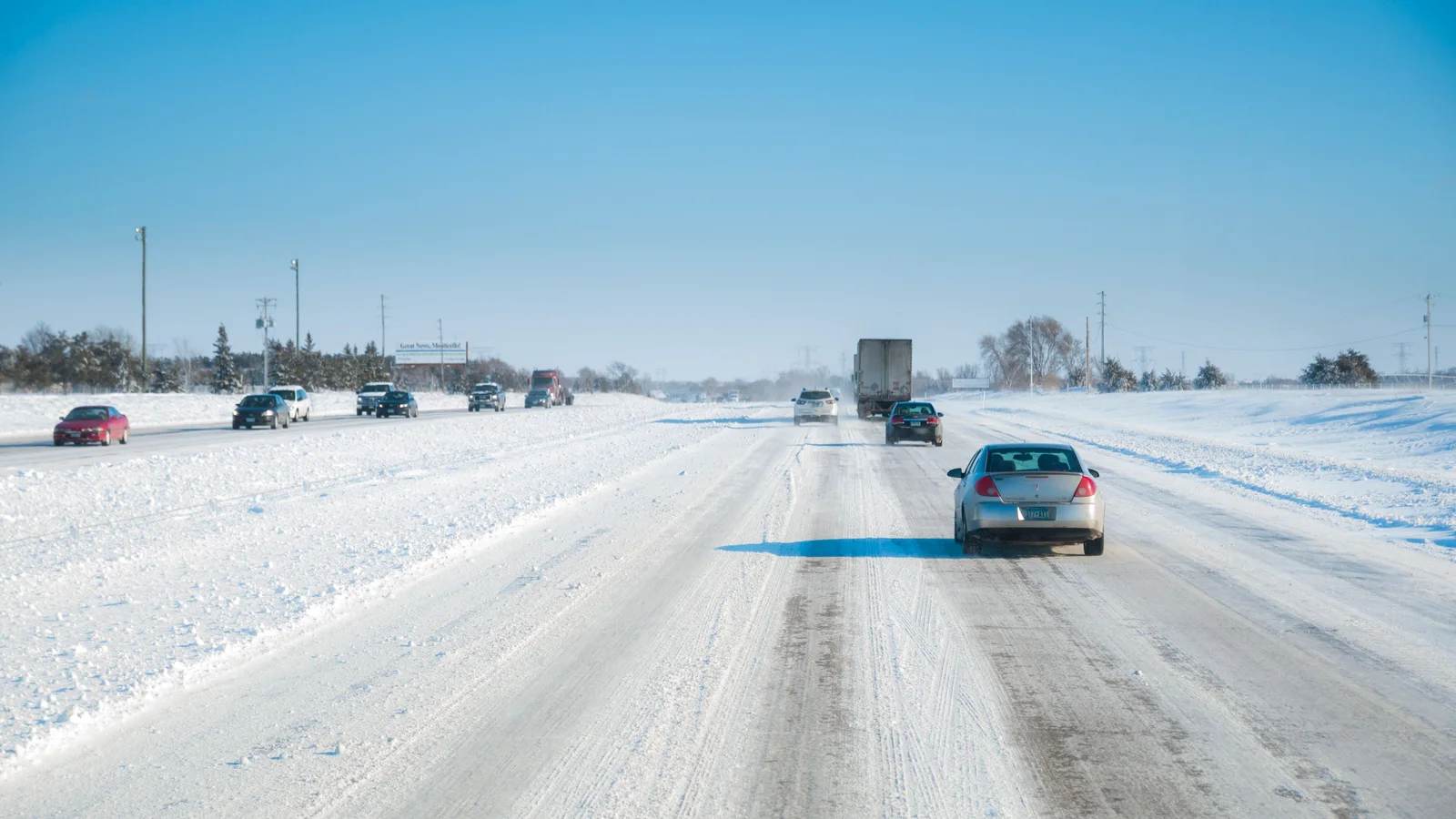
The Weather Service’s advice is to avoid the drive; if you must go, slow down and assume wet-looking roads are ice. Its winter safety page asks drivers to clear the whole car of snow and ice before setting off, tell someone their route, and carry a charged phone, a car charger and an emergency kit.
- Pack the kit before the warning. Ready.gov lists jumper cables, sand, a flashlight, warm clothes, blankets, water and snacks, plus a full tank. The CDC adds a scraper, shovel, cat litter or sand for traction, a first aid kit and bright flags or help signs.
- If you get stuck, stay in the car. The Weather Service warns that people who walk away become disoriented quickly in wind-driven snow.
- Run the engine about 10 minutes an hour for heat, crack a window, and clear snow from the exhaust pipe so fumes cannot build up inside.
- Tie something bright, preferably red, to the antenna or door so rescuers can find you.
- Under a snow squall warning, wait it out. If you are already driving, slow down, turn on headlights and hazards, keep your distance and avoid sudden braking.
In our experience visitors underestimate warnings most. If you are in a rental on summer tyres, a watch is the moment to change the plan, not the warning. Our guide to rental car insurance covers what a damaged car costs you.
What a winter storm warning means for flights
A warning does not cancel your flight; the airline does, and if it cancels, US rules entitle you to a cash refund if you choose not to fly. Under 14 CFR Part 260, a refund is due for a cancelled flight or a significant change, which includes a departure moved three hours or more on a domestic itinerary or six hours or more internationally. Card refunds are due within 7 business days and others within 20 calendar days.
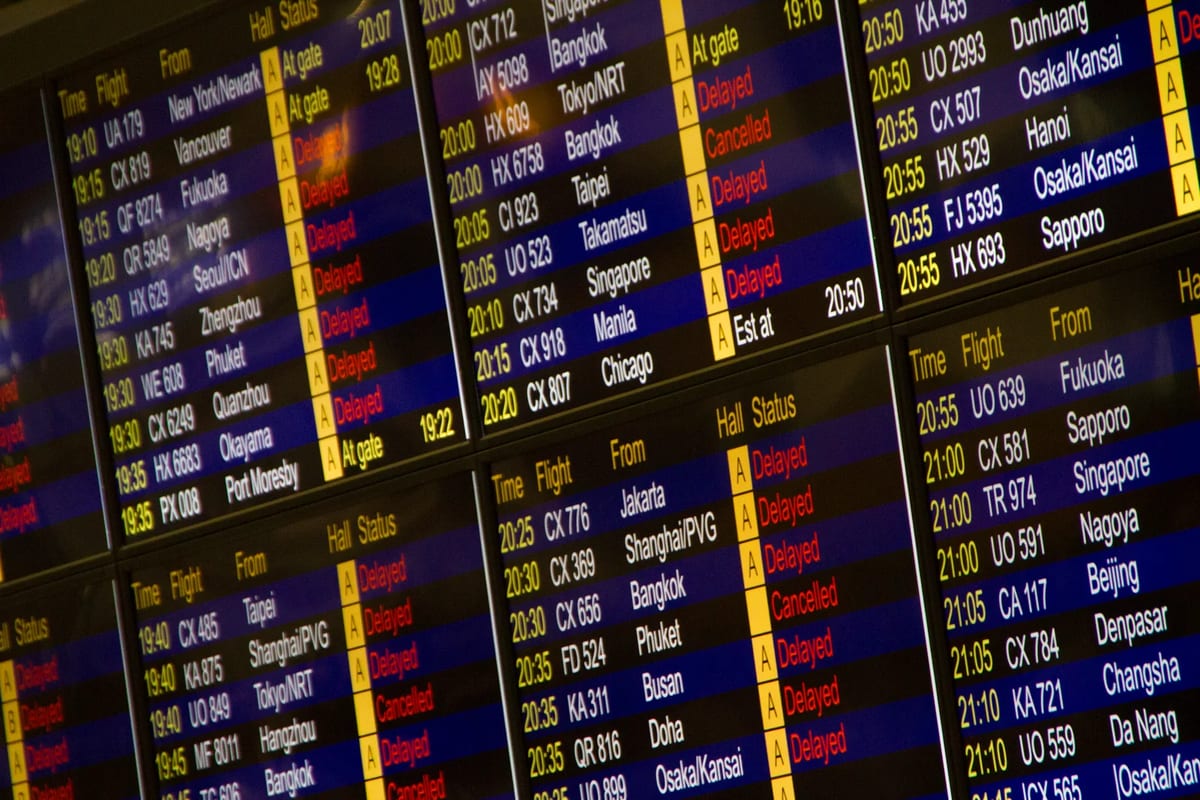
What you are not owed is a meal or a hotel. The care airlines commit to for delays they cause does not extend to weather, which is why a snowbound night at the airport is on you. Read our flight rights guide for the full picture, and when an airline has to rebook you on another carrier. When the watch is issued, check whether your airline has posted a travel waiver for your airport; changing for free before the warning beats queuing after the cancellation.
Our verdict
Treat the watch as the decision point and the warning as the deadline. A watch gives you the cheapest options: a free waiver, a day’s head start on the drive, a hotel before they sell out. By the time the warning lands, everyone else is changing plans too. And read the alert for where you are standing. Four inches in Memphis deserves more respect than a foot in Vail.
If the cold deepens after the snow, the Weather Service switches to a different set of alerts, explained in our guide to the extreme cold warning and cold weather advisory. For storms by the sea, see what a hurricane watch or warning means for your flight, and what a beach hazards statement means before you swim.
Travelling abroad? We decode other countries’ alerts the same way: the UK’s yellow, amber and red weather warnings, Australia’s cyclone categories and tsunami alerts in the US, Japan and Indonesia.
Frequently asked questions
Is a winter storm warning worse than a winter storm watch?
Yes. A watch means a significant storm is possible; a warning means it is expected or already happening. A watch is upgraded to a warning once forecasters are confident.
How many inches of snow is a winter storm warning?
It depends on the Weather Service office. It is 4 inches in 24 hours around Memphis, 5 inches around Washington, DC, 6 in the Twin Cities and New York City, 7 in western New York, and 8 to 12 inches in 24 hours in Colorado.
Should I drive during a winter storm warning?
Only if you must. The Weather Service advises avoiding travel; if you go, carry an emergency kit, tell someone your route, and if you get stuck stay with the car and run the engine about 10 minutes an hour with the exhaust pipe clear.
What is the difference between a winter weather advisory and a winter storm warning?
An advisory covers snow, sleet or freezing rain that will be a significant inconvenience but should not reach warning criteria. A warning means a significant, dangerous storm is expected.
Will my flight be refunded if a winter storm cancels it?
On a US flight, yes, if the airline cancels or significantly changes it and you choose not to travel. Weather does not entitle you to meals or a hotel.
What is a snow squall warning?
A short-fused warning for a burst of heavy snow and gusty wind, usually lasting 30 to 60 minutes, that can cause sudden whiteouts. Delay driving until it passes.
Keep reading
The NWS surf alert, and the one move that gets you out of a rip.
What airlines owe you when a storm wrecks the schedule.
Daylight, snow and avalanche forecasts before you go up.
The risks that matter more than the ones people fear.
Sources: National Weather Service, Winter Weather Warnings, Watches and Advisories; What To Do If You’re Caught in a Winter Storm; Snow Squall safety page; winter criteria from NWS Memphis, NWS Baltimore/Washington, NWS Twin Cities, NWS Albany (New York State definitions) and NWS Boulder; NWS hazard simplification pages (Central Region, Cleveland). Federal Highway Administration, How Do Weather Events Impact Roads? (2019–2023 averages). Ready.gov Winter Weather; CDC, Preparing for a Winter Storm. 14 CFR Part 260 (eCFR). All read 4 October 2026. Photos via Pexels.
Photos via Pexels: dumitru bumbu (cover), Sergei Starostin, Oscar Chan.

Written by
Anjali ShresthaPokhara-based, NMA-certified trekking guides. We’ve led 5,000+ treks across the Annapurna and Everest regions since 1998 — every word here comes from the trail. More from this author →
Ready to Trek?
From reading about it to standing on it
Our Pokhara-based guides have been doing this since 1998. Tell us your dates and fitness level — we'll build your perfect itinerary. Free, no obligation.
More guides like this
Popular trips to consider
View all treks & toursFree Trekker’s Insider Guide
Permits, packing lists, cost breakdowns — no fluff.
We send one useful email. You can unsubscribe anytime.