
Meet the Icefall Doctors: The Nepali Team That Rebuilds Everest's Deadliest Mile Every Morning — For About $3,000 a Season
Before any client sets foot above Base Camp, a small SPCC crew re-threads ladders and rope through the shifting Khumbu Icefall — the stretch that has killed more people than any other part of the mountain.

At a glance
- Published
- TopicRecords & People
- Verified againstThe Himalayan Times
- Treks coveredAma Dablam Base Camp Trek — 10 Days, Everest Base Camp Trek — 14 Days, Island Peak Climbing — 18 Days
Every climber who has ever stood on Everest's summit crossed the Khumbu Icefall to get there — and almost none of them built the path they walked on. That work belongs to a team of Sherpa climbers Nepal calls the Icefall Doctors, who spend three months each spring rebuilding, largely by hand, the only route through the most dangerous half-mile on the mountain.
Key facts
- The Icefall Doctors are a specialist Sherpa team run by the Sagarmatha Pollution Control Committee (SPCC) to fix and maintain the climbing route through Everest's Khumbu Icefall every spring.
- They earn roughly $2,500 to $3,000 for the full three-month season.
- Of Everest's 340 recorded deaths since 1953, 48 happened in the Icefall alone.
- For 2026, the SPCC introduced a new $600-per-climber Icefall route fee, announced March 18, 2026.
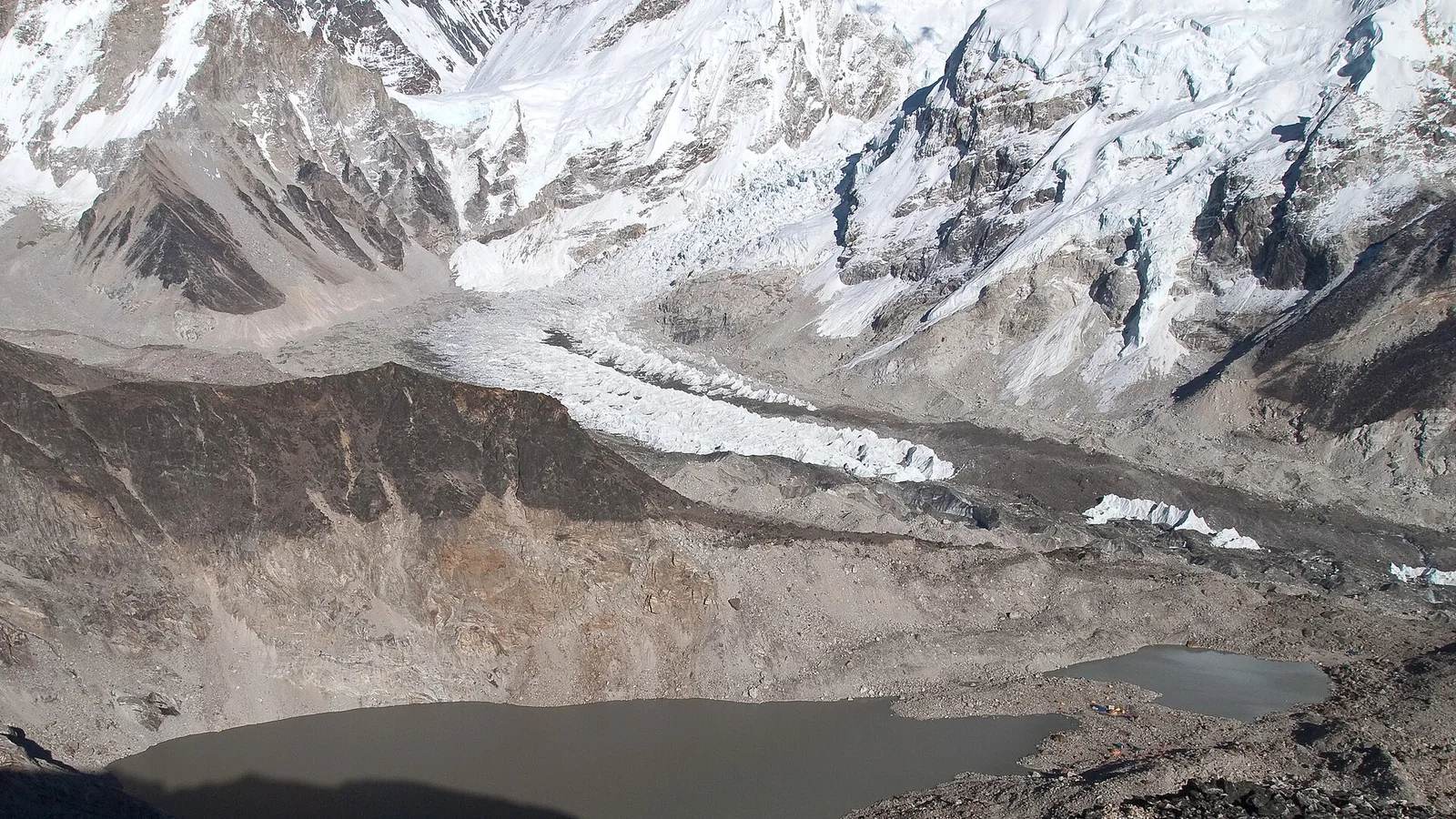
The Khumbu Icefall sits just above Everest Base Camp, where the Khumbu Glacier tips over a roughly 2,000-foot drop and shatters into a maze of leaning ice towers called seracs, some as tall as a six-storey building. The glacier does not sit still: it creeps downhill by around a metre a day, which means ladders lashed across crevasses and ropes anchored into the ice can shift, tilt or snap within days of being set. The Icefall Doctors do not fix the route once at the start of the season — they walk it and repair it, again and again, until the last client has come down in late May.
The Sagarmatha Pollution Control Committee, a community-run NGO, has organised the route through the Icefall since 1993; Nepal's Department of Tourism formalised the arrangement with a proper contract in 1997, improving pay and equipment. For the 2026 spring season, the crew is led by Chief Leader Ang Sarki Sherpa and Team Leader Dawa Jangbu Sherpa, based out of an SPCC camp at Everest Base Camp from March until the route closes for the season.
The pay is modest set against the risk. Icefall Doctors earn roughly $2,500 to $3,000 for the full season — a fraction of what a top climbing Sherpa can earn guiding a single Western client to the summit, and not far off the $600 the SPCC now charges each individual climber simply to use the route the Doctors built and maintain. That fee, announced by the SPCC on March 18, 2026, must be paid by every expedition operator, with proof submitted alongside permit paperwork before the end of April.
A route rebuilt on the site of Everest's worst single day
Tenzing Norgay and Edmund Hillary's expedition forces one of the first routes through the Icefall on the way to Everest's first confirmed summit.
The Sagarmatha Pollution Control Committee begins organising a dedicated Sherpa team to fix rope and ladders through the Icefall each spring.
Nepal's Department of Tourism contracts the SPCC to keep running the route, with improved pay and equipment for the crew.
A collapsing serac triggers an avalanche that kills sixteen Nepali climbing staff in the Icefall on April 18 — Everest's deadliest single day to that point, and a turning point for Sherpa pay and safety demands.
Led by Ang Sarki Sherpa and Dawa Jangbu Sherpa, the 2026 Icefall Doctors fix the route from March, as the SPCC introduces its new $600-per-climber Icefall fee.
The stakes were never clearer than on April 18, 2014, when a hanging serac broke loose above the Icefall and triggered an avalanche that killed sixteen Nepali climbing staff in seconds — the single deadliest day in Everest's history at the time. Most of the dead were ferrying loads or fixing rope through the same stretch the Icefall Doctors maintain today. In the aftermath, Sherpa guides boycotted the rest of that season, forcing several expedition operators to cancel outright, and the disaster became the moment Nepal's climbing industry was forced to publicly confront how little the people who carry the risk are paid.
What this means for trekkers
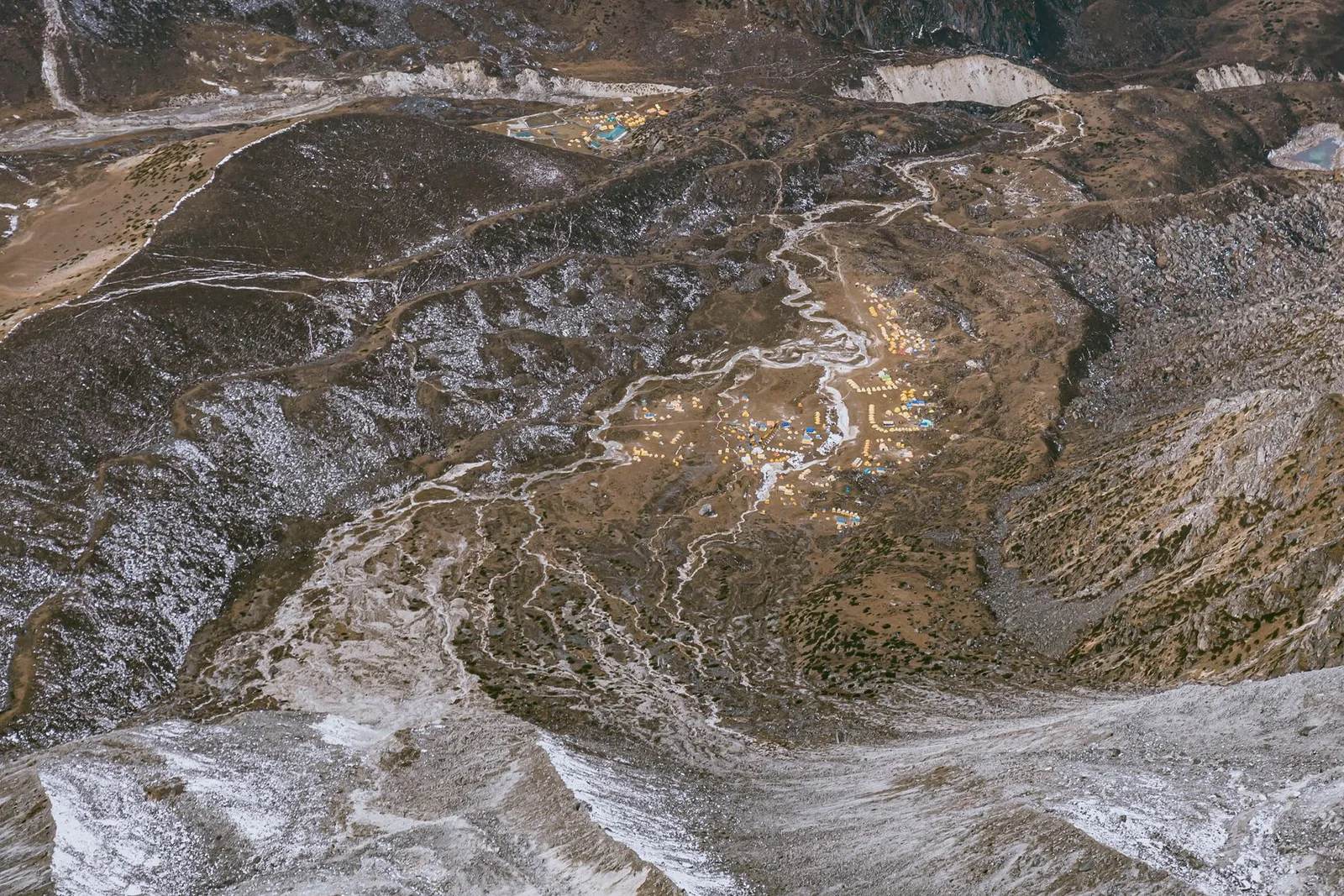
Most Everest Base Camp trekkers never set foot in the Icefall — it belongs to climbers heading for the summits of Everest, Lhotse and Nuptse, not to the standard trekking trail that ends at Base Camp itself. But every trekker who stands at Base Camp and looks up at that broken white wall of ice is looking at the actual workplace behind the entire industry: guides, cooks, porters and route-fixers whose wages are still a fraction of what a single Western client pays for a climbing permit.
What this means for you
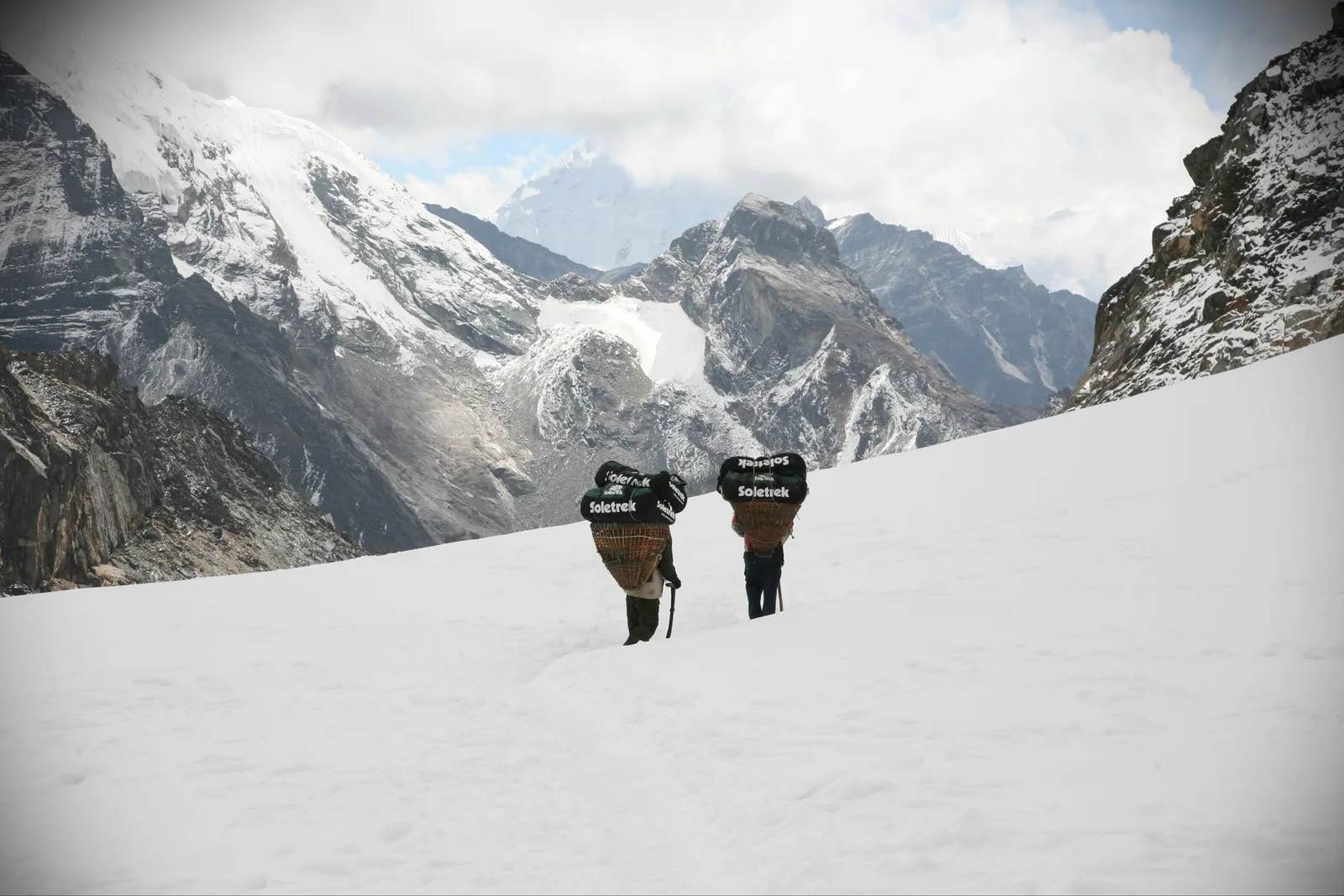
If you are booking any Everest-region trip — a Base Camp trek or a climbing expedition on Island Peak or Ama Dablam — ask your operator directly how much guides, porters and route crew are paid, and whether that is built into the price rather than left to tips. It is the honest version of asking whether a quote is fair, and a reputable Nepali operator will answer it without hesitating.
Travel Himalaya Nepal's own porter and staff welfare policy follows the same principle this story makes plain: the people doing the most dangerous work on the mountain should never be the last to be paid fairly for it. Our 14-day Everest Base Camp trek walks directly beneath the Icefall, and Island Peak is the most popular way to actually rope up and climb above it.
Source: The Himalayan Times; Explorersweb
Cover photo: Maël BALLAND via Pexels (Pexels License).
Still running this season
Ama Dablam Base Camp Trek — 10 Days is running normally
NMA-certified local guides, transparent pricing, 5,000+ treks since 1998. Message us your dates and we'll sort the permits, lodges and logistics — reply within 24 hours, no obligation.
Popular Nepal treks
All treks →
Related coverage
Records & People
The Deadliest Avalanches in the Nepal Himalaya
From the 2014 Khumbu Icefall to the earthquake that swept Everest Base Camp in 2015 — the deadliest avalanches in Nepal's mountains, their causes and tolls, recorded with respect.
World Destinations
Altitude sickness doesn't need a mountain, just a flight to Cusco
Altitude illness starts around 2,450 m, and Cusco, La Paz and Lhasa all sit above it. Flying straight in is harder on you than walking to Everest Base Camp.
Records & People
Everest Isn't the Deadliest 8,000m Mountain. Annapurna Is — and It's Not Close
Guinness World Records has certified Annapurna I as the deadliest Himalayan giant, with a death-to-summit ratio over five times Everest's. Here's the real math behind the title, and why the trek to its base camp is nothing like the climb.
Flights & Access
How Many Days Do You Actually Need for Everest Base Camp in 2026? Every Itinerary Length Compared
Ten days is possible, fourteen is what most operators actually recommend, and the flight into Lukla is why you should budget more time than either number, not less.
Latest from the desk
Gear & Tech
Trail shoes or hiking boots, and what the ankle-support research actually found
Most teahouse trekkers wear more boot than the walk needs, and the ankle-support argument holding that up is thinner than the shops suggest.
Gear & Tech
Merino or synthetic base layers, and what a lab found when it measured the smell
Merino wins the week-long wear, synthetic wins the overnight dry, and the lab reason merino stays fresh is not the bacteria story you have been told.
Safety & Advisories
If someone you know is missing in the Nepal flood, you don't have to fly to Kathmandu
Nepal Police have identified 95 of more than 1,200 bodies recovered. Families abroad can be DNA-profiled at home and send the result in. Here is how it works.