
Eight of the World's 14 Highest Peaks Touch Nepal, and Only Three Sit Entirely Inside It
Nepal shares five of its eight giants with a neighbour, and all eight were first climbed within a single decade, starting with Annapurna in 1950.
At a glance
- Published
- TopicRecords & People
- Verified againstWikipedia, Eight-thousander
- Treks coveredAnnapurna Base Camp Trek — 9 Days, Kanchenjunga Base Camp Trek — 22 Days, Manaslu Circuit Trek — 14 Days
Key facts
- 8 of the 14 mountains above 8,000 m lie wholly or partly in Nepal
- Only 3 are entirely Nepali: Dhaulagiri I, Manaslu and Annapurna I
- The other 5 sit on a border: Everest, Kangchenjunga, Lhotse, Makalu and Cho Oyu
- All eight were first climbed between 1950 and 1960
Most travellers know that Nepal has Everest. Fewer realise how much of the world's highest ground the country holds. Eight of the fourteen eight-thousanders, the peaks above 8,000 metres, are in Nepal. Where exactly they stand on the map is the surprising part.
Three inside, five on the line
Dhaulagiri I, Manaslu and Annapurna I are wholly inside Nepal. The other five straddle a frontier. Everest, Lhotse, Makalu and Cho Oyu sit on the Nepal-China border, and Kangchenjunga sits on the Nepal-India border. The remaining six eight-thousanders are elsewhere: K2, Nanga Parbat, Gasherbrum I and II and Broad Peak are in the Karakoram, and Shishapangma is in Tibet.
| Peak | Location | Height (m) | First ascent |
|---|---|---|---|
| Everest | Nepal/China | 8,849 | 1953 |
| Kangchenjunga | Nepal/India | 8,586 | 1955 |
| Lhotse | Nepal/China | 8,516 | 1956 |
| Makalu | Nepal/China | 8,485 | 1955 |
| Cho Oyu | Nepal/China | 8,188 | 1954 |
| Dhaulagiri I | Nepal | 8,167 | 1960 |
| Manaslu | Nepal | 8,163 | 1956 |
| Annapurna I | Nepal | 8,091 | 1950 |
How far above 8,000 metres?
The gap between the biggest and smallest is larger than the raw heights suggest. Measured by how far each rises above the 8,000 m line, Everest is nearly ten times higher than Annapurna I.
A decade of firsts
The first eight-thousander anyone ever climbed was one of Nepal's. On 3 June 1950, Maurice Herzog and Louis Lachenal of a French expedition reached the summit of Annapurna I without supplementary oxygen. It is also the only 8,000-metre summit reached on the first attempt. Both men survived, but they lost fingers and toes to frostbite. Nepal's ruling Ranas had only recently begun letting mountaineers in.
Once the door opened, the rest followed quickly: Everest in 1953, Cho Oyu in 1954, Makalu and Kangchenjunga in 1955, Lhotse and Manaslu in 1956, and Dhaulagiri in 1960. Eight summits in ten years, all on one small country's map.
You will notice that some of them are open to you and some are not. Cho Oyu shares a border with Tibet, and climbers who normally use the Tibetan side have been funnelled into Nepal, as we reported when Cho Oyu and Shishapangma closed again this autumn. Manaslu, one of the three wholly Nepali giants, also had a difficult September, covered in our story on the washed-out Manaslu trail.
What this means for trekkers
You do not need to climb any of these mountains to be close to them. Trekking routes reach the bases of most of them, and several give you a look at more than one giant in a single walk. The three wholly Nepali peaks each have a trek that circles or approaches them: Manaslu, Annapurna and Dhaulagiri.
Next steps
To walk around one of Nepal's own eight-thousanders, look at the 14-day Manaslu Circuit, or the shorter 9-day Annapurna Base Camp trek, which climbs into the sanctuary beneath Annapurna I. For a remote border giant, our 22-day Kanchenjunga Base Camp trek goes to the third-highest mountain on Earth.
Sources: Wikipedia, Eight-thousander (peak heights, locations and first ascents); Wikipedia and mountaineering histories of the 1950 French Annapurna expedition.
Cover photo: Bijay Chaurasia via Pexels (Pexels License).
Still running this season
Annapurna Base Camp Trek — 9 Days is running normally
NMA-certified local guides, transparent pricing, 5,000+ treks since 1998. Message us your dates and we'll sort the permits, lodges and logistics — reply within 24 hours, no obligation.
Popular Nepal treks
All treks →
Related coverage
Industry & Tourism
Annapurna Circuit vs Tour du Mont Blanc: Which Great Loop in 2026?
Nepal's Thorong La at 5,416m against the Alps' hut-to-hut classic. One tests your lungs, the other grinds your legs — here's the honest, numbers-first comparison of two of the world's great trekking loops.
Records & People
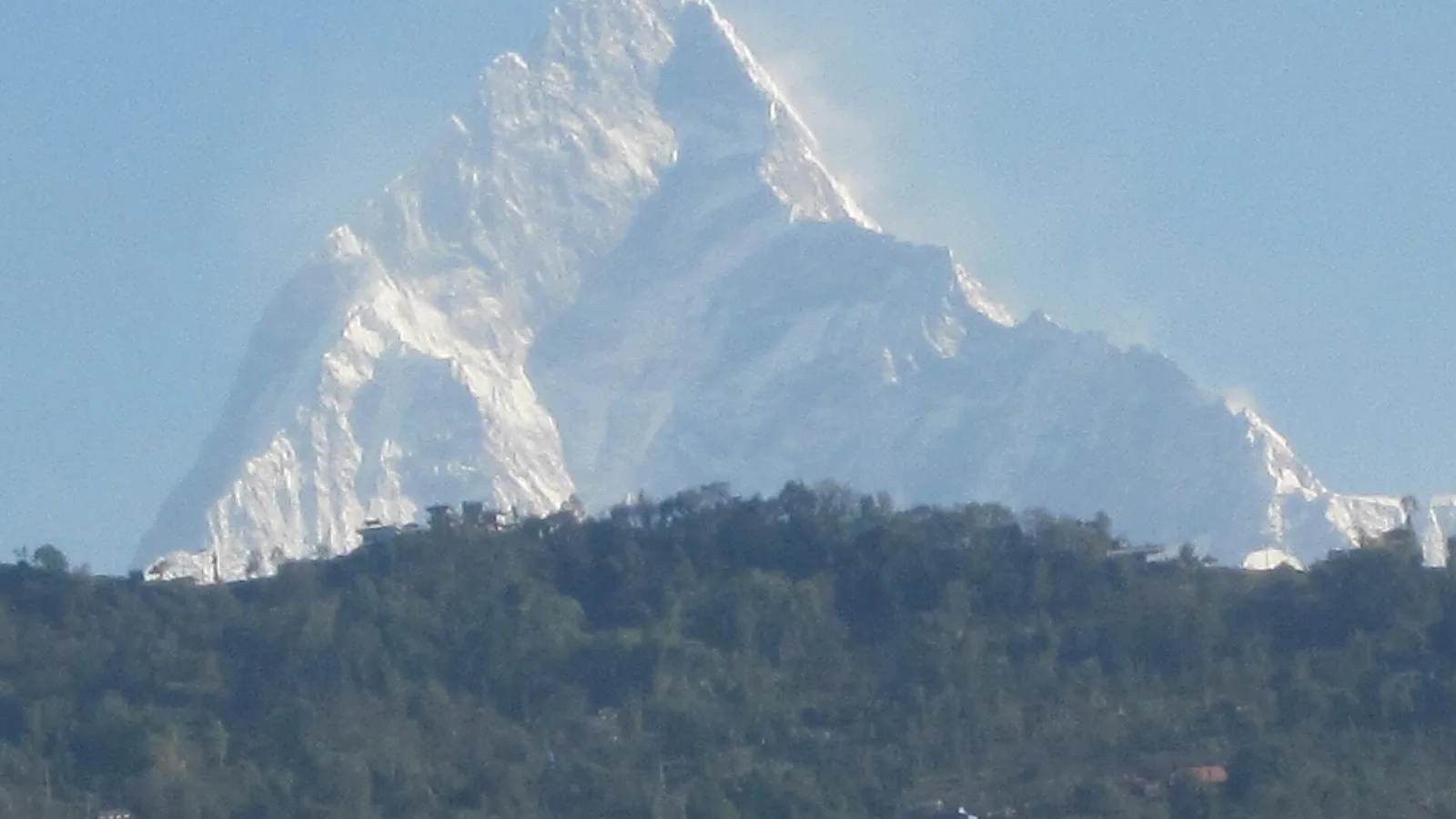
Machapuchare Is the Nepal Mountain Nobody Has Ever Been Allowed to Summit (2026)
At 22,943 feet, Machapuchare towers over the Annapurna Sanctuary, and by Nepal's own law, no one has legally set foot on its true summit since a British team turned back 150 feet short of it in 1957.
Records & People
Why some 8,000-metre peaks get climbed thousands of times and others almost never
Everest has over 12,000 ascents; Annapurna I and Kangchenjunga barely a few hundred each. The gap between the eight-thousanders is not about height.
Safety & Advisories
Is the Ghorepani Poon Hill Trek Affected by the 2026 Nepal Floods?
No — Poon Hill is an Annapurna-region trek out of Pokhara, on the far side of Nepal from the Rasuwa flood, and it is running normally. Here is why, plus the one seasonal road note for first-timers.
Latest from the desk
Records & People
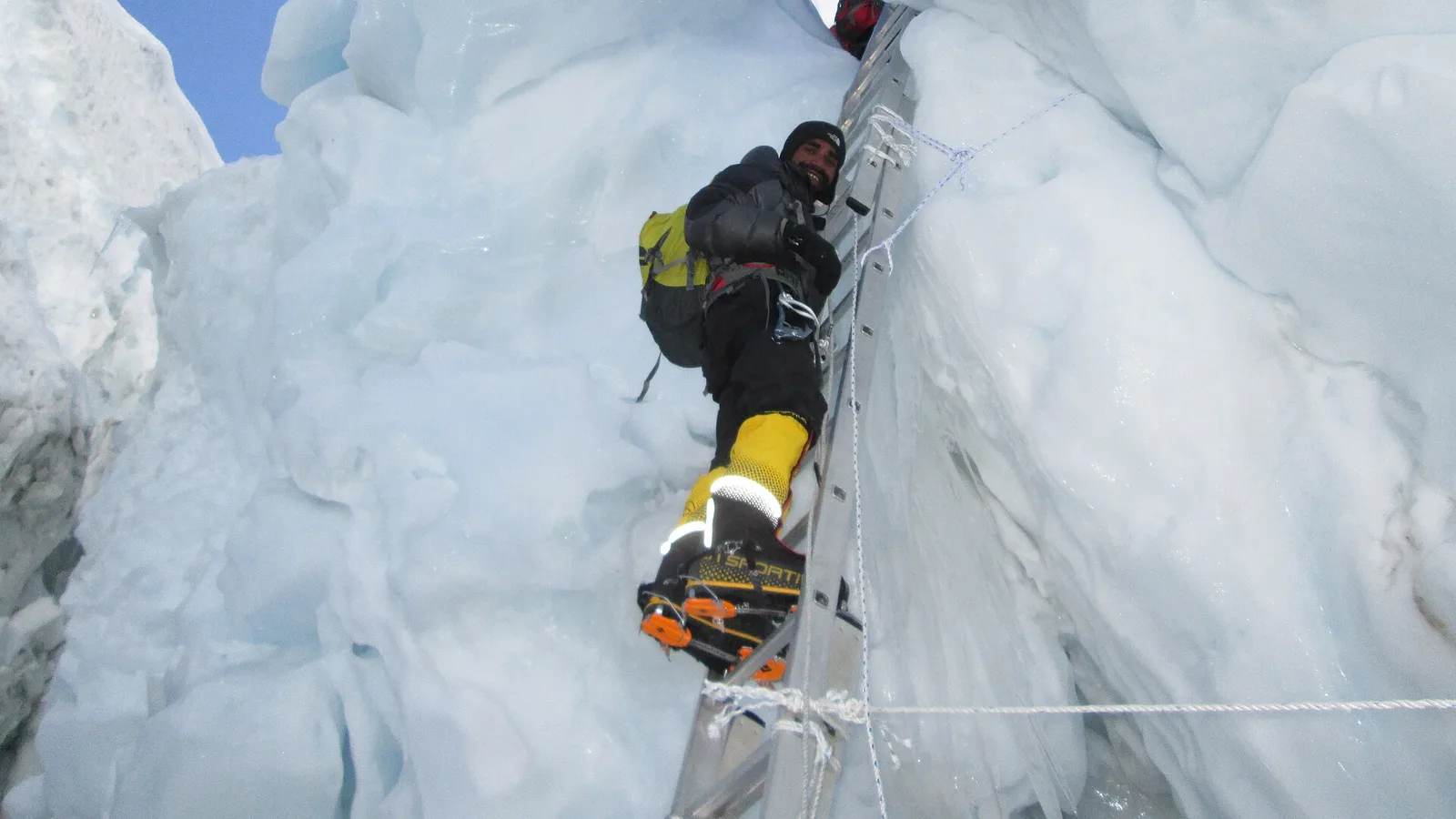
Eight Sherpas Build the Path Every Everest Climber Walks, and This Spring One Ice Tower Stopped Them for 19 Days
The Icefall Doctors fix the ladders and ropes through the Khumbu Icefall each spring, and in 2026 a 28-metre serac made it the latest route opening in years.
Records & People
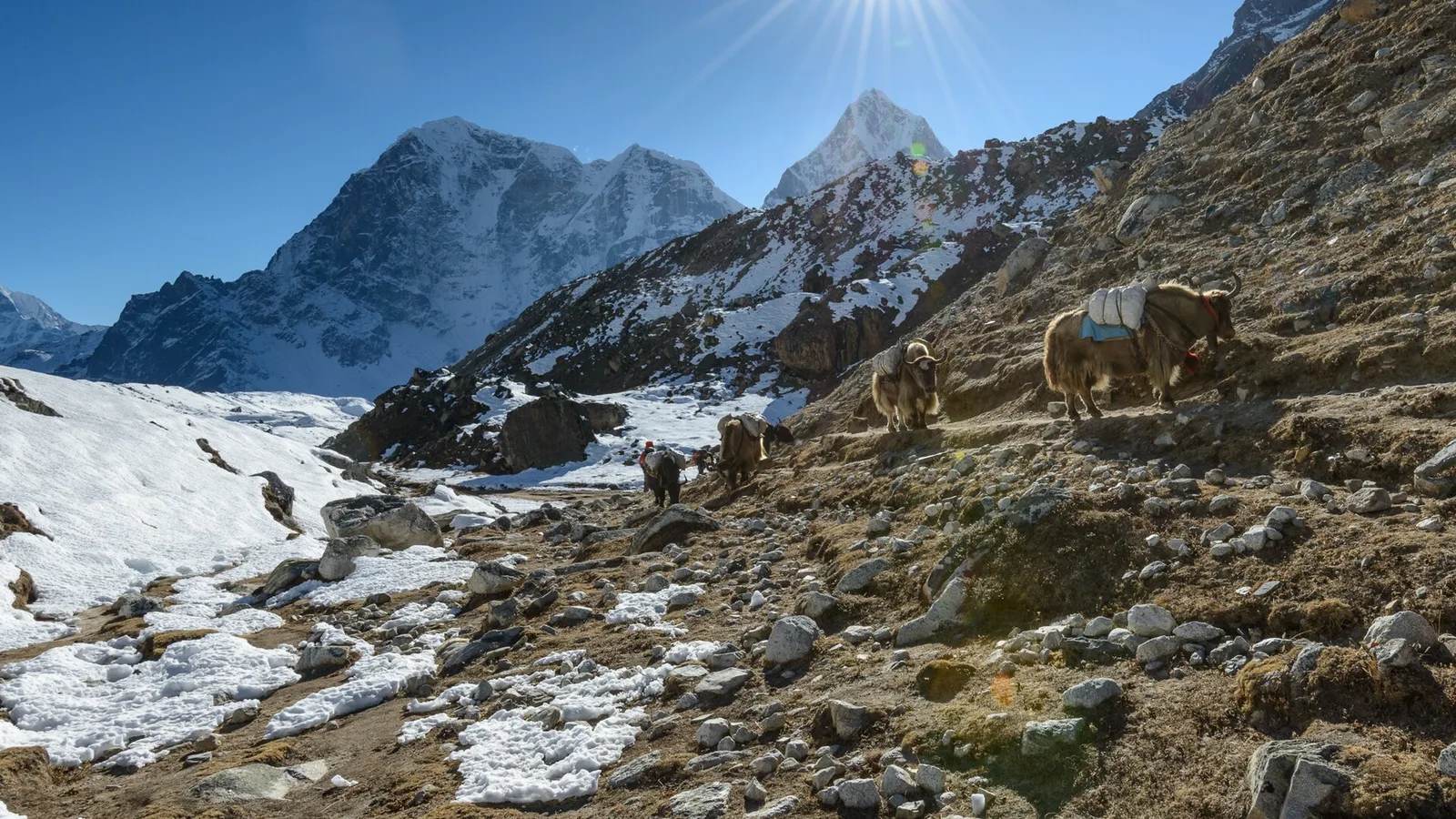
Nobody Tells You Most 'Yaks' Photographed on the Everest Trail Aren't Yaks at All
The shaggy pack animal hauling your duffel bag below about 3,500m almost certainly isn't a yak, but a dzo, a yak-cattle hybrid bred because real yaks can't handle the heat.
Permits & Rules
Nepal's Last Forbidden Kingdom Stayed Closed Until 1992, and Getting In Just Got Far Cheaper
Upper Mustang secretly hosted a CIA-backed guerrilla army and then stayed shut to every foreign visitor for another eighteen years, and Nepal has now dropped the fee that made a short visit cost the same as a ten-day one.