Nobody Tells You Most 'Yaks' Photographed on the Everest Trail Aren't Yaks at All
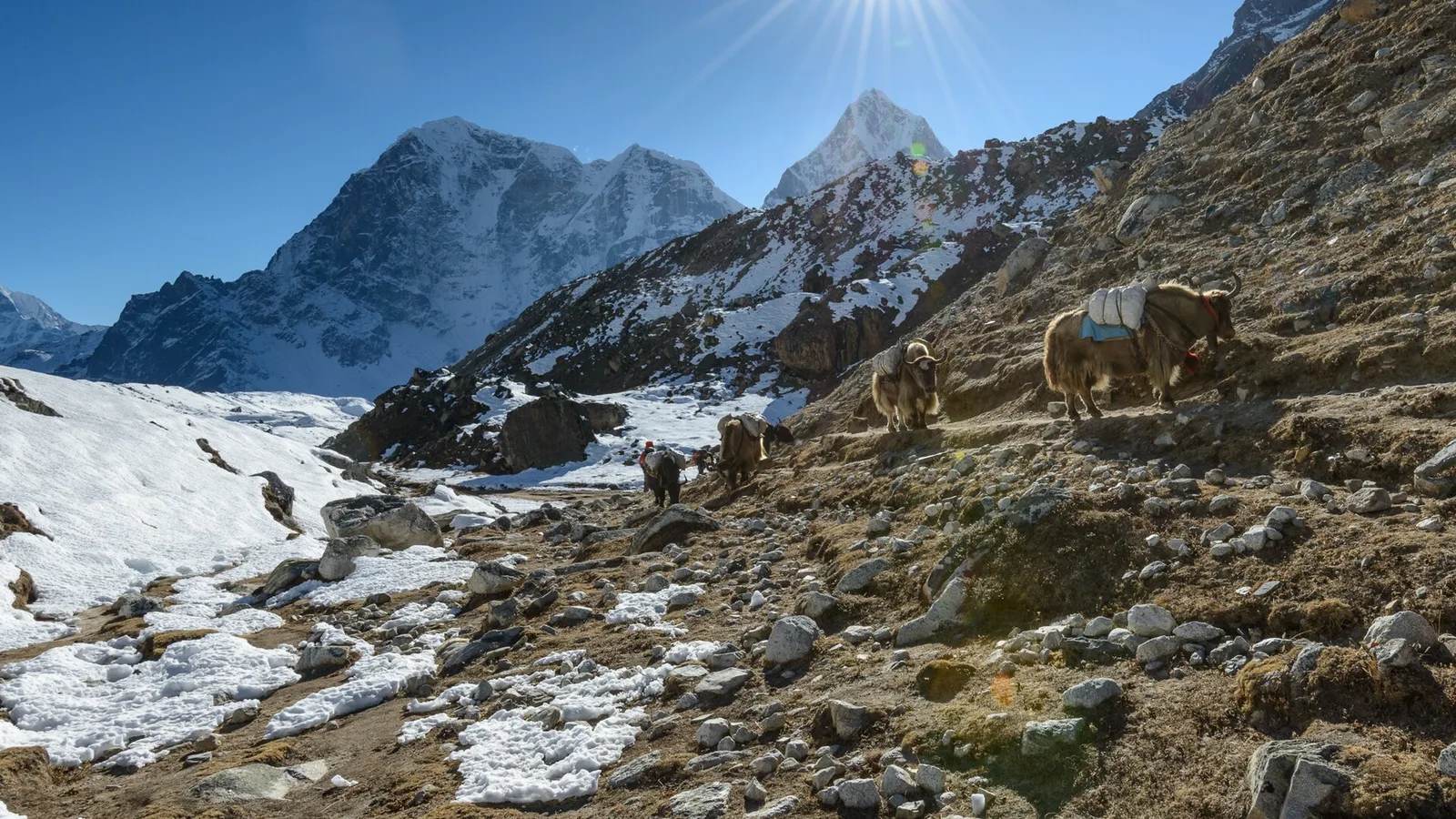
The shaggy pack animal hauling your duffel bag below about 3,500m almost certainly isn't a yak, but a dzo, a yak-cattle hybrid bred because real yaks can't handle the heat.
At a glance
- Published
- TopicRecords & People
- Verified againstWikipedia
- Treks coveredGokyo Ri Trek — 11 Days, Everest Base Camp Trek — 12 Days, Manaslu Circuit Trek — 16 Days
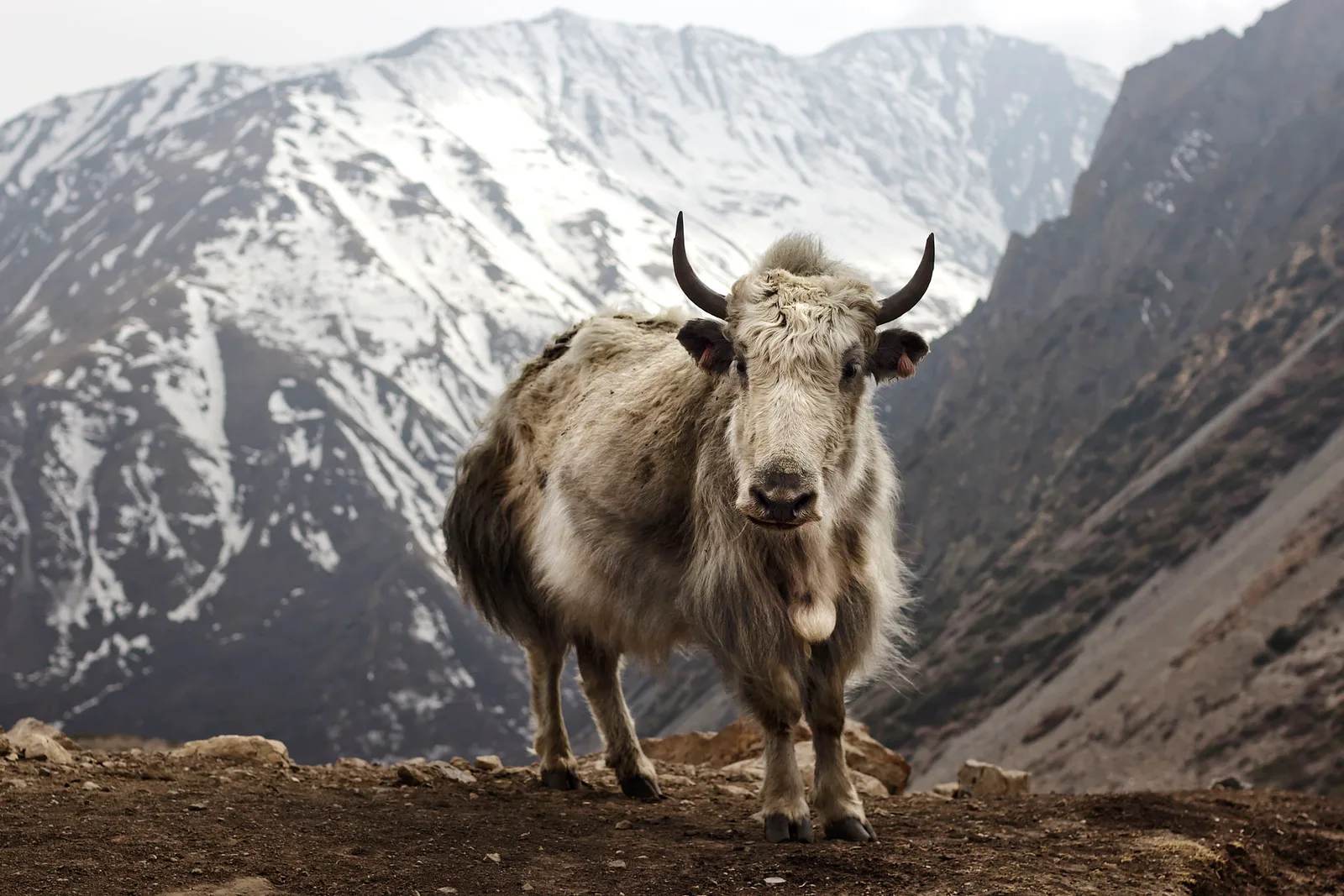
Scroll through Everest Base Camp photos and you'll see the same caption over and over: “our yak train.” But if the shot was taken anywhere below about 3,500m — Phakding, Monjo, even Namche Bazaar — the shaggy black animal hauling the duffel bags almost certainly isn't a yak. It's a dzo, and the swap happens for a very physical reason: a real yak would overheat.
Key facts
- Pure yaks (Bos grunniens) thrive only above roughly 3,000m and start struggling with heat above about 15°C
- The animal working the lower trail, from about 2,000m to 3,500m, is usually a dzo (male) or dzomo (female) — a yak-cattle hybrid
- Nepal counts more than 62,000 yaks, nak and chauri (hybrid cattle) across 28 Himalayan districts
- A female yak has its own name, a nak — it is never correctly called a “female yak”
The biology is the whole story. Yaks evolved a dense double coat and a thick layer of subcutaneous fat to survive Himalayan winters, but paired that insulation with almost no functional sweat glands. Below about 3,000m, and especially once the air warms past 15°C, a yak can't shed heat fast enough and starts to suffer — exactly the temperature band that Everest and Annapurna trekkers walk through on their first two or three days, long before altitude becomes the traveller's problem.
So herders solved it the way herders have solved altitude mismatches for centuries: they crossbred. A yak bull crossed with a local hill cow, or a nak crossed with a domestic bull, produces a hybrid suited to the middle elevations. The male is a dzo (also spelled zopkyo), the female a dzomo. Like a mule, the male is sterile; unlike a mule, the female isn't — and dzomo are prized in their own right, producing noticeably richer milk than a purebred nak, which is why butter and cheese in mid-altitude villages usually comes from a hybrid herd rather than a pure one.
| Trait | Pure yak | Dzo / dzomo hybrid |
|---|---|---|
| Typical range | Above ~3,000m | ~2,000m–3,500m |
| Heat tolerance | Poor above 15°C | Much better |
| Coat | Long, shaggy | Shorter, less hair |
| Fertility | Full | Males sterile; females fertile |
| Common trail role | High-pasture herding | Load-carrying, Phakding–Namche–Tengboche |
The imprecision runs deeper than most trekkers realise. In strict traditional usage, “yak” refers only to the male animal; the female is a nak. Guides and porters keep the terms straight because their livelihoods depend on matching the right animal to the right elevation, not out of pedantry. Lower down, on routes like the Annapurna Circuit near Chame and Pisang or the approach to Manaslu, herders often keep an even broader mixed grade across the whole 2,000–3,500m band, since the trail crosses temperate forest before climbing into high desert — so the “yak” you photograph there is layered breeding too, not a single, clean species.
None of this makes the animal on your trek less impressive. A loaded dzo still hauls 60–90kg of gear up switchbacks that leave trekkers gasping with an empty daypack. But if you specifically want a photo of a genuine, purebred yak, you have to go higher. On the Everest Base Camp trek, that means above Pheriche or Dingboche, around 4,200m and up, where dzo are gradually swapped out for the real thing. The same pattern holds on the Gokyo Ri trek, where yak herds graze the lakeside pastures above 4,700m through the season, and on the higher stages of the Manaslu Circuit once the trail clears the forest.
What this means for trekkers
What this means for you
Don't feel cheated if a guide corrects your “yak” photo to “dzo” — it's not a downgrade, it's a more useful story: a dzo train is the reason your tent, kitchen gear and duffel bags reach camp on schedule below 3,500m. Ask your guide to point out the first pure yak of the trip; on most Khumbu itineraries that happens somewhere around Dingboche, and it's a good, concrete marker of how high you've actually climbed.
Sources: Wikipedia, “Yak” and “Dzo”; Explore Himalaya, “Himalayan Yaks in Nepal: The Complete Guide”; FAO, “Yak in Nepal”; ResearchGate, “A Review on Yak Farming Practices in Nepal.”
Cover photo: valcker from Paris via Wikimedia Commons (CC BY 2.0).
Still running this season
Gokyo Ri Trek — 11 Days is running normally
NMA-certified local guides, transparent pricing, 5,000+ treks since 1998. Message us your dates and we'll sort the permits, lodges and logistics — reply within 24 hours, no obligation.
Popular Nepal treks
All treks →
Related coverage
Records & People
In 1951, an Everest Climber Photographed a Giant Footprint in the Snow. Nobody Has Fully Explained It Since.
Eric Shipton's photo of a 13-inch print near Everest sparked global Yeti mania — DNA science later traced most of the physical 'evidence' back to Himalayan bears.

Records & People
Nobody tells you what it really costs to climb Everest so I added up every dollar
Why a guided Everest expedition runs from about US$35,000 to well over US$100,000 — the permit, the oxygen, the Sherpa team and the logistics, line by line, with real 2026 numbers.
Records & People
Nepal's Gokyo Lakes Turn an Impossible Turquoise Every Autumn, and Rock Dust Is Why
Six sacred glacial lakes above Everest sit higher than almost any freshwater on Earth, and the colour that makes trekkers stop mid-stride comes down to stone ground fine enough to float.
Records & People
There Are 450-Million-Year-Old Seashells Near the Top of Mount Everest — Because It Used to Be Seafloor
The rock forming Everest's summit pyramid is marine limestone packed with ancient sea-creature fossils, laid down in a tropical ocean long before the Himalaya existed.
Latest from the desk
Permits & Rules
Nepal's Last Forbidden Kingdom Stayed Closed Until 1992, and Getting In Just Got Far Cheaper
Upper Mustang secretly hosted a CIA-backed guerrilla army and then stayed shut to every foreign visitor for another eighteen years, and Nepal has now dropped the fee that made a short visit cost the same as a ten-day one.
Industry & Tourism
Everyone Says Island Peak Costs More Than Mera Peak in 2026 — the NMA Fee Says They're Identical
Nepal's two most-climbed trekking peaks carry the exact same government permit fee this year, so the real decision between Mera Peak and Island Peak comes down to technical grade, not price.
Breaking Permits & Rules
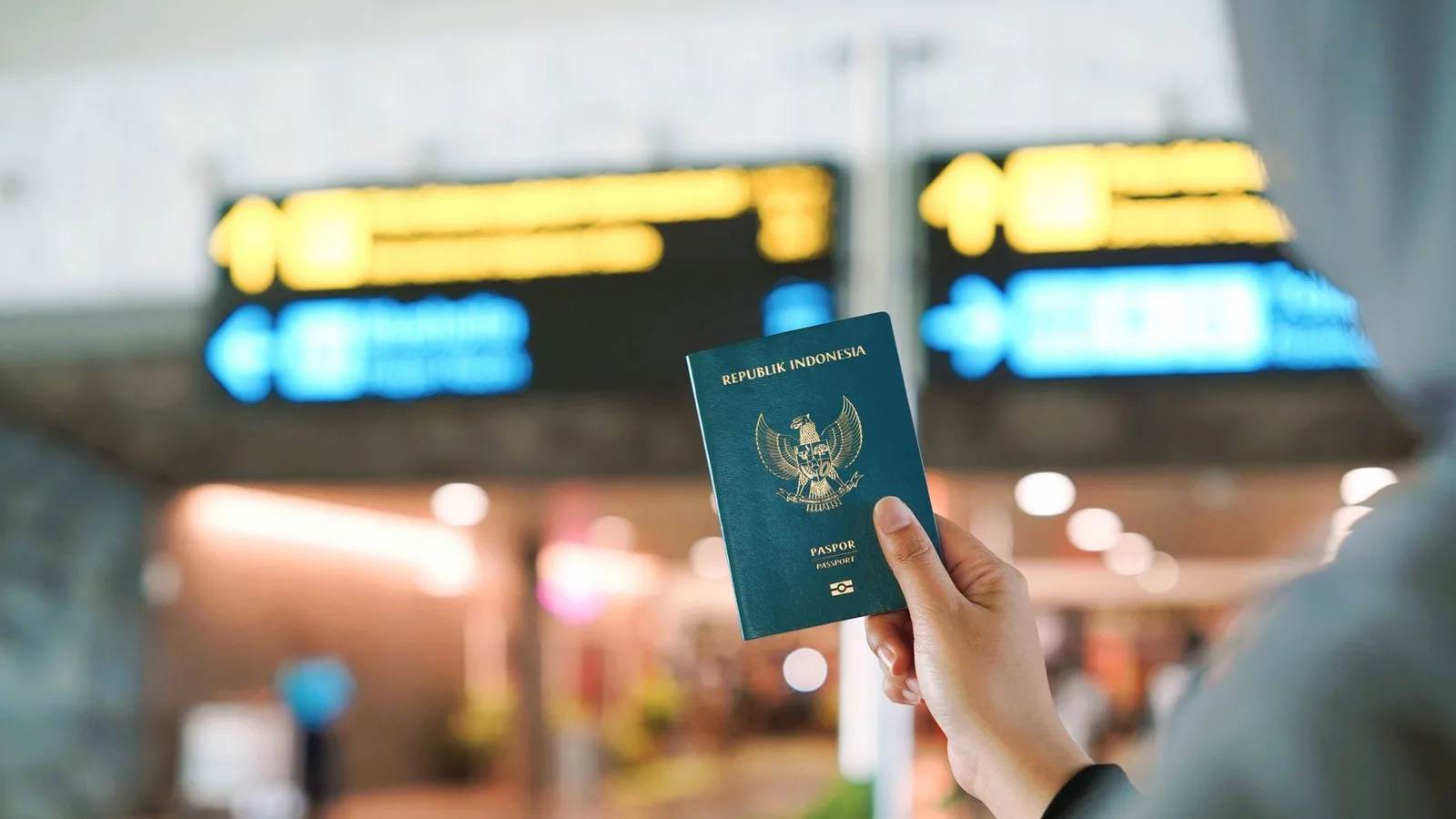
Nepal Just Proposed a Way for Tourists to Travel Without Ever Carrying a Passport
A new Department of Immigration plan would let visitors register once on a mobile app and skip the physical passport for domestic flights, money changers and trekking agencies — but for now, the paper one still needs to stay in your daypack.