
The 'yeti scalp' Hillary flew around the world, and what the scientists found
In 1960 Sir Edmund Hillary carried a Khumjung monastery relic to Chicago to test it. The answer was stranger than the myth, and it is still on show.
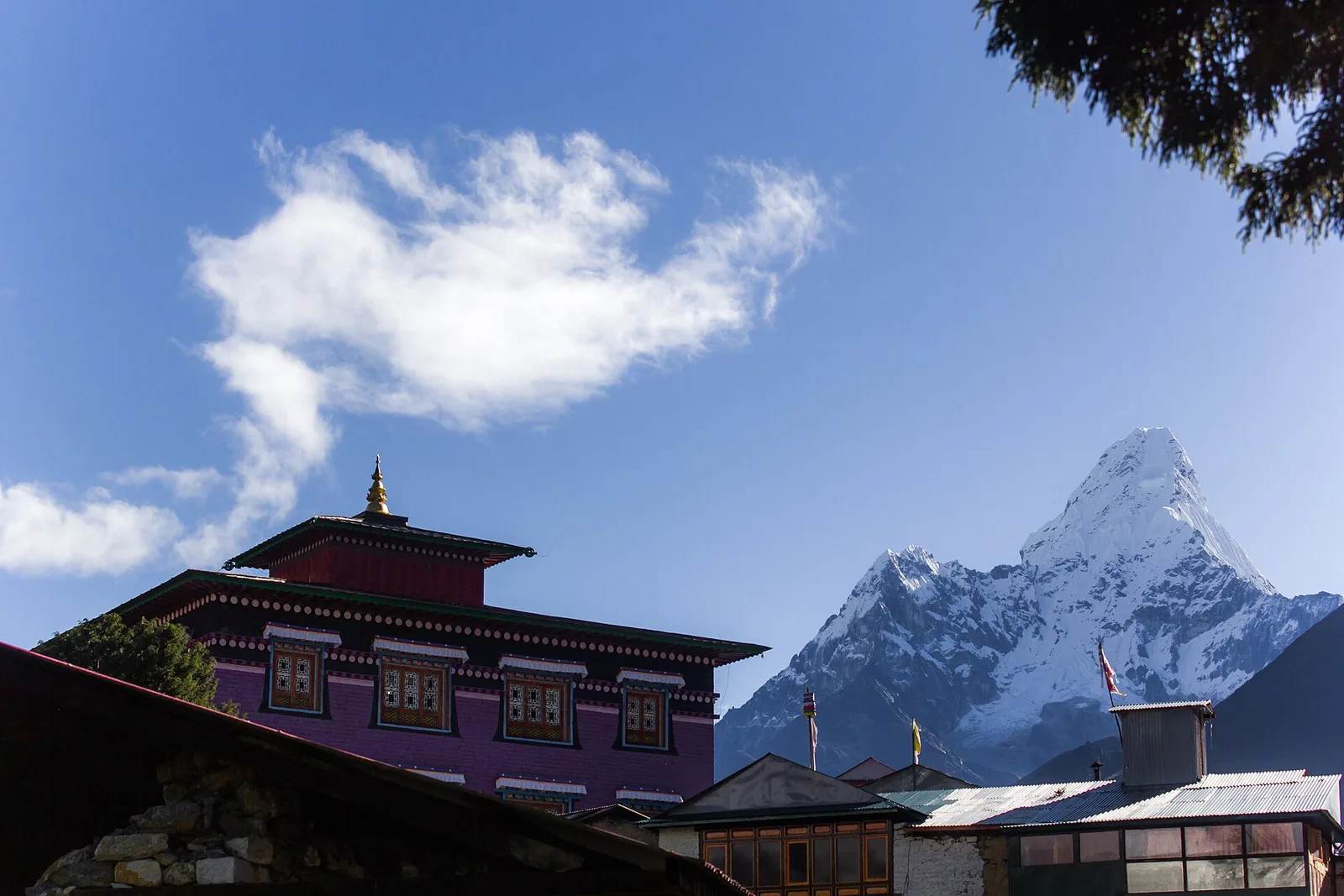
At a glance
- Published · updated
- TopicCulture & Heritage
- Verified againstAtlas Obscura; NBC News; University at Buffalo
- Treks coveredGokyo Ri Trek — 11 Days, Everest Base Camp Trek — 14 Days, Everest View Trek — 7 Days
The “yeti scalp” kept at Khumjung monastery is real, old and sacred — and in 1960 zoologists in Chicago found it was moulded from the hide of a serow, a Himalayan goat-antelope. Sir Edmund Hillary had flown it around the world with its own monk chaperone to find out. The answer was stranger than the myth, and the village still shows it to trekkers today.
Key facts
- The relic is kept at the monastery in Khumjung, a Sherpa village near Namche Bazaar, on the standard acclimatisation walk.
- Hillary borrowed it in 1960 on condition its guardian monk, Konchok Chumbi, travelled with it.
- Chicago’s Field Museum found it was made from serow hide, not a primate, and roughly 200–300 years old.
- A second relic, the Pangboche Hand, was smuggled out of Nepal in 1959; a 2011 DNA test found it was human.
How a sacred relic ended up in Chicago
Hillary took it on a 1960 expedition sent partly to hunt for the yeti, and the village let it go only with its guardian monk. The expedition, backed in part by the World Book Encyclopedia, brought the world’s most famous mountaineer — already known for the 1953 first ascent of Everest — into the Khumbu to look for evidence.
Khumjung had kept the half-football-shaped scalp for generations as a protective charm and was reluctant to part with it. Hillary struck a deal: he would fund improvements to the village school and monastery, and the scalp would travel only with the monk Konchok Chumbi watching over it. It went by way of Paris to the Field Museum in Chicago, then on to scientists and reporters across the US, Britain, Europe and Japan.
What the scientists found
The scalp had been moulded from animal hide, most likely a serow, and had probably served as a template for ceremonial masks. It was genuinely old — the 200-to-300-year estimate held up — just not the evidence of an undiscovered ape that villagers and visiting Westerners had hoped for.
The other relic: the Pangboche Hand
Two trekking days up the valley, the monastery at Pangboche kept a mummified hand, and part of it left Nepal in a film star’s luggage. During the yeti expeditions funded by the Texas oilman Tom Slick between 1957 and 1959, a finger fragment was taken from the hand and smuggled out of the country in 1959 by the actor Jimmy Stewart, hidden in his wife’s luggage.
For half a century it was cited as physical yeti evidence. In 2011 geneticists at the University of Edinburgh tested the fragment’s DNA and found it was human.
What DNA says about the yeti now
Every piece of physical evidence tested so far has turned out to be a known animal. In 2014 the Oxford geneticist Bryan Sykes analysed 30 hair samples from alleged yeti sightings across the Himalaya and Tibetan Plateau; they came from bears, cattle, horses, even a porcupine and a raccoon.
In 2017 Charlotte Lindqvist’s team at the University at Buffalo tested a separate set of nine specimens and traced eight to Asian bears and one to a dog — along the way identifying the Himalayan brown bear as an old, distinct and barely studied lineage. We tell that half of the story, and the 1951 footprint photograph that started it, in the piece on the Shipton photo and what DNA found.
| Relic / sample | Year tested | Actual source |
|---|---|---|
| Khumjung monastery scalp | 1960 | Serow (Himalayan goat-antelope) hide |
| Pangboche Hand finger fragment | 2011 | Human |
| 30 hair samples, Himalaya and Tibet (Sykes) | 2014 | Bears, cattle, horse, porcupine, raccoon |
| 9 specimens (Lindqvist) | 2017 | Eight Asian bears, one dog |
What this means for trekkers
You can see the scalp yourself, and you will walk past it anyway. Khumjung, at about 3,790 metres beneath the sacred peak of Khumbila, is the standard acclimatisation walk out of Namche Bazaar, and the monastery is a five-minute stop on the trail toward the Everest View Hotel.
What this means for you
You will not find a yeti up there, but the real animal behind the legend is arguably as impressive: a rare, high-altitude brown bear population still barely studied. Khumjung sits on the acclimatisation loop of our Everest Base Camp Trek and the shorter Everest View Trek, and Pangboche is on the main trail between Tengboche and Dingboche. It is a short side trip from the Gokyo Ri Trek too — see Base Camp, Gokyo and the Three Passes compared, and for the people who have guarded these relics for generations, who the Sherpa actually are.
Sources: Atlas Obscura, “The Yeti Scalp of Khumjung”; NBC News; University at Buffalo (Lindqvist et al., 2017).
Cover photo: AngeshRathi via Wikimedia Commons (CC BY-SA 4.0). Section photos: Amel Uzunovic via Pexels (Pexels licence); Kyle Roxas via Pexels (Pexels licence).
This story is part of Travel Himalaya Nepal’s guide to Nepal’s culture and living heritage.
Still running this season
Gokyo Ri Trek — 11 Days is running normally
NMA-certified local guides, transparent pricing, 5,000+ treks since 1998. Message us your dates and we'll sort the permits, lodges and logistics — reply within 24 hours, no obligation.
Popular Nepal treks
All treks →
Related coverage
Festivals & Events
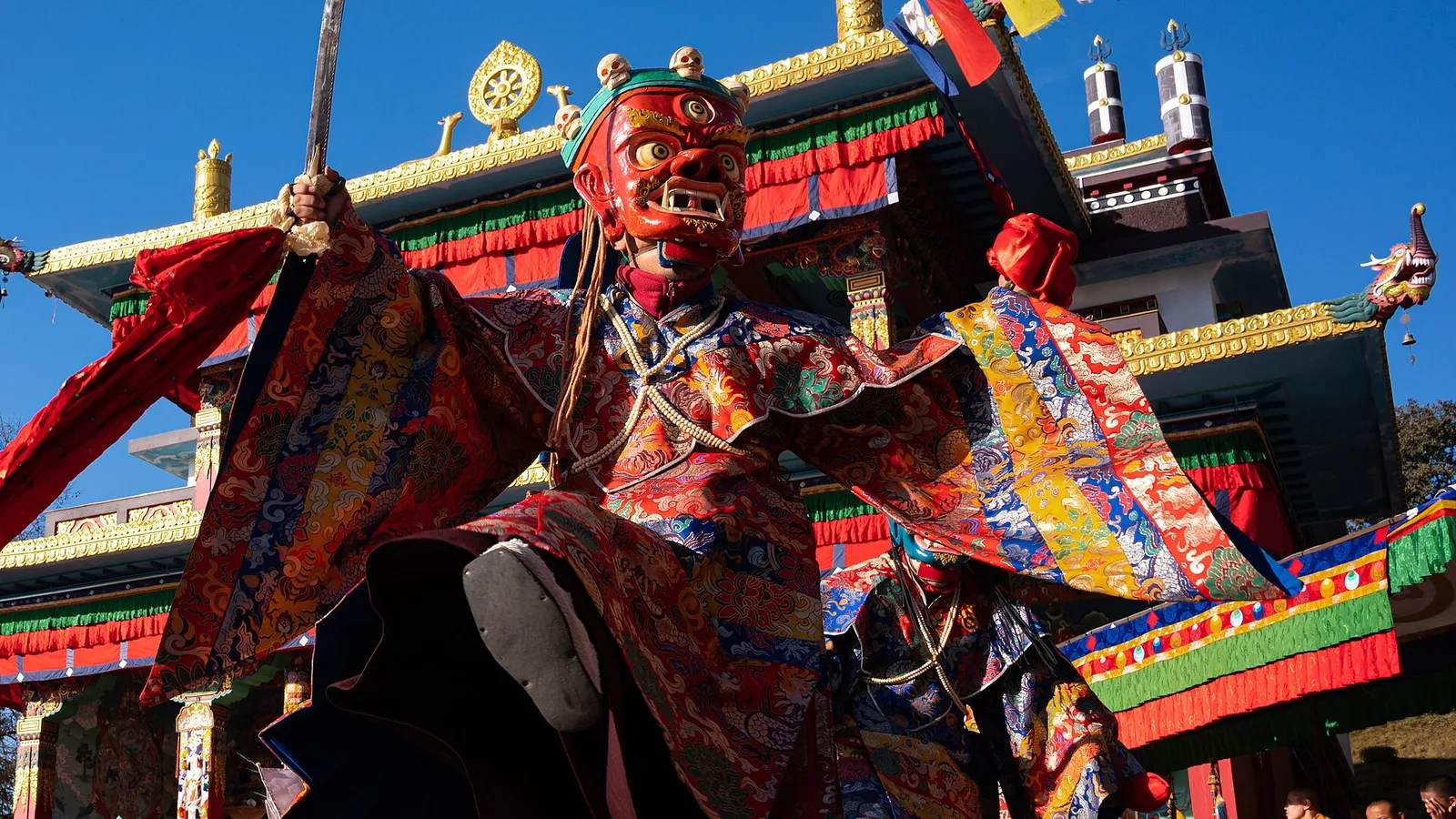
Losar 2026: Nepal's Tibetan New Year and Its Masked Monastery Dances
The Tibetan-Buddhist New Year of Nepal's high country, explained.

Safety & Advisories
Nepal has 21 glacial lakes scientists rate as dangerous, and here is where they are
A region-wide survey flagged 47 Himalayan lakes as potentially dangerous, 21 of them in Nepal. Where they are, and what they mean for your trek.
Records & People
Everest is still growing, and a river that stole another river is pushing it up
A 2024 Nature Geoscience study found a river capture 89,000 years ago is still lifting Everest by up to about 2 mm a year, on top of the tectonic uplift.
World Destinations
The World’s Best National Parks to Visit in 2026: A Continent-Hopping Bucket List
From Torres del Paine to the Serengeti to Nepal’s own Everest and Chitwan — nine UNESCO-grade parks worth planning a whole trip around, and the season each is best.
Latest from the desk
Breaking Safety & Advisories
An Avalanche Buried Himlung Himal's Base Camp in Nepal, and Ten Climbers and Staff Are Missing
An avalanche hit Himlung Himal's base camp in Nepal's Manang district on 27 September, and rescuers are searching snow for ten missing climbers and staff.

Money & Insurance
You Could Be Owed Cash From a $167 Million Visa and Mastercard Settlement, Here's How to Check
Visa and Mastercard are paying $167.5 million after allegedly blocking cheaper ATM fees, and the claim deadline is 10 February 2027.
Wildlife & Nature
Chitwan or Bardia, here's which Nepal safari you should actually book
Nepal's 2026 tiger census found record numbers in Chitwan and a rare decline in Bardia, and it changes the honest answer to which safari to book.