
内容速览
Cold and thin air do not break trekking gear, they stop it working. What fails above 4,000m, at what altitude, and the four items to rent instead of buy.
Eight seasons carrying other people’s bags taught me one thing about gear, and it is not the thing the shops tell you. Kit almost never breaks. It quietly stops doing its job, somewhere above 4,000 metres, and the person carrying it assumes they did something wrong.
They did not. The cold, the thin air and the dryness simply took away the conditions the thing needed to work. A stove that will not light, a power bank reading empty at dawn, a down jacket that has gone flat by day six — none of those is a broken object. They are all the same story told three ways.
I grew up in Syabrubesi, at the Langtang road-head, and started portering at seventeen. That is most of my qualification here. I have hauled the expensive duffel that fell apart and the cheap one that did not, and I have watched a lot of brand-new kit come back down worn twice.
Some links below go to Amazon and we earn a small commission. The rental advice earns us nothing, which is exactly why it comes first.
Four things go wrong, and always in the same order
Everything in this article is one of four forces. Cold takes your gas pressure and your battery capacity. Thin air makes fuel vaporise badly and stops anything drying. Dryness works on skin, lips and glue. Ultraviolet climbs about 12% for every 1,000m, per the World Health Organization — so at Base Camp you are standing under roughly 60% more of it than at sea level.
None of it is dramatic, and that is the whole problem. It is gradual enough to feel like your fault.
The stove goes first, and it is not close
If you carry your own stove, this fails before anything else. A canister works because the liquid inside boils into gas. Straight n-butane boils at −0.5°C. Isobutane at about −12°C. Propane at −42°C. Below its boiling point the liquid will not vaporise fast enough to hold pressure, and your flame goes to nothing.
Gorak Shep in November runs −15°C to −20°C at night. A plain butane canister is not struggling up there, it is dead. Even a decent 80/20 isobutane–propane blend loses about 38% of its vapour pressure at −5°C against 0°C, going by the manufacturer’s own figures at Cascade Designs. Altitude piles on: butane’s vaporisation already falls away above about 2,100m.
Honestly though — do not bring one. Every lodge on the Everest and Annapurna trails cooks, and sells boiled water. Carrying a stove up the Khumbu to save on tea is a lot of weight to prove a point.
Your power bank is not dead, it is cold
Lithium-ion loses real capacity in the cold. Published work puts it at roughly 20–30% of rated capacity, with the steep drop below about −10°C. So the bank that reads empty at 6am and half full by lunchtime has not failed. It was never empty. It was holding a third less than the number on the side, and it hands that back as the day warms.
The fix is free. Sleep with the power bank, your phone and any spare cells inside the sleeping bag. Not in the tent, not in the pack — in the bag, against you. That one habit solves most of what people mistake for broken electronics on this trek.
It is also why a rechargeable headlamp core beats disposable cells up there. You can warm it and top it up.
Do not buy a down jacket for one trek
Here is the unprofitable bit, early, where it belongs.
Down works by trapping air in its loft. Damp flattens that loft, and above 4,000m nothing dries — the air is cold, the pressure is low, and the moisture coming off you each night stays in the jacket. By day six a jacket that felt enormous in the shop is visibly thinner.
Rent it. A couple of dollars a day in Thamel or Pokhara, wear it for a fortnight, hand it back. The rental racks carry exactly the right jacket for exactly the right length of time, and I have seen enough $400 jackets come off the trail and go into a wardrobe forever to be quite firm about this.
Same for the sleeping bag. A four-season bag is bulky, expensive and no use to you at home. The one people get wrong in the other direction is buying a −30°C bag for a trek that tops out in a heated lodge — that is a lot of money and volume for a night you will never have.
If you want one thing of your own in that system, make it a liner. Light, adds genuine warmth, and keeps a rented bag clean.
Boots fail at the join, not the upper
Uppers almost never give way. Soles come apart, because the adhesive holding midsole to outsole is what dislikes cold, dryness and being flexed over rock all day. The classic is a good pair that has sat in a cupboard for three years — the glue has aged quietly, and the trail finds it on the descent.
The other half is fit, and it is the one that gets people. Feet swell at altitude and over long days going down. Boots that fit beautifully in a shop at home are half a size too small on day nine off Kala Patthar. That is where the black toenails come from. Buy with room, and walk them properly before you fly — blisters are the single most common thing I have watched ruin someone’s week, and they are entirely preventable.
Socks are the cheapest thing that actually works
Socks are the one item worth real money and the one nobody budgets for. Two or three pairs of merino, rinsed in a bucket, beat six pairs of cotton, because merino keeps insulating while damp and cotton does the exact opposite against your skin.
It is a sixty-dollar decision protecting an $1,850 trek. Buy the good ones. It is fine, this is the one place to spend.
One frozen night ruins a water filter
Hollow-fibre filters — the type in nearly every squeeze and bottle filter — are destroyed by freezing. The fibres crack, the filter still looks completely fine, and it now passes precisely what you bought it to remove. There is no way to see it and no way to test it on the trail.
Above 4,000m either the filter sleeps in your bag with the batteries, or you carry chemical treatment instead. Chlorine dioxide drops weigh nothing and cannot freeze-fail. What we actually recommend is on the water treatment page.
Buy it, rent it, or leave it at home
| Item | Verdict | Why |
|---|---|---|
| Down jacket | Rent | A fortnight of use, then a wardrobe. |
| Four-season sleeping bag | Rent | Bulky, costly, no use at home. |
| Trekking poles | Rent | Cheap to hire, a nuisance to fly with. |
| Duffel for the porter | Rent | It needs to survive a jeep roof, not look good. |
| Boots | Buy | Fit is everything and must be broken in at home. |
| Merino socks | Buy | Cheapest protection on the whole list. |
| Headlamp | Buy | Rechargeable core, and you will use it again. |
| Sun protection | Buy | UV is ~12% stronger per 1,000m. Not optional. |
| Stove | Skip | The lodges cook. It is weight for nothing. |
In plain words, because it is the whole article: rent the down jacket, the sleeping bag, the poles and the duffel. Buy the boots, the socks, the headlamp and the sun protection. Leave the stove at home.
We run the 14-day Everest Base Camp trek from $1,850pp — licensed guide, porters, permits and every lodge handled. Our guides carry the spares, and they will tell you straight what to rent in Kathmandu rather than buy at home.
See dates & price →What I actually watch go wrong
Never the exotic failures. It is a three-year-old boot letting go on the descent, a power bank that reads empty at dawn, and a bag rated for a cold nobody on that itinerary will ever meet. Three problems, none of them solved by spending more money, and all three sorted before you leave home.
There is a fourth I keep seeing, and it is not gear at all. People insure the trip and forget the altitude. Most standard travel policies stop covering you somewhere between 3,000m and 4,000m, which is under every pass on this list. Check the number written in your policy against the number on your itinerary — the Nepal trekking insurance guide covers how.
The verdict
Buy the four things that touch your body and have to fit — boots, socks, headlamp, sun protection. Rent the four bulky things that only matter for a fortnight. Sleep with anything that holds a charge. Assume nothing dries above 4,000m and pack a system that still works wet.
Do that and gear stops being something you think about, which is the point of all of it. The list is short because it should be.
At what altitude does gear actually start failing?
Around 4,000m for most people. Below that the cold and dryness are an inconvenience. Above it, canister stoves lose pressure, batteries lose capacity, and nothing dries overnight.
Can I rent good gear in Kathmandu or Pokhara?
Yes, and for a single trek it is the better call on down jackets, four-season sleeping bags, poles and duffels. The stock is plentiful and generally sound. Our guides will point you at the right shops when you land.
Why does my power bank die at Base Camp?
It has not died. Lithium-ion loses roughly 20–30% of rated capacity in the cold, with the sharp drop below about −10°C. Sleep with it inside your sleeping bag and most of it comes back.
Will a butane canister work at Everest Base Camp?
No. Plain n-butane stops vaporising at about −0.5°C and Gorak Shep nights run −15°C to −20°C in November. An isobutane–propane blend does better but still loses around 38% of its vapour pressure at −5°C. The lodges cook, so most trekkers need no stove at all.
Do I need special boots for Everest Base Camp?
No, but they must fit with room for swelling and be broken in before you fly. Sole delamination on older boots and toenail damage on long descents are the two failures we see most.
Is my normal travel insurance enough?
Usually not. Many policies cap trekking cover between 3,000m and 4,000m, and Base Camp is 5,364m. Check the altitude limit written into the policy itself, not the marketing page.
Keep reading
Tell us the trek and the month and we will send back an honest list — including what to leave at home and what to rent when you land. No obligation, and we will say so if a cheaper trek suits you better.
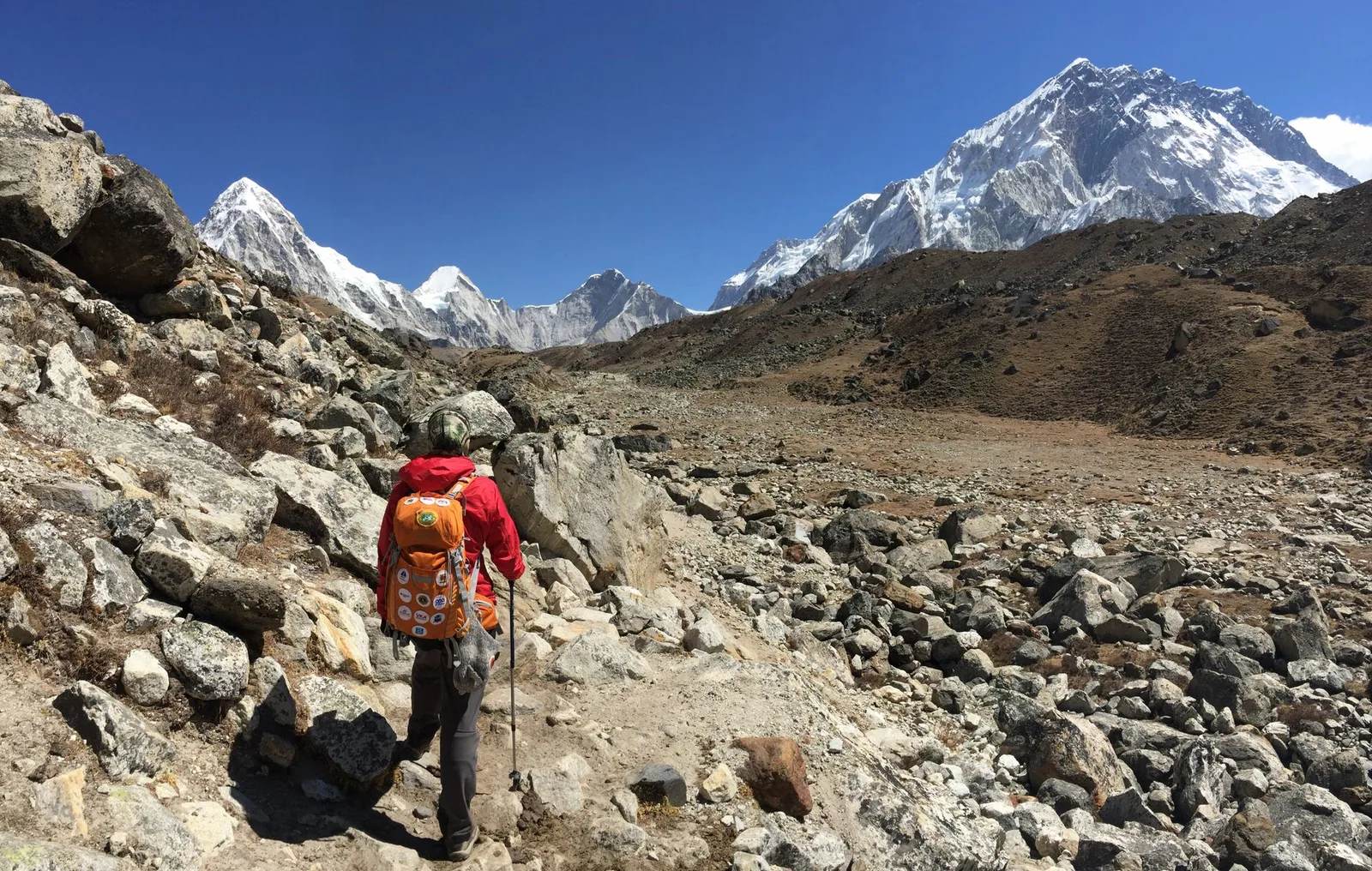
Ask us your gear question →Featured image: Sherine via Pexels.
As an Amazon Associate we earn from qualifying purchases, at no extra cost to you.

撰文
Prakash Tamang我们是常驻博卡拉、经NMA认证的徒步向导。自1998年以来,已在安纳普尔纳与珠峰地区带领超过5,000次徒步——这里的每一句话都源自山路。 More from this author →
分享这篇文章
准备好出发了吗?
从读到它,到站上它
我们常驻博卡拉的向导自1998年以来一直从事此行。告诉我们您的日期与体能水平——我们将为您打造完美行程。免费,无任何义务。
Why trek with our licensed agencyFree Trekker's Insider Guide
Permits, packing lists, cost breakdowns — no fluff.
We send one useful email. You can unsubscribe anytime.