
Everest Base Camp: Trek It or Fly It? The Honest 2026 Cost, Time and Safety Comparison
A helicopter can put you at Everest Base Camp in one day for about the same group price as the trek. Here's what the extra 9-14 days actually buy you, according to CDC altitude-risk guidance and our own 2026 pricing.

At a glance
If you have two weeks and can walk five to six hours a day, walk. If you have one day, a work schedule that won't bend, or a health condition that rules out two weeks at altitude, a helicopter can put you on the ground at Everest Base Camp and back in Kathmandu by dinner — for a price per person that, at group rates, is barely different from the trek itself. The real difference between the two options isn't really the view from the ground. It's acclimatization, and how much altitude risk you're willing to accept to save twelve days.
Key facts
- Classic Everest Base Camp trek: 10–15 days, from $1,100pp in a group of eight, walking both ways
- Helicopter day tour: 1 day, from $1,220pp, no trekking and no acclimatization at all
- Hybrid option — trek in, fly out: 10 days, from $1,900pp
- The CDC ranks rapid ascent above roughly 3,400m as its highest-risk category for acute mountain sickness — Everest Base Camp sits at 5,364m
The real numbers, side by side
Every price below is what we actually charge for the route in 2026, at both solo and group-of-eight-plus rates, so you can see exactly what the extra days — or the extra altitude risk — cost.
| Option | Days | From (group 8+) | Solo |
|---|---|---|---|
| Helicopter day tour | 1 | $1,220 | $1,680 |
| Heli-assisted (trek in, fly out) | 10 | $1,900 | $2,600 |
| Classic trek | 10 | $1,100 | $1,520 |
| Classic trek | 14 | $1,350 | $1,850 |
| Luxury classic trek | 14 | $3,100 | $4,200 |
The pattern is worth sitting with: the one-day heli tour isn't actually the budget option — per day on the ground, it's by far the most expensive way to see Everest. The classic trek, taken in a group, is the cheapest per person at any length. The hybrid sits in between, buying you a guaranteed return date without depending on Lukla's flights, which are grounded by weather often enough that it's a real planning risk on its own.
Why the helicopter's real cost is altitude risk, not money
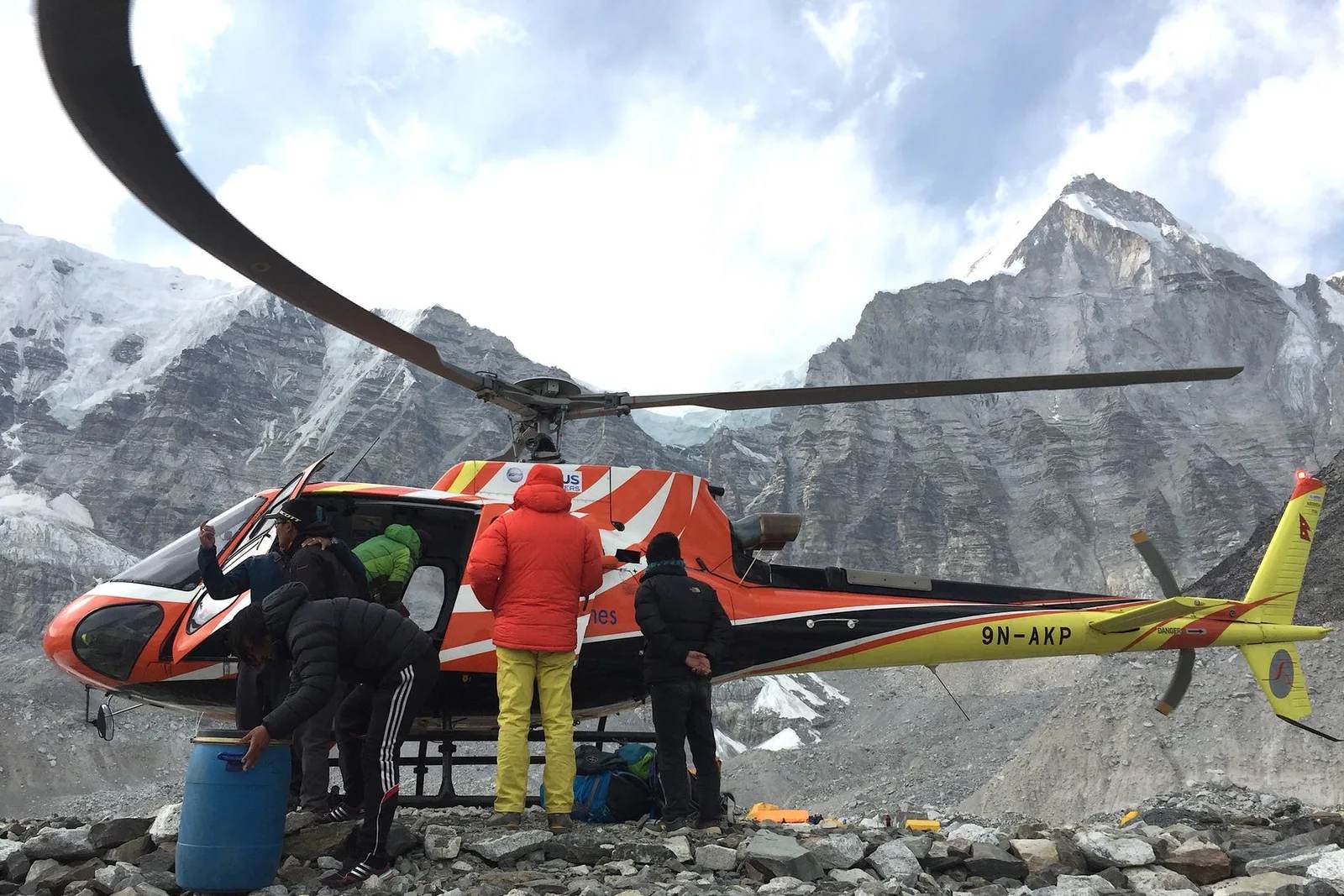
The CDC's Yellow Book puts rapid ascent above roughly 3,400 metres in its highest-risk category for acute mountain sickness, the point where it recommends preventive medication be considered with a low threshold. A helicopter from Kathmandu (1,400m) to Everest Base Camp (5,364m) or the Kala Patthar viewpoint (5,545m) covers that entire gain in under an hour — there is no version of a same-day heli tour that includes real acclimatization. Operators manage the risk by keeping ground time short, often 15–30 minutes, and by carrying oxygen, but neither of those substitutes for the walk-high-sleep-low pattern that actually lets your body adjust.
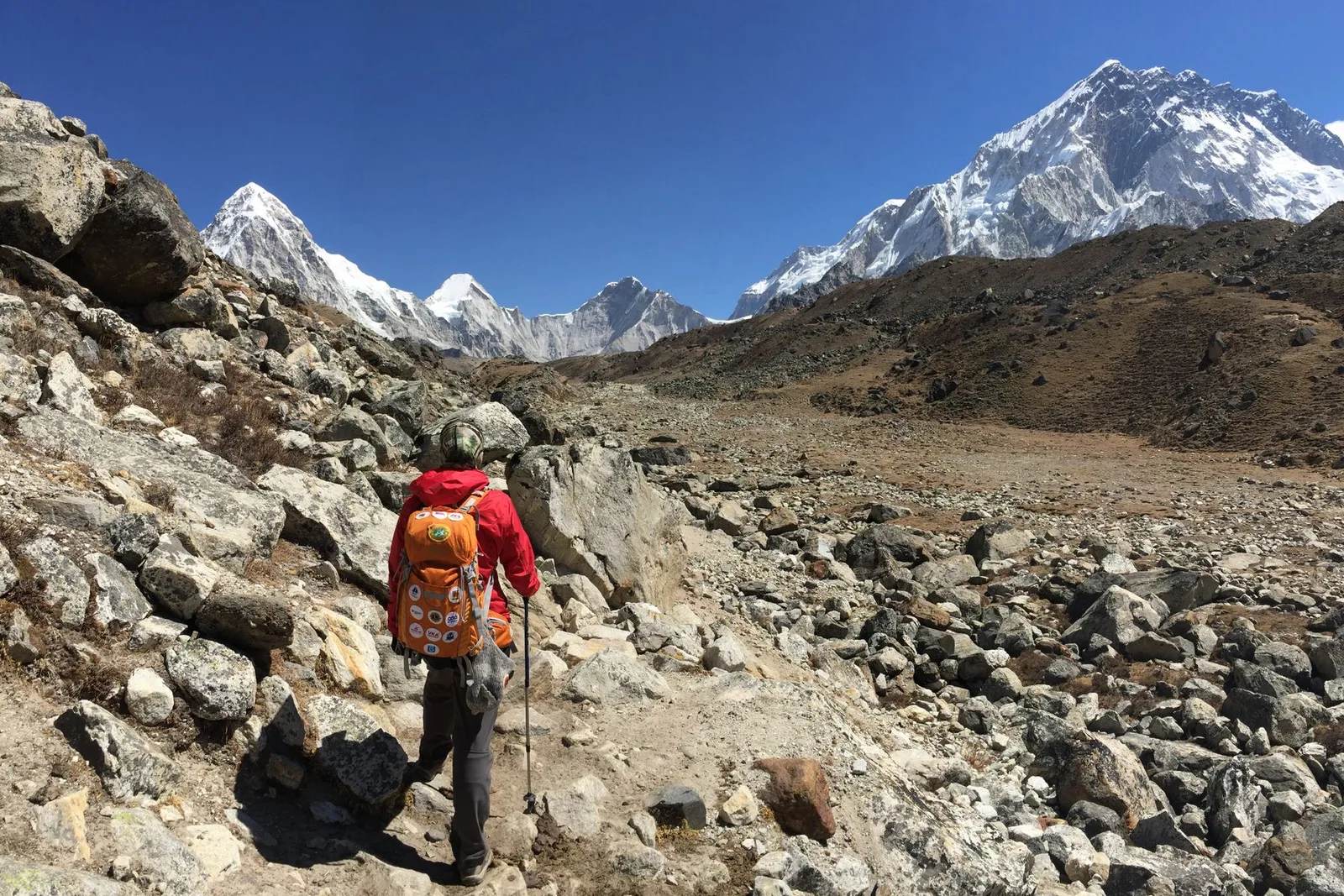
A classic trek builds that adjustment in by design. Our Everest Base Camp itineraries schedule rest days at Namche Bazaar (3,440m) and Dingboche (4,410m) specifically so your body climbs in stages instead of one jump — the entire reason the trek takes 10–15 days instead of 3 or 4 is acclimatization, not distance. The hybrid option keeps the acclimatized approach on the way in, then uses the helicopter only for the way down, which is the lower-risk direction to skip.
Who each option actually suits
The heli day tour suits travelers with a hard time limit — a business trip extension, a one-day gap in a longer Nepal itinerary — or anyone medically advised against sustained exertion who still wants to see Everest up close. It does not suit first-time high-altitude travelers looking for the safest option, or anyone traveling on a tight budget, since the per-day cost runs roughly four to five times the group trek rate.
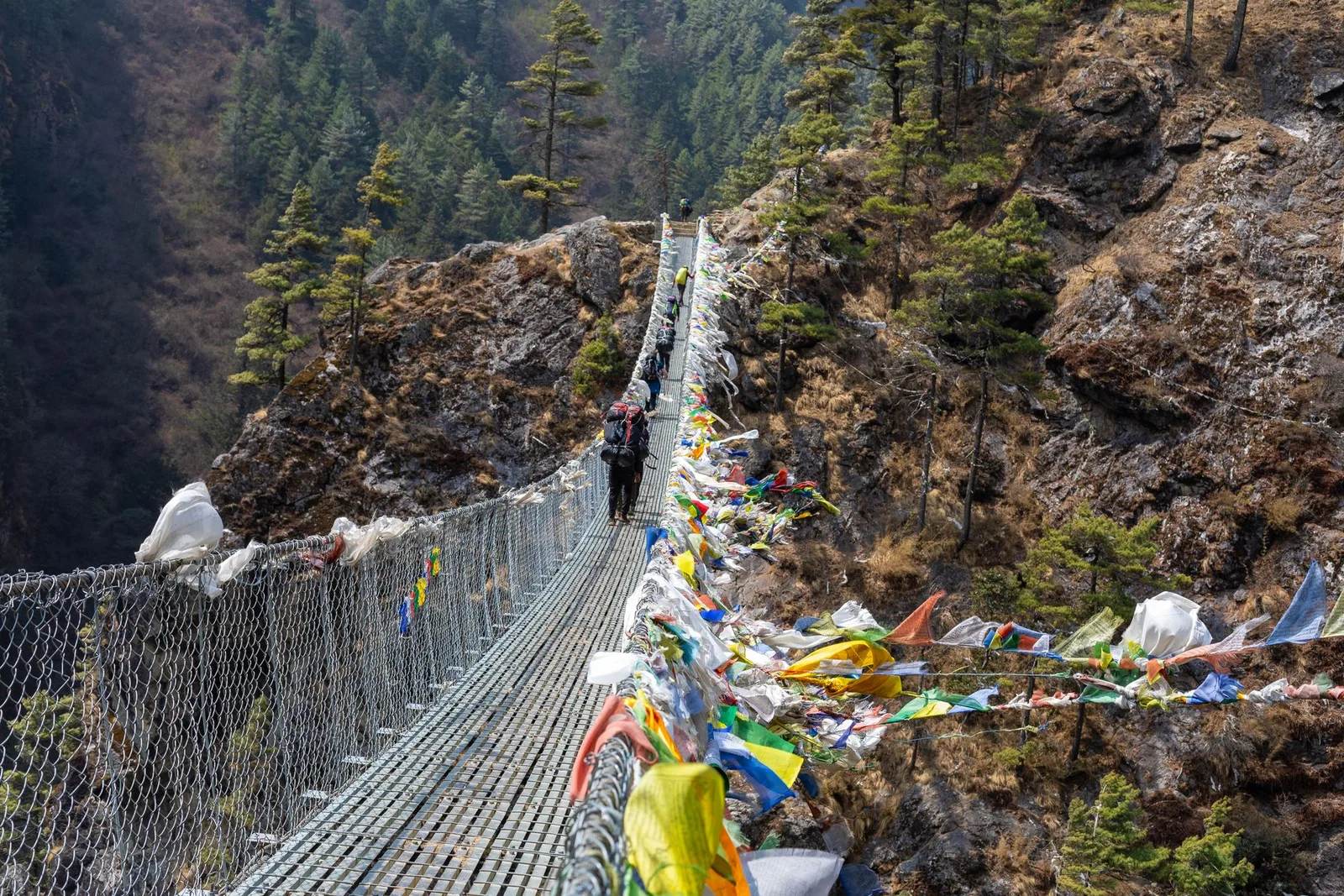
The hybrid — trek in, fly out — suits trekkers who want the acclimatized approach and the village experience but can't spare the multi-day walk back down, or who want a fixed return flight rather than relying on Lukla's schedule twice. The classic trek suits most people booking Everest Base Camp: it's the cheapest per person in a group, it carries the lowest altitude risk of the three, and — this is the part a helicopter genuinely can't sell you — it's most of what people actually come to Nepal for. The Sherpa villages, the suspension bridges, the slow climb through the Khumbu, are the trip, not the obstacle between you and the base camp sign.
What this means for your booking
Choose the helicopter only if your timeline genuinely doesn't allow two weeks — and if you do, ask your operator about their oxygen and ground-time protocol before you fly. If you have the time, the classic trek is safer, cheaper per person in a group, and gives you the trip most people actually picture when they imagine Everest.
Source: CDC Yellow Book — High-Altitude Travel and Altitude Illness.
Cover photo: Abdul Kayum via Pexels (Pexels License).
Still running this season
EBC Trek & Helicopter Return — 10 Days is running normally
NMA-certified local guides, transparent pricing, 5,000+ treks since 1998. Message us your dates and we'll sort the permits, lodges and logistics — reply within 24 hours, no obligation.
Popular Nepal treks
All treks →
Related coverage
Safety & Advisories
Can a Beginner Do the Everest Base Camp Trek? The Honest Difficulty Answer (2026)
No mountaineering skills required — but altitude, not fitness, is what actually turns beginners back. Here is the real difficulty, by the numbers.

Flights & Access
Everest Base Camp Trek or Helicopter Tour? The Kala Patthar Reopening Changes the Math in 2026
A shared helicopter can land you on Kala Patthar again after a three-year ban, but it still can't buy you what nine days on the trail does.
Trail & Weather
Everest Base Camp or Kilimanjaro: Which Trek Should You Actually Do in 2026?
One is a five-day sprint to 5,895 metres, the other a fourteen-day walk to 5,364 — the honest trade-off between them comes down to acclimatization, not fitness.
Industry & Tourism
Everest Base Camp or Annapurna Base Camp: Which Should You Actually Trek in 2026?
Both are sold as 'base camp treks' but they differ by 1,400 metres of altitude, a week of walking and a coin-flip mountain flight — here is how to pick the right one for your fitness, budget and time.
Latest from the desk
Gear & Tech
Trail shoes or hiking boots, and what the ankle-support research actually found
Most teahouse trekkers wear more boot than the walk needs, and the ankle-support argument holding that up is thinner than the shops suggest.
Gear & Tech
Merino or synthetic base layers, and what a lab found when it measured the smell
Merino wins the week-long wear, synthetic wins the overnight dry, and the lab reason merino stays fresh is not the bacteria story you have been told.
Safety & Advisories
If someone you know is missing in the Nepal flood, you don't have to fly to Kathmandu
Nepal Police have identified 95 of more than 1,200 bodies recovered. Families abroad can be DNA-profiled at home and send the result in. Here is how it works.