
Do planes fly over Mount Everest? What pilots really do
No airliner routes over the summit, even though jets cruise higher. The real reason is the emergency descent, and a few flights get closer than you think.

At a glance
- Published · updated
- TopicFlights & Access
- Verified againstFAA Advisory Circular 61-107B and 14 CFR Parts 91 and 121
- Treks coveredEBC Trek & Helicopter Return — 10 Days, Everest Base Camp Helicopter Tour — 1 Day, Everest View Trek — 7 Days
No. Scheduled airliners do not fly over the summit of Mount Everest, even though they cruise higher than its 29,032 ft (8,849 m). The reason is not height but escape: if the cabin loses pressure, a jet must get down to about 10,000 ft within minutes, and over Everest the ground itself sits at 29,000 ft. So routes bend around the highest Himalaya, and the few airways that cross the Tibetan plateau need extra oxygen and pre-planned escape routes.
Below are the actual rules behind that, how long the oxygen masks really last, what happens if an engine fails up there, and the flights that do get close — including the two times anything has gone over the top.
Key facts
- Airliners cruise between 29,000 and 41,000 ft; the summit is 29,032 ft.
- Under the US mountain-terrain rule, the lowest instrument altitude over the summit works out at about 31,000 ft.
- After a rapid decompression at 35,000 ft you have 15 to 30 seconds of useful consciousness (FAA).
- Every passenger must have at least 10 minutes of oxygen above 25,000 ft, and oxygen for the whole time the cabin is above 15,000 ft.
- Kathmandu sightseeing flights fly at almost 25,000 ft, about 20 miles from Everest.
Jets fly higher than Everest, so height is not the problem
An airliner can easily fly above Everest; the question is what it can do next. The FAA’s reduced-separation airspace, where airliners spend their cruise, runs from 29,000 to 41,000 ft (FL290 to FL410). The summit, re-measured by Nepal and China in 2020 at 8,848.86 m, is 29,032 ft.

So on paper there is 2,000 to 12,000 ft of clearance. Some articles still claim airliners “can’t fly high enough” for the Himalaya. That is wrong. Everest is avoided for the same reason a mountain road has no lay-bys: there is nowhere to stop if something goes wrong.
The rule that decides it is how low you can safely go
Every pressurised airliner is planned around one escape: if the cabin depressurises, it descends to about 10,000 ft, where people can breathe unaided. US rules size the crew’s oxygen for exactly that, a descent “to 10,000 feet in ten minutes” (14 CFR 121.333).

Over the highest Himalaya that descent runs into the ground. In mountainous areas the FAA’s minimum instrument altitude is 2,000 ft above the highest obstacle within 4 nautical miles of the track (14 CFR 91.177). Over the summit that is 29,032 + 2,000 = about 31,000 ft, so the terrain rule and the oxygen rule point in opposite directions. Even on the airways that cross the Tibetan plateau, the flight-operations group OPSGROUP notes that the grid minimum off-route altitude stays above 20,000 ft “for several hours”.
The passenger rules make it worse. Whenever the cabin is above 15,000 ft, an airline must carry enough oxygen for every passenger for the entire time it stays up there (14 CFR 121.329). Over the Himalaya the cabin could be stuck above that height for a long time after a decompression, and the standard drop-down masks are not built for it.
How long the oxygen masks actually last
The law asks for at least 10 minutes of oxygen for every passenger on a jet flying above 25,000 ft (14 CFR 121.333), and the chemical generators above the seats are typically built to run for at least 15 minutes. That is plenty for a normal emergency descent and nowhere near enough for a detour around a mountain range.

Without oxygen, the window to act is shockingly short. These are the FAA’s times of useful consciousness, the time before a person can no longer take proper corrective action:
| Altitude | At rest | After a rapid decompression |
|---|---|---|
| 25,000 ft | 3–5 min | 1.5–2.5 min |
| 30,000 ft | 1–2 min | 30 s–1 min |
| 35,000 ft | 30 s–1 min | 15–30 s |
| 40,000 ft | 15–20 s | nominal |
That is why the FAA warns that the times are averages and “impaired performance may be immediate”. Put on your own mask first, and do it fast.
What happens if an engine fails over the Himalaya
A twin-engine jet that loses an engine cannot hold its cruise height and must “drift down” to a lower altitude, and the rules say that path must clear all terrain within five statute miles of the track by at least 2,000 ft (14 CFR 121.191). Near Everest, a drift-down that clears 31,000 ft of terrain-plus-margin is not something an airline can plan on.
People often blame ETOPS for this. ETOPS is a different rule: it limits how far a twin-engine jet may fly from a suitable airport, 60 minutes at one-engine cruise speed unless the airline is specially approved (14 CFR 121.161). It is about distance, not height. Over the Himalaya the limiting rules are the terrain and oxygen ones above, and they apply to four-engine jets too.
Some airliners do cross the Tibetan plateau
Yes, a handful of approved operators fly the L888 and Y1 airways across Tibet, but only with extra oxygen and an escape plan for every stretch of the route. China’s aviation authority (CAAC) requires each operator to file a type-specific “procedure of emergent escape” showing where the aircraft would turn and descend if it depressurised, according to OPSGROUP’s briefing on the airway.
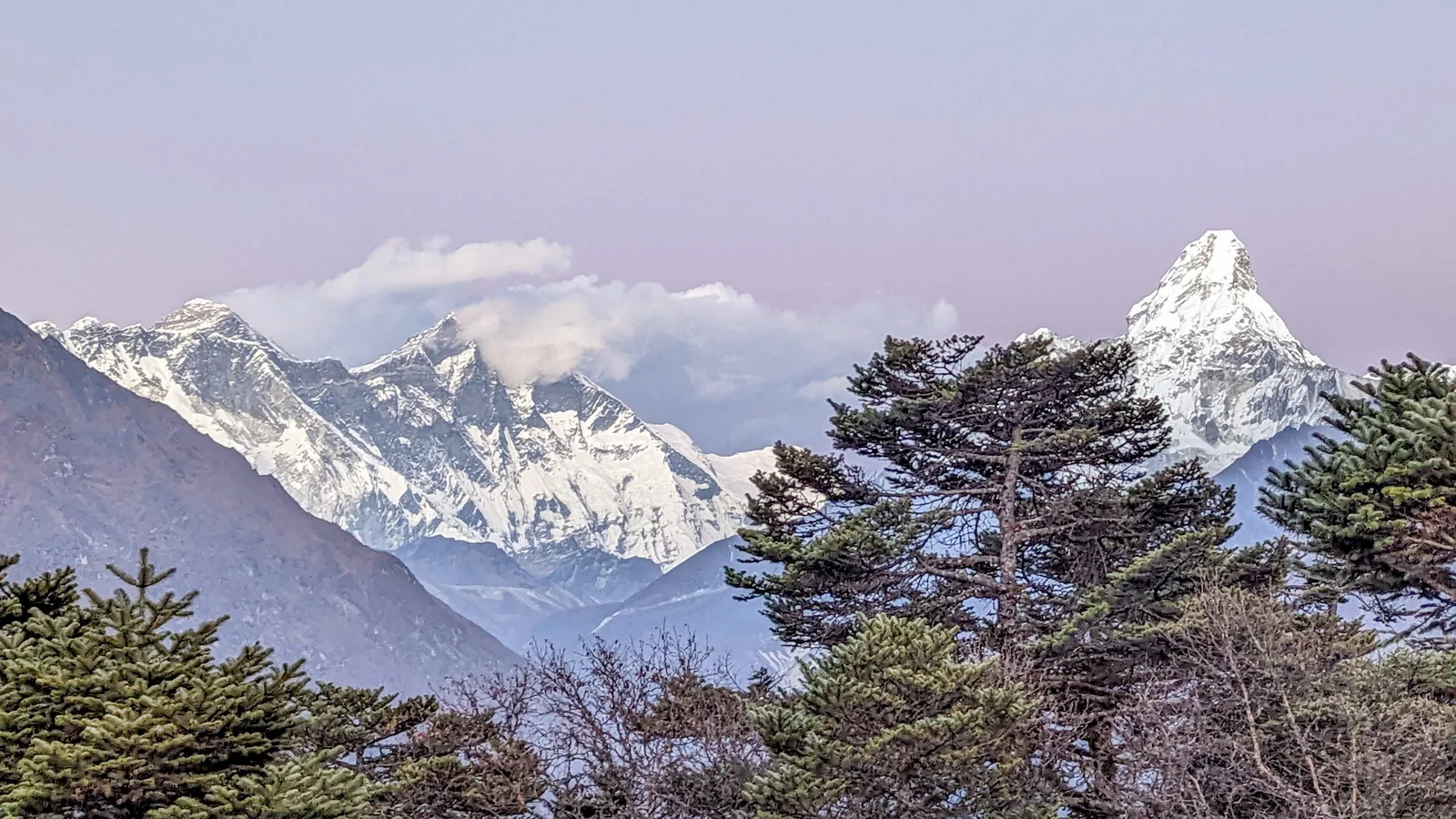
Those airways still pass well north and east of Everest. Closer in, short regional flights skirt the range in full view of it: Drukair’s roughly one-hour Kathmandu–Paro service says passengers on clear days may see Everest, Lhotse, Makalu, Cho Oyu and Kanchenjunga, and recommends the left side (seat A) eastbound and the right side (seat F) on the way back.

Jet stream winds make a thin margin thinner
The subtropical jet stream regularly sits at summit height, which is why Everest is so often wrapped in a plume of blown snow. Climate scientist Tom Matthews, who helped install the world’s highest weather stations on Everest, wrote that the stations “owe their severe winds to the subtropical jetstream” and recorded winds near Camp IV equivalent to a category 2 hurricane.

Strong wind blowing across a high ridge produces mountain waves and turbulence that pilots work hard to avoid. On its own that would mean a wider berth. Stacked on the descent problem, it removes any reason to fly directly over the top.
Two aircraft have been over the top, and one landed
On 3 April 1933 the Houston–Mount Everest expedition flew two Westland biplanes over the summit from Lalbalu airfield near Purnea in India, clearing it by roughly 100 ft at a maximum of about 31,000 ft. The pilots, Lord Clydesdale and David McIntyre, sat in open cockpits on bottled oxygen and heated suits; cameraman Sidney Bonnett briefly blacked out from hypoxia after damaging his oxygen line. The film of the expedition, Wings Over Everest, won an Academy Award.
On 14 May 2005 French test pilot Didier Delsalle landed a Eurocopter AS350 B3 helicopter on the summit, flying from Lukla, and the Fédération Aéronautique Internationale validated it as the highest helicopter landing and take-off on record. We tell the full story in the only helicopter ever to land on Everest’s summit.
| Flight | Altitude | Over the summit? |
|---|---|---|
| Long-haul airliner cruise | 29,000–41,000 ft | No, routed around the highest range |
| L888 / Y1 across Tibet | cruise levels | No, north and east of Everest, with escape routes |
| Kathmandu Everest sightseeing flight | almost 25,000 ft | No, about 20 miles away along the range |
| Kathmandu–Paro (Drukair) | cruise | No, Everest visible on clear days |
| Everest Base Camp helicopter | near Base Camp, 5,364 m | No, lands below the mountain |
| 1933 Houston expedition biplanes | ~31,000 ft | Yes, by about 100 ft |
| 2005 Delsalle helicopter | 8,848 m | Landed on it |
How to actually see Everest from the air
Book a Kathmandu mountain flight, not a window seat on a long-haul jet. Buddha Air’s Everest Experience leaves Kathmandu from 6:15 am, lasts around an hour, climbs to almost 25,000 ft and puts Everest about 20 miles from your window. The airline fills its ATR aircraft only half full so every passenger gets a window seat.

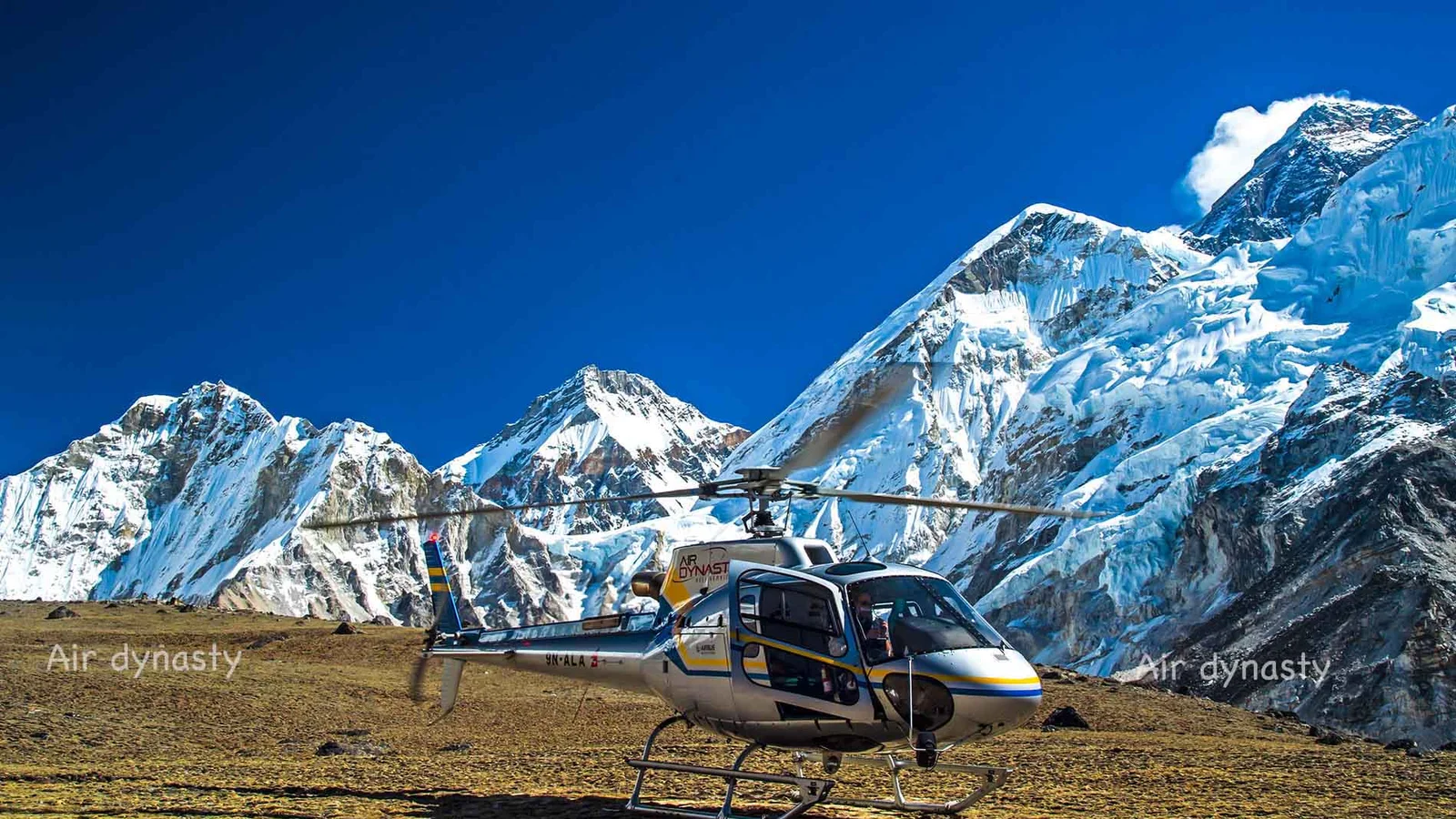
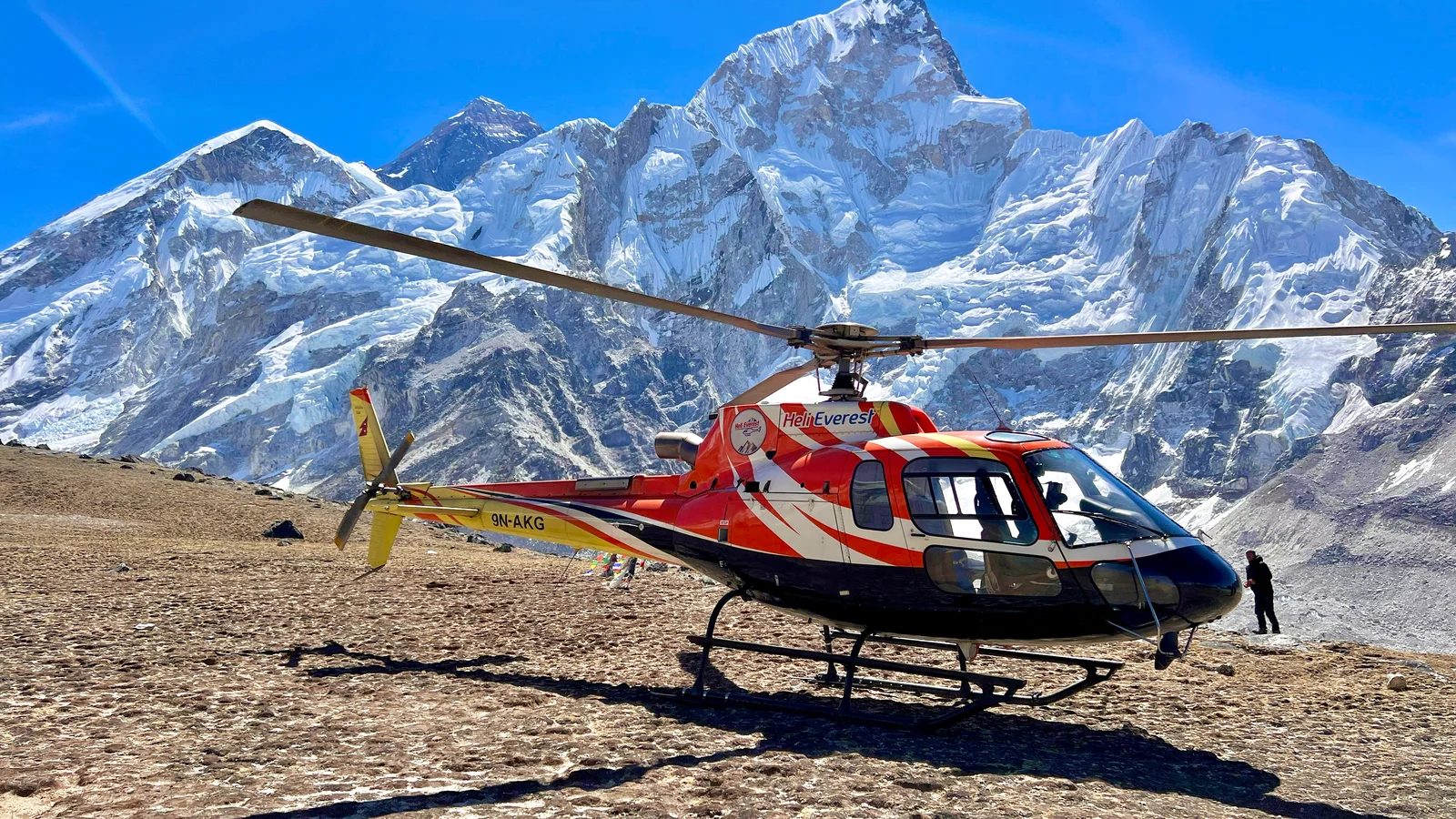
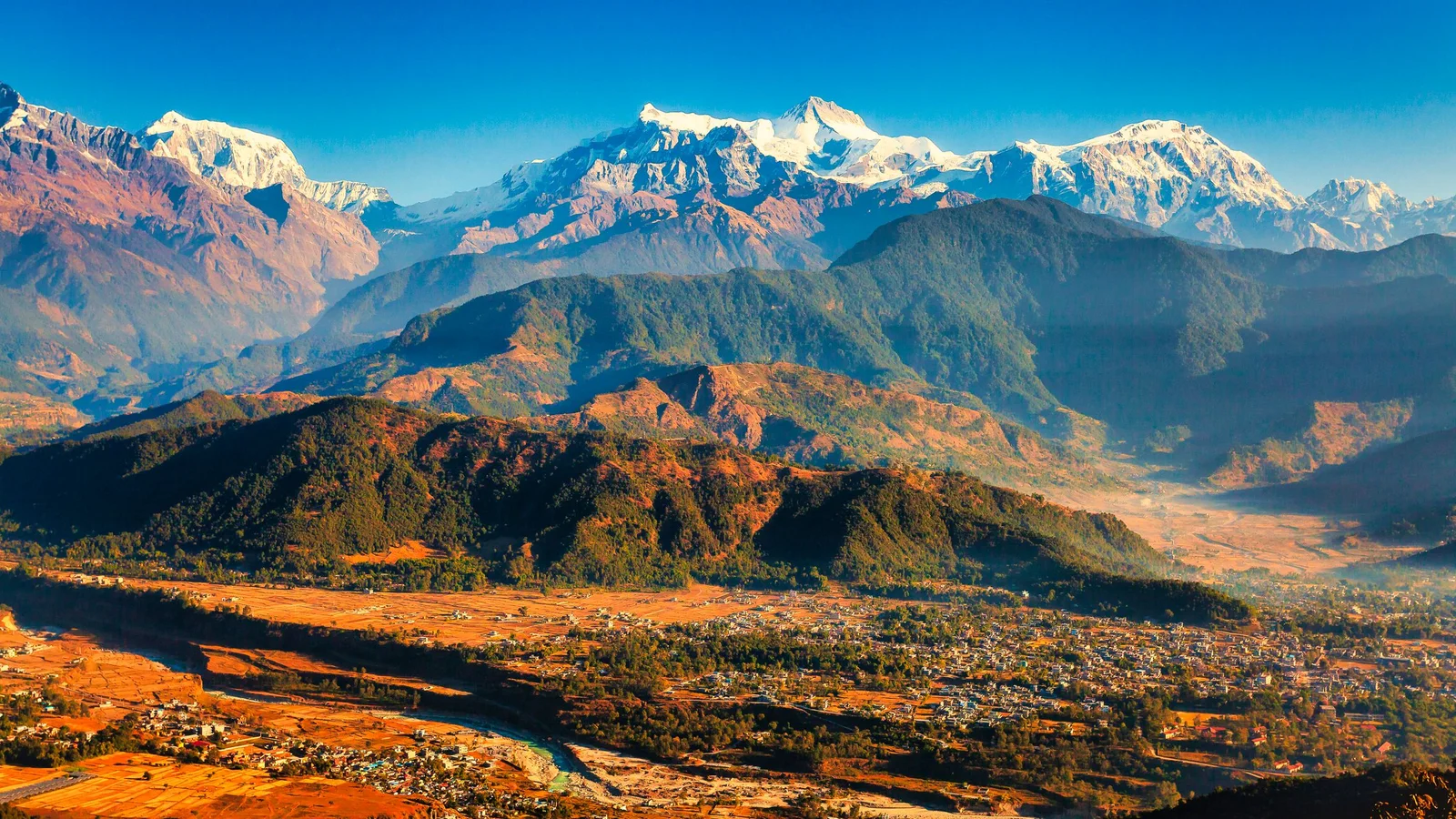
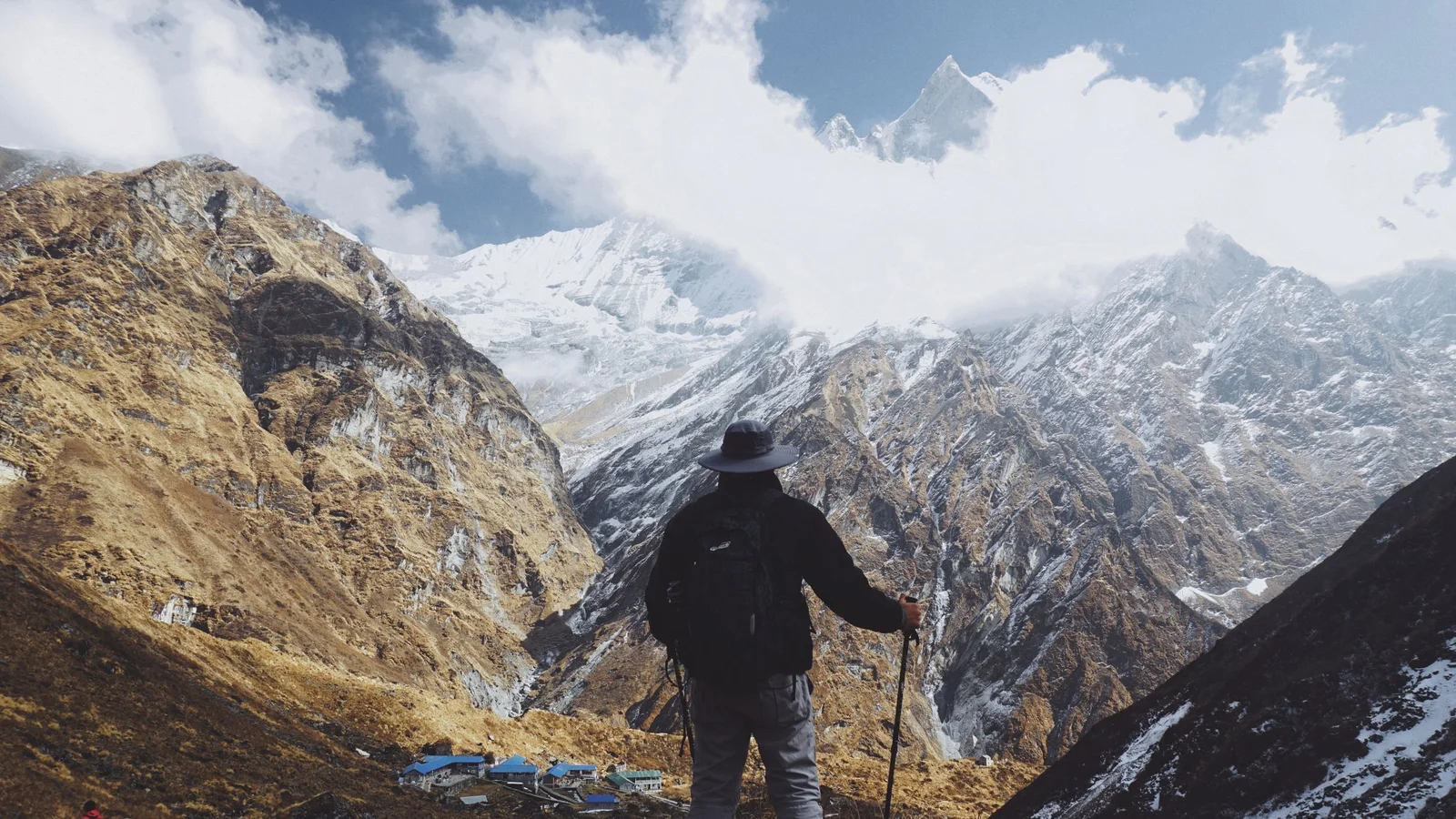
Go between September and April, when the air is clearest, and take the first flight of the day. A helicopter tour to Everest Base Camp goes further and lands you below the mountain at 5,364 m, with its flanks filling the windscreen. If you would rather earn the view, the Everest View trek reaches the same amphitheatre on foot in a week.
What we would tell a friend
The window seat on a scheduled flight is the worst way to see Everest and the one most people end up with: nothing crosses the summit, so you see it side-on from a long way off, often through haze. Spend the money on a morning mountain flight instead. And if you are choosing between that and a helicopter to Base Camp, they are different things: the helicopter lands, you stand on the glacier and you feel the altitude.
Frequently asked questions
Can a plane fly over Mount Everest?
Physically, yes: airliners cruise between 29,000 and 41,000 ft and the summit is 29,032 ft. Scheduled flights do not route over it because a depressurised jet must descend to about 10,000 ft, and over Everest the terrain rules keep it above roughly 31,000 ft.
How high do planes fly over the Himalayas?
Airliners that cross the wider region cruise in the 29,000 to 41,000 ft band. Kathmandu sightseeing flights fly beside the range at almost 25,000 ft, according to Buddha Air.
Has any plane ever flown over Everest?
Yes. Two Westland biplanes of the Houston–Mount Everest expedition flew over the summit on 3 April 1933, clearing it by about 100 ft, and flew it again on 19 April to take photographs.
Has a helicopter landed on top of Everest?
Once. Didier Delsalle landed a Eurocopter AS350 B3 on the summit on 14 May 2005, and the FAI validated it as the highest helicopter landing and take-off on record.
Can you see Everest from a commercial flight?
On clear days, yes. Drukair says passengers on its Kathmandu–Paro flight may see Everest, Lhotse, Makalu, Cho Oyu and Kanchenjunga, best from seat A eastbound. A dedicated mountain flight from Kathmandu gets far closer.
Why don’t planes fly over Tibet?
Most don’t because the plateau stays high for hours, so a depressurised jet cannot descend to breathable air. The few that do use the L888 and Y1 airways with extra oxygen and escape routes filed with China’s aviation authority.
Sources: US Code of Federal Regulations 14 CFR 91.177, 121.161, 121.191, 121.329 and 121.333 (Cornell Legal Information Institute); FAA Advisory Circular 61-107B, Aircraft Operations at Altitudes Above 25,000 Feet (29 March 2013); FAA, Reduced Vertical Separation Minimum; OPSGROUP, L888 the Silk Road airway; Buddha Air, Everest Experience; Drukair, Kathmandu route page; Tom Matthews, The Conversation, on the Everest weather stations; Houston–Mount Everest flight expedition and Didier Delsalle records (Wikipedia, This Day in Aviation). All read 3–4 October 2026.
Cover: Nahuel Villarino via Pexels (Pexels licence). Section photos: Mike Marchetti via Pexels (Pexels licence); Marie Martin via Pexels (Pexels licence); Michael Pointner via Pexels (Pexels licence); Alejandro De Roa via Pexels (Pexels licence); aaerux studio via Pexels (Pexels licence).
Still running this season
EBC Trek & Helicopter Return — 10 Days is running normally
NMA-certified local guides, transparent pricing, 5,000+ treks since 1998. Message us your dates and we'll sort the permits, lodges and logistics — reply within 24 hours, no obligation.
Popular Nepal treks
All treks →
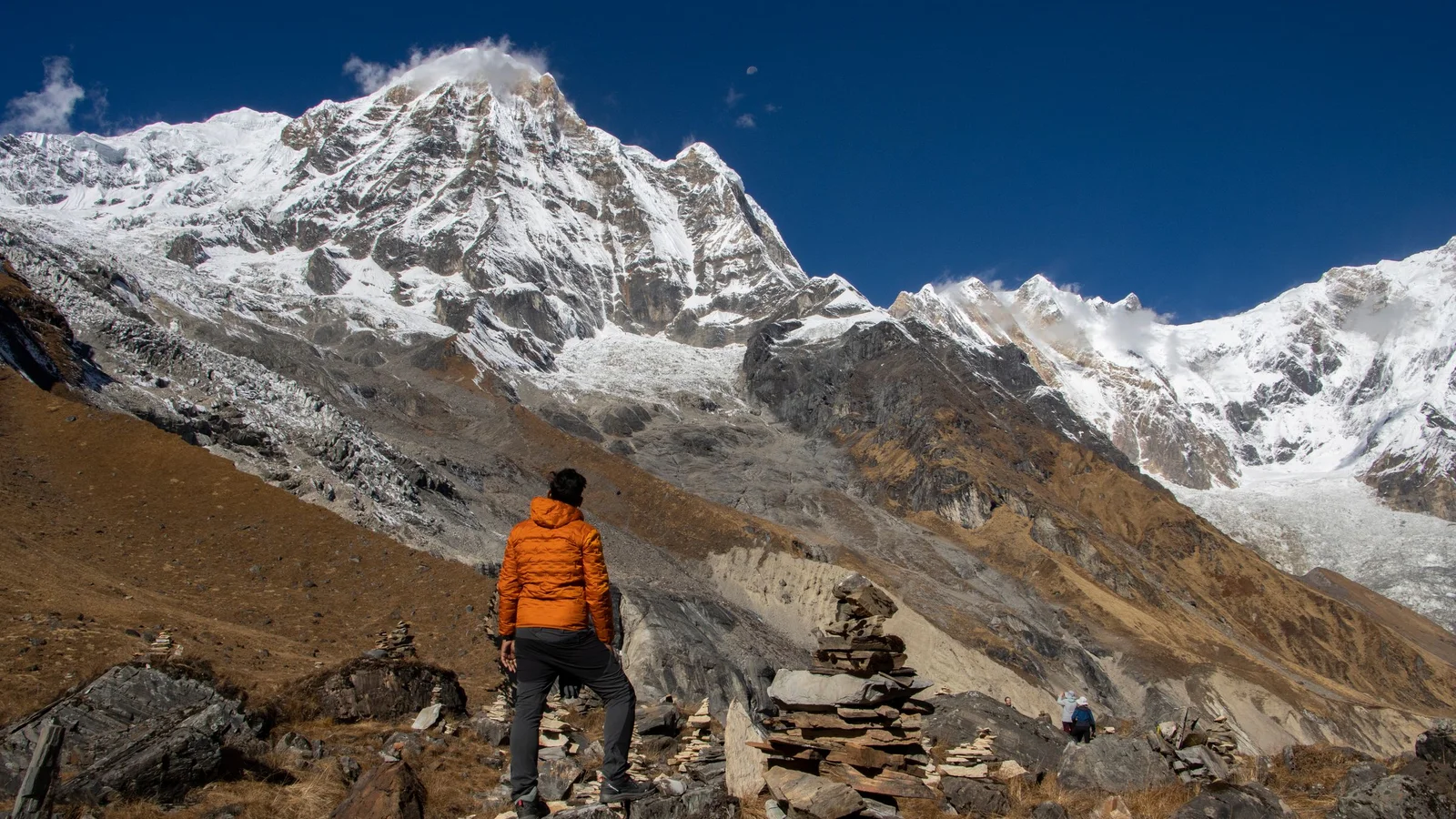
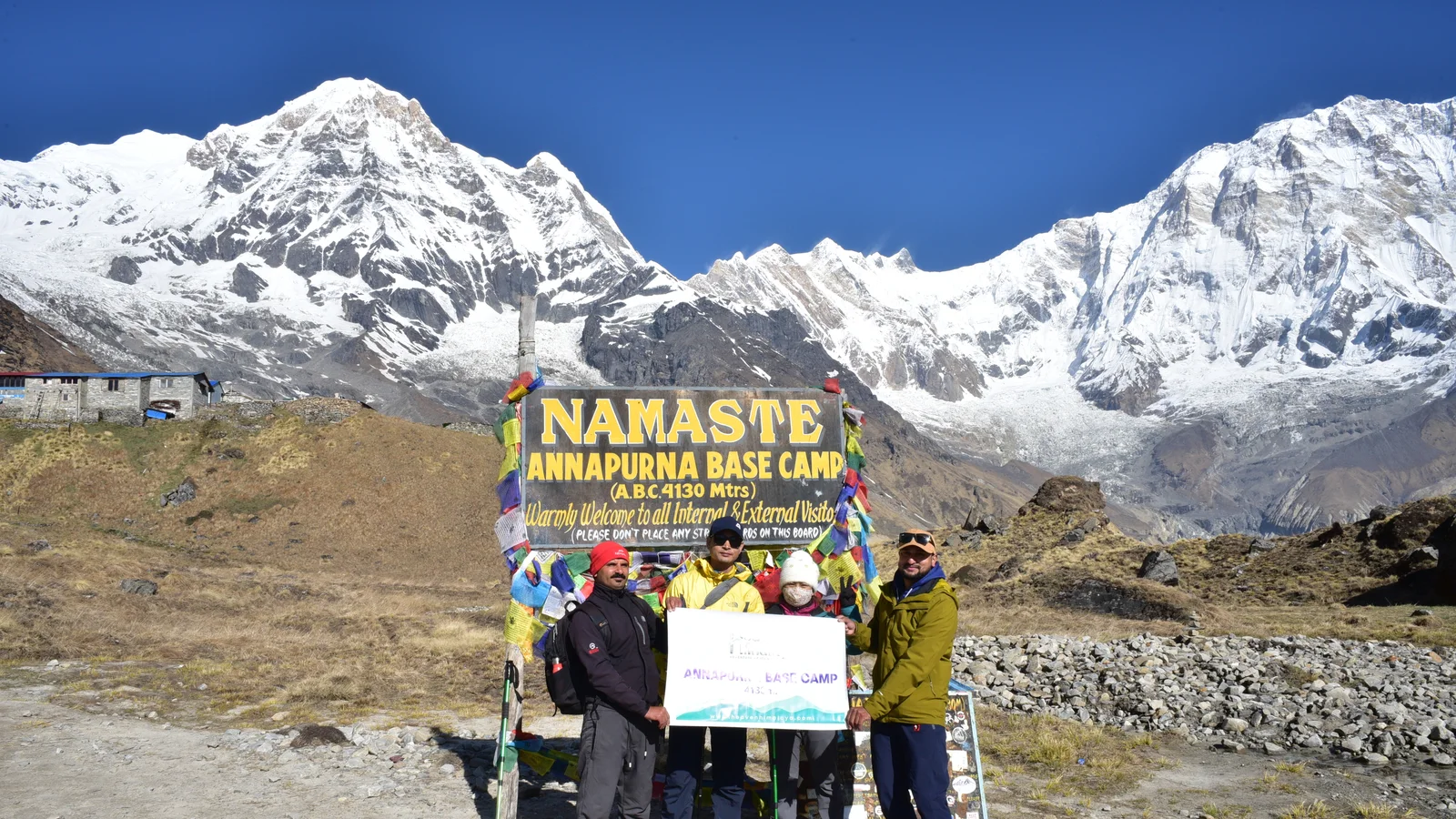
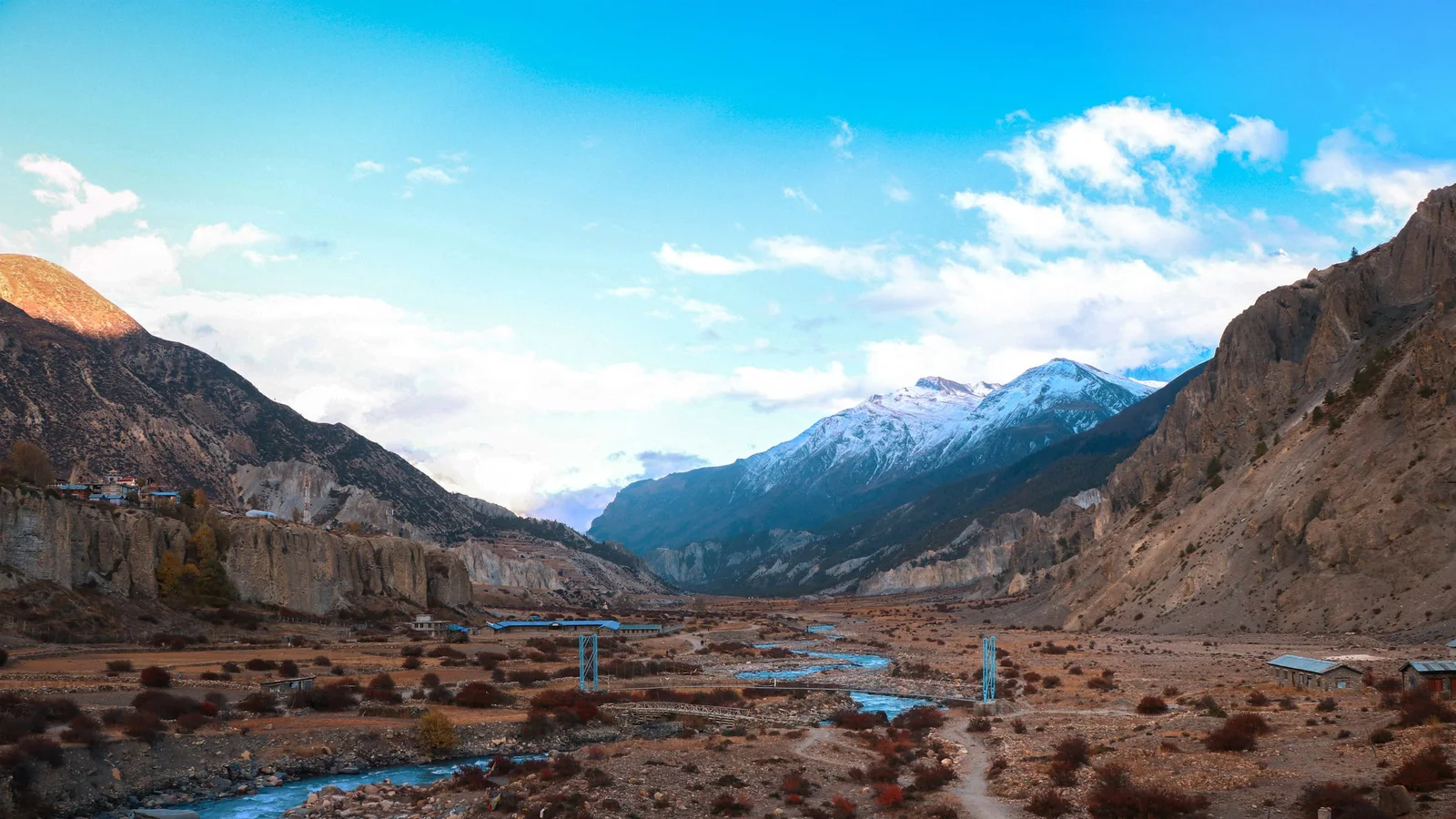
Live travel desk
Related coverage

Flights & Access
Everest Base Camp Trek or Helicopter Tour? The Kala Patthar Reopening Changes the Math in 2026
A shared helicopter can land you on Kala Patthar again after a three-year ban, but it still can't buy you what nine days on the trail does.

World Destinations
If you only have a week in Nepal, here's which trek actually fits
Four real options for one week, from a 4-day ridge walk to a 7-day Everest view trek, with altitude, price and the catch in each.

Records & People
Tom Hiddleston Walked to Everest Base Camp for a Film That Finally Puts Tenzing Norgay First
Apple’s new film Tenzing sent Tom Hiddleston and co-star Genden Phuntsok trekking to Everest Base Camp before filming, here’s the real 1953 story.

Records & People
Mount Everest's Official Height Was Wrong for 65 Years, Until Nepal and China Finally Agreed in 2020
The number on every map, 8,848.86 metres, only became official in December 2020, after two countries spent a decade measuring the same mountain.
Latest from the desk
Flights & Access
Barcelona Airport's Ground Staff Strike Is Still On, Here’s What You Are and Aren’t Owed If Your Flight Is Cancelled
Groundforce staff at Barcelona-El Prat protest again from 19 October. Cancelled flights mean a refund or rebooking and care, but cash compensation is unlikely.
Breaking Flights & Access
Typhoon Champi Is Closing In on Guam, Here’s What You’re Owed If Your Flight Is Cancelled
Guam’s airport is cancelling United, Japan Airlines and Korean Air flights ahead of Typhoon Champi. Weather rarely earns compensation, but a refund is a different matter.
Breaking Flights & Access
Italy's Air Traffic Network Failed and Halved Capacity, Here’s What You Are and Aren’t Owed If Your Flight Was Hit
A data network fault cut Italian air traffic capacity by half on 16 October. Care and rebooking are owed on EU flights, but cash compensation is the contested part.