Flying to Nepal with Diamox? Here's what every border on the way asks for
Diamox is prescription-only in the US, UK, Canada and Australia. Carry it boxed with a prescription; we found no transit permit rule for it at Nepal hubs.

On this page (7)
Acetazolamide (Diamox) needs a prescription in the US, the UK, Canada and Australia, so get it from a doctor before you fly and carry it in its labelled pharmacy box with a copy of the prescription. It is not a narcotic or a psychotropic, and we found no permit requirement for it at the main transit hubs for Nepal: Dubai, Doha, Singapore, Delhi and Istanbul. Dexamethasone and nifedipine follow the same rules: a prescription, the original packaging and a doctor’s letter.
- Bring it from home. Nepal lists acetazolamide as an essential medicine, but the tablet on that list is 250 mg, twice the usual prevention dose, and quality varies.
- Your layover is the easy part. The UAE, Qatar and Singapore aim their permit systems at narcotic, psychotropic and other controlled medicines. None of the three altitude drugs is a narcotic or a psychotropic.
- Dexamethasone is a treatment drug. The CDC says it should generally be kept for treatment, usually alongside descent.
- Descent is the treatment. No pill on this page is a reason to keep climbing.
The general rules for carrying any medicine across borders are in the guide to travelling with prescription medication abroad. This page covers the three drugs trekkers ask about before Nepal.
Is Diamox prescription-only where you live?
Yes, in all four of the main markets we checked. Acetazolamide is prescription-only in the United States, the United Kingdom, Canada and Australia, so a doctor or travel clinic has to prescribe it before you leave.

| Country | Status of acetazolamide | Official source |
|---|---|---|
| United States | Prescription only (“Rx only”); FDA label lists acute mountain sickness in climbers attempting rapid ascent | US National Library of Medicine, DailyMed label |
| United Kingdom | Prescription-only medicine (POM); altitude use is unlicensed | emc product information; TravelHealthPro |
| Canada | Prescription drug | Health Canada Drug Product Database |
| Australia | Schedule 4, Prescription Only Medicine; PBS listed | healthdirect (Australian Government) |
| Nepal | 250 mg tablet on the National List of Essential Medicines 2021 | Department of Drug Administration |
In the UK, “unlicensed” means the drug is licensed for other conditions, such as glaucoma, and doctors prescribe it for altitude under their own judgement. TravelHealthPro, the UK government-funded travel health service, still calls it the preferred drug for preventing altitude illness. The NHS says a GP or travel clinic may prescribe medicine to help prevent altitude sickness if you have had it before.
Australians should note one more detail. Diamox is on the Pharmaceutical Benefits Scheme, and Smartraveller says there are limits on how much PBS medicine you can take overseas. A trek-length supply is small, but check if you also carry other PBS prescriptions.
Dexamethasone and nifedipine are also prescription medicines in all four countries. A doctor deciding whether to prescribe any of the three will want to know your route, your top altitude and the days you plan to gain height.
Can you buy acetazolamide in Kathmandu?
It is a medicine Nepal’s health system is meant to stock, but you should not plan your trek around buying it there. Nepal’s National List of Essential Medicines 2021, published by the Department of Drug Administration, includes acetazolamide 250 mg tablets. The same list includes dexamethasone tablets and sustained-release nifedipine.
Being on that list means the government considers the drug essential. It does not tell you that a given pharmacy has it in stock on the day you arrive, or which brand you will get. Three practical problems follow.
- The strength. The listed tablet is 250 mg. The CDC and TravelHealthPro both give a smaller prevention dose, so a locally bought tablet may need splitting. Ask your prescriber before you go, not a pharmacy counter at 4,000 m.
- Quality. The CDC warns that counterfeit medicines are common in some countries and advises travellers to use medicine brought from home.
- The test dose. TravelHealthPro advises a trial dose before travel to check for side effects such as tingling, nausea and taste changes. You cannot do that if the first tablet you take is on the trail.
The UK Foreign Office adds that healthcare is poor in most places outside the Kathmandu Valley and Pokhara, which covers every trekking region. Bring the full supply from home.
What Dubai, Doha and your other transit airports allow
We found no permit requirement for acetazolamide at any of the main hubs for Nepal flights, because their permit systems target narcotic, psychotropic and other controlled medicines. What each one does ask for is a prescription and medicine kept in its original packaging.
| Hub | What the official rule says | For altitude drugs |
|---|---|---|
| UAE (Dubai, Abu Dhabi) | Prescribed medicine that is not controlled needs no prior Ministry of Health approval; carry the prescription. Controlled medicines need approval, but MOHAP says transit passengers who stay in the airport do not need it | Check each drug’s generic name against MOHAP’s controlled list |
| Qatar (Doha) | Since August 2026, a Ministry of Public Health e-permit for 140 controlled medicines: 61 narcotics (up to 10 days’ supply) and 79 psychotropics (up to 60 days) | None of the three is a narcotic or psychotropic |
| Singapore | Up to 3 months’ supply without approval if not controlled; transit passengers who do not clear immigration need no HSA approval, but prohibited medicines are never allowed | Original labelled packaging plus prescription or doctor’s letter |
| India (Delhi) | GOV.UK: most medicines that need a UK prescription need one in India; narcotic and psychotropic medicines fall under India’s NDPS Act | No specific rule found for these three |
| Turkey (Istanbul) | GOV.UK: some common medicines are controlled in Turkey; check with Turkish customs or the embassy | No specific rule found; ask the embassy in writing |
The UAE Embassy in Washington states that prescribed medicine that is not controlled, and over-the-counter medicine, do not need prior approval from the Ministry of Health, but that travellers must carry the prescription for the quantity they bring. Qatar’s new system, reported by The Peninsula when the Ministry of Public Health launched it in August 2026, asks for a prescription and a medical report in Arabic or English for the drugs on its list.
Singapore’s Health Sciences Authority is the clearest of the five. You may bring up to three months’ supply of a medicine that needs no approval, each one must be in its original container labelled with your name, and more than three months’ supply is not allowed.
The altitude drugs are rarely the problem at a Gulf transit desk. Sleeping tablets, strong painkillers containing codeine or tramadol, and ADHD medicine are. If you carry any of those as well, check the controlled list for every country on your route before you book.
How to pack and document altitude drugs
Keep each drug in its pharmacy box with your name on the label, carry it in your hand luggage, and add a short doctor’s letter that names each one by its generic name. That one set of papers covers every hub in the table above.
- Generic names on everything. “Diamox” is a brand. “Acetazolamide” is what an official in Doha or a pharmacist in Kathmandu will look up.
- A doctor’s letter. List the drug, the strength, the quantity and that it is for your personal use on a high-altitude trek. Smartraveller and the CDC both recommend a letter.
- Hand luggage. A checked bag can go missing on the Kathmandu connection. TravelHealthPro suggests keeping some spare in the hold.
- Enough, not extra. A trek supply plus a few days’ buffer is well inside Singapore’s three-month cap.
- A photo of the prescription on your phone, in case the paper copy gets wet on the trail.
If you sometimes get a reaction to medicines, raise it with your doctor before the trip. The CDC says cross-sensitivity between sulfa antibiotics and acetazolamide has not been reported, but a history of anaphylaxis to any drug calls for caution. TravelHealthPro is stricter: it lists severe sulfonamide allergy as a reason not to take acetazolamide, and suggests a supervised trial for people with milder sensitivity. The two sources differ, so this is a decision for your own doctor.
Dexamethasone and nifedipine are a different conversation
Dexamethasone and nifedipine are treatment drugs for serious altitude illness, and you should only carry them if a doctor has explained when to use them. Neither is a narcotic or a psychotropic, and we found no transit hub on the Nepal routes that requires a permit for either.
Dexamethasone is a corticosteroid, not the anabolic kind of steroid that some countries control. The CDC says it is effective for preventing and treating acute mountain sickness and high altitude cerebral edema (HACE), but that acetazolamide is preferable while ascending and that dexamethasone generally should be reserved for treatment, usually as an adjunct to descent. It also warns that stopping it at altitude before you have acclimatised can cause a mild rebound.
Nifedipine is a blood pressure drug. The CDC and the Wilderness Medical Society’s 2024 guidelines both name it for preventing and treating high altitude pulmonary edema (HAPE), and the WMS calls extended-release nifedipine the first-line drug to prevent HAPE in people who are susceptible. TravelHealthPro notes that experienced climbers sometimes carry both, while saying the evidence on their benefit is unclear.
The symptoms these two drugs treat are explained in the guide to AMS, HACE and HAPE. The short version is that HACE and HAPE are emergencies. The CDC says descent for HAPE is “urgent and mandatory” in most circumstances.
Our verdict, and why descent still wins
Get acetazolamide on prescription at home if your doctor thinks your route needs it, carry it in its box with a letter, and do not worry about your transit airport. Then plan the trek as if you had no pills at all. TravelHealthPro puts it plainly: preventative medicines are not a substitute for gradual ascent.
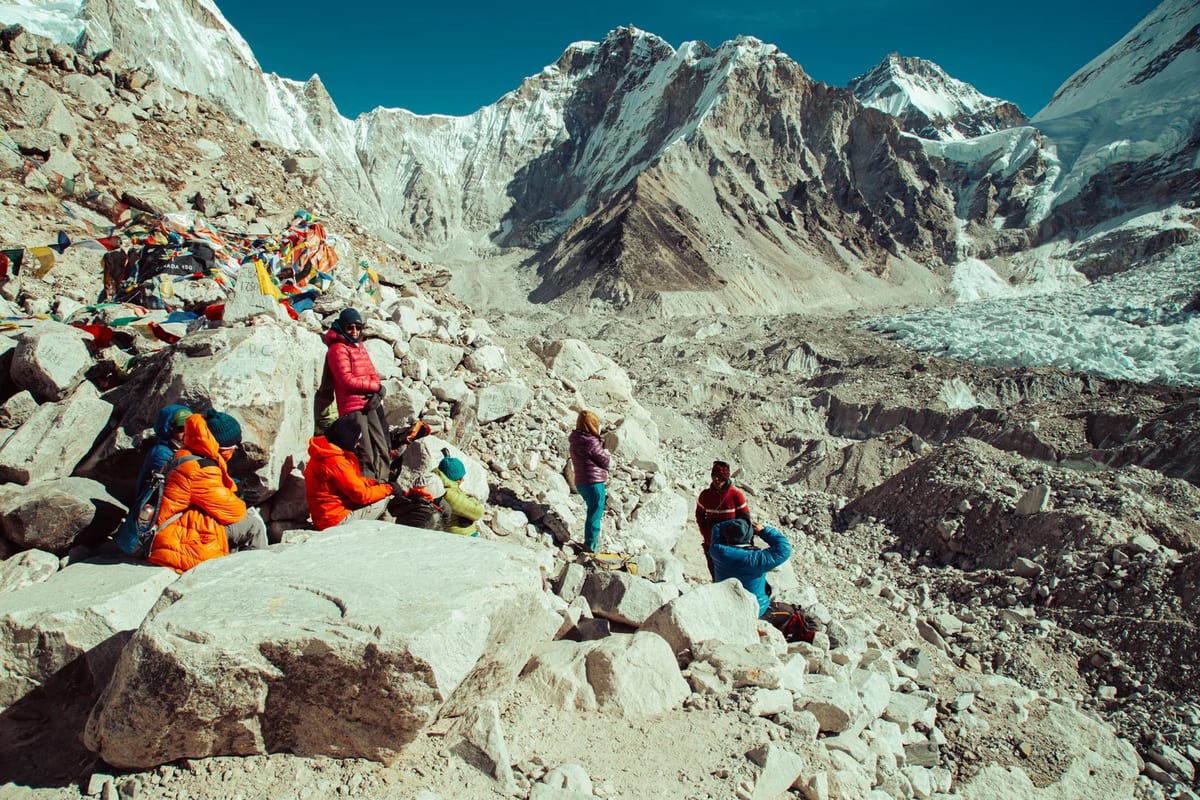
The CDC Yellow Book lists Everest Base Camp, at about 5,400 metres, among typical high-elevation destinations. Its rule of thumb is to gain no more than 500 m of sleeping altitude a night above 3,000 m, with an extra night for every 1,000 m. The Nepal altitude sickness prevention guide shows how that works on real itineraries.
On the trail, Travel Himalaya Nepal guides carry a first-aid kit and turn people around. The CDC says acute mountain sickness improves quickly with a descent of 300 m or more. That is the treatment, whatever is in your bag.
Our 14-day Everest Base Camp trek has acclimatisation days built in. It costs US$1,850 solo, or from US$1,350 each in a group of eight or more, with permits, a government-registered guide, a porter, teahouses and meals.
See the Everest Base Camp trek →Can I buy Diamox over the counter in Nepal?
Acetazolamide 250 mg tablets are on Nepal’s National List of Essential Medicines, but that does not guarantee stock, brand or quality at a given pharmacy. The CDC advises using medicine brought from home, and TravelHealthPro advises a trial dose before travel, so get it on prescription before you fly.
Do I need a prescription for Diamox?
Yes, in the United States, the United Kingdom, Canada and Australia. In the UK it is a prescription-only medicine prescribed off-licence for altitude; in Australia it is Schedule 4, Prescription Only Medicine.
Can I take Diamox through Dubai or Doha?
Acetazolamide is not a narcotic or a psychotropic. The UAE says prescribed medicine that is not controlled needs no prior approval if you carry the prescription, and Qatar’s August 2026 permit system covers narcotic and psychotropic medicines. Keep it in the original box with your prescription.
Can I take acetazolamide if I am allergic to sulfa drugs?
Ask your doctor. The CDC says cross-sensitivity with sulfa antibiotics has not been reported, but advises caution after any drug anaphylaxis. TravelHealthPro treats severe sulfonamide allergy as a reason not to take it.
Does Diamox mask altitude sickness?
No. The CDC says acetazolamide speeds acclimatisation by stimulating breathing and raising oxygen levels. It does not make it safe to keep climbing with symptoms; descent is still the treatment.
Should I carry dexamethasone on an Everest trek?
Only if a doctor has prescribed it and explained when to use it. The CDC says dexamethasone should generally be kept for treatment, usually alongside descent, and that stopping it at altitude before acclimatisation can cause a rebound.
This is one of our travel health guides; the rest, from vaccines to altitude, are collected in the travel health guide.
Keep reading
The border rules for every medicine, not just altitude drugs.
The symptoms, and the ones that mean go down now.
How a sensible ascent works on real itineraries.
Who is at risk on the long flight to Kathmandu.
Where the risk is, and the months it peaks.
Sources: CDC Yellow Book 2026, “High-Altitude Travel and Altitude Illness”, and CDC, “Traveling Abroad with Medicine”; Wilderness Medical Society, Clinical Practice Guidelines for the Prevention, Diagnosis and Treatment of Acute Altitude Illness, 2024 update (Wilderness & Environmental Medicine); TravelHealthPro (NaTHNaC), “Altitude illness” factsheet; NHS, “Altitude sickness”; US National Library of Medicine DailyMed, acetazolamide tablets label; emc (medicines.org.uk), acetazolamide 250 mg tablets product information; Health Canada Drug Product Database; healthdirect Australia, Diamox; Smartraveller, “Taking medicine and medical devices overseas”; Government of Nepal Department of Drug Administration, National List of Essential Medicines 2021; UAE Embassy in Washington, “Permitted prescriptions/drugs while entering the UAE”, and UAE Ministry of Health and Prevention, personal medicine import permit service; Qatar Ministry of Public Health controlled-medicines permit system, as reported by The Peninsula, August 2026; Health Sciences Authority Singapore, “Travelling with medications to Singapore”; GOV.UK foreign travel advice for India, Turkey and Nepal. All read on 2 October 2026. This is general information, not medical advice; speak to a doctor about your own situation.
Photos via Pexels: Tima Miroshnichenko (cover), kaboompics.com, cottonbro studio, Tiago Alvar, mingche lee, Jungsik Kwak, Pritam Chhetri.
Written by
Anjali ShresthaPokhara-based, NMA-certified trekking guides. We’ve led 5,000+ treks across the Annapurna and Everest regions since 1998 — every word here comes from the trail. More from this author →
Ready to Trek?
From reading about it to standing on it
Our Pokhara-based guides have been doing this since 1998. Tell us your dates and fitness level — we'll build your perfect itinerary. Free, no obligation.
More guides like this
Popular trips to consider
View all treks & toursFree Trekker’s Insider Guide
Permits, packing lists, cost breakdowns — no fluff.
We send one useful email. You can unsubscribe anytime.