
How a Sherpa guide decides to send you back down the mountain
With altitude symptoms you sleep no higher tonight. The NHS rules, the signs that mean descend now, and what a guide watches that you cannot see in yourself.
At a glance
- Published
- TopicRecords & People
- Verified againstNHS, altitude sickness
- Treks coveredAnnapurna Base Camp Trek — 9 Days, Everest Base Camp Trek — 14 Days
A guide who turns a client around on a Himalayan trail is not guessing. The decision runs on a short, fixed set of rules that the NHS, the Wilderness Medical Society and every experienced Sherpa guide agree on, and the most important of them is the simplest: with symptoms of altitude sickness, you do not sleep any higher tonight. Not "we will see how you feel at the next lodge". Not "it is only a headache". Same altitude, or lower. This is how that call gets made, and why the client who argues with it is the one the guide worries about most.
Key facts
- Altitude sickness can start above about 2,500 m; most Everest and Annapurna itineraries spend a week above it.
- Above 3,000 m, do not sleep more than about 500 m higher than the night before, with a rest day every 3 to 4 days (NHS).
- With symptoms: rest at the same altitude. If they worsen or do not improve in a day, go down.
- Confusion, loss of balance, breathlessness at rest or a frothy cough mean immediate descent of 300 to 1,000 m, whatever the hour.
The morning question that decides the day
Every guide we work with asks the same thing before breakfast, and it is not "how do you feel". It is a list. Did you sleep? Did you eat? Any headache, and did it come with the climb or the beer? Nausea? Dizzy standing up? A headache alone after a big day is common and usually eases with water, food and a slow morning. A headache with a second symptom is acute mountain sickness until proven otherwise, and the NHS wording for what happens next is the one we use: "rest at the same altitude until you feel better, do not travel or climb to a higher altitude".
The client who gets turned around is rarely the weakest walker. It is often the fittest, because a fit person climbs faster than their body adjusts, arrives early, and then insists they are fine.
The three rules a guide will not bend
| What you report | What it means | What the guide does |
|---|---|---|
| Headache, poor sleep, no appetite, mild nausea | Mild acute mountain sickness | No higher sleeping altitude today. Rest, fluids, food, reassess in the evening |
| Same symptoms worse after a day, or vomiting | Moderate AMS | Descend. Usually to the previous night's lodge, with a companion |
| Confusion, stumbling, cannot walk a straight line | Possible high-altitude cerebral oedema | Immediate descent of 300 to 1,000 m, now, even at night, with oxygen if carried |
| Breathless at rest, cough with frothy or pink sputum, blue lips | Possible high-altitude pulmonary oedema | Immediate descent, oxygen, evacuation arranged |
The NHS list of severe signs is short: confusion, balance problems, hallucinations, shortness of breath, a cough with frothy or bloody spit, bluish skin. Any one of them ends the debate. The descent is not "when it is light"; it is now, because both conditions can kill within hours and both improve fast with a few hundred metres of height lost.
Why the itinerary is built the way it is
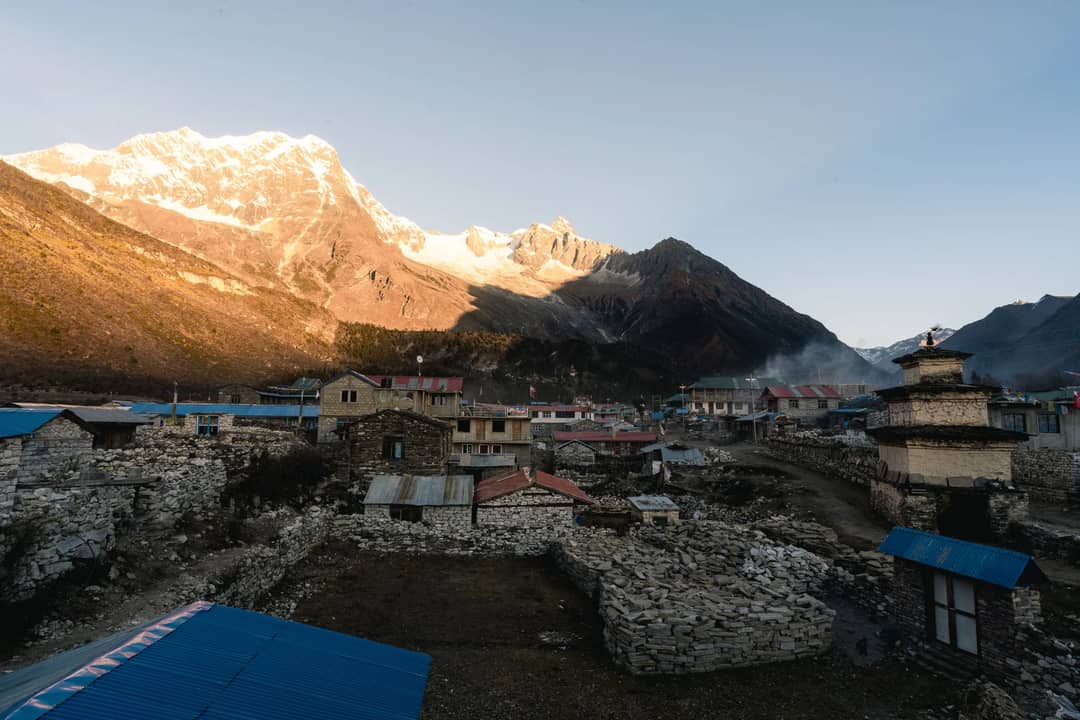
The turnaround rule works because the schedule leaves room for it. On our 14-day Everest Base Camp trek the sleeping altitudes climb from Lukla at 2,860 m to base camp at 5,364 m with rest days at Namche (3,440 m) and Dingboche (4,360 m), so no night is more than a few hundred metres above the last and there is a spare day where the body most needs one. A guide who sends you down from Dingboche to Pheriche is not ending your trek. Usually you rest, recover, and rejoin the same itinerary a day behind. The guide who is really in trouble is the one on a compressed schedule with no spare day and a group that has to keep moving.
What a Sherpa guide watches that you cannot
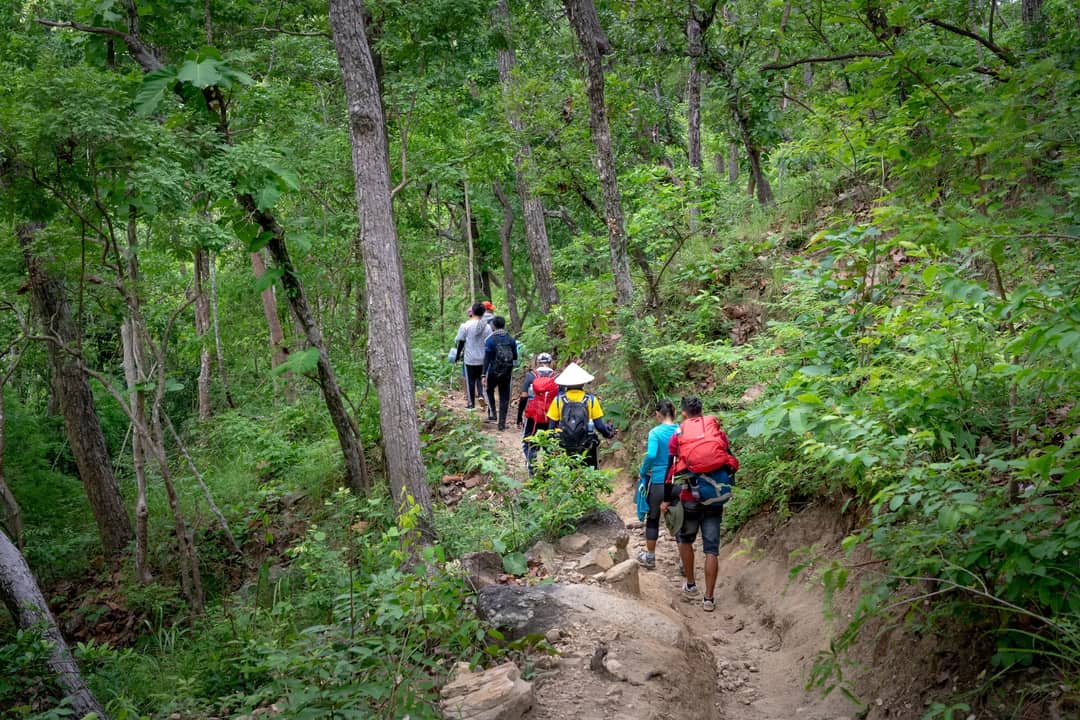
The guide walks behind you on the climbs, and there is a reason. Gait tells him more than words: the client who was striding on day two and is shuffling on day five, the one who stops to "take a photo" every hundred metres, the one who has gone quiet. He listens at night for the breathing pattern that pauses and restarts, which is common and harmless, and the wet cough, which is not. He counts how much you drank and whether you finished dinner. Most of the turnarounds we make are decided by the guide before the client has admitted anything.
What this means for you
Tell your guide everything, early, including the headache you think is nothing. A day's rest at the same lodge costs you a day. Pretending costs the trek, and sometimes the helicopter. Our guides have led more than 5,000 treks since 1998 with no client fatalities, and the rule above is most of the reason.
The medicine question
The NHS notes that a GP may prescribe preventive medicine before a high-altitude trip; acetazolamide is the usual one, and it helps the body adjust but does not replace slow ascent or excuse ignoring symptoms. Painkillers for the headache are fine. Sleeping tablets are not, because they suppress the breathing that keeps you oxygenated at night. The only treatment that always works is the one nobody wants: going down.
If you are planning a first high trek and want the itinerary that leaves room for a bad day, the Everest Base Camp trek is built around exactly that. Our altitude sickness guide covers the symptoms in more depth, and what actually kills hikers puts the numbers to it.
Sources: NHS, altitude sickness (symptoms, ascent rate, rest days, when to descend); Wilderness Medical Society clinical practice guidelines for acute altitude illness (2024 update) for the descent ranges; Travel Himalaya Nepal field practice since 1998.
Cover photo: Volker Meyer via Pexels (Pexels License). Section photos: photowithom via Pexels (Pexels licence); Roman Saienko via Pexels (Pexels licence); Arjay Neyra via Pexels (Pexels licence); The Duluwa🇳🇵 via Pexels (Pexels licence); Quang Nguyen Vinh via Pexels (Pexels licence).
Still running this season
Everest Base Camp Trek — 14 Days is running normally
NMA-certified local guides, transparent pricing, 5,000+ treks since 1998. Message us your dates and we'll sort the permits, lodges and logistics — reply within 24 hours, no obligation.
Popular Nepal treks
All treks →
Related coverage
Safety & Advisories
Your Nepal Trekking Guide Just Spent the Week Learning to Keep You Alive Above 4,000m
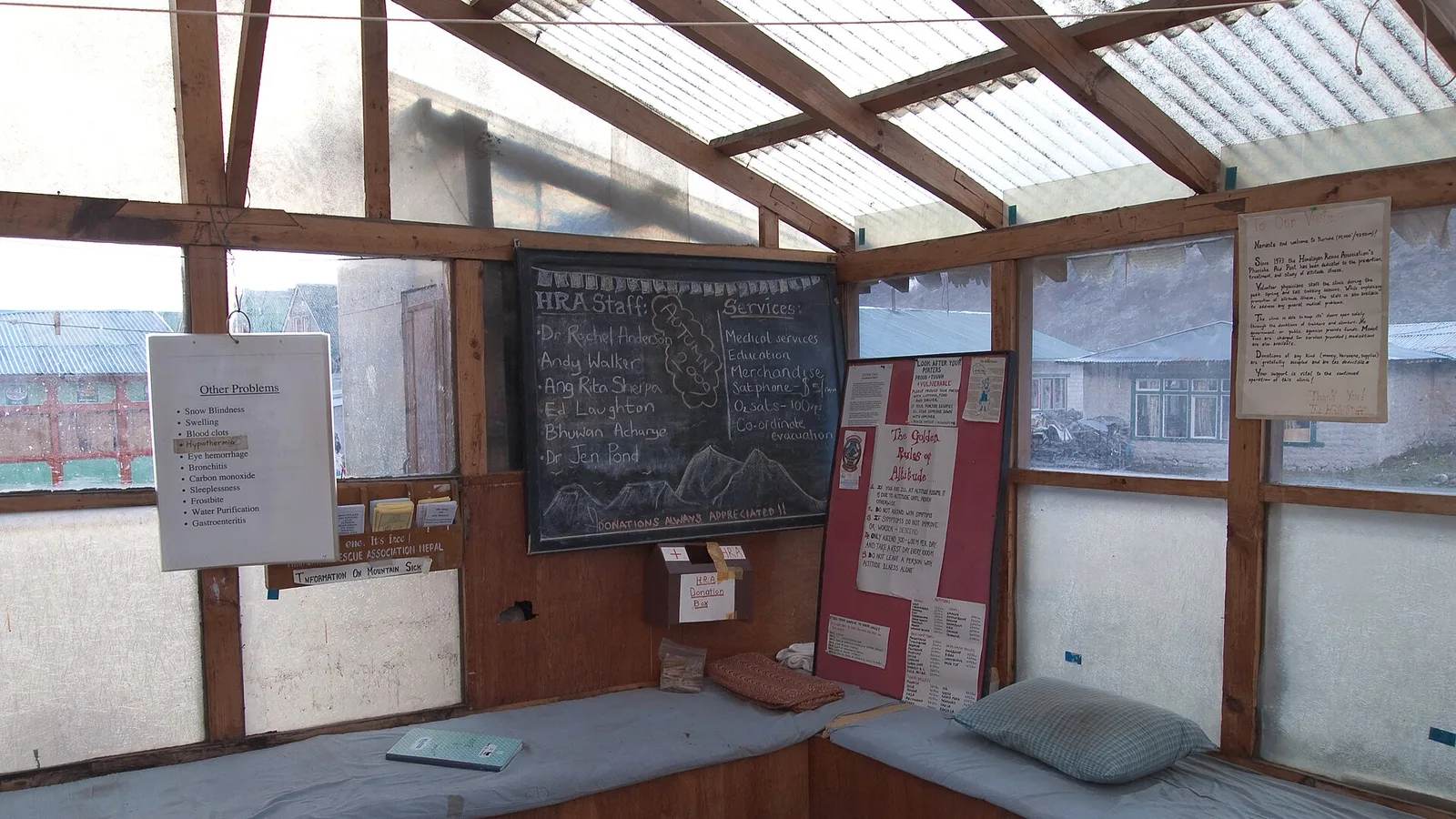
Days before Nepal's autumn trekking season opens, two of the country's oldest mountain-safety institutions ran back-to-back wilderness first-aid courses for working guides, drilling CPR, patient evacuation and the earliest signs of altitude sickness.
Safety & Advisories
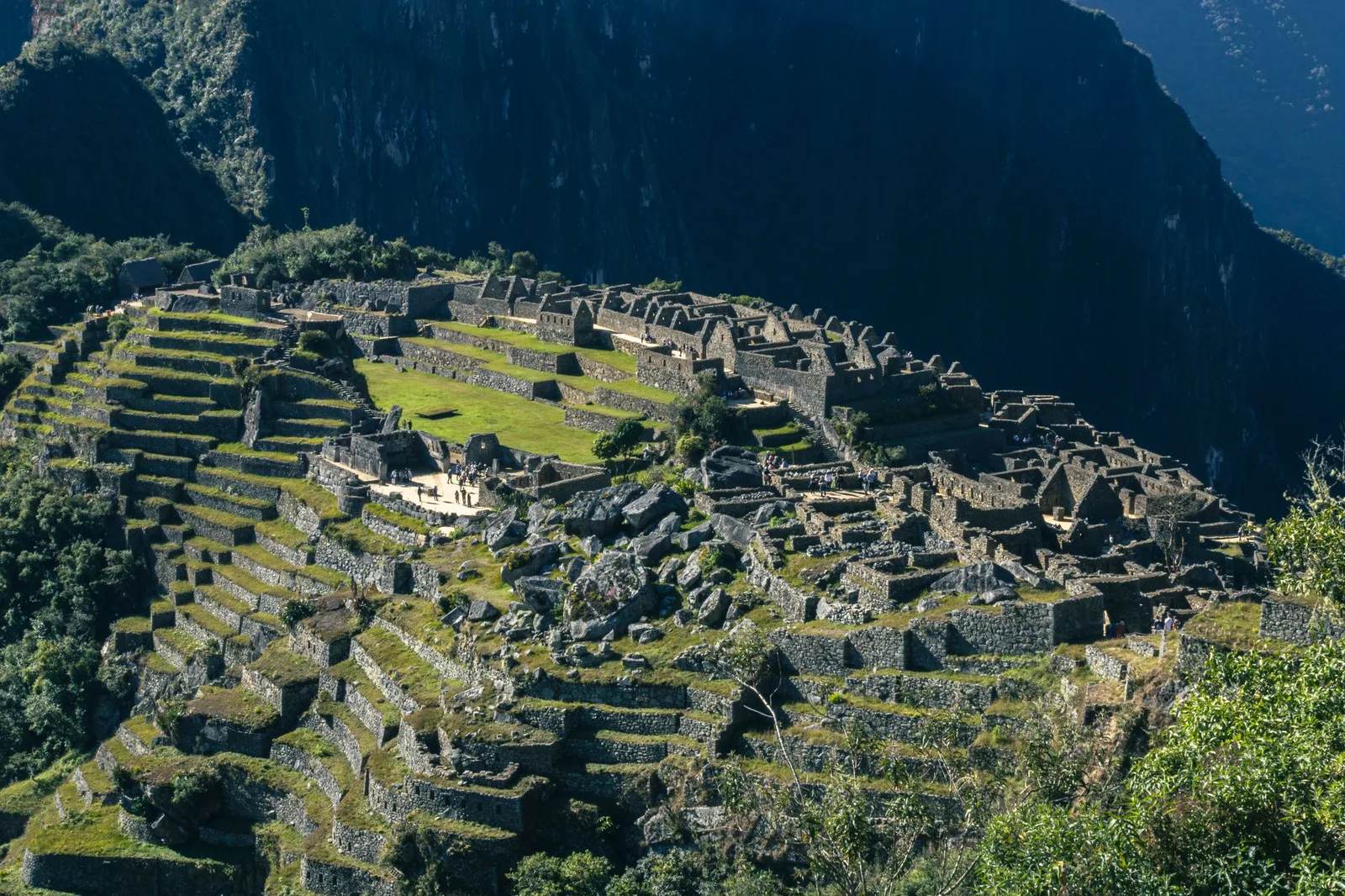
Altitude Sickness on Holiday in 2026: It Hits Tourists in High Cities and Sights, Not Just Trekkers
You do not have to climb a mountain to get altitude sickness. Cusco, La Paz, Lhasa and the ski slopes all sit high enough — here is how AMS works, the golden rules, and why fitness and age will not save you.
Safety & Advisories
Altitude Sickness Explained: AMS vs HACE vs HAPE, and the Rules That Prevent Them (2026)
Altitude sickness is not one illness but three — AMS, HACE and HAPE. Here is how to tell them apart, the symptoms that signal an emergency, and the four golden rules that prevent all three.
Permits & Rules
Nepal Now Stations Rangers at 6,400 Metres on Everest to Weigh Climbers' Rubbish, Poop Bags Included
Everest's first mountain rangers weighed 9.5 tonnes of waste this spring, and 1.76 tonnes of it was human waste carried down in bags.
Latest from the desk
Permits & Rules
Rara or Phoksundo, Here's Which of Nepal's Two Great Hidden Lakes You Should Actually Book
Rara and Phoksundo are Nepal's two legendary remote lakes, and almost nobody treks to both. Here's the real difference in cost, permits and days.
Safety & Advisories
If You're on Blood Pressure Medication, Here's What Everest Base Camp Altitude Actually Does to You
Altitude raises blood pressure and some heart drugs slow acclimatisation, but most controlled hypertension does not rule out an Everest Base Camp trek.
Gear & Tech
Packing cubes do one thing well, and it is not the thing most people buy them for
Compression cubes won the AAA space test, but no cube changes what the scale says. Which airlines limit size, which limit weight, and how to buy for yours.