
Before you book a New England leaf-peeping trip, look at what happened to Maine
Maine went from 12% to 100% in drought in seven weeks while southern New England got wetter. What that means for this year’s color, and how to time a trip.
At a glance
- Published
- TopicWorld Destinations
- Verified againstUS Drought Monitor
- Treks coveredAnnapurna Base Camp Trek — 9 Days, Ghorepani Poon Hill Trek — 5 Days
This fall, the drought map matters more than any foliage forecast, and it has split New England in two. In seven weeks Maine went from 12% to 100% of the state in moderate drought or worse, according to the US Drought Monitor. Over the same weeks, Massachusetts fell from 89% to 13%, and Connecticut and Rhode Island came out of drought altogether. Color is only just starting, so nobody knows yet what this does to the display. My advice: book refundable, and time the trip by the states’ own weekly reports rather than an early-season forecast.
Key facts
- Maine: 100% of the state in moderate drought or worse on 15 September, up from 12% on 28 July. 5% is in extreme drought.
- New Hampshire rose from 26% to 61%. Vermont went from none to 24%.
- Massachusetts fell from 89% to 13%. Connecticut and Rhode Island are now at 0%.
- Maine’s 16 September report put statewide color change under 10%, with the north and west approaching 30%.
- The busiest leaf-peeping weekend is the long one: Indigenous Peoples’ Day / Columbus Day, Monday 12 October.
The drought flipped north to south since July
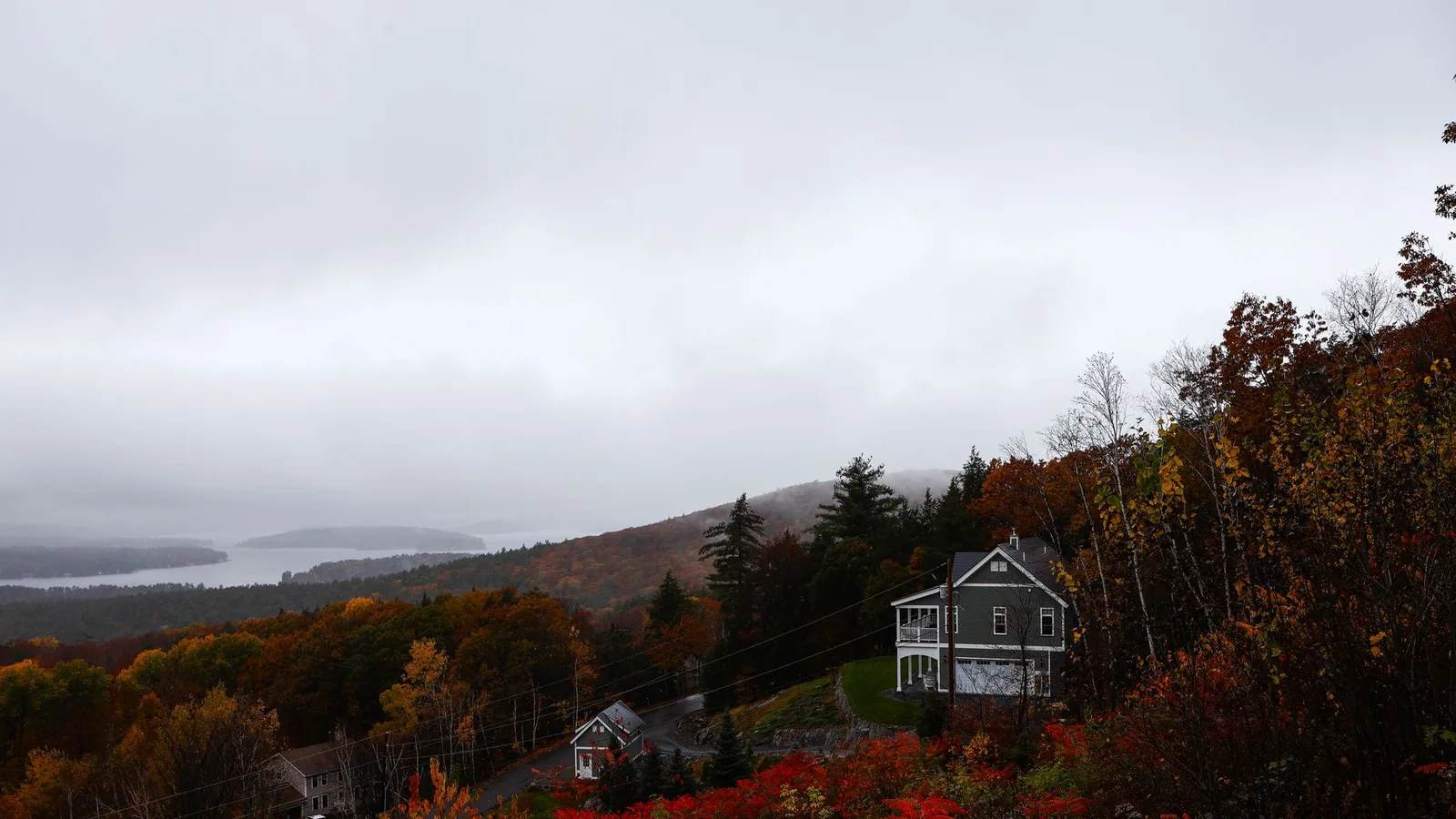
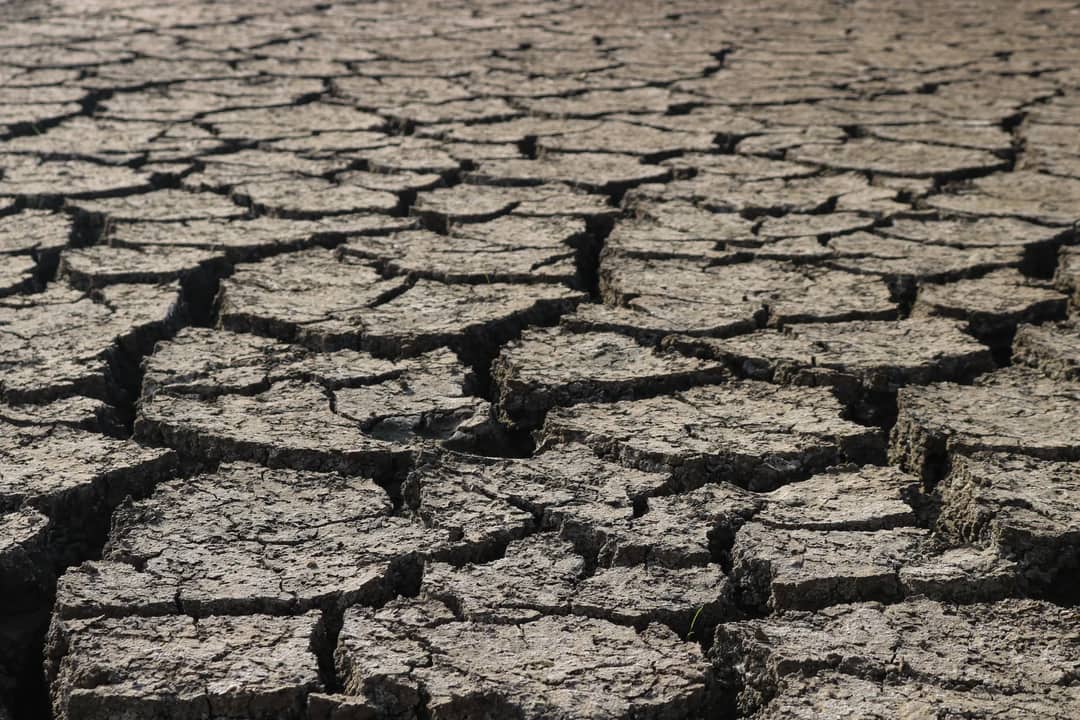
At the end of July, southern New England was the dry half. By mid-September it was northern New England. The US Drought Monitor publishes the share of each state in each drought category every week. We compared its map for 28 July with the latest one, for 15 September. The Maine figure is the most striking in the region: the whole state is now in drought, and one-fifth of it is in severe drought or worse.
| State | 28 July 2026 | 15 Sept 2026 | Direction |
|---|---|---|---|
| Maine | 12% | 100% | Much drier |
| New Hampshire | 26% | 61% | Drier |
| Vermont | 0% | 24% | Drier |
| Massachusetts | 89% | 13% | Much wetter |
| Rhode Island | 46% | 0% | Out of drought |
| Connecticut | 32% | 0% | Out of drought |
| New York | 5% | 0.1% | Out of drought |
What drought does to autumn color
A dry fall can make color better, but drought combined with heat makes it worse and ends it sooner. The yellows and oranges come from pigments already in the leaf, carotenes and xanthophylls, which show once the green chlorophyll breaks down. The reds, in maples and scarlet oak, come from anthocyanins, which the leaf makes fresh in autumn. Marc Abrams, a professor of forest ecology at Penn State, describes the best conditions as clear, bright days, cool nights that stay above freezing, and ground that is “dry but not drought”.

Push past that into real drought, especially with late heat, and trees can turn early, look muted, and drop their leaves before the usual peak. Nor does every tree react the same way. Maine’s foliage spokesperson, Gale Ross, pointed out in the state’s 16 September report that maples, birches and aspens have shallow roots and respond to dry conditions differently from deeper-rooted oaks and beeches. So a drought year can look patchy: one hillside early and brown, the next one normal.
That is why I would not trust a forecast made in August for Maine this year. It was written before most of this drought arrived.
Where the color stands this week
It is early. Most of New England is still green, and the far north is only starting to turn. Maine’s 16 September report rated color change low or very low in every one of its seven zones, and leaf drop very low everywhere, with the state under 10% overall and the north and west approaching 30%. New York’s report for the week of 16 to 22 September showed 20 to 35% change in the Adirondacks, around Tupper Lake, Long Lake, Wilmington and Old Forge.
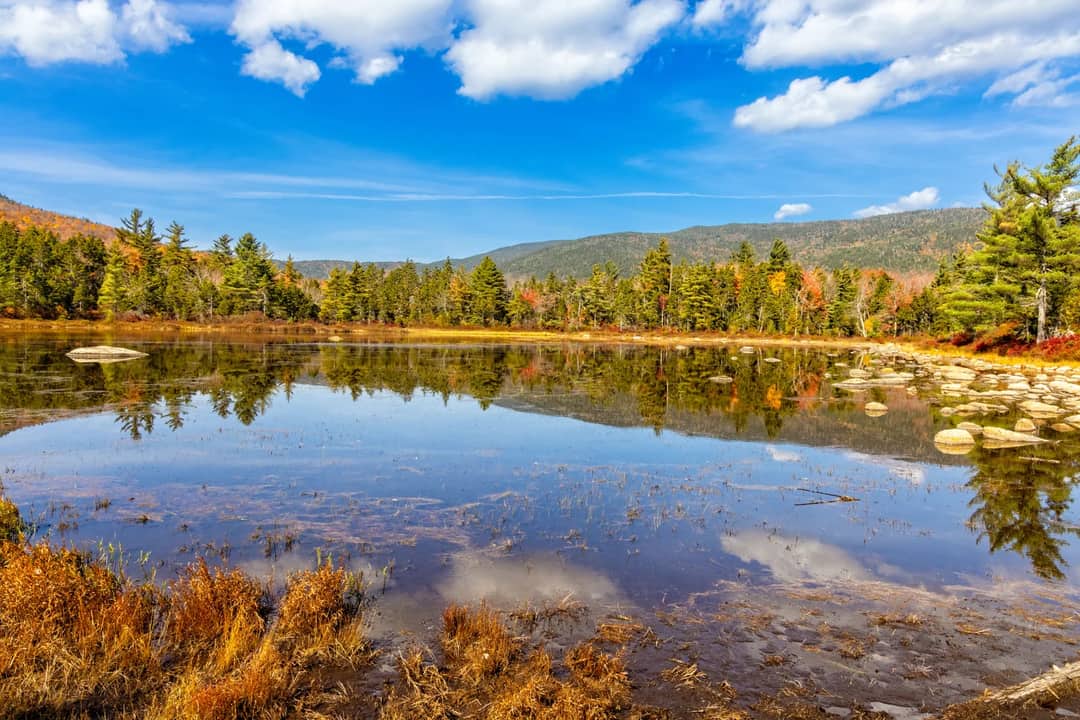
Maine’s forest service expects its north to peak between the last week of September and the first week of October, most of the state by mid-October, and the coast from mid to late October. That north-to-south, high-to-low order is the pattern across the region.
| State | Published | Who reports |
|---|---|---|
| Maine | Tuesdays | Maine Forest Service, by zone |
| New York | Wednesday afternoons | More than 100 volunteer observers; hotline 800-225-5697 |
How to time a trip this year
Keep the booking flexible and let the reports tell you where to drive. This is what I would do.
- Book refundable rooms, especially in Maine. If the drought brings the color forward or cuts it short, you want to be able to move north or south without losing a deposit.
- Check the report the week before you go, then again two days out. Maine publishes on Tuesdays and New York on Wednesdays, so a Friday departure gets fresh data.
- Follow the elevation. If the valleys are past it, the hills are usually earlier; if the hills are bare, go lower and toward the coast.
- Avoid the long weekend if you can. Monday 12 October is the federal holiday, and it is the weekend inns fill first. The weekend before or after gives you the same trees with fewer people.
- Consider southern New England this year. Massachusetts, Connecticut and Rhode Island are wetter now than they were in July, and they peak later, which gives you more time to plan.
Our verdict
This is not a bad year to go. It is a year to stay flexible. Maine is the uncertain one, because the whole state is in drought and nobody has yet seen how its maples respond. Southern New England has had the rain. Book something you can move, watch the Tuesday and Wednesday reports, and go where the color is.
The same season, on the other side of the world
Autumn is also Nepal’s best season, for a different reason. The monsoon ends, the dust is washed out of the air, and October and November bring the clearest mountain views of the year. There are no maples on the trail to Poon Hill; there are oak and rhododendron forests below a wall of 8,000-metre peaks. If you have been thinking about a big autumn trip rather than a road trip, our guide to trekking Nepal in October explains what the month is like, and trekking Nepal over Thanksgiving shows what fits in a US holiday week.

Our five-day Poon Hill trek from Pokhara is $500 solo and reaches 3,210m; Annapurna Base Camp is nine days and $920 solo. Both include permits, a registered guide, a porter and teahouses. Tell us your dates and we will tell you what fits.
Sources: US Drought Monitor state statistics for 28 July and 15 September 2026; Maine Forest Service foliage report, 16 September 2026; I LOVE NY foliage report, week of 16–22 September 2026; Penn State College of Agricultural Sciences.
Cover photo: Mason McCall via Pexels (Pexels License).
Still running this season
Annapurna Base Camp Trek — 9 Days is running normally
NMA-certified local guides, transparent pricing, 5,000+ treks since 1998. Message us your dates and we'll sort the permits, lodges and logistics — reply within 24 hours, no obligation.
Popular Nepal treks
All treks →



Related coverage
Safety & Advisories
No Atlantic hurricane yet this year, and what it means for an autumn Caribbean trip
Six named storms, zero hurricanes, the latest start of the satellite era. NOAA still says one storm is enough, and the peak runs into October.

World Destinations
How many vacation days Americans actually get, and what fits inside them
No US law requires a single paid day off, and most workers get 10 to 14 after a year. Here is the trip arithmetic that comes out of that.
World Destinations
How many Americans actually visit Iceland, and why this year looks strange
661,929 Americans visited Iceland in 2025, nearly three in ten visitors. This year is flat overall, hiding swings of more than 20% from month to month.
World Destinations
Which US national parks are actually the busiest, by the Park Service’s own count
323 million visits in 2025, down on the year before. The busiest place in the system is not a national park at all, and Zion now outdraws Yellowstone.
Latest from the desk

Breaking Flights & Access
Britain's Flight Control System Just Failed Twice in 13 Days, Here's What That Actually Means If You're Flying This Autumn
A Prestwick network fault cut UK airspace capacity 60% on 21 September, thirteen days after a software defect grounded 2,000+ flights nationwide.

Money & Insurance
Australia's Card Surcharge Ban Sounds Like Free Money, Here's the Catch Starting October 1
From 1 October, Australian businesses can't add a card surcharge, but the same reform is why Qantas and others plan to raise base fares instead.

Breaking Safety & Advisories
If you have a flight through Dubai this month, here's what three governments are warning you about
The UK, US and Australia now advise against non-essential UAE travel, and several airlines are still avoiding Dubai and Abu Dhabi.